
 English
 usheenthermal

Expert Tips for Selecting an Energy Storage Battery Pack Insulating Thermal Management Pad
Date:2026-03-19
Expert Tips for Selecting an Energy Storage Battery Pack Insulating Thermal Management Pad
The Energy storage battery pack insulating thermal management pad might sound like a mouthful, but in a high-voltage battery room, it’s the quiet hero standing between smooth operation and a five-alarm meltdown. When you’re sourcing by the truckload, one bad batch isn’t a hiccup—it’s a headline. Heat spikes, insulation gaps, delayed shipments… that’s the stuff that keeps engineers up at 2 a.m., staring at dashboards and muttering, “Not on my watch.”
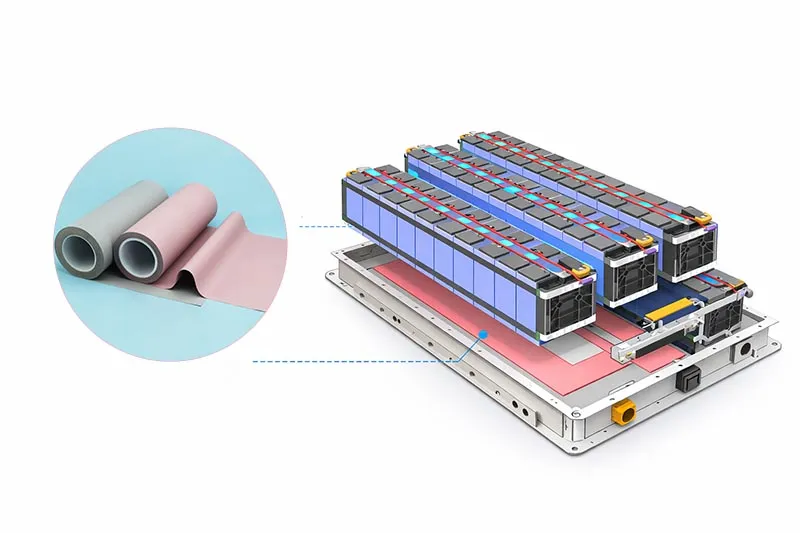
BloombergNEF reports global energy storage deployments hit record highs in 2023, and the curve is still climbing. More packs. More pressure. No room for flimsy materials.
Picking the right pad is like choosing boots for a mountain climb—too thin, you feel every rock; too thick, you lose your footing. The sweet spot? High thermal conductivity, rock-solid dielectric strength, consistent compression across thousands of units. Get that right, and your production line hums. Get it wrong, and you’re playing whack-a-mole with warranty claims.
Energy Storage Battery Pack Insulating Thermal Management Pad Basics
Energy storage is moving fast, and heat is the silent troublemaker behind the scenes. An Energy storage battery pack insulating thermal management pad keeps battery temperature in check while adding insulation and safety. From storage battery modules to full battery pack systems, the right thermal management pad makes daily operation smoother and a lot safer.
Understanding the Role of Thermal Management in Energy Storage Systems
In any energy storage battery pack, controlling Battery Temperature is not optional. It sits at the core of performance and safety.
Heat Generation in Battery Packs
1.1 During charging and discharging
· Internal resistance creates heat buildup.
· Uneven current flow increases local hot spots.
1.2 Under high-density layouts
· Compact battery pack design reduces airflow.
· Higher capacity raises thermal load.
Risk Control and Stability
2.1 Preventing Thermal Runaway
· A quality energy storage battery pack insulating thermal management pad slows heat transfer between cells.
· It improves Thermal Stability and buys time for protection circuits.
2.2 Reducing Performance Degradation
· Stable Optimal Operating Temperature extends Battery Lifespan.
· Balanced Heat Dissipation keeps output steady.
System-Level Integration
3.1 Mechanical Fit
· The thermal management pad must match compression gaps in the battery pack.
3.2 Compliance
· UL 94 flammability and IEC 60243 insulation standards guide material choice.
Sheen Technology designs each Energy storage battery pack insulating thermal management pad to handle real-world storage battery stress, not just lab tests.
Key Material Properties for Effective Insulation in Battery Packs
When choosing an Energy storage battery pack insulating thermal management pad, material details matter more than hype.
· Thermal Conductivity decides how fast heat moves away from cells.
· Thermal Resistance controls how heat is blocked between critical zones.
· Compressibility ensures tight contact without damaging components.
1) Mechanical and Physical Balance
· High Durability resists long-term vibration.
· Good Flexibility fills gaps in complex battery pack layouts.
· Stable density supports consistent performance.
2) Safety and Chemical Behavior
· Strong Flame Retardancy limits fire spread.
· Reliable Chemical Resistance protects against electrolyte vapor.
A silicone-based storage battery insulating pad often blends ceramic or boron nitride fillers. The mix boosts thermal conductivity while maintaining electrical insulation. That balance keeps the energy storage battery system cool yet electrically safe.
Sheen Technology fine-tunes filler ratios and polymer structure so each Energy storage battery pack insulating thermal management pad works smoothly under wide operating temperatures, from freezing outdoor cabinets to high-load peak demand cycles.
The Impact of Dielectric Strength on Battery Performance
Electrical safety runs parallel to thermal control. In a high-voltage battery pack, Electrical Insulation is the thin line between stable output and failure.
Core Electrical Protection
1.1 Dielectric Strength and Voltage Withstand
· Materials must survive rated voltage without breakdown.
· Verified through IEC 60243 testing methods.
1.2 Material Breakdown Voltage
· Higher breakdown voltage reduces risk during surge events.
Failure Prevention
2.1 Short Circuit Prevention
· A storage battery insulating pad separates conductive parts.
· It reduces arc risk in compact energy storage battery pack layouts.
2.2 Electrolyte and Material Interaction
· Good Electrolyte Compatibility avoids chemical weakening.
Standards and Long-Term Reliability
3.1 Meeting Safety Standards
· Compliance supports grid-level project approval.
3.2 Sustained Performance
· Stable insulation maintains output consistency across the battery lifespan.
An Energy storage battery pack insulating thermal management pad is not just a cushion. It acts as a thermal bridge and an electrical barrier at the same time. With solutions from Sheen Technology, battery pack manufacturers gain a practical path to safer, longer-lasting energy storage systems.
4 Performance Metrics For Thermal Management Pads
Energy storage systems run hot, shake hard, and demand real safety. Choosing the right Energy storage battery pack insulating thermal management pad is not guesswork; it’s about matching performance metrics to real-world battery stress.
Thermal Conductivity: A Critical Factor for Battery Pack Efficiency
When selecting an Energy storage battery pack insulating thermal management pad, thermal conductivity defines how fast heat transfer moves away from cells.
Test Standards
· ASTM D5470
· ISO 8301
Both evaluate thermal resistance under compression.
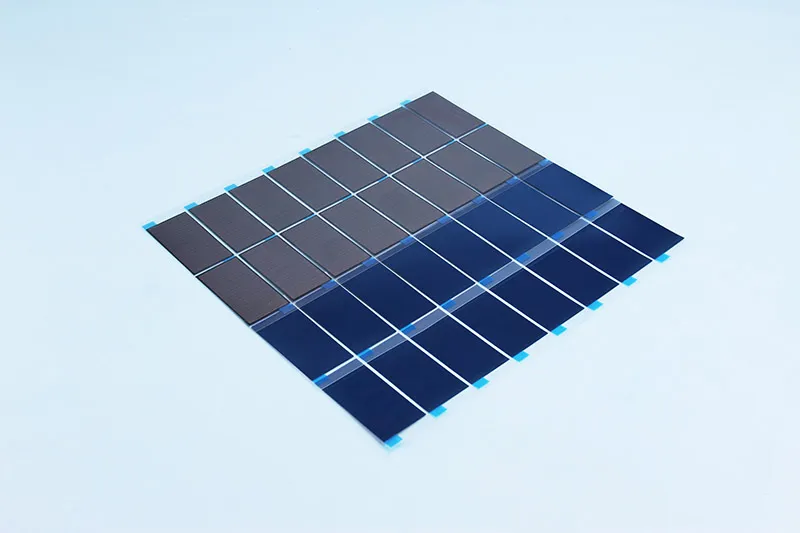
Material Design
· Ceramic filler → boosts energy dissipation
· Graphite particles → improves lateral spreading
· Boron nitride → supports electrical insulation
Performance Impact
· Stable temperature uniformity
· Higher battery performance
· Better overall efficiency
Inside a battery pack:
Cell layer
· Heat generation
· Local hot spots
Pad interface
· Contact pressure
· Gap filling
· Cooling plate
· Heat rejection
A high-quality battery pack thermal pad keeps that chain tight and efficient. Sheen Technology tunes filler ratios so conductivity rises without sacrificing insulation.
How Operating Temperature Range Affects Pad Selection
An Energy storage battery pack insulating thermal management pad must survive extreme operating temperature swings.
Key checks:
· Wide temperature range tolerance
· Stable performance at high ambient temperature
· Long-term thermal stability
Selection logic often follows:
1) Define lowest and highest pack conditions.
2) Confirm no performance degradation after cycling.
3) Validate compression set after heat aging.
If the pad cracks or hardens, battery lifespan drops and thermal runaway risks climb. Energy storage insulation pads must stay flexible, not brittle, across years of charge–discharge cycles.
The Flammability Rating: Safety Considerations in High-Power Applications
Safety is non-negotiable in high-power systems using an Energy storage battery pack insulating thermal management pad.
Core metrics include:
· Flammability rating
· UL 94 classification
· Compliance with safety standards
Material structure matters:
· Silicone elastomer base
Resists ignition
· Fiberglass reinforcement
· Improves structural hold
· Insulation material additives
· Support thermal runaway prevention
For high-power applications, fire safety isn’t hype; it’s survival.
Vibration Damping and Its Importance for Battery Longevity
Road shock and transport vibration create constant mechanical stress.
Protection path:
· Proper vibration damping rating
· Balanced density for shock absorption
· Controlled compressibility to protect battery pack integrity
Inside the pack:
Cells
· Reduced component wear
Adhesive backing
· Stable bonding
Frame
· Preserved spacing
The right Energy storage battery pack insulating thermal management pad cushions movement, supports durability, and extends longevity. Sheen Technology designs pads that handle heat and shake without losing shape, keeping energy storage battery systems steady for the long haul.
Which Pad Thickness Suits High-Power Battery Packs?
High-power systems run hot, fast, and tight on space. Choosing the right Energy storage battery pack insulating thermal management pad is not just about filling a gap; it shapes battery pack performance, safety margins, and long-term reliability. Thickness, density, and insulation all play their part.
Balancing Thermal Resistance and Pad Thickness for High-Power Demands
In high-rate charging and discharging scenarios, thermal resistance and pad thickness must stay in sync with high-power demands. Too thin, and you lose insulation. Too thick, and heat lingers.
Core Relationship Between Thickness and Heat Flow
1.1 Heat Transfer Path
· Cell surface → Energy storage battery pack insulating thermal management pad → cooling plate
· Each added millimeter increases total thermal resistance.
1.2 Surface Contact
· Rough cell casing needs slightly thicker battery pack thermal pad for gap filling.
· Smooth aluminum plates allow thinner insulating thermal management pad designs.
Impact on Energy Storage Layout
2.1 Cell Spacing
· Thicker Energy storage battery pack insulating thermal management pad reduces volumetric density in energy storage cabinets.
2.2 Mechanical Compression
· Over-compression changes insulation properties and weakens long-term heat dissipation.
Performance Comparison Table
| Pad Thickness (mm) | Thermal Conductivity (W/m·K) | Calculated Thermal Resistance (°C·cm²/W) | Max Cell Temp @3C (°C) | Pack Density Impact (%) |
| 1.0 | 3.0 | 0.33 | 58 | -1 |
| 1.5 | 3.0 | 0.50 | 55 | -2 |
| 2.0 | 2.5 | 0.80 | 53 | -3.5 |
| 3.0 | 2.0 | 1.50 | 51 | -6 |
| 4.0 | 1.8 | 2.22 | 50 | -9 |
A balanced design often sits between 1.5–2.0 mm for high C-rate systems using an Energy storage battery pack insulating thermal management pad, keeping heat dissipation efficient without hurting structure.
Sheen Technology tunes thickness tolerance tightly so compression stays stable across cycling life.
How to Determine Ideal Pad Thickness Based on Thermal Runaway Prevention
When safety is the priority, thickness decisions focus on thermal runaway prevention, not just cooling.
Here’s a practical approach engineers actually use:
· Check peak heat generation during worst-case abuse tests.
· Measure delay time to adjacent cell ignition.
· Compare insulation material breakdown temperature.
Then move step by step:
1) Run thermal simulation with 1–4 mm Energy storage battery pack insulating thermal management pad options.
2) Validate with nail penetration and overcharge tests.
3) Track internal temperature control gradients.
4) Confirm barrier effect under emergency cooling failure.
In 2025, the IEA’s Electricity Market Report noted:“Battery storage is expanding rapidly, with safety standards and system integration becoming central to market growth.” — IEA, 2025
That growth pushes stricter battery safety benchmarks. A thicker Energy storage battery pack insulating thermal management pad may add milliseconds of protection, but those milliseconds matter.
Quick reference checklist for ideal pad thickness:
✓ Meets flame retardant rating
✓ Maintains dielectric strength
✓ Controls propagation time
✓ Supports emergency cooling layout
An advanced battery insulation pad should balance insulation material strength and mechanical recovery.
Sheen Technology develops each Energy storage battery pack insulating thermal management pad with propagation-delay targets in mind, helping integrators stay ahead of compliance while keeping systems cool, dense, and safe.
Multi-Layer Vs Single-Layer Thermal Management Pad
Energy storage systems run hot, and that’s just reality. Choosing the right Energy storage battery pack insulating thermal management pad can make or break safety, lifespan, and performance. From battery pack insulation to heat flow control, every thermal management pad decision matters in real-world operation.
Pros and Cons of Multi-Layer Pads in Thermal Management Systems
When evaluating a multi-layer Energy storage battery pack insulating thermal management pad, engineers usually assess performance through layered construction logic:
Material Architecture
· Polymer matrix base
· Supports thermal conductivity tuning
Maintains core insulation properties
· Fiberglass reinforcement
· Enhances durability
Controls dimensional stability
· Ceramic interface layer
· Improves heat spreading
· Adds flame resistance
Performance Trade-offs
Advantages
· Higher application suitability for high-voltage battery pack insulation
· Better mechanical flexibility across uneven cell surfaces
Limitations
· Increased tooling complexity
· Reduced cost-effectiveness in small production runs
Manufacturing Considerations
· Lamination alignment tolerance
· Adhesive curing consistency
· Batch traceability
For large-scale energy storage battery modules, this layered energy storage thermal pad design offers solid safety margins.
BloombergNEF’s 2025 battery outlook notes that thermal incident mitigation remains a top cost driver in stationary storage, reinforcing demand for advanced insulation materials.
Sheen Technology optimizes multi-layer structures to balance performance and realistic production budgets.
How Single-Layer Pads Contribute to Efficient Heat Dissipation
A single-layer Energy storage battery pack insulating thermal management pad often relies on uniform filler dispersion inside silicone elastomer.
Core Composition
· Engineered material composition
· Controlled thickness
· Stable surface flatness
Heat Flow Path
· Direct heat transfer from cell to cooling plate
· Reduced interface thermal resistance
· Maximized effective surface area contact
Installation Advantages
· Faster placement
· Clean trimming
· Lower error rate
For many battery energy storage systems, this simpler energy storage battery pad design shortens lead time and improves installation ease. Sheen Technology supplies molded formats that maintain tight dimensional tolerance without overcomplicating assembly.
Key Factors in Choosing Between Multi-Layer and Single-Layer Pads
Selecting the right Energy storage battery pack insulating thermal management pad depends on structured evaluation:
Operating Profile
· Target operating temperature range
· Expected thermal cycling frequency
· Risk of thermal runaway
Battery Configuration
· Specific battery chemistry
· Module spacing
· Cooling channel design
System-Level Demands
· Electrical isolation goals
· Required thermal runaway prevention performance
· Overall system design constraints
Production Strategy
· Internal manufacturing process capability
· Environmental exposure conditions
· Long-term performance requirements
A well-matched energy storage battery pack insulating thermal management pad supports safer battery pack insulation and stable heat dissipation. Sheen Technology works closely with integrators to align pad structure with actual field conditions, not just lab specs.
Grid-Scale Storage And Pad Scalability
Grid storage projects are getting bigger, hotter, and more demanding. An Energy storage battery pack insulating thermal management pad is no longer a small accessory; it sits at the core of safety and efficiency. From material chemistry to factory throughput, every detail shapes how an energy storage battery pack insulating thermal management pad performs in real-world battery farms.
Material Composition for Large-Scale Energy Storage Pads
For large battery sites, material choice decides performance boundaries.
Core Polymer Matrix
1.1 Silicone Elastomer Systems
· Balanced Thermal conductivity and Compressibility
· Stable Dielectric strength for high-voltage battery pack layouts
· Long-term Durability under outdoor exposure
1.2 Modified Polymer Blends
· Improved Fire retardancy ratings
· Reduced Environmental impact with RoHS alignment
Functional Fillers
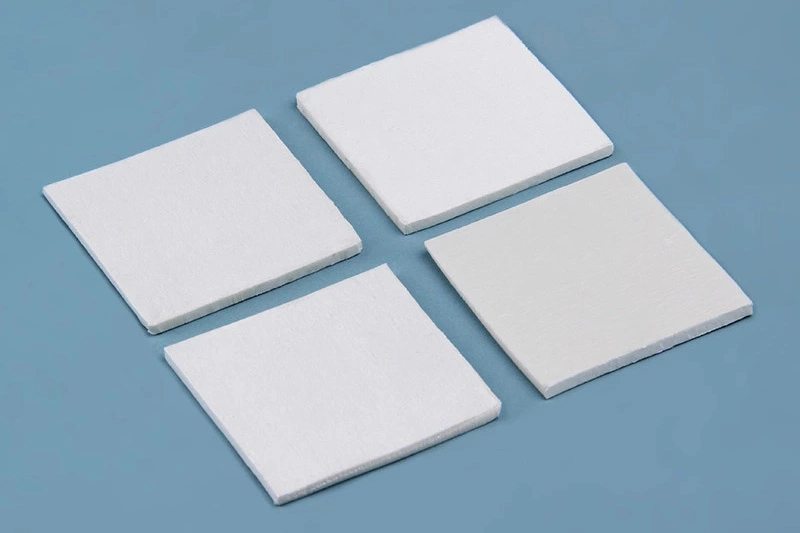
2.1 Boron Nitride
· Raises Thermal conductivity without hurting Dielectric strength
2.2 Ceramic Fillers
· Boost Durability and structural stability
· Support flame resistance targets
| Material System | Thermal Conductivity (W/m·K) | Dielectric Strength (kV/mm) | Density (g/cm³) |
| Silicone + BN | 3.0–5.0 | 8–12 | 2.2–2.8 |
| Silicone + Al₂O₃ | 2.0–3.5 | 10–15 | 2.5–3.0 |
| Hybrid Ceramic | 4.0–6.0 | 7–11 | 2.8–3.2 |
| Low-Density Blend | 1.5–2.5 | 9–13 | 1.8–2.3 |
An Energy storage battery pack insulating thermal management pad built on these systems also works as a battery pack thermal insulation pad, keeping heat in check while staying electrically safe. Sheen Technology tunes filler ratios so storage integrators get steady compression and reliable insulation at scale.
How Manufacturing Processes Impact Pad Scalability
Production scale can make or break a grid project. An energy storage battery pack insulating thermal management pad must roll out in thousands of square meters, not just lab samples.
· Casting supports large-format sheets with solid Material uniformity.
· Extrusion improves Throughput and steady thickness control.
· Automated molding boosts Production efficiency and reduces scrap.
In real factories, the flow often looks like this:
1) Raw material mixing under strict Quality control.
2) Continuous forming with monitored pressure and temperature.
3) Controlled curing to lock in Cost-effectiveness and performance.
Automation is not a buzzword here; it directly impacts Automation levels, lead time, and batch consistency. Sheen Technology aligns equipment layout and inspection checkpoints so each Energy storage battery pack insulating thermal management pad meets dimensional tolerance, helping EPC contractors avoid on-site trimming headaches.
Ensuring Long-Term Reliability for Grid-Scale Energy Storage Systems
Reliability in open-field battery farms comes down to layered protection.
Environmental Endurance
· Temperature cycling resistance from -40°C to 90°C
· Strong Moisture resistance against condensation inside battery enclosures
· Proven UV stability for partially exposed modules
Mechanical Integrity
· High Mechanical stress tolerance under module clamping force
· Controlled Degradation rate across 10+ years
Lifecycle Assurance
· Target Service life aligned with 15–20 year storage projects
· Stable adhesive backing to prevent shift or pump-out
An Energy storage battery pack insulating thermal management pad that passes IEC and ASTM testing becomes more than a material; it turns into insurance for asset owners. Sheen Technology supports validation plans and logistics planning, so every battery pack insulating pad arrives ready for long-haul grid duty.
FAQs about Energy Storage Battery Pack Insulating Thermal Management Pad
What material properties matter most in an Energy storage battery pack insulating thermal management pad?
Performance stands on a tight balance between heat flow and electrical safety. Key properties include:
· Thermal conductivity (ASTM D5470 / ISO 8301): controls how fast heat escapes the cells.
· Dielectric strength (IEC 60243): guards against internal short circuits.
· Operating temperature range: ensures stability from cold starts to peak charging.
· Flammability rating (UL 94): limits fire spread under fault conditions.
· Compressibility & density: maintain battery cell spacing while absorbing stress.
When these values align, long-term reliability follows.
How do material composition choices affect thermal and electrical performance?
Material design shapes the pad’s behavior under pressure and heat:
· Silicone elastomer – keeps flexibility across wide temperatures.
· Boron nitride / ceramic filler – boosts thermal conductivity without sacrificing electrical isolation.
· Graphite particles – enhance heat spreading in dense modules.
· Fiberglass reinforcement within a polymer matrix – improves mechanical strength.
The right blend protects against thermal runaway while keeping insulation intact.
Why is pad thickness critical in battery pack design?
Pad thickness directly influences:
· Heat transfer distance
· Battery cell spacing
· Energy density inside the pack
Too thin risks poor vibration damping and uneven surface finish. Too thick raises thermal resistance and reduces compactness.
Engineers balance pad dimensions, density, and compressibility to meet both cooling and structural demands.
Which manufacturing processes impact pad quality and consistency?
Quality is shaped long before installation.
· Casting & molding: control pad thickness and surface finish.
· Extrusion: ensures uniform structure for large sheets.
· Curing: stabilizes dielectric strength and operating temperature range.
· Lamination: integrates adhesive backing and layered insulation.
Stable processing reduces variation between batches—critical for high-volume energy storage systems.
What should buyers verify before sourcing for large-scale projects?
Beyond performance specs, supply reliability matters.
| Category | Key Checkpoints |
| Testing Standards | UL 94, IEC 60243, ASTM D5470, ISO 8301, RoHS compliance |
| Supply Chain | Supplier qualification, material availability, lead time stability |
| Commercial Terms | Minimum order quantity, logistics planning |
| Product Specs | Pad dimensions, color, adhesive backing consistency |
Clear validation today prevents costly downtime tomorrow.
Sheen Thermal
Dongguan Sheen Electronic Technology Co., Ltd · Founded in 2008
Manufacturer of thermal interface materials and silicone foam for automotive electronics, energy storage, power electronics, communications and consumer electronics.
Certified
- ISO 9001:2015
- ISO 14001:2015
- IATF 16949:2016
What we supply
- Thermal conductivity Up to 90 W/m·K
- Thickness 0.3–10.0 mm
- Custom & samples Die-cut to drawing, 3–7 days