
 English
 usheenthermal

The Future of Cooling: Unlocking Graphene Thermal Conductivity
Date:2026-04-23
The Future of Cooling: Unlocking Graphene Thermal Conductivity
Graphene thermal conductivity isn’t just a lab flex—it’s the ace up the sleeve for overheating tech that’s about to tap out. Chips are shrinking, power loads are climbing, and your devices are sweating like a soda can in July. Copper’s doing its best, but it’s playing checkers in a chess match. Graphene moves heat like a fast lane on an empty highway—quick, clean, and straight to the exit.
The International Energy Agency reported in 2023 that data centers account for about 1–1.3% of global electricity demand—and cooling eats a hefty slice of that pie.
That’s the pain point. Energy bills creep up. Performance dips. Lifespans shrink. Graphene steps in like the cool-headed friend who opens every window and fixes the fan before dinner burns.
Essence Echoes: Graphene Thermal Conductivity Guide
· Single-layer graphene excels with intrinsic conductivity >2000 W/mK, driven by minimal phonon scattering for rapid heat spread.
· Interfaces matter: Surface roughness and adhesion to substrates like copper foil dictate interfacial thermal resistance and overall heat flux.
· Multilayer stacks boost in-plane conduction but rely on van der Waals coupling; layer count and stacking order tune cross-plane pathways.
· Scalable methods (roll-to-roll, liquid-phase exfoliation) paired with strict quality control (Raman, XRD) ensure uniform, high-performance graphene TIMs.
Layered Analysis: Graphene Thermal Conductivity Mechanisms
Understanding graphene thermal conductivity is not just lab talk; it shapes how phones stay cool and chips survive heavy workloads. When we break down graphene, thermal, and conductivity into real mechanisms, things start to click. From atomic motion to interface heat flow, each layer plays its part.
Phonon Scattering in Single-Layer Graphene
At the core of graphene thermal conductivity lies phonon motion—tiny packets of lattice vibrations carrying heat across single-layer graphene.
Key scattering origins
· Structural factors:Defects interrupt smooth thermal transport
· Chemical disruptions:Impurities introduce extra scattering centers
· Environmental coupling:Substrate contact alters phonon lifetime
When heat travels through graphene, phonon scattering defines the pace. Fewer defects mean longer phonon paths. Cleaner lattices mean stronger graphene heat conduction.
Measurement often follows a nested path:
Material preparation
· High-purity growth
· Controlled transfer
Characterization
· Raman shifts tracking lattice vibrations
· Optical methods probing phonon decay
Interpretation
· Extract phonon mean free path
· Correlate with graphene thermal conductivity
At Sheen Technology, careful lattice control keeps thermal transport sharp and stable.
Interfacial Thermal Resistance of Graphene Films
Heat does not stop at graphene; it crosses an interface. That crossing introduces interfacial thermal resistance, often called Kapitza resistance.
Influencing factors:
· Surface roughness of the substrate
· Adhesion quality
· Residual contamination
When graphene films sit on silicon dioxide or copper, heat transfer depends on thermal boundary conductance. Even with strong graphene thermal properties, poor interface bonding slows energy flow.
A 2025 IEA Energy Efficiency update noted:
“Advanced materials with high thermal boundary conductance are increasingly central to next-generation electronics cooling strategies.”
That aligns with industry focus on lowering interfacial thermal resistance to maximize effective graphene heat conductivity.
Sheen Technology optimizes surface treatment before film transfer, improving contact and cutting unwanted resistance.
Heat Flux Pathways in Multilayer Graphene
With multilayer graphene, heat flux splits into two main routes:
In-plane thermal conduction
· Strong phonon transport within each sheet
· Minimal scattering along bonded carbon networks
Cross-plane transport
· Governed by interlayer coupling
· Limited by van der Waals bonding between layers
Stacking order matters.
Aligned stacking
· Better phonon continuity
· Lower in-plane resistance
Twisted stacking
· Modified phonon dispersion
· Altered cross-plane heat flow
The result? In-plane graphene thermal conductivity remains impressive, while vertical transport depends heavily on stacking geometry. Thermal conduction across layers is steady but restrained by weak coupling.
Thermal Diffusivity in Graphene Composites
In real devices, graphene rarely works alone. It blends into a matrix material as a filler, forming graphene composites.
Performance unfolds in levels:
Material design
· Uniform filler dispersion
· Low defect density
Interface engineering
· Strong bonding between graphene and matrix
· Reduced interfacial gaps
Property outcome
· Higher thermal diffusivity
· Balanced thermal conductivity, specific heat, and density
Effective graphene thermal conductivity in composites depends on network formation.
· Disperse graphene evenly
· Align conductive pathways
· Strengthen filler–matrix interaction
· Validate thermal diffusivity
When done right, heat spreads fast and evenly. That’s why Sheen Technology focuses on dispersion control and bonding chemistry, ensuring graphene thermal performance translates from lab samples to real electronic cooling systems.
Comparative: Traditional TIMs Vs Graphene-Enhanced TIMs
Heat is the silent performance killer inside modern devices. From gaming rigs to data servers, managing temperature is no small deal. This comparison breaks down how classic materials stack up against graphene solutions, especially in terms of graphene thermal conductivity, overall heat flow, and long-term thermal performance.
Traditional Thermal Interface Materials
Conventional solutions like thermal paste, thermal grease, and thermal pads still dominate many assembly lines. Their structure usually follows a clear material logic:
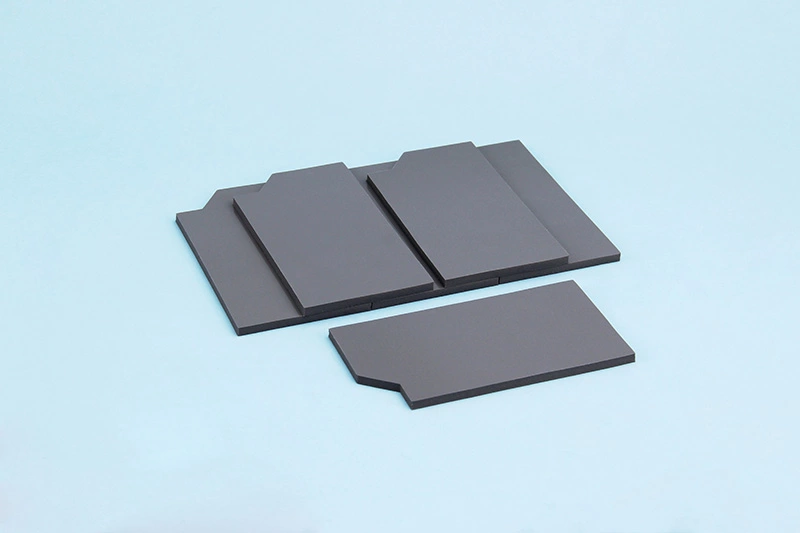
Polymer-Based TIMs
· Matrix: silicone or epoxy systems
· Fillers: aluminum oxide or other ceramic particles
· Performance focus: basic heat transfer with manageable interface resistance
Metallic TIMs
· Composition: indium or solder-based alloys
· Strength: improved bulk conductivity
· Limitation: mechanical stress during thermal cycling
Under working conditions:
· Heat leaves the chip surface.
· It crosses the bonding layer.
· It passes through filler-loaded polymer.
· It reaches the heat sink.
Each stage adds thermal resistance. That stack-up effect restricts effective thermal conductivity, especially when compared with graphene thermal conductivity levels seen in advanced materials.
Key constraints often include:
· Limited long-term stability
· Pump-out under thermal cycling
· Moderate thermal management capacity
Despite these limits, brands like Sheen Technology continue refining polymer-based TIMs to reduce interface resistance and improve consistency in real-world assembly lines.
Graphene-Enhanced Thermal Interface Materials
Now the game shifts. By embedding graphene, graphene composites, or reduced graphene oxide into the matrix, engineers create conductive networks that seriously boost graphene thermal conductivity pathways.
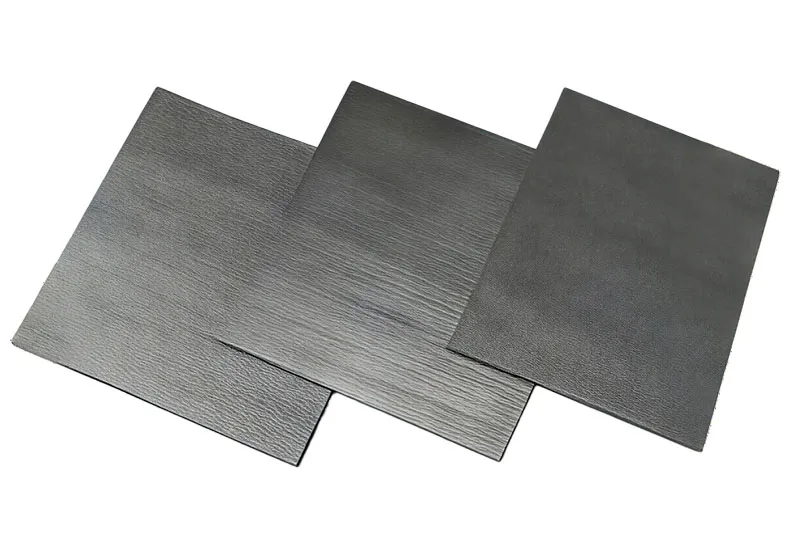
Sheen technology graphene thermal pad properties:
| Properties | Unit | Graphene Thermal Pad | Test Method |
| Color | - | Black | Visual |
| Thermal Conductivity | W/m·K | ≥75 | ASTM E1461 |
| Thermal Resistance (@40psi) | ℃*in2/W | ≤0.016 | ASTM D5470 |
| Thickness | mm | 0.27~0.33 | ASTM D374 |
| Density | g/cm³ | 0.6~0.9 | ASTM D792 |
| Compression Rebound Rate | % | ≥60 | ASTM D575 |
| Tensile Strength | Mpa | ≥0.03 | ASTM D412 |
| Oil Bleeding Rate | % | ≤3 | / |
| Application Temperature | ℃ | -40~150 | / |
| RoHS | - | PASS | IEC 62321 |
| Halogen | - | PASS | EN 14582 |
| REACH | - | PASS | EN 14372 |
Here’s how it plays out:
• Nanotechnology enables thin, percolated heat channels
• Advanced materials design lowers contact resistance
• Improved heat dissipation supports dense microprocessors
The magic sits inside the structure. Graphene sheets overlap, forming lateral and vertical paths that raise effective thermal conductivity far beyond standard ceramic-filled systems. That’s where graphene thermal conductivity becomes a performance driver, not just a lab metric.
Performance gains usually show up in:
· Lower junction temperatures
· Faster heat spreading
· Higher sustained clock speeds
Short and simple: better pathways, better cooling.
In practical deployment, Sheen Technology integrates graphene composites into tailored formulations, balancing viscosity, bonding strength, and thermal performance. The result isn’t hype. It’s measurable improvement in thermal management where thermal performance and durability actually matter.
When comparing side by side, traditional systems move heat adequately. Graphene-based systems move it smarter—thanks to the physics behind graphene thermal conductivity, optimized thermal conductivity design, and engineered graphene heat transfer networks.
Bulleted: 4 Graphene Attributes That Optimize Cooling
When heat builds up, performance drops fast. That’s why graphene thermal conductivity keeps popping up in power electronics and LED design talks. Break the phrase down—graphene, thermal, conductivity—and you get the full story: a carbon material moving heat with serious efficiency. Here’s how four attributes make cooling systems smarter and tougher.
Exceptional Thermal Conductivity of Graphene Sheets
At the core of graphene thermal conductivity is how efficiently phonons travel across atom-thin sheets. Heat doesn’t stall; it flows.
Material foundation
Single-layer graphene structure
· Dense carbon lattice
· Minimal atomic disruption
High intrinsic thermal conductivity
· Supports rapid heat transfer
· Boosts cooling efficiency
Heat dissipation pathway
· Source: chips, LEDs, ICs
· Conduction medium: graphene layers
· Result: faster dissipation, lower junction temperature
Performance impact
· Stable output under load
· Longer device lifespan
· Reduced hotspot formation
When engineers talk about graphene heat conduction, this is what they mean—direct, fast, and reliable thermal flow. Sheen Technology applies this principle in advanced thermal films designed for tight electronic layouts.
Low Defect Density in Graphene Nanoplatelets
Not all graphene is created equal. The real magic in graphene thermal conductivity shows up when defect density stays low.
· Fewer lattice breaks in graphene nanoplatelets
· Reduced phonon scattering inside the crystal lattice
· Higher retained thermal conductivity
Short version? Clean structure equals better cooling.
· High purity during synthesis
· Strong structural integrity
· Verified quality control standards
When defects creep in, heat slows down. Keep the lattice clean, and graphene thermal performance stays sharp. That’s why manufacturers working with Sheen Technology prioritize tight material screening before integration.
High Thermal Stability of Reduced Graphene Oxide
Cooling materials can’t just move heat; they must survive it. Reduced graphene oxide (rGO) stands out for long-term thermal stability.
High temperature endurance
· Maintains structure under sustained load
· Limits material degradation
Oxidation resistance
· Lower risk of breakdown
· Extended operational lifespan
Resilience in electronics
· Suitable for power modules
· Reliable in dense semiconductor packaging
In systems where heat cycles repeat daily, stable graphene thermal conductivity matters. rGO keeps its shape, keeps its properties, and keeps devices running without drama.
Superior Interfacial Adhesion on Metal Substrates
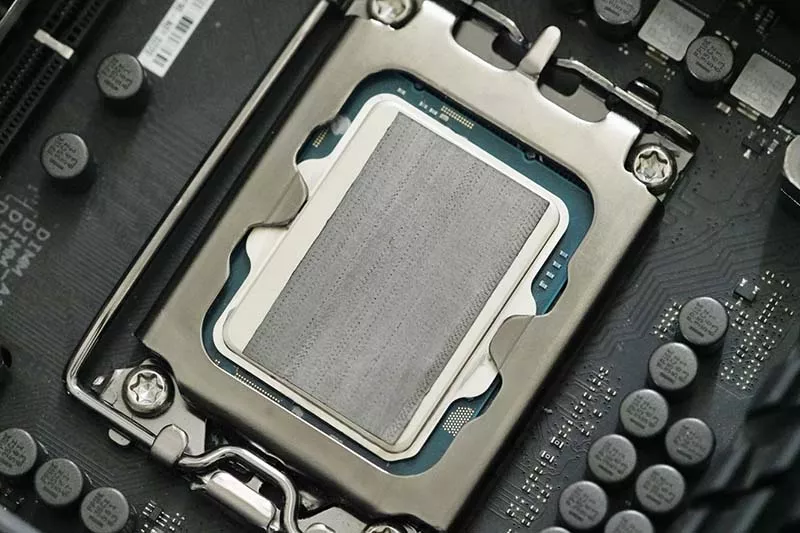
Even with strong graphene thermal conductivity, weak contact can bottleneck heat flow. That’s where interfacial adhesion steps in.
· Tight surface contact with copper or nickel
· Increased bonding strength across the interface
· Lower thermal boundary resistance
Here’s how it plays out:
• Graphene layer
• Metal substrates
• Optimized composite integration
Better adhesion means smoother heat transfer from chip to heat sink. No gaps, no wasted thermal path. In practical builds, Sheen Technology enhances this bonding within graphene-based composite solutions, helping manufacturers squeeze more cooling power from compact assemblies.
When graphene thermal conductivity, structural purity, high-temperature endurance, and strong metal integration work together, cooling stops being a bottleneck. It becomes a competitive edge.
Question-Based: Is Graphene Thermal Conductivity Scalable Industrially?
Graphene thermal conductivity gets a lot of hype, but scaling it up is where things get real. From lab samples to factory floors, the jump involves process control, cost, and consistency.
What Role Does Roll-to-Roll Manufacturing Play?
Graphene thermal conductivity depends heavily on structural continuity. That’s where Roll-to-roll processing and Continuous manufacturing step in.
Large-scale production
· Uniform coating of graphene films across meters of Flexible substrates
· Stable control of graphene layer thickness for consistent graphene thermal performance
High throughput
· Faster deposition cycles
· Reduced idle time between coating and curing
Cost reduction
· Lower per-unit energy use
· Streamlined Industrial application integration
Within this setup:
Substrate handling
· Tension control
· Alignment precision
Film formation
· Chemical vapor deposition transfer
· Ink-based coating of graphene sheets
Post-treatment
· Thermal annealing
· Surface defect minimization
When done right, graphene heat conduction stays high across wide areas, keeping graphene thermal conductivity close to lab benchmarks.
Can Liquid-Phase Exfoliation Meet Mass Production Needs?
Liquid-phase exfoliation focuses on bulk output. It breaks graphite into Graphene dispersion, feeding scalable supply chains.
Production logic:
· Raw graphite selection
· Shear or ultrasonic Exfoliation methods
· Centrifugal separation for layer grading
Under the hood:
Scalability potential
· Reactor volume expansion
· Parallel processing lines
Production capacity
· Kilogram-scale batches
Material yield
· Trade-off between flake size and defect density
Cost efficiency
· Solvent recycling
· Energy optimization
The catch? Controlling layer count is tough. Variations directly affect graphene thermal conductivity, graphene heat transfer, and overall thermal conductivity of graphene films in composites.
How Does Quality Control Impact Yield and Uniformity?
No shortcuts here. Quality assurance defines commercial success.
Core control stack:
Structural analysis
· Raman mapping for defect density
· XRD for interlayer spacing
Property verification
· Direct thermal conductivity measurement
· Electrical resistivity cross-check
Process stability
· In-line Process control sensors
· Batch traceability logs
Performance chain:
· Material uniformity → stable graphene thermal conductivity
· Defect management → reduced phonon scattering
· Production yield → fewer rejected rolls
· Performance consistency → predictable graphene thermal behavior
Even small shifts in flake alignment can drop graphene thermal conductivity fast. Tight Characterization techniques keep thermal conductivity graphene products steady, protecting both yield and real-world device reliability.
FAQs about Graphene Thermal Conductivity
How does graphene thermal conductivity improve heat dissipation in electronic devices?
Graphene thermal conductivity directly shapes how electronic devices survive intense heat loads. In microprocessors, power electronics, LEDs, and transistors, heat builds fast and failure follows close behind.
A practical cooling path often looks like this:
Graphene films or graphene nanoplatelets → lower thermal resistance → faster heat flux into copper foil, silicon carbide, or dedicated heat sinks.
In production environments:
· Graphene sheets act as thermal interface material layers between chips and metal substrates.
· High thermal diffusivity spreads hot spots across integrated circuits.
· Reduced graphene oxide in graphene composites supports flexible electronics and wearable electronics where thinness matters.
Engineers value stable thermal management because fewer thermal cycles mean longer semiconductor life and steadier performance.
What factors control phonon scattering in single-layer and multilayer graphene?
Phonon scattering defines how much of graphene’s theoretical thermal conductivity is preserved in practice.
Key structural drivers include:
· Defect density and grain boundaries in single-layer graphene
· Layer count in multilayer graphene
· Substrate coupling with silicon dioxide or sapphire
Grouped impact structure:
1) Material quality
· High purity and uniformity extend phonon lifetimes.
· Lower sheet resistance often signals better crystal order.
2) Interface effects
· Strong bonding to dielectric substrates increases interfacial thermal resistance.
· Metal substrates like nickel foil can improve heat dissipation if contact is tight.
Careful process optimization during chemical vapor deposition or liquid-phase exfoliation keeps scattering under control and preserves real heat transport capability.
Why is interfacial thermal resistance critical for graphene films on substrates?
Even when graphene thermal conductivity exceeds 2000 W/mK, the interface can become the bottleneck.
Heat path under real conditions:
Graphene → interface layer → copper foil or silicon carbide → heat sinks.
If interfacial thermal resistance is high:
· Thermal management weakens
· Local temperatures rise in semiconductors and optoelectronics
· Long-term thermal stability drops
Transient thermoreflectance and Raman spectroscopy are often used to quantify interface heat flow. For manufacturers, small gains at this boundary can decide yield and reliability across mass production lines.
How can manufacturers scale graphene-enhanced thermal interface materials?
Scaling graphene thermal conductivity solutions requires coordination between synthesis, coating, and quality control.
Common industrial route:
· Liquid-phase exfoliation for graphene flakes or graphene nanoplatelets.
· Roll-to-roll manufacturing or spray coating onto polymer substrates or flexible substrates.
· Quality control using X-ray Diffraction, Atomic Force Microscopy, and thermal conductivity measurement.
Performance balance in scalable production:
| Material Form | Strength in TIMs | Main Control Factor |
| Graphene thermal pad | High in-plane heat dissipation | Uniformity |
| Reduced graphene oxide | Good dispersion in composites | Purity |
| Graphene nanoplatelets | Cost-effective bulk enhancement | Layer count |
When reproducibility and yield remain stable, graphene composites move from lab trials into steady supply for integrated circuits and power electronics.
Sheen Thermal
Dongguan Sheen Electronic Technology Co., Ltd · Founded in 2008
Manufacturer of thermal interface materials and silicone foam for automotive electronics, energy storage, power electronics, communications and consumer electronics.
Certified
- ISO 9001:2015
- ISO 14001:2015
- IATF 16949:2016
What we supply
- Thermal conductivity Up to 90 W/m·K
- Thickness 0.3–10.0 mm
- Custom & samples Die-cut to drawing, 3–7 days