
 English
 usheenthermal

Stop Silicone Contamination: High Compressibility Non-Silicone Thermal Pad
Date:2026-07-29
Silicone migration in thermal interface materials has become a recognized failure mechanism in sealed electronic assemblies — contaminating optical surfaces, increasing contact resistance on connectors, and compromising wire-bond integrity. The engineering response is a shift toward high- compressibility non- silicone thermal pads: TIMs that deliver the conformability engineers expect from silicone without the long-term contamination risk.
Sheen Technology manufactures a portfolio of non- silicone thermal pad formulations to meet diverse application requirements across automotive electronics, AI data center infrastructure, optical modules, and industrial power systems. This article examines the material classifications, compares silicone vs. non- silicone performance, and provides an engineering framework for TIM selection in contamination -sensitive environments.
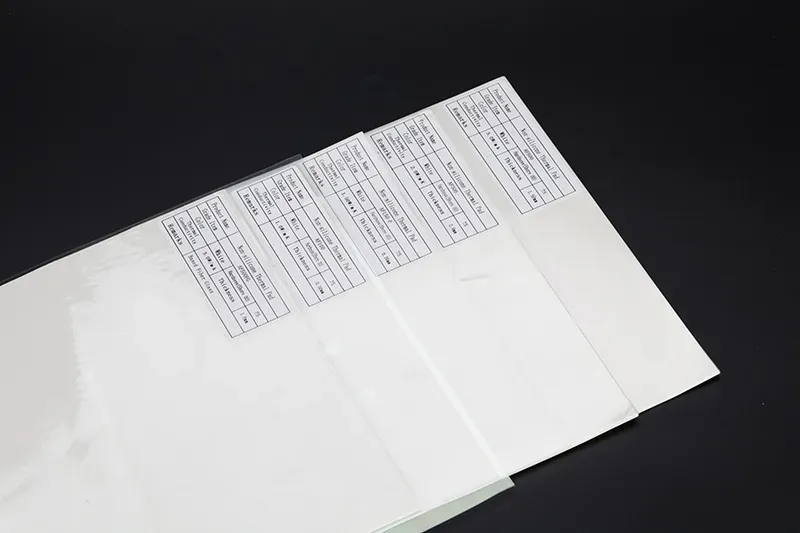
Reading Notes: Symphony of High Compressibility Non- Silicone Thermal Pad
➔ Material Excellence: Leverages boron nitride, aluminum oxide, graphite or polyurethane matrices for superior conductivity, low outgassing, and contamination -free performance.
➔ Gap-Filling Conformability: High compressibility adapts to uneven interfaces, minimizes thermal impedance, and ensures consistent contact under varied tolerances.
➔ Reliability & Compliance: RoHS -compliant, flame-retardant, UL-certified formulations maintain stability through thermal cycling for automotive, data center, and consumer electronics.
➔ Integration Ease: Available as die-cut pads, rolls, or custom geometries with adhesive or non-adhesive options, simplifying assembly and reducing risk of silicone bleed contamination.
Classifications Of Non- Silicone Thermal Pads
Picking the right high compressibility non- silicone thermal pad isn’t just spec-chasing—it’s about fit, feel, and heat flow in real gear. From dense servers to bumpy battery packs, each material type behaves a bit differently under pressure, temperature, and time.
Polymer Matrix Filled with Boron Nitride
Core traits:
- Polymer base blended with boron nitride
- Strong dielectric isolation
- Reliable heat transfer under compression
This type of thermal interface material keeps things stable when loads fluctuate. A high- compressibility non- silicone thermal pad built on this system adapts well to tight assemblies while staying electrically safe.
- Heat enters the matrix
- Moves across filler pathways
- Exits efficiently into the heatsink
Nested performance view:
Thermal path
- In-plane moderation
- Through-plane conduction
Mechanical response
- Soft compression
- Shape recovery
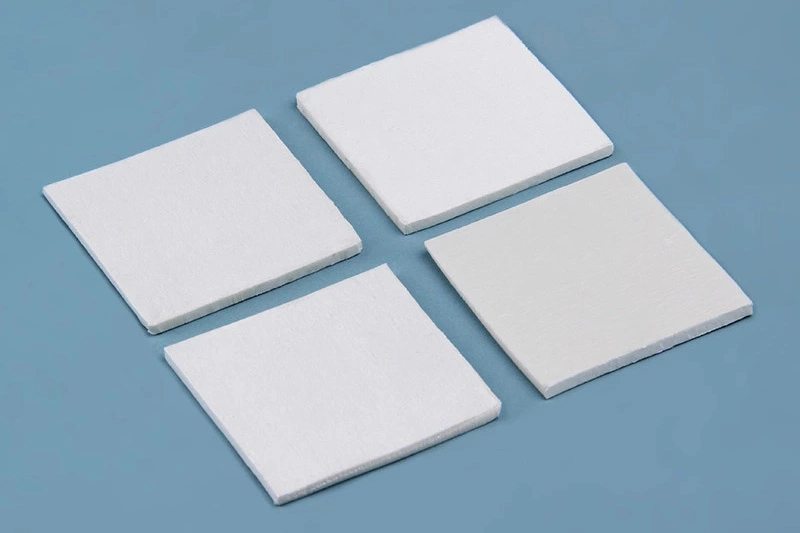
BN filler loading in non- silicone matrices typically ranges 30–70 wt%, with through-plane conductivity scaling nonlinearly with filler volume fraction. Sheen Technology optimizes the particle size distribution (PSD) and arrangement to maximize the through-plane thermal conductivity of boron nitride thermal pads without compromising mechanical compliance.
Aluminum Oxide –Reinforced Non- Silicone Elastomer
Short breakdowns keep it real:
- Aluminum oxide boosts durability
- Elastomer adds flexibility
- Strong dielectric strength
A high- compressibility non- silicone thermal pad here leans toward rugged environments. Think vibration, thermal cycling, and uneven mounting pressure.
Multi-layer logic
- Reinforcement layer:Particle dispersion,Crack resistance
- Elastomer base:Flex under load,Return after stress
Also works as a non- silicone thermal pad option when contamination risk rules out silicone entirely.
Graphite and Acrylic Resin Hybrid Sheets
→ Ultra-thin
→ High thermal conductivity
This is less about squish and more about speed. Still, a tuned high- compressibility non- silicone thermal pad variant can be paired with graphite layers for hybrid stacks.
Flow pattern:
- Heat spreads across graphite sheet
- Stabilized by acrylic resin
- Redirected to cooling zones
Application tiers
- Mobile devices
- Telecom boards
- Slim enclosures
Polyurethane -Based Gap Filler Material
Multiple quick hits: soft, adaptive, forgiving.
A polyurethane gap filler shines when surfaces aren’t perfect. A high- compressibility non- silicone thermal pad in this family handles wide tolerances without losing contact.
Nested behavior
- Compression stage:Fill voids,Reduce air gaps
- Operational stage:Maintain heat dissipation,Absorb vibration
Sheen Technology pushes this category toward battery systems where swelling, movement, and safety all collide.
Silicone vs. Non- Silicone Thermal Pad s — An Engineering Comparison
Picking between silicone and non- silicone options can feel like splitting hairs, but it really shapes heat flow, cleanliness, and long-term reliability. From flexible installs to ultra-clean environments, each material behaves differently under pressure, heat, and time.
Silicone Thermal Pads: Strengths and Known Limitations

Silicone -based pads are kind of the “easygoing” option—flexible, forgiving, and widely used. Still, there are trade-offs that show up once systems age or operate in sensitive environments.
Core behavior:
- Strong thermal performance across wide temperatures
- Reliable electrical insulation even under compression
- Noticeable migration and oil bleed over time
Practical observations:
- Under heat cycling, silicone structures may soften slightly
- This can lead to contamination on nearby optics or contacts
- Extended use increases outgassing, especially in sealed designs
Short notes worth keeping in mind:
- Easy die-cutting and fast assembly
- Cost-effective for general electronics
- Risk of material degradation in high-cleanliness setups
A lot of consumer electronics still rely on silicone because it just works without fuss. But once you move into optics or automotive sensing, those small contamination risks stop being “small.”
Non- Silicone Thermal Pads: Contamination -Free Performance

Non- silicone materials step in where cleanliness and stability matter more than convenience. This is where options like a high- compressibility non- silicone thermal pad really stand out—less mess, tighter control, better long-term consistency.
Material advantages:
- contamination -free operation with minimal residue
- Low outgassing, ideal for sealed modules
- Stable thermal conductivity under pressure
Performance layering
- Base materials: Polyurethane blends,Acrylic elastomer s
- Functional gains:Improved heat dissipation, Higher reliability in harsh cycles
Application fit
- Automotive sensors
- Optical modules
- Cleanroom electronics
Keyword-driven positioning:
- high compressibility non- silicone thermal pad → adapts to uneven gaps
- non silicone thermal pad → avoids silicone -related migration
- compressible non silicone pad → balances pressure and interface contact
Here’s a quick comparison snapshot:
| Property | Silicone Pad | High- Compressibility Non- Silicone | Test Method |
| Outgassing (% TML) | 0.1–0.5% | <0.05% | ASTM E595 |
| Siloxane Contamination Risk | Present | Near-Zero | GC-MS Analysis |
| Compressibility (% at 50 psi) | 20–40% | 30–50% | ASTM D575 |
| Thermal Conductivity (W/m·K) | 1–15 | 1–10 | ASTM D5470 |
| Compression Set (% at 70°C) | 15–30% | <10% | ASTM D395 |
| Volume Resistivity (Ω·cm) | 10¹²–10¹⁴ | 10¹²–10¹⁴ | ASTM D257 |
| Long-Term Stability (1000 cycles) | Moderate | Very High | IEC 60068-2-14 |
Note: Ranges represent typical industrial-grade products. Sheen Technology provides product-specific datasheets with guaranteed performance values.
Selection Rule of Thumb: If your assembly contains exposed optical surfaces, unsealed connectors, or wire-bonded components within 50 mm of the TIM, specify a non- silicone formulation. The incremental material cost is typically offset by reduced field failure rates and eliminated cleaning/rework steps. Sheen Technology application engineers can provide a contamination -risk assessment for your specific assembly layout.
[Download the Silicone vs Non- Silicone TIM Whitepaper]
Top 3 Features Of High- Compressibility Pads
A high compressibility non- silicone thermal pad isn’t just a filler —it quietly fixes contact issues, cools hotspots, and survives stress. Below, we break down how a high- compressibility thermal pad keeps performance steady without the usual headaches.
Superior Conformability and Compressibility
Core behavior
conformability adapts to uneven stacks
- fills micro gaps caused by surface irregularities
- maintains tight interface contact under low pressure
compressibility absorbs tolerance stack-ups
- reduces air pockets through effective gap filling
- supports delicate assemblies with non- silicone formulations
Real-world impact
- A high- compressibility non- silicone thermal pad settles into tight spaces fast
- It keeps consistent pressure across chips, housings, and shields Sheen Technology tunes density so the pad deforms just enough, not too much, keeping alignment clean while improving contact.
Optimized Heat Transfer Efficiency
A high- compressibility non- silicone thermal pad works like a quiet heat bridge. It blends strong thermal conductivity with low thermal resistance, letting heat move away before junction temperature climbs too high.
- You get smoother heat transfer across uneven surfaces
- Better heat dissipation without cranking mounting force
- Stable performance in compact, high-power layouts
Short bursts or sustained loads—either way, efficiency holds. A non- silicone thermal pad also avoids oil bleed, keeping surrounding components cleaner over time. Sheen Technology pushes filler alignment so the path for heat stays direct, not scattered.
Proven Thermal Cycling Stability and Reliability
- Compression recovery
A high- compressibility pad rebounds after expansion and contraction, preserving stability.
- Repeated stress handling
During thermal cycling, materials resist cracking and material degradation, even under high temperature fluctuations.
- Long-term output
- Consistent reliability means predictable cooling over years, not months. A high compressibility non- silicone thermal pad keeps its shape and function, supporting long-term performance in demanding builds.
That’s why designers stick with a high- compressibility non- silicone thermal pad when uptime actually matters.
Sheen Technology AF300 Silicone-free thermal pad Reliability Test Report:
- Test Conditions
| Test Item | Test Conditions | Test Equipment |
| High-Temperature Aging | 100℃,360H | Precision Oven |
| Constant Temperature & Humidity | 85℃,85%RH,360H | Constant Temperature & Humidity Chamber |
| Thermal Shock | -20℃~100℃,360H | Thermal Shock Chamber |
- Acceptance Criteria
| Property | Initial Value | Acceptance Criteria |
| Thermal Conductivity(W/m·k) | 1.9098 | ±15% |
| Hardness(Shore 00) | 70 | ±10% |
| Pressure (20% compression) psi | 20 | ±60% |
| Volume resistivity(10¹³ Ω·cm) | 3.063 | ±5% |
High-Temperature Aging Test Results:
| Aging Time | H | 0 | 100 | 300 | 360 |
| Thermal Conductivity | W/(m·K) | 1.9088 | 1.9191 | 1.8917 | 1.9031 |
| Hardness | Shore 00 | 70 | 73 | 75 | 75 |
| Pressure (20% compression) | psi | 20 | 24.3 | 20.5 | 21 |
Constant Temperature and Humidity Test Results:
| Aging Time | H | 0 | 100 | 300 | 360 |
| Thermal Conductivity | W/(m·K) | 1.9088 | 1.8503 | 1.9135 | 1.8764 |
| Hardness | Shore 00 | 70 | 73 | 74 | 74 |
| Pressure (20% compression) | psi | 20 | 22 | 26 | 24 |
| Volume resistivity | 10¹³ Ω·cm | 3.063 | 3.338 | 2.356 | 3.475 |
Thermal Shock Test Results:
| Aging Time | H | 0 | 100 | 300 | 360 |
| Thermal Conductivity | W/(m·K) | 1.9088 | 1.9746 | 1.9325 | 1.9233 |
| Hardness | Shore 00 | 70 | 70 | 71 | 71 |
| Pressure (20% compression) | psi | 20 | 21 | 25 | 23 |
Comparison of appearance before and after aging:
| Before aging | High-temperature aging | Constant temperature & humidity | Thermal shock |
 |  |  |  |
Test Conclusion: Under the specified test conditions, AF300 performed satisfactorily after 360 hours of aging, with no changes in appearance. Based on the overall reliability test results: Pass.
Application-Specific Selection Guidance
Automotive Electronics (ADAS, ECU, LiDAR)
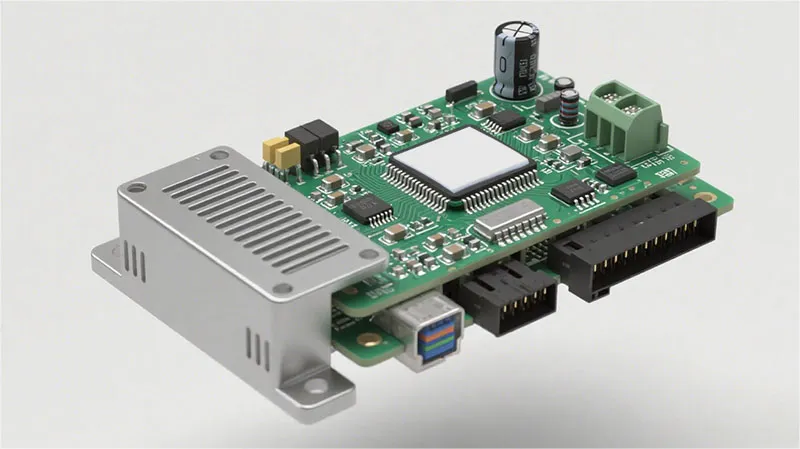
Non- silicone TIMs are increasingly mandatory in camera modules, LiDAR assemblies, and ADAS ECUs where even trace siloxane deposition on optical elements degrades signal integrity over the vehicle lifetime (10–15 years).
Key requirements: AEC-Q200 compliance, -40°C to +150°C operating range, <0.05% TML per ASTM E595.
Sheen Technology offers UL 94 V-0 rated non- silicone pads qualified to these profiles.
AI Data Center & HPC Infrastructure
High-density GPU/CPU assemblies benefit from high- compressibility non- silicone pads that accommodate lid flatness variation while avoiding silicone migration onto PCB edge connectors in adjacent slots. Through-plane conductivity of 6–12 W/m·K is achievable in production-grade materials.
Optical Transceivers & Photonics Modules
Plug-in optical modules (QSFP-DD, OSFP, CFP2) present extreme sensitivity to contamination. Non- silicone gap fillers with near-zero outgassing prevent optical path degradation in sealed transceiver housings. Dielectric strength >15 kV/mm provides additional margin for intra-module isolation.
Industrial Power & Energy Systems
IGBT modules, power inverters, and battery management systems benefit from non- silicone pads that withstand continuous operating temperatures of 125–150°C while maintaining compression set below 10%. Polyurethane -based formulations are particularly suited where cell swelling dynamics demand adaptive compliance.
For more application examples, please visit our application page to match your application needs.
As electronic assemblies become denser, more sensitive, and more valuable, the hidden cost of silicone contamination — in optical degradation, connector failures, and rework expenses — increasingly outweighs the upfront material savings of conventional silicone TIMs.
High-compressibility non-silicone thermal pads represent an engineered solution: they match or exceed the conformability of silicone while eliminating the root cause of siloxane contamination. For automotive, optical, data center, and industrial power applications where reliability defines brand reputation, the engineering case for non-silicone TIMs is clear and growing stronger.
Next Steps for Engineering Teams:
[CTA 1] Download the Non-Silicone Thermal Pad Product Datasheet — Full thermal, mechanical, and outgassing specifications
[CTA 2] Request Evaluation Samples & Schedule an Engineering Consultation — Discuss contamination risk assessment with a Sheen Technology specialist
Sheen Technology — Engineered Thermal Interface Materials for High-Reliability Electronics.
Sheen Thermal
Dongguan Sheen Electronic Technology Co., Ltd · Founded in 2008
Manufacturer of thermal interface materials and silicone foam for automotive electronics, energy storage, power electronics, communications and consumer electronics.
Certified
- ISO 9001:2015
- ISO 14001:2015
- IATF 16949:2016
What we supply
- Thermal conductivity Up to 90 W/m·K
- Thickness 0.3–10.0 mm
- Custom & samples Die-cut to drawing, 3–7 days