
 English
 usheenthermal

How to Choose the Right Insulating Thermal Sheet Thickness
Date:2026-03-30
How to Choose the Right Insulating Thermal Sheet Thickness
Choosing the right insulating thermal sheet thickness can feel like picking the perfect jacket for a cross-country road trip—too light, you freeze; too heavy, you overheat. In high-power electronics, that split-second miscalculation means scorched components, failed inspections, and warranty headaches nobody wants on their desk.
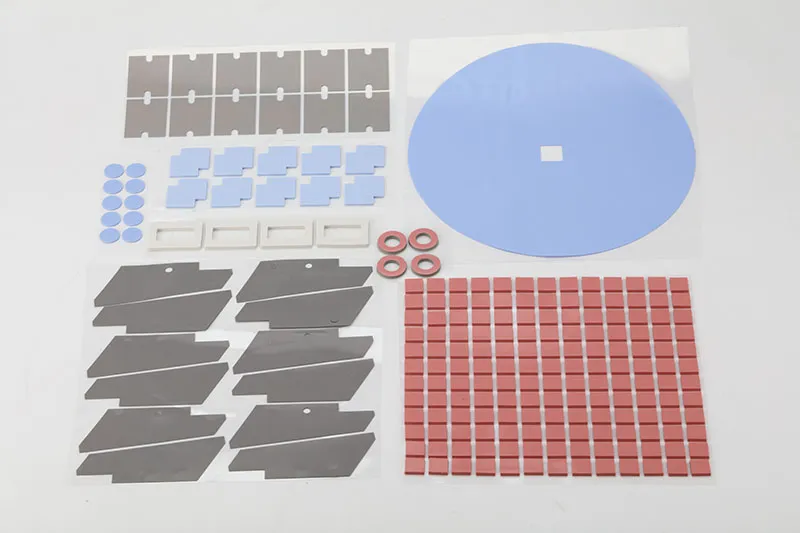
Get it right, though, and everything hums. Heat moves out, voltage stays in its lane, and production lines keep cruising. This guide cuts through the guesswork so you can spec with confidence—and sleep at night.
Swift Insights: Insulating Thermal Sheet Thickness Unveiled
➔ Balance heat and insulation: Choose thickness that dissipates heat efficiently while maintaining dielectric strength to prevent shorts.
➔ Factor in material & tolerances: Account for thermal conductivity, flammability rating, thickness uniformity, and slitting accuracy in spec sheets.
➔ Align with standards: Verify UL, RoHS, ISO, and traceability requirements to ensure safety and reliable production.
Why Insulating Thermal Sheet Thickness Matters
Getting insulating thermal sheet thickness right isn’t just a technical detail—it’s the line between smooth performance and burnt boards. From thermal management to safety compliance, thickness affects heat flow, voltage resistance, and fire behavior. Let’s break down why this small dimension carries serious weight.
Balancing Heat Dissipation and Electrical Insulation
When engineers talk about insulating thermal sheet thickness, the real concern is balance. Too thin, and electrical insulation suffers. Too thick, and heat dissipation slows down.
Core Performance Factors
Thermal management
· Controls component temperature under load
· Directly impacts device performance
Electrical insulation
· Prevents short circuits in compact PCB layouts
· Protects long-term reliability
Risk Control
· Overheating reduces safety margins
· Poor insulation weakens voltage separation
In high-density assemblies, insulating sheet thickness works like a referee—keeping heat moving while stopping stray current. That’s why experienced manufacturers such as Sheen Technology fine-tune insulating thermal sheet thickness based on real operating loads, not guesswork.
The Role of Thermal Conductivity and Dielectric Strength
Two material properties steer the game: thermal conductivity and dielectric strength.
· Thermal conductivity decides how efficiently heat transfer happens across the interface.
· Dielectric strength defines the safe voltage rating the material can endure without breakdown.
If insulating thermal sheet thickness increases, insulation integrity improves, but heat flow may slow unless conductivity is optimized. That’s where smart material selection meets actual application requirements.
Quick checkpoints:
· Match sheet thickness to operating voltage.
· Confirm conductivity aligns with power density.
· Test under realistic cycling conditions.
Gartner’s 2025 electronics thermal management outlook notes that higher power densities in compact devices are driving stricter validation of insulation materials for both heat and voltage endurance.
Thermal insulation sheet thickness isn’t random—it’s engineered around both physics and real-world stress.
Avoiding Flammability Risks with Adequate Thickness
Fire risk is no joke. The right insulating thermal sheet thickness directly supports flammability control and overall fire safety compliance.
Compliance Structure
Certification Layer
· Meet required UL rating
· Verify tested flame retardancy
Material Layer
· Stable material composition under heat aging
· Maintained structural integrity
Protection Outcomes
· Stronger regulatory compliance
· Better long-term risk mitigation
Adequate thickness helps resist ignition during overload or fault events. In practical builds, Sheen Technology evaluates insulating thermal sheet thickness against continuous high-temperature exposure, ensuring safety margins stay solid even when systems run hot for hours.
4 Key Factors in Sheet Thickness Selection
Choosing the right insulating thermal sheet thickness isn’t just a technical checkbox; it shapes safety, heat control, and product life. From thermal sheet thickness control to insulation sheet thickness stability, every detail counts. Get the insulating thermal sheet thickness wrong, and performance slips fast. Get it right, and everything runs smoother, cooler, longer.
Material Properties: Temperature Resistance vs Thermal Conductivity
When dialing in insulating thermal sheet thickness, material science sets the tone. The balance between thermal conductivity and temperature resistance often pulls in opposite directions.
Core Material Structure
Polymer base
· Impacts operating temperature range
· Determines baseline insulation performance
Filler systems
· Enhance heat dissipation
· Shift overall thermal conductivity
Thickness Adjustment Logic
· Higher conductivity materials:Require optimized thermal sheet thickness to avoid heat bottlenecks
· High resistance polymers:May need reduced insulating thermal sheet thickness for better heat flow
Performance Matching
· Align material composition with expected load
· Fine-tune insulating thermal sheet thickness for stable heat dissipation
In practice, insulating thermal sheet thickness becomes the bridge between conductivity and resistance, not a random number on a drawing.
Sheet Dimensions – Thickness Uniformity and Cut Tolerance
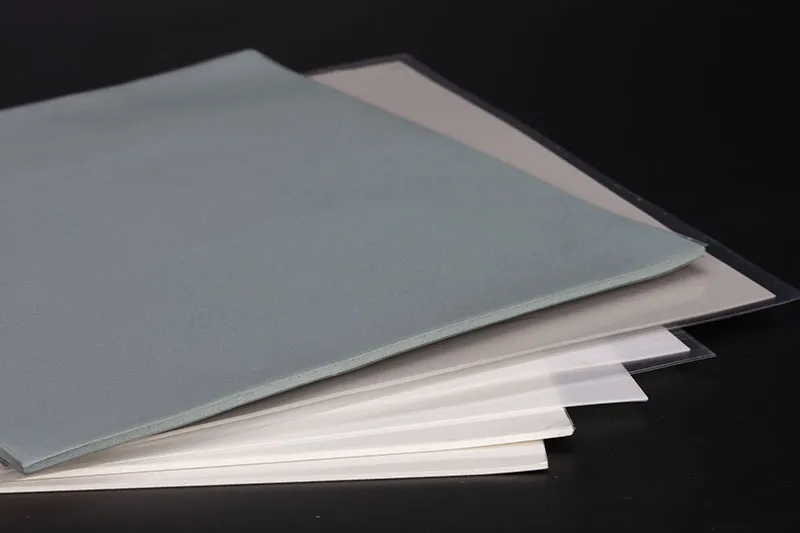
Consistency drives trust in insulating thermal sheet thickness.
Dimensional Control
· Thickness uniformity:Maintains predictable insulation sheet thickness across rolls
· Sheet dimensions:Affect lamination fit,Processing Compatibility
· Cut tolerance:Reduces mismatch during die cutting
· Manufacturing precision:Supports repeatable thermal sheet thickness
Surface Integrity
· Edge finish:Limits tearing
· Dimensional stability:Keeps insulating thermal sheet thickness steady under stress
A tight thickness range means fewer surprises on the production line.
Application Requirements: Vibration Damping and Component Spacing
Real-world use pushes insulating thermal sheet thickness beyond theory.
Mechanical Demands
· Vibration damping:Thicker profiles absorb shock
· Mechanical stress:Impacts long-term insulation sheet thickness reliability
Assembly Constraints
· Component spacing:Controlled by precise insulating thermal sheet thickness
· Pressure application:Affects heat transfer efficiency
Thermal interface material pairing
· Must match sheet thickness
· Balanced heat transfer efficiency
· Avoids hot spots
Get the spacing wrong, and the insulating thermal sheet thickness can’t compensate later.
Quality Standards Including UL Certification and RoHS Compliance
Compliance locks in credibility for insulating thermal sheet thickness.
Certification Alignment
· UL certification:Confirms fire safety at defined sheet thickness
· RoHS compliance:Validates restricted substance control
Regulatory Fit
· Environmental regulations:Guide raw material use
Industry standards
· Define acceptable insulation sheet thickness ranges
Assurance Systems
· Material safety documentation
· Product quality assurance tracking
Full traceability of insulating thermal sheet thickness batches
Manufacturers like Sheen Technology fine-tune insulating thermal sheet thickness under strict audit trails, blending compliance with performance. That’s how Sheen Technology keeps thermal sheet thickness dependable in real-world builds.
Scenario: Electronics Assembly Insulation Needs
In electronics assembly, small thickness shifts can make or break performance. Getting insulating thermal sheet thickness right is not just a spec on paper—it directly affects heat flow, spacing, and long-term reliability.

High-Power Modules Demanding Superior Heat Dissipation
High-power assemblies push serious power density, so insulating thermal sheet thickness must balance insulation with thermal conductivity.
Thermal Control Priorities
Heat Flow Path
· Match sheet thickness with heat sink flatness.
· Reduce air gaps that block heat dissipation.
Interface Stability
· Use reliable thermal interface material bonding.
· Maintain surface pressure consistency.
Thickness Decision Factors
· Expected heat flux (W/cm²)
· Target junction temperature
· Required temperature management margin
When insulating thermal sheet thickness increases slightly, insulation improves, yet excessive thickness can trap heat. That trade-off needs tight engineering control. Sheen Technology fine-tunes thermal sheet thickness to support high-output modules without cooking internal components.
PCB Stacks Requiring Consistent Dielectric Strength
Multilayer boards rely on stable dielectric strength and predictable layer behavior. Here, insulating thermal sheet thickness directly influences electrical insulation and signal integrity.
Electrical Reliability Framework
Core Requirements
· Prevent voltage breakdown under continuous load.
· Maintain uniform layer thickness.
Interlayer Protection
· Strengthen interlayer insulation.
· Control compression during lamination.
Even minor deviation in insulating sheet thickness may lead to uneven electric fields. Over time, that stress builds. Consistency keeps stacked PCBs safe and steady, especially in telecom and industrial control boards.
Compact Devices with Tight Component Spacing
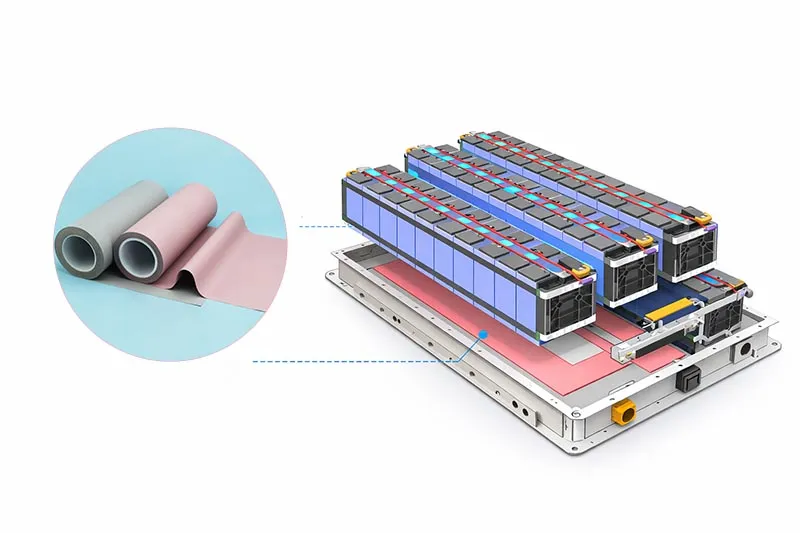
Miniaturized devices leave almost no breathing room. Component spacing is tight, and poor insulating thermal sheet thickness selection may trigger thermal runaway.
Miniaturization Goals
· Support gap filling without overflow.
· Fit thin profiles required by slim housings.
Surface Protection
· Pair with conformal coating for edge coverage.
· Reinforce local thermal management.
Short takeaway: thinner is not always better. The right insulating layer thickness protects circuits while keeping heat moving. Sheen Technology adjusts insulating thermal sheet thickness and overall insulating layer thickness to match real-world device constraints, not just lab numbers.
How To Calculate Optimal Sheet Thickness
Getting the right insulating thermal sheet thickness is not guesswork. It comes down to physics, factory reality, and paperwork discipline. When insulating, thermal, sheet, and thickness are treated as separate but connected factors, the final insulation thickness performs as expected—no overheating surprises, no wasted material.
Determining Required Thermal Resistance from Heat Flux
To define the correct insulating thermal sheet thickness, start from heat behavior and work inward:
Thermal resistance
· Derived from allowable Temperature difference
· Linked to measured Heat flux
Material conductivity
· Lower conductivity → thinner sheet possible
· Higher conductivity → increased insulation thickness required
Surface area
· Larger exposure increases total heat transfer
· Impacts overall Insulation performance
Calculation flow:
· Measure operating Heat flux across the Surface area.
· Define maximum acceptable Temperature difference.
· Use Material conductivity to compute required Thermal resistance.
· Convert resistance into minimum insulating thermal sheet thickness.
This keeps the thermal sheet thickness grounded in real thermal resistance math, not assumptions.
Incorporating Manufacturing Variations like Roll Length and Slitting Accuracy
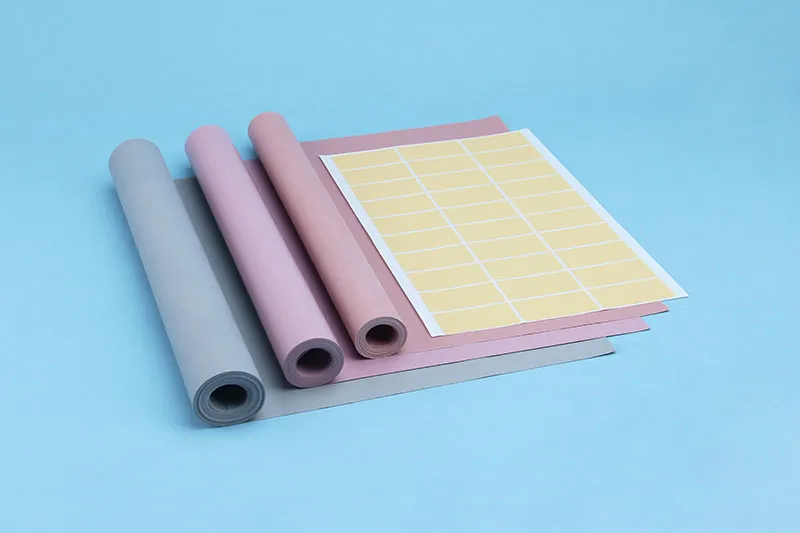
Even perfect calculations can drift during production. That’s where factory variables step in.
· Roll length variation may slightly stretch or compress the sheet.
· Slitting accuracy affects final Sheet width.
· Small shifts in Manufacturing tolerances influence actual sheet thickness.
Control approach:
· Monitor Dimensional consistency during slitting.
· Calibrate blades to protect edge stability.
· Apply Process control checks at batch intervals.
If the design calls for a specific insulating thermal sheet thickness, build in a tolerance buffer so post-processing still meets the required thermal resistance.
Validating Thickness Against ISO Standards and Material Traceability
Compliance locks everything in place.
· Confirm measured thickness through calibrated tools under Quality control.
· Cross-check results against ISO standards and Specification compliance targets.
· Verify Certification records for the base material.
· Maintain Documentation proving full Material traceability.
Only after Thickness validation aligns with records should the insulating thermal sheet thickness be approved for shipment.
In short, accurate insulating sheet thickness depends on heat math, production discipline, and documented proof—all working together so the thermal sheet thickness performs exactly as planned.
FAQs about Insulating Thermal Sheet Thickness
How does insulating thermal sheet thickness shape heat dissipation and electrical insulation?
Thickness sits at the fault line between safety and heat.
A thinner layer eases heat dissipation but strains dielectric strength and component spacing.
A thicker layer calms electrical risk, yet can trap heat if thermal conductivity and filler material fail to cooperate.
The balance shows up in human terms: cooler surfaces, quieter systems, fewer late-night shutdowns.
Which material properties matter most when choosing thickness?
A short list guides long-term peace of mind:
· Thermal conductivity and temperature resistance decide how heat moves under stress.
· Dielectric strength and flammability rating guard against sudden failure.
· Polymer type, reinforcement layer, and surface treatment shape flexibility, elongation at break, and aging behavior during vibration and thermal cycling.
Why do sheet dimensions and processing accuracy affect real-world performance?
Uniformity feels invisible until it breaks.
During die cutting, lamination, or slitting, small shifts in thickness uniformity or cut tolerance disturb electrical insulation and environmental sealing.
Stable sheet width, predictable roll length, and controlled sheet length keep assemblies calm on the line and consistent in the field.
Which standards confirm that the selected thickness is safe and reliable?
Trust grows from traceable proof, not labels alone.
· UL certification confirms fire behavior at working thickness.
· RoHS compliance and REACH regulation protect people and markets.
· ISO standards and clear material traceability link test data to each roll, from core size and protective film through storage conditions and shipping weight.
Sheen Thermal
Dongguan Sheen Electronic Technology Co., Ltd · Founded in 2008
Manufacturer of thermal interface materials and silicone foam for automotive electronics, energy storage, power electronics, communications and consumer electronics.
Certified
- ISO 9001:2015
- ISO 14001:2015
- IATF 16949:2016
What we supply
- Thermal conductivity Up to 90 W/m·K
- Thickness 0.3–10.0 mm
- Custom & samples Die-cut to drawing, 3–7 days