
 English
 usheenthermal

How to Select the Right Punchable Insulating Thermal Sheet for Your Project
Date:2026-03-26
How to Select the Right Punchable Insulating Thermal Sheet for Your Project
Factories hum, deadlines glare, and someone on your line keeps asking why heat keeps messing with yields. A Punchable insulating thermal sheet often sits in that awkward space between “cheap pad” and “engineered fix,” like choosing boots for a long hike instead of flip flops for a sprint.
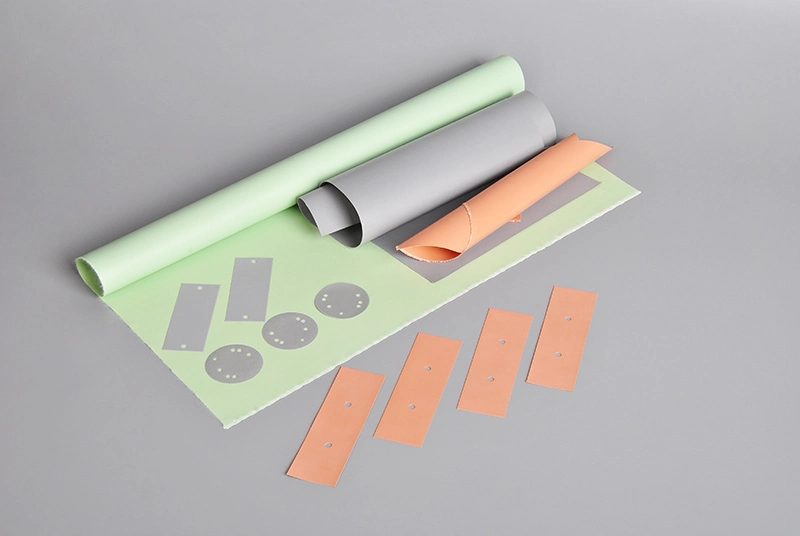
Short truth bomb. UL puts it plainly: “Thermal management materials play a critical role in electrical safety and long term reliability.” That line shows up again and again in compliance reviews, and for good reason.
Pick right, and punchability speeds installs, cuts scrap, keeps audits calm. Pick wrong, and it’s another late night, another call from QA.
Punchable Insulating Thermal Sheet Vs Traditional Foam Sheets
Choosing between materials for hot-running electronics can feel tricky. Let’s break down how Punchable insulating thermal sheet stacks up against foam options in real-world builds, without the fluff.
Punchable Insulating Thermal Sheet
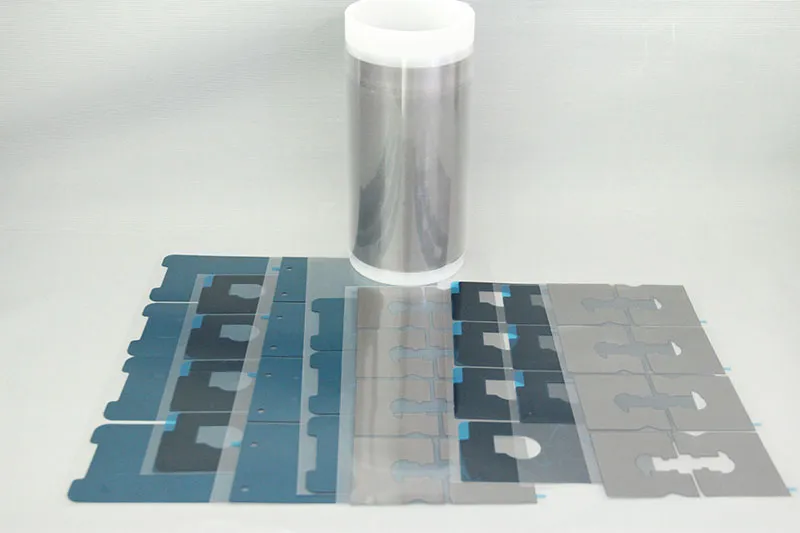
When engineers talk about a Punchable insulating thermal sheet, they’re really splitting the idea into three parts: punchable, insulating, thermal sheet. Each word matters.
Punchable
Clean die processing
• Supports Die-cuttable formats for tight tolerances
• Enables Customizable shapes for compact PCB layouts
Insulating
Strong Electrical insulation
• Maintains controlled dielectric performance
• Protects battery modules from short circuits
Balanced Vibration damping
• Helps manage mechanical stress in EV packs
Thermal sheet
High Thermal conductivity
• Transfers heat from MOSFETs and IGBTs
• Keeps power modules within safe limits
Flexible Material thickness
• Adapts to stack-up design
• Improves Ease of assembly
A Punchable insulating thermal sheet is not just a thermal pad. It’s an engineered polymer matrix with ceramic fillers, built for stable temperature cycling. In power electronics and BMS systems, a Punchable insulating thermal sheet keeps heat moving while insulation stays solid.
At Sheen Technology, each Punchable insulating thermal sheet is tuned for precise punching and consistent insulating thermal performance. If you need an insulating thermal sheet that survives high heat without drama, this one gets the job done.
Traditional Foam Sheets
Traditional foam sheets play a different game.
Structure focus
• High Compressibility
• Good gap filling
• Strong Impact absorption
Insulation style
• Basic Thermal resistance
• Moderate Density control
Practical features
• Optional Adhesive backing
• Standard Sheet size formats
• General Durability
Foam works well for cushioning and low-heat insulation. But in high-power setups, its lower thermal conductivity and tensile strength can limit performance. A Punchable insulating thermal sheet handles heat flow and electrical safety more confidently than many elastomer foams.
If your device runs cool and just needs soft support, foam is fine. If it runs hot and demands precise insulating thermal control, a Punchable insulating thermal sheet from Sheen Technology feels like the smarter move.
3 Steps To Determine Required Thermal Conductivity
Choosing the right Punchable insulating thermal sheet is not rocket science, but it does demand clarity. From temperature swings to voltage stress and filler balance, each factor shapes how your insulating thermal sheet performs in real devices.
Step 1: Evaluate Operating Temperature Range and Flammability Rating
When specifying a Punchable insulating thermal sheet, temperature limits and fire safety go hand in hand.
Define Thermal Boundaries
Operating Temperature
• Continuous exposure range (e.g., -40°C to 130°C)
• Impact on aging of the insulating thermal sheet
Maximum Temperature
• Short-term peak tolerance
• Risk of polymer softening
Minimum Temperature
• Brittleness threshold
• Punchability retention at low temp
Verify Fire Compliance
• Target UL 94 class (V-0, V-1)
• Required Flame Retardancy for LED drivers or battery packs
| Parameter | Typical Spec | Test Standard | Application Example |
| Continuous Temp | 120°C | IEC 60216 | Motor control unit |
| Peak Temp | 150°C | Internal test | Power module |
| UL 94 Rating | V-0 | UL 94 | Consumer electronics |
At Sheen Technology, material data for each punchable insulating sheet is validated against strict thermal cycling tests, so real-world stress won’t catch you off guard.
Step 2: Align Dielectric Strength with Your Application Area
Electrical safety defines long-term reliability of any Punchable insulating thermal sheet.
Electrical Protection Targets
• Dielectric Strength:kV/mm requirement based on PCB spacing
• Breakdown Voltage:Margin above working voltage
• Voltage Rating:Match inverter or BMS output levels
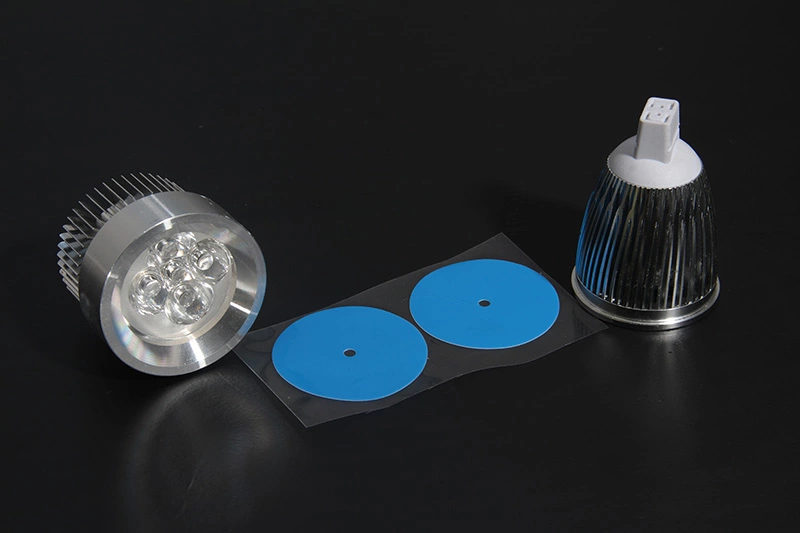
Application Mapping
• Power electronics
• High Arc Resistance
• Reinforced Electrical Insulation
• Low-voltage LED boards
• Moderate dielectric demand
• Higher focus on thermal flow
A punchable thermal insulation sheet must block current while letting heat move out fast. That balance is the sweet spot. Sheen Technology fine-tunes this by adjusting internal ceramic pathways without sacrificing insulation integrity.
Step 3: Optimize Polymer Matrix and Ceramic Fillers Ratio
Thermal performance lives inside the material structure of the Punchable insulating thermal sheet.
Material Composition Control
Polymer Matrix
• Silicone for flexibility
• Epoxy for rigidity
Ceramic Fillers
• Alumina for cost balance
• Boron nitride for higher Thermal Conductivity
Performance Trade-offs
Higher Filler Loading
• ↑ Heat Dissipation
• ↓ Flexibility
Lower filler ratio
• Easier die cutting
• Reduced thermal transfer
Optimization Logic
• Application requires bending → increase polymer ratio
• High watt density → raise ceramic content
• Complex punching geometry → maintain ductile matrix
A well-balanced insulating thermal sheet doesn’t crack during curing, doesn’t warp in service, and still moves heat like it should. That’s exactly how Sheen Technology engineers every punchable insulating sheet—practical, stable, and ready for production lines that don’t have time for guesswork.
Installation Scenario: Mounting Punched Thermal Sheets Cleanly
Getting a Punchable insulating thermal sheet mounted neatly is not rocket science, but details matter. From picking the right form factor to checking certifications, every move affects heat flow, safety, and long-term reliability in compact electronics.
Selecting the Right Form Factor—Pre-cut Sheets or Roll Stock
Choosing the right Form factor for a Punchable insulating thermal sheet shapes your workflow more than most teams expect.
Based on Application needs
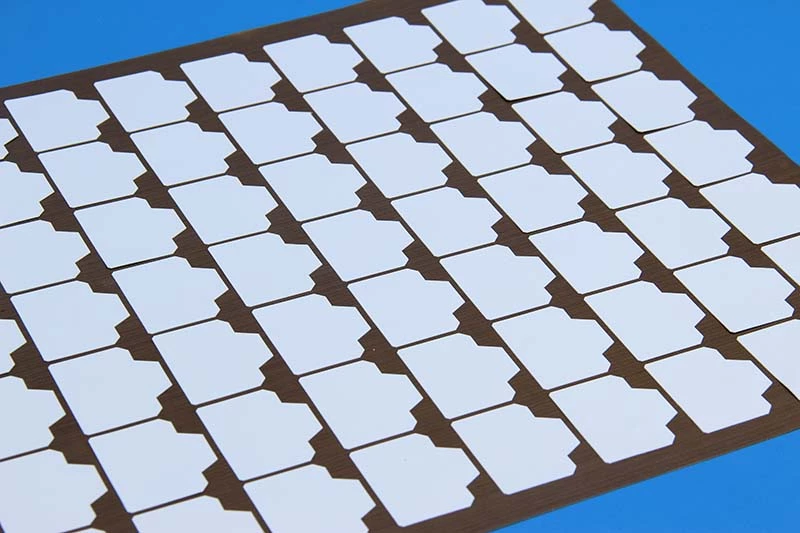
1.1 Low-volume builds
• Use Pre-cut sheets
• Reduced Material handling
• Faster Ease of use at assembly bench
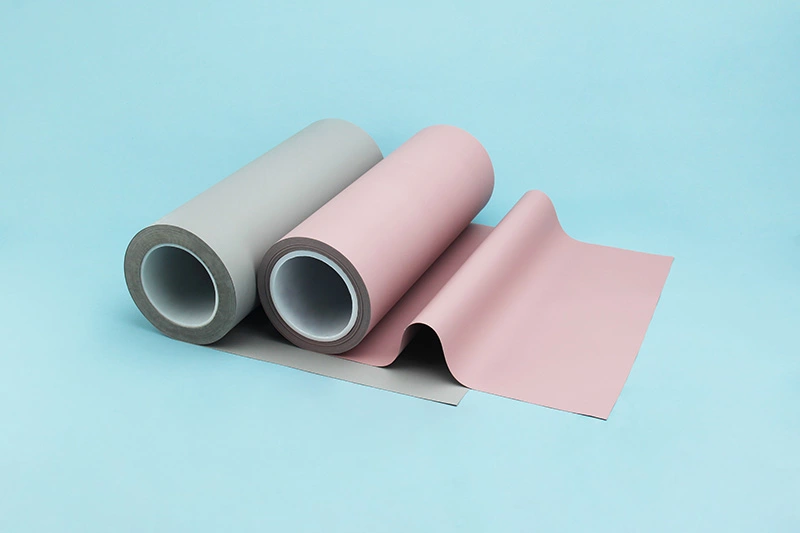
1.2 High-volume automation
• Use Roll stock
• Continuous feeding
• Better alignment with die systems
Based on logistics
2.1 Storage requirements
Pre-cut formats
• Flat stacking
• Clear lot labeling
Roll formats
• Compact vertical storage
• Moisture-barrier wrapping
Based on customization
3.1 Thickness variation
3.2 Custom geometry
3.3 Hybrid builds combining insulating thermal sheet pads with flexible strips
A smart pick keeps the insulating sheet flat, clean, and ready for precise punching. Many OEMs working with Sheen Technology prefer roll-fed thermal sheet materials when scaling up, since waste drops and throughput climbs.
Ensuring Precise Punchability via Die Cutting Techniques
Clean holes define real Punchability. A Punchable insulating thermal sheet must survive tooling pressure without tearing or edge burrs.
Key checkpoints:
• Material thickness tolerance
• Calibrated Punch force
• Stable Tooling alignment
• Verified Hole quality
Typical control flow in production looks like this:
• Extrusion and lamination of the insulating thermal sheet
• Conditioning to stabilize moisture
• Test strikes to measure Precision
• Full-batch die cutting
• Random sampling for edge inspection
If hole walls look fuzzy, reduce punch speed or review die clearance. Too much force? Expect compression marks. Too little? Incomplete cut-through. Teams using Sheen Technology materials often note consistent edge integrity because the sheet density is tuned for repeatable die performance.
Leveraging Adhesive Backing for Tidy Thermal Pathways
A Punchable insulating thermal sheet with Adhesive backing keeps builds neat and stable.
Surface prep
1.1 Remove dust
1.2 Degrease metal pads
1.3 Dry fully
Mounting control
• Align sheet to component
• Apply even pressure
• Confirm Adhesion strength
Thermal management logic
3.1 Continuous Thermal pathways
• Minimized air gaps
• Improved contact resistance
3.2 Mechanical stability
• Reduced vibration shift
• Cleaner internal layout
Good Surface preparation directly impacts Ease of application and long-term bond stability. A well-mounted insulating thermal sheet almost disappears into the assembly, quietly managing heat without messy overflow or misalignment.
Post-mounting Checks: UL Certification and ASTM Compliance
After installation, paperwork matters as much as performance. A Punchable insulating thermal sheet should meet UL certification, ASTM compliance, and internal Quality assurance targets.
Below is a sample validation reference table used in supplier audits:
| Test Item | Standard | Requirement Value | Test Result Example |
| Dielectric Strength (kV/mm) | ASTM D149 | ≥ 4.0 | 4.6 |
| Flammability Rating | UL 94 | V-0 or V-1 | V-0 |
| Thermal Conductivity (W/m·K) | ASTM E1461 | ≥ 1.5 | 1.8 |
| Thickness Tolerance (mm) | Internal Spec | ±0.05 | ±0.03 |
Meeting Regulatory standards confirms Application suitability across EV modules, power supplies, and telecom boards. Many buyers shortlist Sheen Technology because documentation, lab data, and compliance files are ready before mass production kicks off.
FAQs about Punchable Insulating Thermal Sheet
What makes a punchable insulating thermal sheet different from traditional foam sheets?
The difference shows up the moment heat and voltage rise.
· Material core: a Polymer Matrix loaded with Ceramic Fillers and Insulating Additives channels Thermal Conductivity without losing Dielectric Strength.
· Mechanical feel: controlled Punchability and steady Tensile Strength survive repeated Die Cutting, while foam built on Elastomeric Components softens and drifts.
· Real-world pressure: stable Operating Temperature Range and defined Flammability Rating keep Power Electronics and Motor Control Units calm under stress.
The tension resolves in reliability—heat moves, structure holds, safety stays intact.
How should thermal conductivity be selected for an electronic assembly?
Choosing the right balance feels like walking a tightrope.
1) Heat load: peak device temperature sets the baseline for Thermal Conductivity in LED Lighting or Battery Management Systems.
2) Electrical safety: confirm Dielectric Strength and match UL Certification with ASTM Standards.
3) Form factor: Roll Stock with Adhesive Backing suits automation; Pre-cut Sheets or Custom Shapes ease manual builds.
A slight shift in filler ratio can cool a board—or crack it—so alignment with real operating behavior matters.
Which certifications and supply factors matter when buying in bulk?
Bulk orders bring quiet pressure behind the scenes.
· Quality signals: RoHS Compliance, REACH Compliance, and audited ISO 9001 processes tied to Sheet Extrusion, Lamination, and Curing.
· Supply chain pulse: predictable Lead Time, realistic Minimum Order Quantity, and clear Packaging Requirements reduce late-night calls.
· Trust factor: steady Supplier Reliability keeps Consumer Electronics lines moving through Slitting and final Die Cutting.
Sheen Thermal
Dongguan Sheen Electronic Technology Co., Ltd · Founded in 2008
Manufacturer of thermal interface materials and silicone foam for automotive electronics, energy storage, power electronics, communications and consumer electronics.
Certified
- ISO 9001:2015
- ISO 14001:2015
- IATF 16949:2016
What we supply
- Thermal conductivity Up to 90 W/m·K
- Thickness 0.3–10.0 mm
- Custom & samples Die-cut to drawing, 3–7 days