
 English
 usheenthermal

Solving Electronics Overheating with Silicone Free Thermal Pads
Date:2026-03-16
Solving Electronics Overheating with Silicone Free Thermal Pads
Electronics overheating isn’t just a spec-sheet problem—it’s the silent budget killer. When power modules run hot, performance dips, warranties spike, and suddenly your production line feels like it’s sweating, too. That’s why more engineers are switching to silicone free thermal pads—not as a trend, but as damage control. Traditional pads can bleed, shift, or lose grip under pressure. In tight EV control units or dense telecom boards, that tiny failure turns into a big, expensive headache.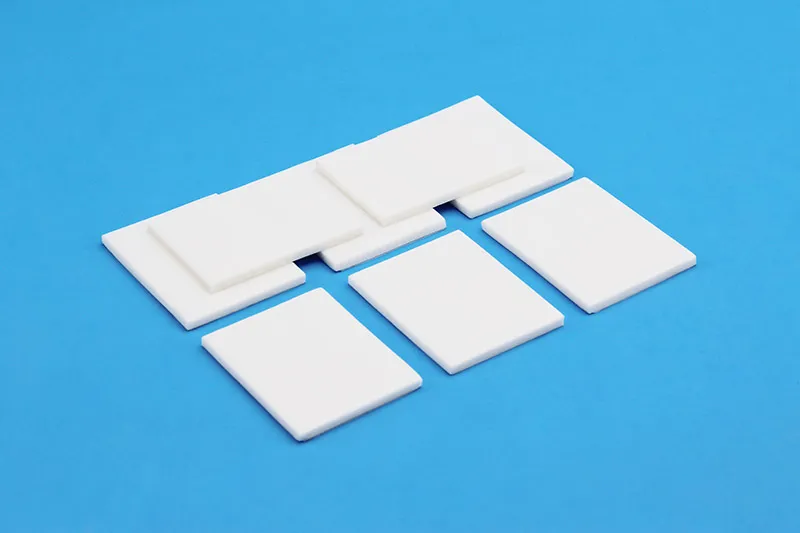
“Heat is the number-one reliability threat in compact power design,” notes a senior thermal engineer at Sheen Electronic Technology in a 2025 industry briefing.
Silicone-free materials cut contamination risk, hold their shape, and keep heat moving where it belongs. Fewer air gaps. Lower impedance. Less drama on the factory floor. Now we’re getting to the part that changes how you spec your next build.
Reading Notes: Silicone Free Thermal Pads Insights
➔ Superior Heat Transfer – Boron nitride and graphite composites deliver low thermal impedance and efficient in-plane spreading.
➔ Enhanced Reliability – Silicone-free materials resist bleed, maintain shape, and reduce contamination in compact assemblies.
➔ Optimal Conformability – Low compression set and high surface tackiness ensure consistent contact across uneven substrates.
➔ Compliance & Processing – Halogen-free, RoHS-compliant pads support roll-to-roll processing, die-cutting, and clean automated dispensing.
5 Causes Of Electronics Overheating
Modern devices keep shrinking, yet power keeps climbing. That tension often pushes thermal materials to their limits. From automotive drives to compact GPUs, poor Thermal Management choices—especially ignoring options like silicone free thermal pads—can quietly raise temperatures until performance drops or parts fail.
High Power Module Cooling Requirements Exceed Heat Dissipation Capability
When High Power Modules operate beyond planned Cooling Requirements, the gap between Heat Dissipation capacity and actual load becomes obvious.
Core imbalance
• Rising switching frequency
• Material constraint
• Compression fatigue
• Upgrading path
A 2025 IDC update on power electronics noted that thermal bottlenecks remain a “top-three reliability limiter in high-density automotive modules,” reinforcing how ignored heat flow stacks up fast.
Ceramic Filled Polymer’s Low Thermal Conductivity in Tight Spaces
Compact boards look sleek, yet Component Density raises the bar for Heat Transfer.
Ceramic Filled Polymer limits
• Moderate Thermal Conductivity
• Noticeable Conduction Limitations in thin gaps
Tight assembly
• Reduced spreading area
• Trapped hot zones
Practical fix
• Thinner silicone free thermal pads
• Better surface wetting
Short truth: thin devices hate thick materials.
Another reality: Material Properties matter more than marketing claims.
And yes, silicone free thermal solutions often perform better in contamination sensitive builds.
Restricted Conduction from Aluminum Oxide Matrix Under Stress
The Aluminum Oxide Matrix works well—until Mechanical Stress steps in.
Structural strain
• Board flex
• Micro gapsHigher
Thermal Resistance
• Mount torque
• Uneven pressure
• Disturbed Heat Flow
Material integrity
• Cracking risk
• Reduced Material Integrity
Recovery path
• Flexible non silicone thermal pad options
• Stress-tolerant silicone free thermal pads
Small stress. Big temperature spike. That’s how hotspots sneak up.
Poor Surface Tackiness Reducing Effective CPU GPU Interface
Low Surface Tackiness sounds minor, yet at the CPU GPU Interface, it’s a deal breaker.
Contact chain
• Weak Adhesion
• Air pockets
• Rising Contact Resistance
Vibration
• Interface shift
• Reduced Heat Transfer Efficiency
Mounting reality
• Uneven Component Mounting pressure
• Pump-out under cycling
Switching to silicone free thermal pads with balanced compression helps maintain interface stability without silicone bleed. That’s huge for AI servers running nonstop.
Elevated Volume Resistivity Caused by Thick Polyimide Film Substrate
A thick Polyimide Film may improve Electrical Insulation, yet increased Substrate Thickness can elevate Volume Resistivity and trap heat.
• Electrical upside
• Thermal downside
• Reliability trade-off
Long-term exposure amplifies the issue, especially in telecom racks where airflow is already tight.
Gartner’s 2025 infrastructure hardware outlook highlighted thermal density as “a persistent constraint in next-generation telecom and edge computing deployments,” linking dielectric stack design directly to cooling overhead.
Using thinner dielectric stacks paired with silicone free thermal pads balances Dielectric Properties and Thermal Performance. In high-frequency builds, that balance keeps systems cool without sacrificing insulation strength.
Heat problems rarely shout at the start. They whisper through rising resistance, minor lag, and subtle throttling—until one day, the device just taps out.
How Silicone-Free Pads Improve Heat Transfer
Silicone free thermal pads are changing how engineers handle heat. By removing silicone oils, these thermal pads stay cleaner, more stable, and better at heat flow. From CPUs to automotive boards, silicone free thermal pads, silicone free pads, and silicone thermal interface pads are becoming the go-to fix for tight thermal budgets.
Boosting Conductivity with Boron Nitride Composite
When Boron Nitride is blended into a Composite Material, heat moves faster while Electrical Insulation stays solid.
Material Layer Design
Filler Network
• High loading of Boron Nitride particles
• Uniform dispersion for stable Thermal Conductivity
Polymer Matrix
• Silicone-free backbone
• Enhanced Heat Dissipation
Application Fit
• LED modules
• Power converters
• High performance computing boards
Silicone free thermal pads built with this structure help devices run cooler without messy oil bleed.
Superior Conformability and Compression Set
Good Conformability means tighter Surface Contact. That’s where silicone free pads shine.
Interface Behavior
• Micro Gap Filling
• Soft structure adapts to uneven copper
• Better Gap Filling under light pressure
Controlled Compression Set
• Maintains thickness
• Supports Long-term Performance
Reliability Gains
• Stable Thermal Interface Material behavior
• Less pump-out during cycling
• Stronger durability in telecom racks
According to IDC’s 2025 thermal management outlook, “Material stability under mechanical stress is now a key purchasing factor in high-density electronics manufacturing.”
That shift is pushing more designers toward silicone free thermal pads, especially from Sheen Electronic Technology.
Reduced Thermal Impedance for Cooler CPU GPU Interfaces
Lower Thermal Impedance equals lower Device Temperature. Simple math, big impact.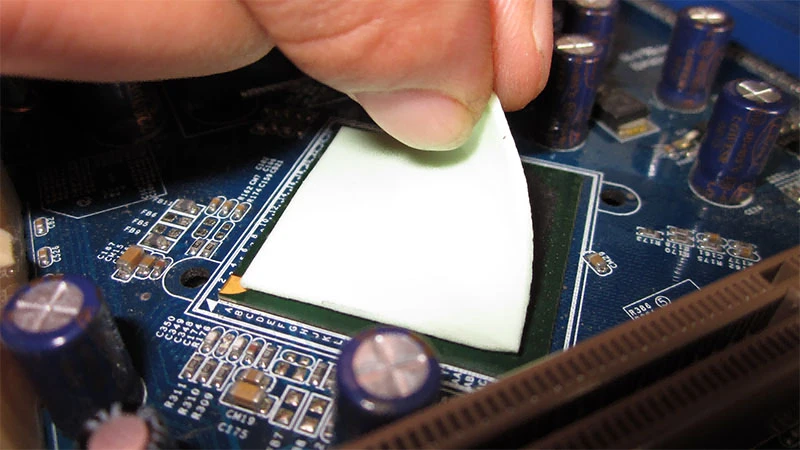
CPU / GPU Stack-Up
• Die → Heat Spreader. Precision thickness control
• Heat Spreader → Heatsink. Optimized hardness
Cooling Solution Optimization
• Reduced interface resistance
• Balanced clamping force
• Noticeable Performance Enhancement under load
In gaming rigs and AI servers, even a 2–3°C drop can extend component life. Sheen Electronic Technology tunes material density and die-cut accuracy so each silicone free thermal pad fits right the first time.
Optimizing Heat Paths: Graphite Based Material Benefits
Graphite Material works differently. Heat prefers a direction.
Anisotropic Conductivity
• In-plane: rapid Directional Heat Flow
• Through-plane: controlled transfer
Heat Path Strategy
• Spread heat away from hotspot
• Guide it toward chassis walls
• Support balanced Component Cooling
Device Efficiency Boost
• Improved Thermal Management
• Lighter assemblies
• Better overall Device Efficiency
Pairing graphite layers with silicone free thermal pads creates a smart hybrid approach. Heat spreads wide, then flows down efficiently. That combo is why silicone free thermal pads from Sheen Electronic Technology keep showing up in telecom and automotive builds.
Silicone Vs Silicone-Free: Thermal Pad Comparison
Thermal management is getting serious these days. From EV control units to compact consumer boards, the choice between silicone based pads and silicone free thermal pads can change long-term reliability, cleanliness, and even brand reputation. Let’s break it down in a practical way.
Silicone-Based Thermal Pads
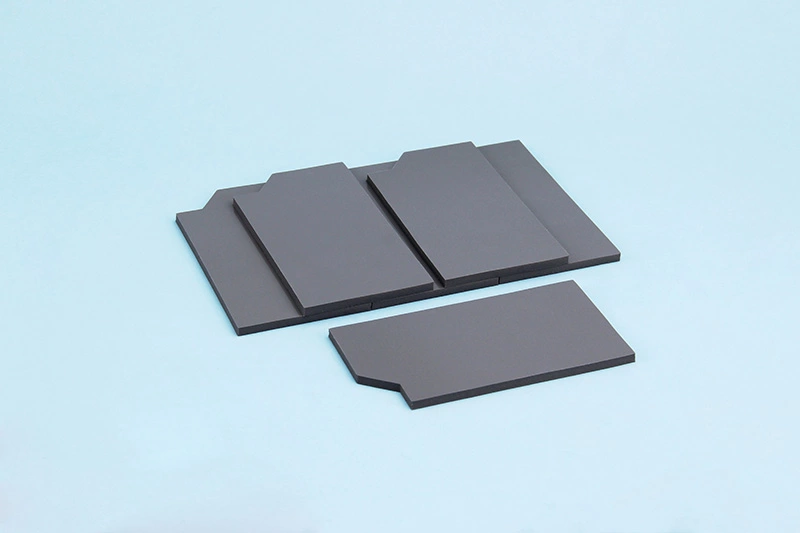
When engineers evaluate silicone pads, discussion usually centers on six technical pillars:
Core Material Characteristics
Thermal conductivity
• Stable in mid-to-high power modules
• Suitable for uneven surfaces due to softness
Dielectric strength
• Reliable electrical insulation in dense PCB layouts
Temperature resistance
• Wide operating window, often from -40°C to 200°C
Mechanical & Functional Performance
Application flexibility
• Easy die-cutting and compression
• Good gap-filling on rough heatsinks
Long-term durability
• Resists vibration
• Maintains structural integrity under cycling
Risk Considerations
• Oil bleed migration
• Can affect nearby connectors
• Possible contamination in optical modules
Certification challenges
• Some environments restrict siloxane presence
In short, silicone pads deliver predictable performance in demanding heat paths. Yet in ultra-clean electronics, that tiny risk of siloxane spread makes some designers pause. That hesitation is exactly where silicone-free thermal pads start gaining traction.
Silicone-Free Thermal Pads

The rise of silicone free thermal pads is closely tied to cleaner manufacturing trends and higher compliance standards.
Material Composition & Structure
Base polymer system
• Non-silicone matrix engineered for steady thermal conductivity
• Designed for controlled outgassing
Reinforcement layer
• Fiberglass or PET backing improves dimensional stability
Surface engineering
• Acrylic-based adhesion layer for automated placement
Reliability & Heat Flow
• Stable heat dissipation under compression
• Reduced risk of residue transfer
• Enhanced long-term reliability in sealed modules
Manufacturing Advantages
• Roll-to-roll processing compatibility
• Cleaner dispensing automation
• Alignment with halogen-free standards
According to the 2025 Thermal Interface Materials report released by MarketsandMarkets, demand for non-silicone and low-outgassing interface solutions is rising steadily in automotive electronics due to stricter contamination control and reliability benchmarks.
That trend explains why many OEM buyers now actively request silicone free thermal pads, not just traditional silicone sheets. The phrase “silicone free” isn’t just marketing talk; it signals lower contamination risk and smoother downstream assembly.
Sheen Electronic Technology responds to this shift with both silicone based pads and advanced silicone free thermal pads, giving engineers room to balance thermal conductivity, controlled adhesion, and system-level cleanliness. For compact power modules, EV battery boards, or optical units, a well-designed silicone-free thermal solution can keep heat moving without leaving unwanted traces behind.
FAQs about Silicone Free Thermal Pads
What causes overheating in high-power electronics during continuous operation?
Overheating usually results from a chain of small weaknesses building into thermal stress:
• Interface gaps at the CPU GPU interface → low surface tackiness or poor conformability traps air, raising thermal impedance.
• Material limits → ceramic filled polymer or aluminum oxide matrix with insufficient thermal conductivity cannot match power module cooling demands.
• Structural barriers → thick polyimide film substrate increases volume resistivity and restricts heat dissipation capability.
• Mechanical fatigue → high compression set and unstable material hardness reduce long-term contact under cycling loads.
In automotive electronics and industrial control systems, these factors shrink the effective operating temperature range and shorten service life.
How do silicone free thermal pads improve heat transfer in compact devices?
Silicone free thermal pads stabilize the thermal path while keeping assemblies clean.
Material design
• Boron nitride composite boosts thermal conductivity and preserves dielectric strength.
• Acrylic adhesive layer enhances surface tackiness without oil bleed.
Performance impact
| Key Factor | Practical Effect in Consumer Electronics Devices |
| Low thermal impedance | Faster heat flow from chips to heat sink |
| Controlled material thickness | Balanced pressure across small gaps |
| Stable flammability rating | Safer operation in tight housings |
Why are silicone free materials preferred in contamination-sensitive environments?
In telecommunications equipment and precision automotive electronics, cleanliness is critical.
• Silicone-free structure avoids migration and fogging risks.
• Fiberglass reinforcement improves tensile strength during die cutting techniques.
• Halogen free standard, RoHS compliance, and REACH declaration simplify audits.
• Stable volume resistivity supports consistent insulation performance.
• The absence of silicone bleed protects optical parts, connectors, and sensitive contacts over long duty cycles.
How can buyers evaluate the right silicone free thermal pads before mass purchase?
Selection should combine data, testing, and supplier cooperation.
1. Review quality control procedures covering compression set, material hardness, and curing parameters.
2. Request sample availability for validation in real power module cooling conditions.
3. Confirm roll to roll processing, lamination methods, and slitting capabilities match assembly flow.
4. Check UL certification, material safety data sheet, and conflict minerals reporting.
5. Discuss custom formulation, lead time considerations, and global distribution network support.
1. Review quality control procedures covering compression set, material hardness, and curing parameters.
2. Request sample availability for validation in real power module cooling conditions.
3. Confirm roll to roll processing, lamination methods, and slitting capabilities match assembly flow.
4. Check UL certification, material safety data sheet, and conflict minerals reporting.
5. Discuss custom formulation, lead time considerations, and global distribution network support.
Strong technical support and clear research development focus reduce risk before scaling to full production.
Sheen Thermal
Dongguan Sheen Electronic Technology Co., Ltd · Founded in 2008
Manufacturer of thermal interface materials and silicone foam for automotive electronics, energy storage, power electronics, communications and consumer electronics.
Certified
- ISO 9001:2015
- ISO 14001:2015
- IATF 16949:2016
What we supply
- Thermal conductivity Up to 90 W/m·K
- Thickness 0.3–10.0 mm
- Custom & samples Die-cut to drawing, 3–7 days