
 English
 usheenthermal

Expert Review: Is a Tear-Resistant Carbon Fiber Thermal Pad Worth It?
Date:2026-04-08
Expert Review: Is a Tear-Resistant Carbon Fiber Thermal Pad Worth It?
Heat is the silent budget killer in high-power electronics. A Tear-resistant carbon fiber thermal pad steps in like the unsung hero under the hood—built to move heat fast and refuse to rip under pressure. In packed server racks and overworked ECUs, a few stray degrees can mean throttled performance, fried components, and service calls nobody wants to explain in Monday’s meeting.
Data centers already consume about 1–1.5% of global electricity, according to the International Energy Agency. That’s not pocket change. As Uptime Institute notes, “thermal management remains a top operational risk” for operators pushing higher densities.
So the real question isn’t hype—it’s payoff. If a tougher pad trims downtime, cuts energy bleed, and survives assembly without shredding, that upfront premium starts looking less like a splurge and more like smart insurance.
Key Points: Tear-resistant carbon fiber thermal pad Unwrapped
➔ Exceptional heat transfer: High thermal conductivity and low resistance ensure efficient cooling in servers and ECUs.
➔ Unmatched durability: Carbon fiber weave and reinforcement layers resist tearing and punctures during assembly and vibration.
➔ Flexible fit: Optimized density and flexural modulus conform to irregular surfaces, reducing air gaps.
➔ Long-term stability: UL-rated binder and stable polymer matrix maintain performance under continuous thermal cycling.
➔ Cost-effective ROI: Lower downtime and energy savings offset upfront premium, making it smart insurance for high-power electronics.
Tear-Resistant Carbon Fiber Thermal Pad: What The Data Says
A Tear-resistant carbon fiber thermal pad isn’t just about hype. When heat spikes and vibration kick in, real numbers decide survival. Let’s break down how carbon fiber thermal pad performance holds up in labs and on factory floors.
Measuring Thermal Conductivity and Thermal Resistance
When testing a Tear-resistant carbon fiber thermal pad, engineers focus on how fast heat moves and how little gets stuck.
Core thermal metrics
Thermal Conductivity
· Measured in W/m·K under defined pressure
· Higher values mean faster Heat Transfer
Thermal Resistance
· Calculated across thickness
· Lower numbers reduce hotspot risk
Interface behavior
Temperature Gradient
· Observed between chip and heatsink
Interface Resistance
· Affected by surface roughness
· Improved through compression stability
In high-density servers, this combo defines real Material Performance. A tear-resistant thermal interface that keeps resistance low under load saves hardware from early burnout.
Evaluating Tensile Strength and Puncture Resistance
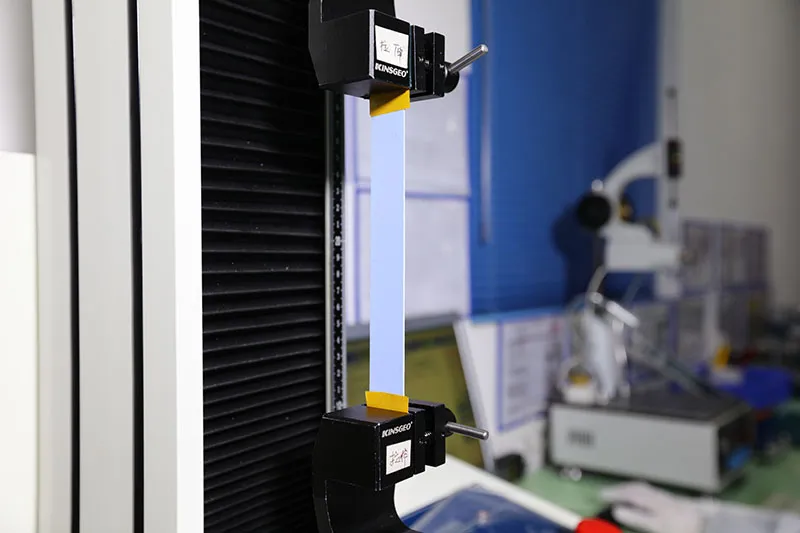
Heat is only half the story. A carbon fiber thermal pad also needs grit.
· Tensile Strength keeps the pad intact during die cutting.
· Puncture Resistance protects against sharp solder joints.
· Tear Strength matters during rework.
Stress tests simulate vibration in EV battery packs. Results often show that reinforced weave structures boost Mechanical Durability and maintain Material Integrity even after repeated compression cycles.
IDC’s 2025 thermal management outlook noted:
“Mechanical reliability of interface materials is now as critical as conductivity in high-density compute environments.”
That lines up with what users see in the field—Stress Tolerance equals uptime.
Operating Temperature Range vs Flexural Modulus
For automotive ECUs and avionics, survival means balance.
Operating Temperature span
· Cold start performance
· High-load endurance
· No softening drift
Mechanical response
· Flexural Modulus:Governs bend behavior
· Material Flexibility:Prevents cracking during Thermal Cycling
A Tear-resistant carbon fiber thermal pad that keeps Structural Integrity across wide swings avoids micro-gaps that quietly kill performance.
Density, Electrical Resistivity and Long-Term Stability
Long runs under heat separate average pads from serious ones like those engineered by Sheen Technology.
Physical profile
· Density:Affects weight and conformability
Electrical safety
· Electrical Resistivity:Prevents short circuits in tight layouts
Aging control
· Long-Term Stability:Resists Material Degradation
Performance Longevity
· Steady output after thousands of hours
A Tear-resistant carbon fiber thermal pad built with a stable polymer matrix holds its shape, keeps contact tight, and stays electrically safe. That’s why Sheen Technology continues refining every carbon fiber thermal pad and tear-resistant thermal pad in its lineup—because in real hardware, small gains stack up fast.
Tear-Resistant Carbon Fiber Pad Vs Silicone Pad
When heat builds up inside electronics, the choice of pad really matters. A Tear-resistant carbon fiber thermal pad sounds technical, yet it solves a simple issue: move heat fast and stay tough. Let’s break down how a Tear-resistant carbon fiber thermal pad compares with silicone options in real-world use, without the fluff.
Tear-Resistant Carbon Fiber Pad
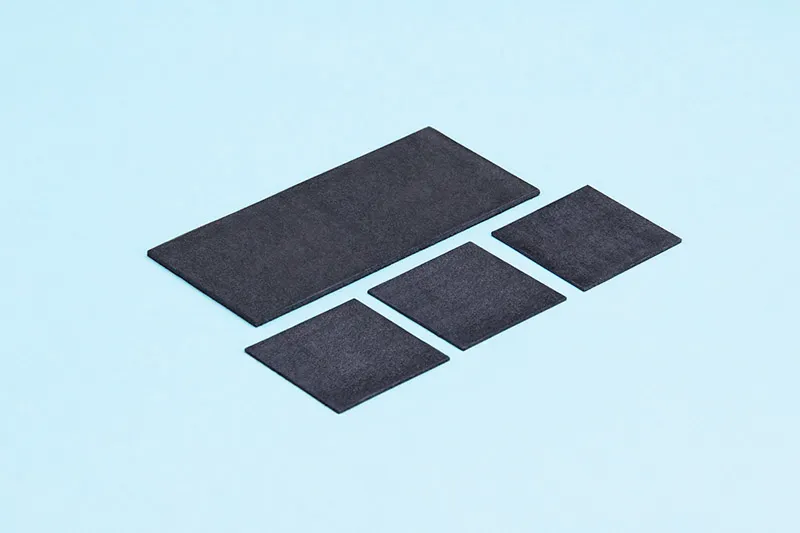
Material Structure
Carbon fiber network
· Enhances material strength
· Improves durability under compression
Graphite infusion
· Boosts thermal conductivity
· Supports faster heat dissipation
Reinforced polymer matrix
· Extends longevity
· Maintains stable performance
Functional Advantages
Thermal flow
· Heat transfers from chip surface
· Carbon fiber channels distribute energy
· Graphite layers spread it evenly
Mechanical resistance
· Resists tearing during installation
· Handles repeated assembly cycles
Application Impact
· Data centers demand stable cooling
· EV battery packs require steady thermal conductivity
· Industrial modules need long-term durability
A carbon fiber thermal pad doesn’t just sit there; it works hard. The Tear-resistant carbon fiber thermal pad from Sheen Technology is designed for tight assemblies where pressure and heat show no mercy. That’s where real performance shows up.
Silicone Pad
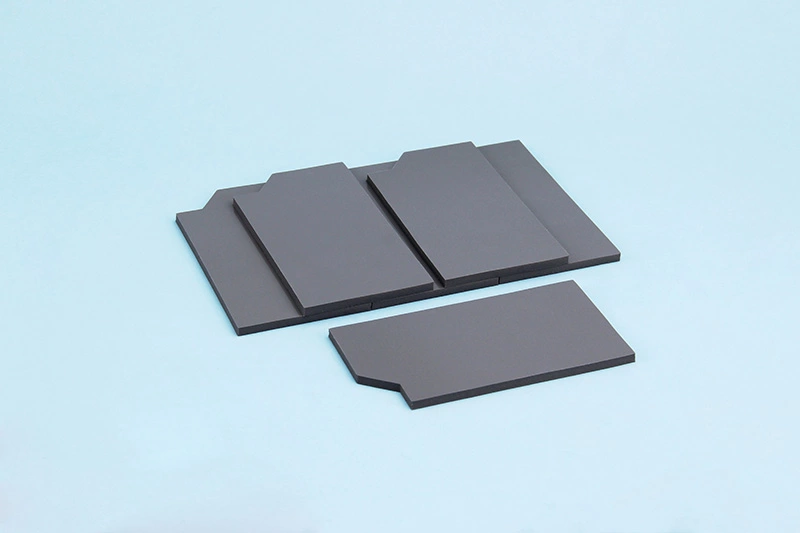
Silicone pads follow a different formula.
Material Composition
Silicone base
· High flexibility
· Strong insulation properties
Ceramic fillers
· Moderate thermal transfer
· Controlled electrical insulation
Practical Traits
· Easy trimming
· Smooth ease of application
· Good cost-effectiveness
· Decent reusability
Limitations Compared to Carbon Fiber Thermal Pad
· Lower tensile strength
· Reduced thermal conductivity
· Shorter longevity in high-stress setups
A silicone thermal pad works fine for light-duty electronics. Yet when heat spikes and mechanical stress rise, a Tear-resistant carbon fiber thermal pad clearly delivers stronger material strength and longer service life. For teams serious about cooling reliability, Sheen Technology keeps pushing carbon fiber pad innovation forward.
5 Benefits Of Using Carbon Fiber Thermal Pads
In high-power electronics, heat is the silent killer. A Tear-resistant carbon fiber thermal pad keeps temperatures under control while standing up to pressure, friction, and daily wear. By blending carbon fiber strength with thermal interface efficiency, this carbon fiber thermal solution helps devices stay cool, safe, and reliable without adding complexity.
Superior Heat Dissipation with High Thermal Conductivity
A Tear-resistant carbon fiber thermal pad improves thermal conductivity at multiple levels:
Material Core
Carbon fiber network
· Boosts heat transfer across the interface
· Enhances overall thermal performance
Optimized resin matrix
· Reduces internal thermal resistance
· Supports steady thermal management
Interface Contact
Micro-gap filling
· Increases real contact area
· Promotes efficient cooling
Surface wetting behavior
· Stabilizes heat dissipation over time
Compared to standard pads, a thermal pad carbon fiber design keeps hot spots in check, plain and simple.
Enhanced Durability from Carbon Fiber Weave Reinforcement
Durability comes from structure, not luck.
Carbon fiber weave
Interlaced fibers
· Improve mechanical strength
· Increase tear resistance
Layered reinforcement
· Protects material integrity
Compression Performance
· Withstands molding pressure
· Maintains thickness stability
A Tear-resistant carbon fiber thermal pad handles repeated assembly without cracking. That carbon fiber reinforced pad design matters in mass production lines where downtime costs money.
Flexible Conformability over Irregular Surfaces
Not every heat sink is perfectly flat.
Flexibility
· Balanced density:Allows natural conformability
· Soft polymer matrix:Improves adaptability
Surface Interaction
· Micro-level gap filling
· Better surface contact on irregular surfaces
This makes a carbon fiber heat pad practical for LED housings and compact PCBs. The Tear-resistant carbon fiber thermal pad bends without losing strength.
Long-Term Stability Backed by UL Flammability Rating
Safety and lifespan go hand in hand.
Compliance Layer
· Certified UL flammability rating
· Meets strict safety standards
Material Stability
· Low material degradation
· Extended operational lifespan
Performance Consistency
· Maintains long-term stability
· Supports high-temperature reliability
A Tear-resistant carbon fiber thermal pad with certified backing gives peace of mind in power modules that run day and night.
Reduced Downtime: RoHS-Compliant and Easy Slitting
Efficiency shows up on the shop floor.
Regulatory Advantage
· Fully RoHS-compliant
· Speeds approval cycles
Processing Efficiency
· Precision easy slitting
· Clean die cutting
Operational Gains
· Faster installation
· Simplified maintenance
· Noticeable reduced downtime
Sheen Technology delivers Tear-resistant carbon fiber thermal pad solutions tailored for scalable production. With clean cutting, stable supply, and consistent quality, Sheen Technology helps teams move faster. For manufacturers chasing higher operational efficiency, Sheen Technology keeps things cool and under control.
Is Tear-Resistant Carbon Fiber Pad Worth It?
Data centers run hot, fast, and nonstop. Choosing a Tear-resistant carbon fiber thermal pad isn’t just about specs on paper; it’s about uptime, budgets, and peace of mind.
Cost vs Performance: A Data Center Servers Case Study
In large-scale Data Center Servers, material choice directly shapes Thermal Management, uptime, and cost curves.
Performance Metrics in Live Racks
Thermal conductivity improvement
· Standard pad: 15.0 W/m·K
· Tear-resistant carbon fiber thermal pad: 45.0 W/m·K
Surface contact stability
· Reduced pump-out under vibration
Hardware Longevity
· Lower chip stress cycles
Cost Analysis Snapshot
| Material Type | Thermal Conductivity (W/m·K) | Avg. Annual Cooling Cost (USD/Rack) | Failure Rate (%) | Replacement Cycle (Months) |
| Silicone Pad | 15.0 | 4,800 | 3.2 | 18 |
| Graphite Sheet | 30.0 (@Z) | 4,200 | 2.4 | 20 |
| Tear-resistant carbon fiber thermal pad | 45.0 | 3,650 | 1.1 | 30 |
Efficiency Gains
· Lower junction temperature
· Fewer emergency shutdowns
· Noticeable reduction in downtime penalties
In short, higher upfront pricing balances out through measurable Efficiency Gains and extended Hardware Longevity. That’s where Sheen Technology positions its Tear-resistant carbon fiber thermal pad—less drama, more stability.
Supply Chain Considerations: Lead Time and MOQ Insights
When planning large deployments, the Manufacturing Process and Material Sourcing matter just as much as conductivity numbers.
· Lead time typically ranges from 2–5 weeks, depending on Production Capacity.
· MOQ varies with thickness and custom die-cut design.
· Stable Component Availability reduces last-minute redesign stress.
Check supplier scalability.
· Confirm logistics routes and warehousing.
· Align forecast with server rollout cycles.
A tear resistant carbon fiber pad with predictable supply flow supports real Scalability. Teams that ignore this often face stalled rack builds and budget creep.
Meeting Quality Standards: ISO Certification to REACH Regulation
Compliance isn’t flashy, but it keeps doors open globally.
Product Quality Assurance
· ISO-certified production lines
· Routine Material Testing for tensile strength and thermal decay
Regulatory Compliance
· RoHS alignment
· REACH adherence under strict Environmental Standards
Safety and Documentation
· Full MSDS availability
· Clear traceability under Safety Regulations
For buyers in finance or telecom, verified Industry Certifications reduce procurement friction. A reliable Tear-resistant carbon fiber thermal pad backed by Sheen Technology checks those boxes—clean paperwork, steady performance, and fewer late-night calls from the server room.
Tear-Resistant Carbon Fiber Thermal Pad In Server Racks
Server racks run hot, and nobody likes surprise shutdowns. A Tear-resistant carbon fiber thermal pad keeps heat in check while surviving tight installs, vibration, and constant pressure inside busy data centers.
Optimizing Thermal Resistance in High-Power Electronics
A smart setup for High-power electronics starts with dialing in Thermal resistance and steady Heat dissipation. With a Tear-resistant carbon fiber thermal pad, the trick isn’t just conductivity; it’s the balance between compression and stability.
Material selection
Thermal management goals
· Target Component temperature under peak load
· Match pad thickness to mounting force
Carbon fiber thermal pad structure
· Reinforced fiber network
· Elastic matrix for pressure recovery
Installation tuning
Compression control
· Even torque across heat spreaders
· Avoid over-squeeze that spikes Thermal resistance
Surface contact
· Fill micro-gaps
· Reduce air pockets
Performance optimization
· Monitor temperature drift
· Adjust pad density if hotspots appear
A Tear-resistant carbon fiber thermal pad holds shape under repeated servicing, keeping performance stable instead of fading out over time.
Lamination and Surface Treatment for Rack-Mount Heat Sinks
For Rack-mount heat sinks, adhesion can make or break long-term uptime. A carbon fiber thermal pad with tailored Lamination and smart Surface treatment bonds cleanly without messy residue.
Surface prep basics:
· Clean metal fins
· Light abrasion for better Adhesion
Lamination layers:
· Fiber core for Thermal conductivity
· Protective film for Durability
· Optional tacky layer for vertical installs
“Thermal interface materials are becoming a critical reliability factor in high-density AI servers,” noted Gartner in a 2025 data center infrastructure update, pointing to rising power densities in rack systems.
A Tear-resistant carbon fiber thermal pad from Sheen Technology is built with tuned Material properties so it won’t peel or crack after long heat cycles.
Balancing Density and Conformability in Data Center Servers
Inside Data center servers, space is tight and components aren’t perfectly flat. That’s where density control really counts.
Mechanical support
· Stable Pressure distribution across chips
· Prevent board flex during assembly
Flexibility
· High Conformability for uneven GPUs
· Effective Gap filling around memory stacks
Assembly flow
· Clean placement in the Assembly process
· Minimal rework during maintenance
A Tear-resistant carbon fiber thermal pad combines firm fiber reinforcement with soft contact surfaces. This carbon fiber heat pad handles vibration, resists tearing during swaps, and keeps thermal interface material performance steady. Sheen Technology fine-tunes density so the pad supports heavy heat sinks yet still molds to tricky layouts. In real-world racks, that balance just makes life easier.
How To Install A Carbon Fiber Thermal Pad
Getting a Tear-resistant carbon fiber thermal pad installed the right way isn’t rocket science, but it does demand care. Done properly, heat moves fast, parts stay cool, and your ECU lives longer.
Pre-Installation: Die Cutting to Fit Automotive ECUs
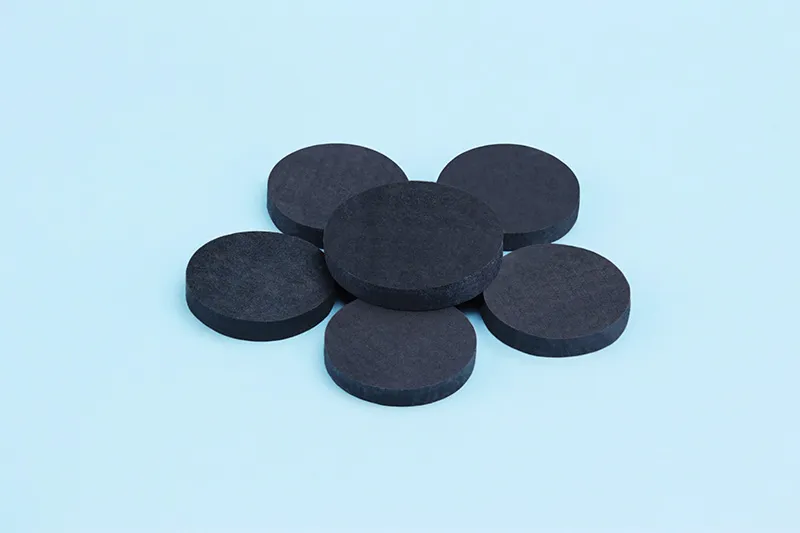
When preparing a Tear-resistant carbon fiber thermal pad for Automotive ECUs, accuracy drives performance.
Define Component Dimensions
1.1 Measure PCB length, width, and hotspot zones.
1.2 Confirm tolerance range within ±0.1 mm.
Execute Die Cutting
2.1 Use calibrated blades for Precision Cutting.
2.2 Maintain stable Material Handling to avoid fiber fray.
Validate Custom Fit
3.1 Dry-place the carbon fiber pad.
3.2 Check edge clearance and connector spacing.
A well-cut thermal interface pad sits flat, no curling, no stress lines. With Sheen Technology, die-cut accuracy supports consistent carbon fiber thermal pad geometry, helping the tear-resistant pad keep structural integrity during assembly.
Surface Treatment and Cleaning Best Practices
Heat hates dirt. A clean mating surface means lower resistance for your Tear-resistant carbon fiber thermal pad.
· Use approved Cleaning Agents for safe Contamination Removal.
· Focus on proper Surface Preparation to protect Surface Integrity.
· Ensure Residue-Free Cleaning before pad placement.
Quick checklist:
· Wipe with lint-free cloth.
· Apply solvent evenly.
· Air-dry fully.
Good Adhesion Promotion helps the carbon fiber heat pad grip without shifting. Skip this, and even a high-end thermal interface pad can underperform.
Compression Molding and Proper Alignment
Correct Compression Molding locks in thermal efficiency.
Positioning and Thermal Pad Alignment
1.1 Center pad over hotspot.
1.2 Verify Component Seating before pressure.
Controlled Pressure Application
2.1 Apply uniform torque across screws.
2.2 Achieve Uniform Contact to remove air gaps.
Process Stability
3.1 Confirm Mold Design supports even load.
3.2 Track torque specs under Process Control logs.
A Tear-resistant carbon fiber thermal pad handles compression without splitting, which is key in vibration-heavy automotive systems. That carbon fiber pad must flex slightly, yet stay firm.
Final Checks: Binder Material Verification and IPC Standards Review
Before closing the housing, slow down and review.
· Inspect Binder Material for cracks or bleed.
· Complete Material Verification records.
· Perform Assembly Inspection against IPC Standards.
Then run through:
· Electrical clearance check.
· Torque recheck.
· Final Compliance Check and Documentation Review.
A tear-resistant thermal interface pad only proves its worth after inspection. Sheen Technology supports clients with traceable documentation, so every Tear-resistant carbon fiber thermal pad meets reliability targets without drama.
FAQs about Tear-Resistant Carbon Fiber Thermal Pad
What makes a tear-resistant carbon fiber thermal pad suitable for high-power electronics?
In High-Power Electronics and Data Center Servers, heat and pressure strike at the same time. A tear-resistant carbon fiber thermal pad answers with balance:
· High Thermal Conductivity lowers Thermal Resistance, pushing heat away from chips fast.
· Reinforced Carbon Fiber Weave inside a stable Polymer Matrix increases Tensile Strength and Puncture Resistance.
· Wide Operating Temperature Range and controlled Density protect long-term output.
The result is steady Durability and Long-Term Stability, even under repeated compression.
How is the pad manufactured and tested for reliability?
Production is a controlled chain, not a single step:
· Lamination of Carbon Fiber Weave with Graphite Flakes or Ceramic Fillers.
· Precision Compression Molding and defined Curing Cycle to lock the Binder Material.
· Final Die Cutting, Slitting, and Surface Treatment for tight tolerances.
Quality is verified through:
· Measured Thermal Conductivity and Electrical Resistivity
· Compression-based Thermal Resistance testing
· Compliance with ISO Certification, RoHS Compliance, REACH Regulation, UL Flammability Rating, and documented Material Safety Data Sheet under relevant IPC Standards
Each stage guards reliability before the pad reaches Aerospace Avionics or Automotive ECUs.
Is it cost-effective for large-scale applications like data center servers?
Upfront cost is higher, yet the numbers shift over time.
Short term:
· Stable Conformability reduces installation errors in Server Racks and Consumer Device Heat Sinks.
· Fewer failures improve Inventory Management and lower emergency Logistics Requirements.
Long term:
· Reduced Thermal Resistance cuts cooling load.
· High Durability extends service cycles.
· Reliable suppliers with clear Lead Time, flexible Minimum Order Quantity, and strong Customization Options support scaling.
For operators watching uptime and heat budgets daily, the value becomes visible in quieter cooling systems and fewer shutdowns.
Sheen Thermal
Dongguan Sheen Electronic Technology Co., Ltd · Founded in 2008
Manufacturer of thermal interface materials and silicone foam for automotive electronics, energy storage, power electronics, communications and consumer electronics.
Certified
- ISO 9001:2015
- ISO 14001:2015
- IATF 16949:2016
What we supply
- Thermal conductivity Up to 90 W/m·K
- Thickness 0.3–10.0 mm
- Custom & samples Die-cut to drawing, 3–7 days