
 English
 usheenthermal

How to Optimize Heat Dissipation Using Anisotropic Thermal Conductive Carbon Fiber Sheet
Date:2026-04-14
How to Optimize Heat Dissipation Using Anisotropic Thermal Conductive Carbon Fiber Sheet
Anisotropic thermal conductive carbon fiber sheet steps in—built to move heat sideways fast, not straight down where it can fry sensitive parts. It’s less “metal plate” and more “heat highway,” steering thermal traffic with purpose.
Heat is the silent deal-breaker in modern electronics. Pack more power into a smaller box, and suddenly your system runs like a pickup truck hauling bricks uphill. That’s where
The U.S. Department of Energy notes that poor thermal management remains a leading cause of power electronics failure. In plain English? Hotspots cost money.
Engineers see it all the time: warped boards, throttled performance, warranty claims stacking up. This isn’t about fancy materials for bragging rights. It’s about keeping products cool under pressure—and profits out of the danger zone.
What Is Anisotropic Thermal Conductive Carbon Fiber Sheet
Anisotropic thermal conductive carbon fiber sheet sounds technical, yet the idea is simple: move heat where you want it, block it where you don’t. By breaking down anisotropic, thermal, conductive, carbon fiber, and sheet, the logic behind this carbon fiber thermal sheet becomes surprisingly clear.
Defining Anisotropy and Thermal Conductivity in Carbon Fibers
Understanding Anisotropy in an anisotropic thermal conductive carbon fiber sheet starts with direction.
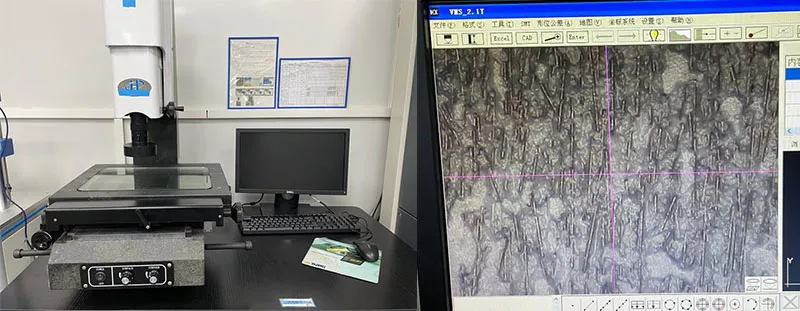
At the material level:
· Material Properties depend on internal structure.
· Microstructure determines how heat travels.
· Fiber Alignment controls Directional Heat Flow.
At the fiber level:
· Carbon fibers are arranged mainly in-plane.
· Heat moves quickly along the fiber axis.
· Through-thickness transfer slows down.
At the performance level:
· High in-plane Thermal Conductivity spreads heat fast.
· Limited vertical flow protects nearby components.
· Stable Carbon Fibers maintain conductivity under cycling.
In simple terms, this thermal conductive carbon sheet acts like a highway for heat across its surface, while acting more like a speed bump through its thickness. That’s the core reason anisotropic carbon fiber sheet materials are favored in compact electronics.
Polymer Matrix and Binder Roles in Sheet Composition
An anisotropic thermal conductive carbon fiber sheet is not just loose fibers pressed together. The Polymer Matrix and Binder quietly do the heavy lifting.
Here’s how it plays out:
· Adhesion keeps the carbon network intact.
· The matrix supports Mechanical Strength during bending.
· Electrical pathways are controlled to maintain Electrical Insulation when required.
Fibers are aligned for heat flow.
· A binder locks the structure in place.
· The composite cures into a stable Sheet Composition.
Some designs turn the carbon fiber thermal sheet into a Thermal Interface Material, improving contact between chips and heat spreaders. Others focus on flexibility for foldable hardware. A good anisotropic thermal conductive carbon fiber sheet balances heat transfer with toughness, so it doesn’t crack when devices flex or vibrate.
Comparing Flexible Sheet, Thin Film, and Composite Panel Forms
Not all anisotropic thermal conductive carbon fiber sheet products look the same. Form factor matters a lot.
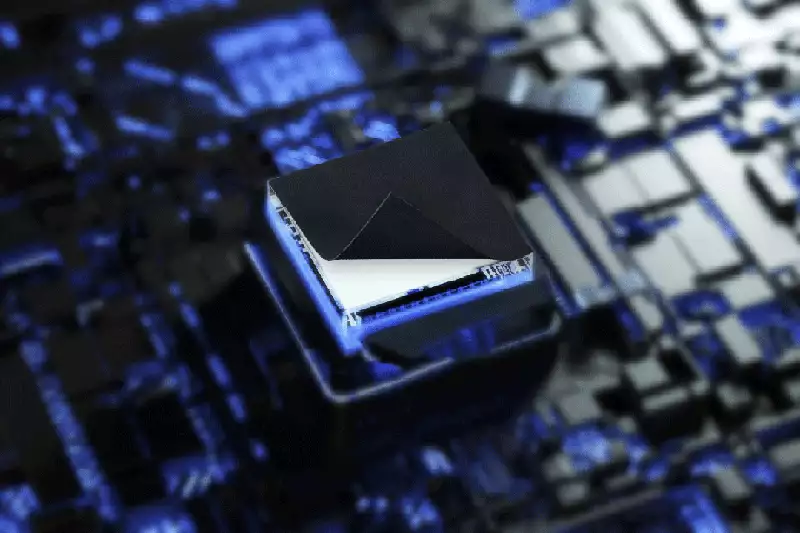
Flexible Sheet
· Thin profile
· Easy bending
· Ideal for curved housings
Thin Film
· Ultra-slim Thickness
· Optimized for tight packaging
· Maximizes usable Surface Area
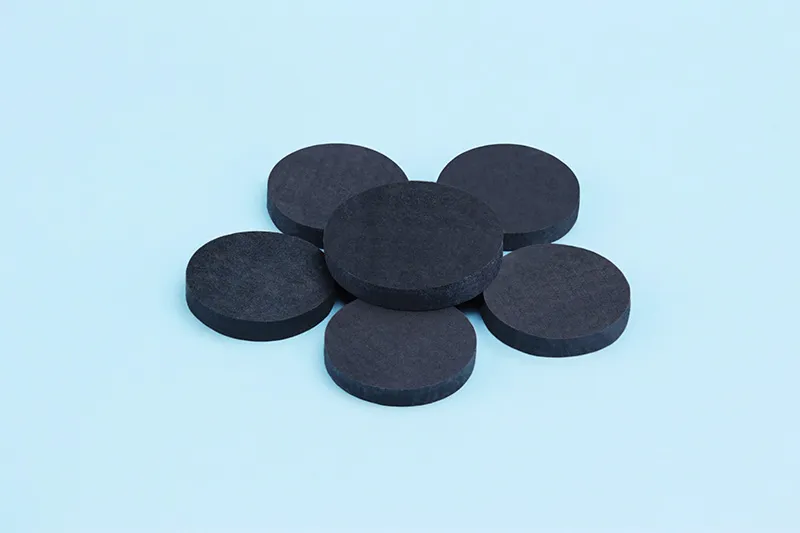
Composite Panel
· Reinforced layers
· Higher rigidity
· Better for power modules
Under the hood, the difference comes down to structure:
Form Factor
· Affects Application Suitability
· Influences mounting method
Internal Build
· Fiber density
· Resin content
External Performance
· Heat spreading efficiency
· Structural durability
This is why one anisotropic thermal conductive carbon fiber sheet may suit a smartphone, while another fits a battery pack or inverter.
Key Performance Metrics: Thermal Resistance and Operating Range
When engineers evaluate an anisotropic thermal conductive carbon fiber sheet, a few numbers drive the decision.
· Thermal Resistance tells how easily heat passes across contact surfaces.
· Operating Range defines safe temperature limits.
· Temperature Stability reflects long-term reliability.
A 2025 IDC manufacturing outlook noted:
“Thermal management materials with directional heat dissipation are seeing increased integration in compact electronics and EV systems due to rising power densities.”
That trend explains the push for advanced carbon fiber heat spreader materials.
Performance review usually follows a flow:
· Measure in-plane conductivity for Heat Dissipation.
· Evaluate thickness impact on resistance.
· Test cyclic heating for Efficiency retention.
Short story? A well-designed anisotropic thermal conductive carbon fiber sheet keeps heat moving sideways, keeps components cool, and keeps performance steady over time. In high-density devices, that’s not a luxury. It’s survival.
4 Steps To Prepare Your Carbon Fiber Sheet Surface
Getting the most out of an Anisotropic thermal conductive carbon fiber sheet isn’t luck—it’s prep work. When thermal conductivity, carbon fiber orientation, and sheet bonding all need to line up, surface treatment becomes the game changer. Here’s how to prep your Anisotropic thermal conductive carbon fiber sheet so heat flows exactly where you want it.
Step 1: Cleaning and Decontaminating the Sheet Surface
Proper Surface cleaning sets the tone for stable bonding in any Anisotropic thermal conductive carbon fiber sheet application.
Primary Objectives
· Remove oils using Degreasing agents
· Eliminate micro particles through Solvent cleaning
· Improve Surface preparation consistency
Cleaning Workflow
Pre-wipe
· Apply lint-free Wiping techniques
· Inspect for visible residue
Deep cleaning
· Use ultrasonic bath for advanced Contaminant removal
· Dry with filtered air
Quality Check Indicators
· Uniform matte appearance
· No surface streaks
· Stable contact angle performance
Even minor contamination can block in-plane heat paths in a thermal conductive carbon fiber sheet.
Step 2: Surface Treatment via Plasma or Chemical Etching
After cleaning, controlled Surface modification enhances bonding strength in your Anisotropic thermal conductive carbon fiber sheet.
Treatment Options
· Plasma treatment
· Chemical etching
Surface Mechanism
· Increase Surface energy
· Enable Surface activation
Strengthen Adhesion promotion
| Treatment Type | Surface Energy (mN/m) | Bond Strength (MPa) | Processing Time (min) |
| Untreated Sheet | 38–42 | 8–10 | — |
| Plasma Treatment | 60–72 | 15–18 | 5–10 |
| Chemical Etching | 65–75 | 17–20 | 10–20 |
Higher surface energy improves bonding to adhesives and TIM layers in anisotropic thermal sheets.
Step 3: Alignment Techniques for Enhanced Anisotropy
Heat prefers direction. So should your carbon fibers.
Core Goal: Anisotropy enhancement
· Optimize in-plane thermal flow
· Reduce vertical heat trapping
Orientation Control Methods
Mechanical systems
· Precision Fiber alignment
· Tension-guided Mechanical stretching
Field-assisted systems
· Magnetic field alignment
· Controlled Thermal processing
Performance Impact
· Better hotspot mitigation
· Higher lateral conductivity
· Stable performance in LED modules
For high-power electronics, Sheen Technology tunes alignment to maximize the advantage of every Anisotropic thermal conductive carbon fiber sheet produced.
Step 4: Final Curing and Lamination Procedures
The final stage locks everything in place.
Curing process
· Pre-press heating
· Controlled Thermal curing
· Optional Post-curing
Lamination techniques
· Vacuum-assisted layup
· Precision Pressing methods
· Multi-layer Adhesive bonding
Composite manufacturing Control
· Monitor void ratio
· Balance pressure and temperature
· Validate interlayer adhesion
A properly cured anisotropic thermal conductive carbon fiber sheet shows improved durability, stable conductivity, and consistent thickness.
When every phase—from Surface cleaning to final Lamination techniques—is dialed in, your thermal conductive carbon fiber sheet performs like it should. That’s the standard Sheen Technology builds around, every single time.
Top 3 Adhesives For Anisotropic Sheets
When bonding an Anisotropic thermal conductive carbon fiber sheet, picking the right adhesive is not just a detail—it decides heat flow, strength, and long-term stability. From thermal conductive carbon fiber layers to carbon fiber heat sheets, the glue matters more than most people think.
Epoxy Resin with Filler Materials for High Strength
When high load meets an Anisotropic thermal conductive carbon fiber sheet, Epoxy Resin systems reinforced with Filler Materials stand out.
Core Material Composition
1.1 Epoxy Resin matrix
· Cross-linked Composite Material structure
· Excellent chemical resistance
1.2 Conductive fillers
· Ceramic particles for electrical insulation
· Graphite for enhanced heat spreading
Mechanical Performance Factors
2.1 Bonding Strength
· High shear resistance
· Strong interfacial Bonding to carbon fiber sheet surfaces
2.2 Enhanced Mechanical Properties
· Increased tensile strength
· Crack resistance under thermal cycling
Application to Thermal Conductive Carbon Fiber Sheet
3.1 Surface Preparation
· Light abrasion
· Solvent cleaning
3.2 Controlled curing
· Stable pressure
· Optimized temperature ramp
For industrial-grade anisotropic carbon fiber sheet assemblies, companies like Sheen Technology often recommend filler-adjusted epoxy formulas when structural integrity is just as critical as heat transfer.
Silicone-Based Thermal Interface Material for Flexibility
For assemblies exposed to vibration or thermal expansion, Silicone-based Thermal Interface Material keeps things stable without going brittle.
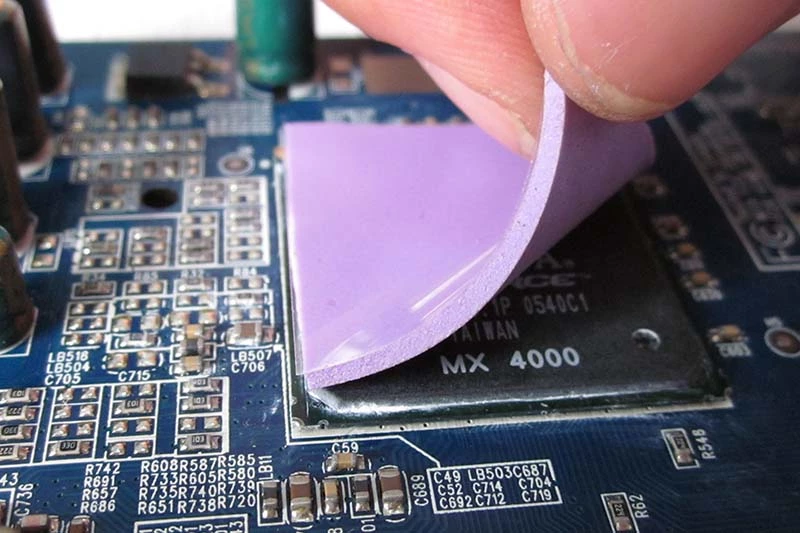
Functional Characteristics
1.1 Flexibility
· Absorbs stress from mismatched CTE
· Maintains Surface Conformity
1.2 Stable Thermal Conductivity
· Consistent heat path
· Reduced micro air gaps
Thermal Management Role
2.1 Improved Heat Transfer
· Bridges uneven surfaces
· Maintains contact over time
2.2 Reliable Application range
· Low-temp startups
· High-temp continuous operation
Practical Integration with Anisotropic Thermal Conductive Carbon Fiber Sheet
3.1 Between heat source and carbon fiber thermal sheet
3.2 In flexible electronics using thin thermal conductive carbon fiber sheet
3.3 In automotive battery modules
In short, when movement is unavoidable, silicone Elastomer chemistry keeps the interface alive instead of cracking. Sheen Technology integrates these materials in flexible module designs where shock resistance matters.
Acrylic Polymer Adhesive with Low Thermal Resistance
Acrylic Polymer systems balance light weight and fast processing, making them ideal for thin Anisotropic thermal conductive carbon fiber sheet bonding.
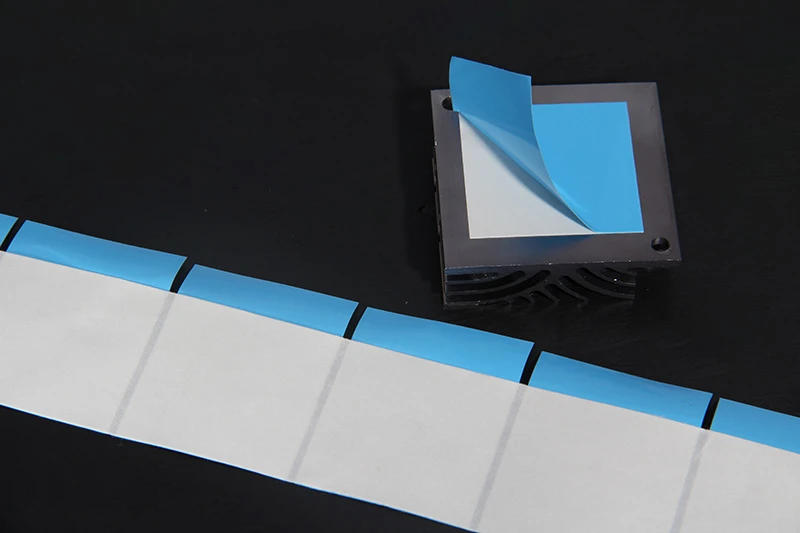
Key advantages include:
· Low Thermal Resistance
· Fast curing time
· Clean Interface formation
Performance Highlights
· Thin bond line reduces thermal barrier.
· Strong adhesion to treated carbon fiber surfaces.
· Good durability in consumer electronics.
Below is a simplified comparison for bonding a carbon fiber heat sheet:
| Adhesive Type | Thermal Conductivity (W/m·K) | Shear Strength (MPa) | Service Temp (°C) | Typical Thickness (mm) |
| Epoxy + Ceramic Filler | 1.5–3.0 | 20–35 | -40 to 180 | 0.1–0.3 |
| Epoxy + Graphite | 3.0–6.0 | 18–30 | -40 to 200 | 0.1–0.25 |
| Silicone TIM | 1.0–5.0 | 3–10 | -50 to 220 | 0.2–0.5 |
| Acrylic Polymer | 0.8–1.2 | 15–25 | -30 to 130 | 0.05–0.2 |
| Modified Acrylic | 1.5–3.5 | 18–28 | -30 to 160 | 0.05–0.15 |
For lightweight devices using Anisotropic thermal conductive carbon fiber sheet, acrylic adhesives often hit the sweet spot between Thermal Management efficiency and mechanical Performance. That’s why Sheen Technology applies them in compact electronic modules where space is tight and heat still needs to move fast.
Comparative: Carbon Fiber Vs Graphite Heat Spreaders
Modern devices run hot, fast, and tight on space. Picking the right heat spreader can make or break reliability. This comparison breaks down Anisotropic thermal conductive carbon fiber sheet solutions and graphite options in a clear, practical way, using real data and shop-floor logic you can actually use.
Carbon Fiber Heat Spreader
When engineers talk about Anisotropic thermal conductive carbon fiber sheet, the phrase can be segmented into four working ideas:
Anisotropic / thermal conductive / carbon fiber / sheet.
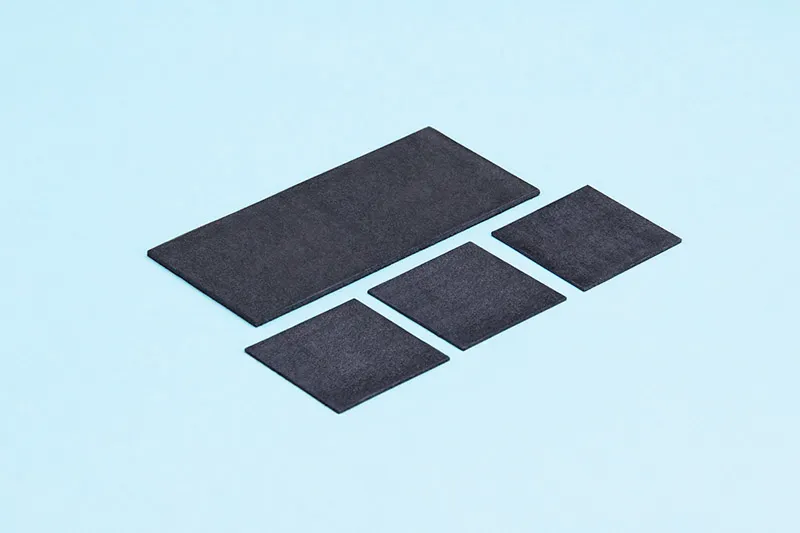
Each word matters in real applications.
· Anisotropic → heat flows faster in-plane than through thickness.
· Thermal conductive → built for serious heat dissipation.
· Carbon fiber → reinforced carbon fiber composite structure.
· Sheet → thin, customizable format for thermal management stacks.
From a performance standpoint:
Material Structure
Fiber alignment
· Controls anisotropic thermal conductivity
· Directs heat toward sinks or chassis
Resin matrix
· Supports mechanical integrity
· Enhances vibration resistance
Performance Advantages
Thermal
· High in-plane conductivity
· Efficient heat spreading across modules
Mechanical
· Lightweight construction
· High strength under compression
Integration
· Laser-cut shapes
· Laminated multi-layer carbon fiber sheet builds
Application Mapping
· Consumer electronics
· Automotive power modules
· Telecom base stations
· AI computing boards
Below is a practical comparison between a typical Anisotropic thermal conductive carbon fiber sheet and graphite:
| Property | Carbon Fiber Sheet | Graphite Sheet | Test Direction |
| In-plane thermal conductivity (W/m·K) | 600–900 | 800–1500 | X–Y |
| Through-plane conductivity (W/m·K) | 20–60 | 10–30 | Z |
| Density (g/cm³) | 1.5–2.6 | 1.9–2.2 | — |
| Tensile strength (MPa) | 400–800 | 20–40 | X–Y |
| Thickness range (mm) | 0.2–12.0 | 0.02–0.5 | — |
The edge shows up in mechanical durability. That’s why Sheen Technology promotes its Anisotropic thermal conductive carbon fiber sheet for designs needing both heat control and structural support.
“Advanced thermal management materials will be critical to improving efficiency and reliability in next-generation energy and electronics systems.” — IEA, Energy Technology Perspectives 2024
Graphite Heat Spreader
Graphite heat spreaders are all about extreme in-plane thermal conductivity. Ultra-thin. Flexible. Highly efficient at lateral heat spreading.
Quick facts:
· Excellent two-dimensional heat flow
· Strong electrical conductivity
· Ideal as a thermal interface material
· Easy to laminate into tight spaces
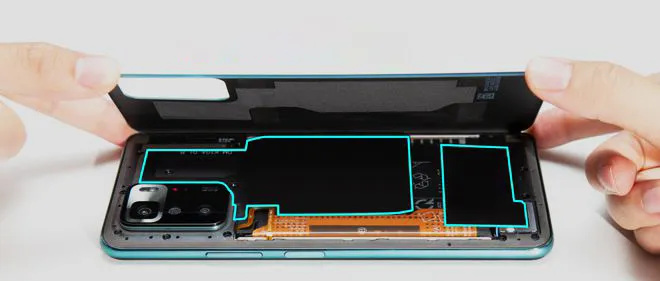
In phones and tablets, a graphite sheet works like a heat highway. Heat moves fast across the plane, then transfers into metal frames or vapor chambers. Slim profile? Absolutely. Mechanical toughness? Not so much.
Performance snapshot:
· Very high X–Y conduction
· Lower Z-direction conduction
· Brittle under bending stress
Unlike a reinforced carbon fiber sheet, graphite lacks structural reinforcement. Crack it once and thermal paths drop. That’s the trade-off.
Still, graphite dominates in ultra-thin builds where thickness under 0.1 mm matters. It shines in:
· Wearables
· OLED modules
· Compact consumer boards
In contrast, an Anisotropic thermal conductive carbon fiber sheet handles both load-bearing and thermal management in one body. That hybrid function is why many power electronics teams now compare carbon fiber thermal sheet options alongside traditional graphite sheet materials.
The choice comes down to this:
✦ Need ultra-thin and flexible? Graphite.
✦ Need strength plus controlled heat dissipation? Anisotropic thermal conductive carbon fiber sheet.
For projects demanding both precision and durability, Sheen Technology continues refining its Anisotropic thermal conductive carbon fiber sheet portfolio to meet real-world thermal limits without adding unnecessary weight.
Pain-Point-Solving: Uneven Cooling? Fiber Alignment Fix
Uneven cooling drives engineers crazy. A tiny hotspot can drag down output, trigger component failure, and shorten lifespan fast. This is where the Anisotropic thermal conductive carbon fiber sheet steps in. By tuning carbon fiber orientation and thermal pathways, heat stops piling up and starts moving smartly across the surface.
Diagnosing Hotspots in LED and Power Electronics
When overheating hits, guessing won’t cut it. Solid data does.
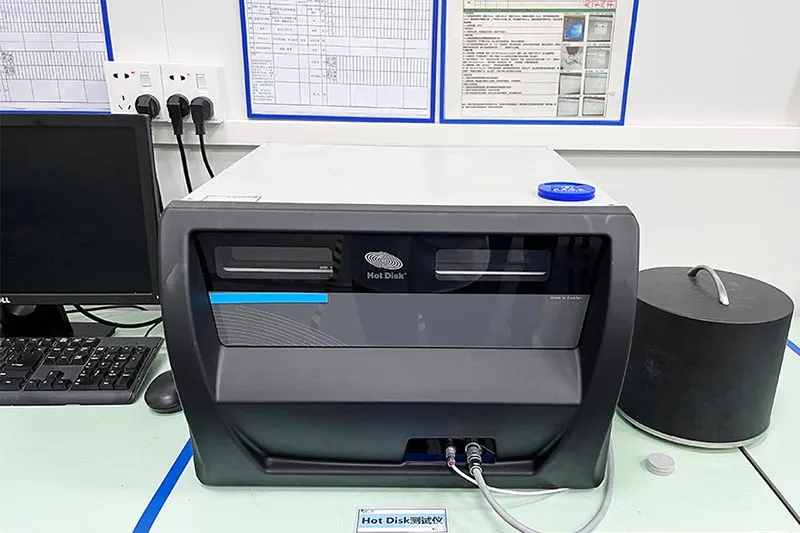
Detection Tools and Methods
· Thermal imaging cameras capture real-time temperature mapping.
· Embedded sensors log heat generation trends under load.
· Software flags abnormal gradients linked to performance degradation.
Common Overheating Zones
· LED junction interfaces
· Power MOSFET contact pads
· Battery module edges
Comparative Thermal Data with and without Anisotropic Thermal Conductive Carbon Fiber Sheet
| Device Type | Peak Temp (°C) Without Sheet | Peak Temp (°C) With Anisotropic Thermal Conductive Carbon Fiber Sheet | Temp Uniformity ΔT (°C) | Failure Rate (%) |
| LED Module | 112 | 89 | 18 → 6 | 4.5 → 1.2 |
| IGBT Board | 124 | 97 | 22 → 8 | 5.1 → 1.6 |
| Battery Pack | 118 | 92 | 20 → 7 | 3.8 → 1.1 |
| PSU Unit | 109 | 85 | 16 → 5 | 3.2 → 0.9 |
Thermal conductive carbon fiber sheets redirect heat laterally, cutting overheating before it snowballs.
Aligning Fibers to Maximize In-Plane Conductivity
Getting fiber direction right changes everything. The Anisotropic thermal conductive carbon fiber sheet depends on smart fiber orientation to form a low-resistance thermal pathway.
• Align carbon fiber along dominant heat flow direction.
• Control lamination pressure to avoid misalignment.
• Verify anisotropic conductivity after curing.
Here’s the flow that works in real production:
1) Map heat source layout.
2) Define required in-plane thermal performance.
3) Adjust carbon fiber alignment during layup.
4) Validate using post-lamination thermal scans.
Some teams also switch to a carbon fiber thermal sheet with enhanced lateral spread for compact LED arrays. At Sheen Technology, engineers fine-tune each Anisotropic thermal conductive carbon fiber sheet so heat spreads sideways instead of stacking vertically. Simple tweak. Big payoff.
Achieving Uniform Heat Dissipation and Reliability Enhancement
Balanced heat spreading is the endgame. The Anisotropic thermal conductive carbon fiber sheet supports stable thermal management across demanding loads.
Heat Spreading Logic
· Lateral conduction reduces peak node stress.
· Controlled vertical transfer maintains insulation safety.
· Optimized sheet thickness improves cooling efficiency.
Reliability Impact
· Better temperature uniformity
· Extended device lifespan
· Stronger system reliability
Practical Implementation Framework
· Evaluate system power density.
· Select matching anisotropic carbon fiber sheet grade.
· Integrate with heat sink or aluminum base.
· Conduct lifecycle thermal cycling tests.
Sheen Technology applies this approach across LED drivers and power boards, pushing heat spreading performance without adding bulk. When cooling becomes even and controlled, reliability stops being a gamble and turns into a measurable advantage.
FAQs about Anisotropic thermal conductive carbon fiber sheet
What makes an anisotropic thermal conductive carbon fiber sheet suitable for electronic packaging?
Heat moves with intent here.
– Lateral thermal conductivity spreads heat across the surface, easing stress in electronic packaging and LED cooling.
– Controlled anisotropy limits through-thickness transfer, guarding delicate chips.
– Low density brings weight reduction, felt by designers holding a flexible sheet or thin film in hand.
Behind the feel: carbon fiber set in a polymer matrix, balanced for mechanical strength and flexibility during daily thermal management cycles.
How does fiber alignment shape heat dissipation performance?
Alignment techniques decide the story of heat.
1) During sheet fabrication, carbon fiber orientation channels energy sideways.
2) Hotspots soften, thermal resistance drops, reliability steadies across curing and lamination cycles.
3) In power electronics and battery thermal regulation, this guided flow protects performance under pressure.
The result reads clearly on test data and on the engineer’s confidence.
Which bonding and surface preparation methods work best in real manufacturing?
A short path to trust between layers:
– Surface treatment raises surface energy before lamination.
– Binder choices and filler materials tune adhesion without hurting electrical conductivity control.
– Common pairings: epoxy with fillers for composite panels, silicone-based thermal interface material for vibration, acrylic adhesive for thin film layouts.
Care here supports durability across the operating temperature range.
Can anisotropic carbon fiber sheets replace graphite heat spreaders?
A quiet contest on the workbench:
| Aspect | Carbon fiber sheet | Graphite sheet |
| Mechanical strength | Higher, less fragile | Lower |
| Weight | Lighter | Heavier |
| In-plane conductivity | Comparable | High |
| Form options | Flexible sheet, thermal pad | Mostly rigid |
For designers balancing heat dissipation, handling comfort, and long-term reliability, the composite panel often wins the day.
Sheen Thermal
Dongguan Sheen Electronic Technology Co., Ltd · Founded in 2008
Manufacturer of thermal interface materials and silicone foam for automotive electronics, energy storage, power electronics, communications and consumer electronics.
Certified
- ISO 9001:2015
- ISO 14001:2015
- IATF 16949:2016
What we supply
- Thermal conductivity Up to 90 W/m·K
- Thickness 0.3–10.0 mm
- Custom & samples Die-cut to drawing, 3–7 days