
 English
 usheenthermal

Testing a Boron Nitride Thermal Pad for Server Power Supplies Performance
Date:2026-07-28
In crowded server racks, heat plays dirty, and a boron nitride thermal pad for server power supplies steps in like a quiet fixer, pulling excess heat away before components start cooking and costs start climbing.
Engineers want stability, buyers want fewer failures, and both need proof that materials hold up under pressure without cutting corners or budgets.
Quick Answers: Boron Nitride Thermal Pad for Server Power Supplies
1)JEDEC-Tested Performance – Ensures reliable thermal conductivity and resistance benchmarks for data center power modules.
2)h-BN vs. AlN Fillers – h-BN excels in electrical insulation and stability; AlN offers higher intrinsic conductivity but lower dielectric strength.
3)Integration Best Practices – Die-cut and cure pads for precise thickness, mount between semiconductors and heat sinks, and pair with heat pipes or fans.
4)Real-Load Validation – Measure thermal resistance under VRM and full-load conditions, analyze data trends, and confirm RoHS/UL compliance.

Data-Proven: Thermal Conductivity Gains of BN Pads
Server racks run hot, and power modules feel it first. Picking a solid boron nitride thermal pad for server power supplies isn’t just spec-chasing—it’s uptime insurance. From lab-grade JEDEC checks to real-world pad compression, this cluster breaks down how boron nitride thermal pad for server power supplies designs move heat fast while staying electrically safe, especially in dense PSU layouts.
JEDEC Standards for Thermal Conductivity Testing
JEDEC JESD51 series standards define test methods for thermal characterization of semiconductor packages and interface materials.
For TIM testing, the relevant methodology uses a steady-state heat flux method: a known thermal load is applied through a test die, and the temperature differential across the TIM layer is measured under controlled pressure and ambient conditions.
Thermal conductivity testing method for Sheen Technology's BN thermal pads:
- Testing is performed using the LW-9389 thermal conductivity tester, in accordance with the ASTM D5470 standard.
- Sample preparation: Samples measuring 25.4mm x 25.4mm (with thicknesses of 0.3, 0.5, 0.7, 1.0, 1.2, or 1.5mm) are placed flat on the test platform.
- Test procedure: Launch the software and select the calibration function; set the pressure to 40 psi and the temperature to 80°C; perform a thickness zeroing procedure; set the duration to 15 minutes.
- Select the thermal conductivity test mode for thermal pads; set the temperature to 80°C and the pressure to 40 psi.
- Initiate the test to obtain results, then perform a three-line fit on the data.
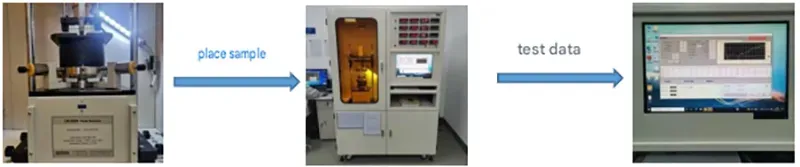
Test result:
| Initial thickness(mm) | 0.3 | 0.5 | 0.7 | 1.0 | 1.2 | 1.5 |
| Compressed thickness(mm) | 0.265 | 0.458 | 0.667 | 0.95 | 1.12 | 1.308 |
| Thermal resistance (°C*cm²/W ) | 0.286 | 0.469 | 0.618 | 0.691 | 0.835 | 0.975 |
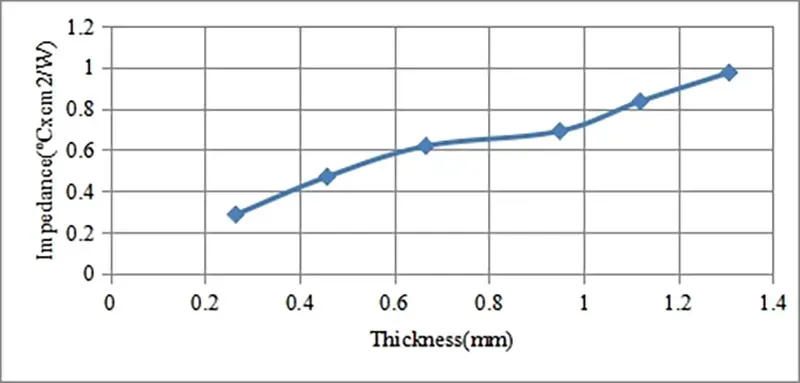
Based on the formula λ = 1 / (α · A), the fitted thermal conductivity is calculated to be K = 16.1 W/(m·K).
Hexagonal Boron Nitride vs. Aluminum Nitride Fillers
When comparing hexagonal boron nitride and aluminum nitride in fillers:
- BN: strong dielectric behavior, stable across temps, smoother integration in thermal interface materials
- AlN: higher intrinsic thermal properties, but trade-offs in insulation and processing
In practice, a boron nitride thermal pad for server power supplies often wins where isolation and reliability matter. Sheen Technology tunes material comparison and performance to balance conductivity with safety.
Volume Resistivity Impact on Heat Transfer
Short takes that matter:
- volume resistivity stays high → safer electrical insulation
- strong dielectric properties → protects MOSFET gates
- minimal impact on thermal performance when BN networks are well-formed
- balanced electrical properties and heat transfer keep VRMs steady
For tight PSU designs, a boron nitride thermal pad for server power supplies delivers cooling without risking shorts—exactly the mix Sheen Technology targets.
Engineering Scenario: BN Pad Integration in a 2 kW CRPS Module
Consider a 2 kW common redundant power supply (CRPS) form factor (73.5 x 185 x 40 mm). The primary thermal interfaces within a CRPS include:
Die-Cutting and Curing for PSU Layouts
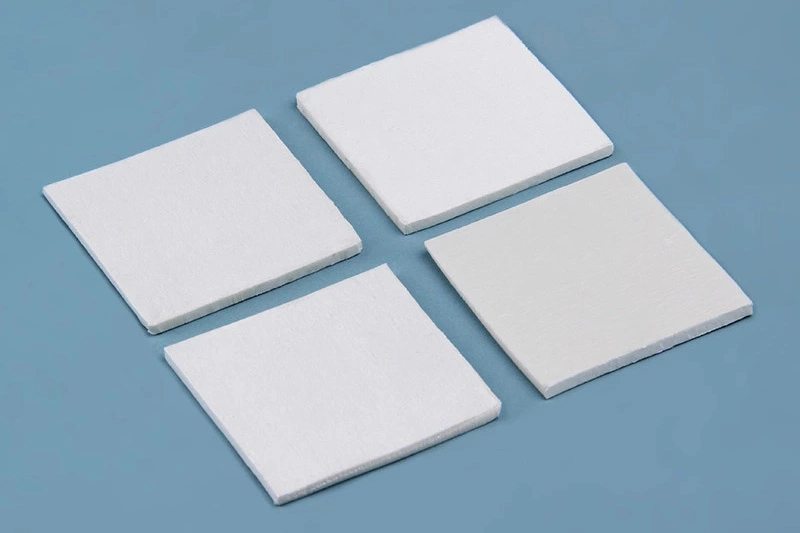
The BN thermal pad must match the exact die footprint of each power stage. Sheen Technology supplies die-cut pads in the following typical geometries for server PSUs:
- PFC stage MOSFET/Diode: 15 x 20 mm pad, 1.5 mm thickness
- Half-bridge LLC primary switches: 12 x 18 mm pad, 1.0 mm thickness
- Synchronous rectifier MOSFETs (x4 paralleled): 10 x 15 mm per device, 1.0 mm thickness
- VRM controller and driver ICs: 8 x 10 mm pad, 0.5 mm thickness
After die-cutting, pads undergo a controlled curing cycle (150 C for 30 minutes) to stabilize the polymer matrix and ensure that the h-BN filler network is fully formed. Curing eliminates residual volatiles and prevents post-installation compression set. Sheen Technology verifies cured pad thickness to +/-0.05 mm tolerance per lot.
Mounting Procedure and Heat Sink Interface
The mounting procedure follows a defined sequence:
- Step 1: Clean heat sink base and semiconductor package surfaces with isopropyl alcohol to remove oxides and residues
- Step 2: Position die-cut BN pad on the heat sink base with alignment fixture
- Step 3: Mount the PSU PCB assembly onto the heat sink, applying even pressure in a cross-pattern torque sequence (typically 4-6 in-lb per screw)
- Step 4: Verify pad compression--the BN pad should compress to 50-70% of its original thickness at the target clamp force
At the target mounting pressure of 40 psi, the BN pad achieves >90% contact area with the semiconductor package surface (measured by pressure-indicating film), compared to approximately 70-80% for uncured silicone pads at the same pressure.
5 Steps to Benchmarking Thermal Pad Performance
Getting a boron nitride thermal pad for server power supplies right isn’t guesswork—it’s controlled testing with real constraints. This walkthrough keeps it practical, mixing lab habits with production insight so your thermal sheet choice actually holds up under server-grade loads.
Step 1: Selecting Boron Nitride Thermal Sheet Specifications
Core picks revolve around Boron Nitride, thermal conductivity, and dielectric strength,Then match sheet dimensions and material properties to server PSU layouts.
Selection logic
- Electrical safety:Check dielectric strength thresholds
- Thermal path:Optimize thermal sheet thickness
- Fit:Confirm sheet dimensions vs heatsink
Sheen technology Boron Nitride thermal pad performance properties:
| Properties | Unit | SF1600- BN-03 | SF1600-BN-05 | SF1600-BN-07 | SF1600-BN-10 | SF1600-BN-15 | SF1600-BN-20 | SF1600-BN-30 | Test Method |
| Color | - | White | White | White | White | White | White | White | Visual |
| Thermal Conductivity | W/m·K | 16 | 16 | 16 | 16 | 16 | 16 | 16 | ASTM D5470 |
Thermal Resistance (@40psi) | ℃*cm²/W | ≤0.3 | ≤0.5 | ≤0.7 | ≤0.8 | ≤1.1 | ≤1.4 | ≤1.7 | ASTM D5470 |
Application temperature | ℃ | -40~150 | -40~150 | -40~150 | -40~150 | -40~150 | -40~150 | -40~150 | - |
Thermal weight loss rate | % | ≤1 | ≤1 | ≤1 | ≤1 | ≤1 | ≤1 | ≤1 | - |
| Thickness | mm | 0.2~5.0 | 0.2~5.0 | 0.2~5.0 | 0.2~5.0 | 0.2~5.0 | 0.2~5.0 | 0.2~5.0 | ASTM D374 |
| Breakdown voltage | KV,@AC | ≥4 | ≥5 | ≥6 | ≥10 | ≥12 | ≥12 | ≥12 | ASTM D149 |
| Dielectric constant | F/m, @ 1MHz | ≤4.2 | ≤4.2 | ≤4.2 | ≤4.2 | ≤4.2 | ≤4.2 | ≤4.2 | ASTM D150 |
| Volume resistivity | Ω*cm, @250V | ≥10¹³ | ≥10¹³ | ≥10¹³ | ≥10¹³ | ≥10¹³ | ≥10¹³ | ≥10¹³ | ASTM D257 |
| Rebound rate | % | ≥90 | ≥80 | ≥70 | ≥70 | ≥60 | ≥60 | ≥60 | - |
| Density | g/cm³ | 1.6±0.2 | 1.6±0.2 | 1.6±0.2 | 1.6±0.2 | 1.6±0.2 | 1.6±0.2 | 1.6±0.2 | ASTM D792 |
| Hardness | shore 00 | 60~80 | 60~80 | 60~80 | 60~80 | 60~80 | 60~80 | 60~80 | ASTM D2240 |
| Flammability rating | - | V-0 | V-0 | V-0 | V-0 | V-0 | V-0 | V-0 | UL 94 |
A boron nitride thermal pad for server power supplies should balance insulation and heat spread, not just chase peak numbers.
Step 2: Surface Preparation and Silicone Binder Application
Surface workflow
- Substrate cleaning,Remove oxide
- Surface treatment,Micro-roughening
- Binder application,Apply silicone binder evenly
Key effects:
- Better adhesion
- Reduced voids
- Stable coating uniformity
Sheen Technology often tunes bonding agent viscosity to keep spread consistent across large PSU plates. A good boron nitride thermal pad for server power supplies fails fast if prep is sloppy.
Step 3: Hot Pressing Dielectric Layer for Consistent Thickness
Process chain:
- Hot pressing setup: Temperature ramp-up and pressure control
- Material response: Compression behavior and resin flow
Quick sequence:
1) Preheat
2) Align layers
3) Press + dwell
4) Controlled cool
Consistency here defines repeatability more than raw material specs.
Step 4: Thermal Resistance Measurement under VRM Load
Testing isn’t idle-state fluff.
Load simulation
- Real VRM load
- Cycling patterns
Metrics
- Thermal resistance
- Junction temps
Data snapshot:
| Load (W) | Temp Rise (°C) | Thermal Resistance (°C/W) |
|---|---|---|
| 50 | 18 | 0.36 |
| 100 | 34 | 0.34 |
| 150 | 52 | 0.35 |
| 200 | 71 | 0.355 |
Interpretation:
- Stable values = solid thermal interface contact.
- Spikes = poor compression or gaps.
A boron nitride thermal pad for server power supplies must stay flat under sustained load, not just pass a quick bench test.
Step 5: Data Analysis and RoHS Compliance Verification
Break it down cleanly:
Analysis tree
- Test results:Trend lines
- Data interpretation:Outlier detection
Compliance track
- RoHS compliance
- material certification
- Environmental checks
Multiple short takes:
- Numbers tell the story.
- Compliance keeps you shipping.
- Miss either, and redesign starts again.
Sheen Technology integrates verification early, so performance and environmental standards move together—not as a last-minute fix.
Comparing Thermal Pads: BN Versus Silicone
Kick off with a quick reality check: picking between a boron nitride thermal pad for server power supplies and a silicone option isn’t just spec-sheet stuff. It shapes uptime, heat flow, and how hard your cooling system has to work. We’ll break it down in plain terms, with real material behavior and how it plays out in racks.
Boron Nitride Thermal Pad
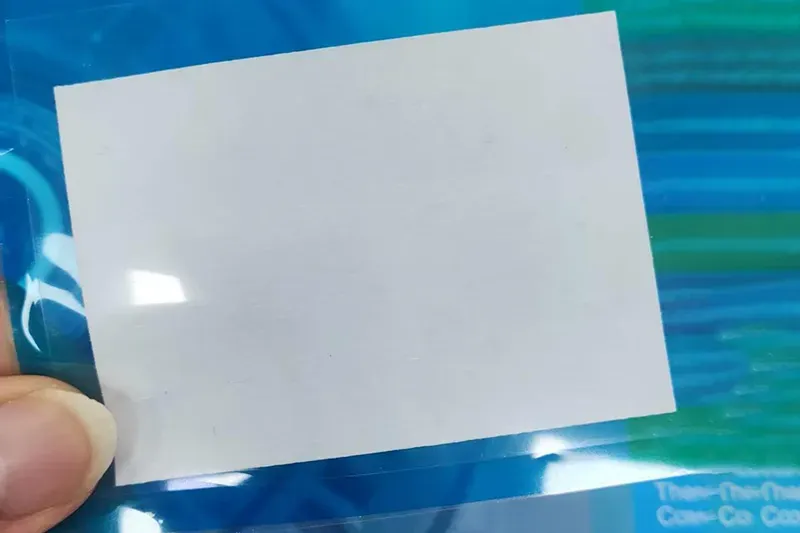
A boron nitride thermal pad for server power supplies stands out when heat density climbs. You’re dealing with Boron Nitride fillers inside a thermal pad matrix, tuned for serious thermal conductivity and stable material properties under pressure and temperature swings.
Core traits
- High thermal performance → faster heat dissipation
- Strong electrical isolation → safe for server power supplies
- Low pump-out → steady thermal management
Why it matters in servers
- Heat paths stay consistent across load spikes
- Pads keep shape, so contact resistance doesn’t creep up
- Cooling fans don’t need to overcompensate
Quick comparison snapshot
- BN pad = tighter heat path
- Standard pad = more variance
Small note: a boron nitride thermal pad for server power supplies often replaces paste where maintenance cycles are tight.
Long view: In dense racks, a boron nitride thermal pad for server power supplies reduces thermal throttling risk because the interface doesn’t degrade quickly, even with repeated thermal cycling.
Short bursts: stable, predictable, low drift.
Silicone-Based Thermal Interface Material
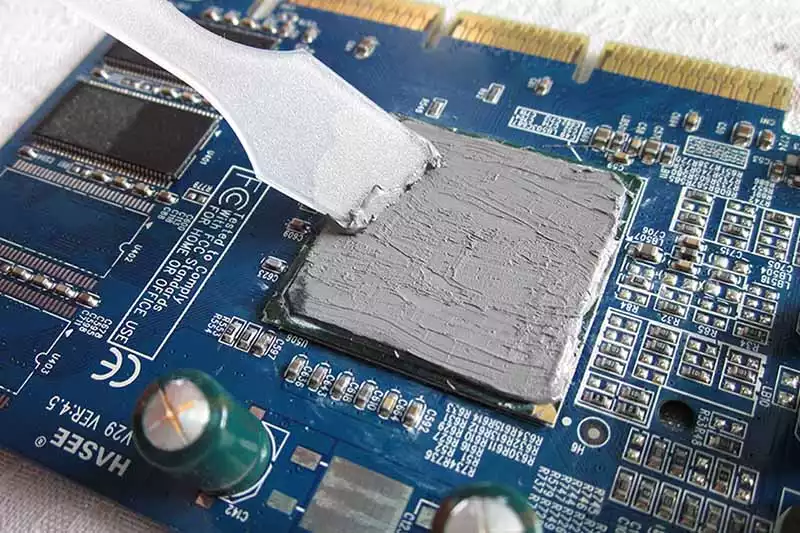
A Silicone-driven thermal interface material—think thermal grease or thermal paste—leans into flexibility and easy spread. It adapts well to uneven surfaces but trades off some thermal conductivity and raises thermal resistance compared to BN-filled options.
How it behaves in use
- Application spreads thin, filling micro-gaps
- Initial heat transfer is decent
- Over time, dry-out or pump-out can increase resistance
Where it fits
- Prototyping or frequent rework
- Lower heat flux components
- Cost-sensitive builds
Now a data-backed glance from Sheen technology:
| Material Type | Thermal Conductivity (W/m·K) | Thermal Resistance (°C·cm²/W) | Operating Temp (°C) | Typical Use Case |
|---|---|---|---|---|
| BN Thermal Pad | 16 | 0.3–1.7 | -40 to 150 | High-density servers |
| Silicone Pad | 1–15 | 0.64–5.80 | -50 to 200 | General electronics |
| Thermal Grease | 1–5 | 0.09–0.25 | -50 to 150 | CPUs, rework setups |
| Phase-Change TIM | 3–8 | 0.04–0.32 | -40–150 (active) | Controlled environments |
Tie it together: if your setup demands consistency under load, a boron nitride thermal pad for server power supplies wins on stability and long-term thermal management. Silicone options stay handy for flexibility and quick installs, but they usually can’t match BN when heat gets serious.
Dual-Scenario Testing: Idle and Full Load
Even when systems chill in idle state or push hard at full load, thermal behavior shifts in ways that can quietly make or break reliability. This is where a boron nitride thermal pad for server power supplies steps in, balancing heat flow, stability, and efficiency without overcomplicating the setup.
Idle-State Thermal Resistance with Heat Spreader
At low draw, heat doesn’t disappear—it lingers. A heat spreader paired with a boron nitride pad smooths out uneven hotspots across a server power supply, keeping thermal resistance predictable under low power conditions.
Heat paths stay consistent,Surface temperature variance drops,Long-term heat dissipation improves.
- Contact layer: the boron nitride thermal pad for server power supplies fills microscopic gaps
- Spreading phase: heat redistributes across the metal spreader
- Release phase: gradual transfer into ambient airflow
Short notes:
- Cooler casing feel
- Reduced thermal cycling stress
- Stable baseline metrics
Now, a closer nested view:
- Interface control: Soft pads reduce contact resistance,Firm pads maintain structural spacing.
- Material response:Boron nitride pad conductivity,Keeps dielectric strength intact,Avoids leakage risks.
- System effect:Server power supply lifespan,Lower idle drift,Fewer micro-expansion events.
A solid boron nitride thermal pad for server power supplies from Sheen Technology quietly keeps things steady without overengineering the stack.
Full-Load Thermal Conductivity under Liquid Cooling
Push the system, and everything changes. Under high power conditions, heat flux spikes, and only high thermal conductivity materials keep pace—especially when liquid cooling enters the loop.
Flow sequence under stress:
- Heat generation:CPU/GPU spikes,Server power supply strain increases
- Transfer bridge:Boron nitride thermal pad for server power supplies channels heat
- Cooling loop:Liquid absorbs and relocates thermal load
Small takeaways:
- Faster heat evacuation
- Less throttling
- Better cooling efficiency
A boron nitride pad for server PSU setups tuned by Sheen Technology handles these extremes cleanly, keeping performance sharp without thermal drama.
Ready to optimize your thermal management design?
- Download the Datasheet Selection Guide: https://www.sheenmaterials.com/resource/datasheet-download/
- Refer to The Application Page for Details: https://www.sheenmaterials.com/applications/
- Schedule Technical Consultation: https://www.sheenthermal.com/feedback.html
Sheen Thermal
Dongguan Sheen Electronic Technology Co., Ltd · Founded in 2008
Manufacturer of thermal interface materials and silicone foam for automotive electronics, energy storage, power electronics, communications and consumer electronics.
Certified
- ISO 9001:2015
- ISO 14001:2015
- IATF 16949:2016
What we supply
- Thermal conductivity Up to 90 W/m·K
- Thickness 0.3–10.0 mm
- Custom & samples Die-cut to drawing, 3–7 days