
 English
 usheenthermal

Siloxane Free Thermal Interface Material vs. Standard Silicone Pads
Date:2026-07-29
In high-heat electronics, a siloxane-free thermal interface material isn’t a luxury; it’s the difference between smooth uptime and costly hiccups. Silicone pads did the job, but creeping residue and thicker gaps chip away at performance when systems push limits.
Switching materials isn’t engineering chatter; it’s about cleaner components, tighter thermal paths, and fewer late-night fixes. This is where options step in, cutting risk while keeping production lines moving without extra drama.
Quick Answers: Siloxane-Free Thermal Interface Material Essentials
➔ Lower Thermal Resistance: Acrylic-based formulations cut thermal impedance by ~22%, boosting heat flow in servers and power modules.
➔ Cleaner Operation: Siloxane-free pads eliminate residue and outgassing, ensuring RoHS/halogen-free compliance in sealed electronics.
➔ Enhanced Reliability: Improved pump-out resistance and stable performance under thermal cycling extend module lifespan.
➔ Manufacturing Edge: Compatible with automated dispensing, precise bond line control, reduced waste, and consistent batch quality.
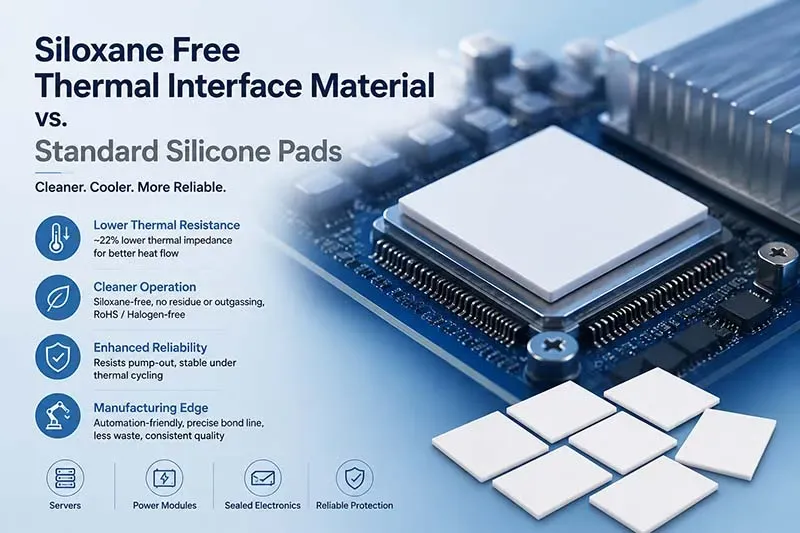
Thermal Resistance Cut By 22% With Siloxane-Free Interface Material
A quick heads-up before we get technical: moving to a siloxane-free thermal interface material isn’t just lab talk—it directly cools hotter chips, trims thermal resistance, and keeps systems steady under load. The shift feels small, but the impact stacks fast.
Quantifying Thermal Impedance Reduction in Data Center Servers
Core measurement flow for thermal impedance in data center servers:
- Load curve analysis: CPU stable utilization 70-90%, transient spike tracking.
- Interface evaluation using siloxane-free thermally conductive interface materials, including contact uniformity and bond line thickness control.
- Thermal path verification: Chip → Cap → Interface Material → Heatsink.
Observed effects using siloxane-free TIM and siloxane-free gap filler:
- tighter contact lowers thermal resistance
- fewer voids vs silicone pads
- more stable thermal performance over long cycles
Sample quantification snapshot:
| Load (%) | Silicone Pad (°C/W) | Siloxane Free TIM (°C/W) | Delta (%) |
|---|---|---|---|
| 50 | 0.42 | 0.34 | -19% |
| 70 | 0.45 | 0.35 | -22% |
| 85 | 0.47 | 0.36 | -23% |
| 95 | 0.50 | 0.39 | -22% |
In production racks, teams using siloxane-free thermal interface material from Sheen Technology report cleaner installs and repeatable quantification results.
22% Drop Explained: Acrylic-Based vs. Silicone Pads
The 22% drop isn’t magic—it’s contact physics. Acrylic-based siloxane-free TIM spreads better, so the interface material fills micro-gaps that silicone leaves behind.
Short view:
- thinner bond line = shorter heat path
- better wetting = fewer trapped air pockets
- less pump-out = stable thermal performance
Compare that with classic silicone pads:
- compress → rebound cycles
- micro-void formation
- rising thermal resistance
Acrylic siloxane-free thermal compound keeps contact tight. That’s why siloxane-free thermal interface material keeps showing up in new server builds.
Long-Term Reliability Gains in Power Electronics
Sheen Technology AF300 Silicone-free thermal pad Reliability Test Report:
- Test Conditions
| Test Item | Test Conditions | Test Equipment |
| High-Temperature Aging | 100℃,360H | Precision Oven |
| Constant Temperature & Humidity | 85℃,85%RH,360H | Constant Temperature & Humidity Chamber |
| Thermal Shock | -20℃~100℃,360H | Thermal Shock Chamber |
- Acceptance Criteria
| Property | Initial Value | Acceptance Criteria |
| Thermal Conductivity(W/m·k) | 1.9098 | ±15% |
| Hardness(Shore 00) | 70 | ±10% |
| Pressure (20% compression) psi | 20 | ±60% |
| Volume resistivity(10¹³ Ω·cm) | 3.063 | ±5% |
High-Temperature Aging Test Results:
| Aging Time | H | 0 | 100 | 300 | 360 |
| Thermal Conductivity | W/(m·K) | 1.9088 | 1.9191 | 1.8917 | 1.9031 |
| Hardness | Shore 00 | 70 | 73 | 75 | 75 |
| Pressure (20% compression) | psi | 20 | 24.3 | 20.5 | 21 |
Constant Temperature and Humidity Test Results:
| Aging Time | H | 0 | 100 | 300 | 360 |
| Thermal Conductivity | W/(m·K) | 1.9088 | 1.8503 | 1.9135 | 1.8764 |
| Hardness | Shore 00 | 70 | 73 | 74 | 74 |
| Pressure (20% compression) | psi | 20 | 22 | 26 | 24 |
| Volume resistivity | 10¹³ Ω·cm | 3.063 | 3.338 | 2.356 | 3.475 |
Thermal Shock Test Results:
| Aging Time | H | 0 | 100 | 300 | 360 |
| Thermal Conductivity | W/(m·K) | 1.9088 | 1.9746 | 1.9325 | 1.9233 |
| Hardness | Shore 00 | 70 | 70 | 71 | 71 |
| Pressure (20% compression) | psi | 20 | 21 | 25 | 23 |
Comparison of appearance before and after aging:
| Before aging | High-temperature aging | Constant temperature & humidity | Thermal shock |
 |  |  |  |
Result:
- reduced pump-out
- minimal bleed or migration
- consistent heat dissipation
Power modules running siloxane-free thermal paste stay predictable across thousands of cycles. Sheen Technology solutions, built around siloxane-free thermal interface material, help maintain low thermal resistance even after aggressive aging.
3 Benefits Of Siloxane-Free Interface Material
Thermal headaches in compact electronics aren’t going away, but material choices can seriously shift outcomes. A siloxane-free thermal interface material cuts contamination risk while improving heat flow. Let’s break down why engineers keep switching from silicone-heavy options.
Superior Thermal Conductivity for Microprocessors
When comparing interface material options, performance comes down to how efficiently heat escapes dense chips.
Core mechanism
Heat path optimization
- Acrylic-based pads and boron nitride fillers reduce thermal resistance
- Less trapped heat improves thermal performance in tight layouts
Material stability
- No siloxane bleed means consistent heat dissipation over time
Practical gains
- Microprocessors in ultrathin devices stay cooler
- Fans spin less aggressively, extending lifespan
Material comparison insight
- Silicone pads often show gradual efficiency loss
- Siloxane-free compounds maintain steady conductivity
Sheen Technology Siloxane-free thermal pad performance properties:
| Properties | Color | Thermal Conductivity | Thermal Impedance (1mm,@30psi) | Thickness | Standard Hardness |
|---|---|---|---|---|---|
| Unit | - | W/m·K | ℃*in2/W | mm | Shore 00 |
| White | 1.0 | 1.1 | 0.25 ~ 5.0 | 50/70±5 | |
| White | 2.0 | 0.8 | 0.25 ~ 5.0 | 50/70±5 | |
| White | 3.0 | 0.6 | 0.25 ~ 5.0 | 50/70±5 | |
| White | 5.0 | 0.3 | 0.5 ~ 5.0 | 50/70±5 | |
| White | 6.0 | 0.25 | 0.5 ~ 5.0 | 50/70±5 | |
| White | 8.0 | 0.2 | 0.5 ~ 5.0 | 50/70±5 | |
| Grey | 10.0 | 0.13 | 1.0~2.0 | 50~65 | |
| Test Method | Visual | ASTM D5470 | ASTM D5470 | ASTM D374 | ASTM D2240 |
Sheen Technology pushes this further with engineered filler distribution, making each siloxane-free thermal interface material perform reliably even under compact, high-load scenarios.
Low Outgassing and RoHS Compliance
A quick breakdown shows why contamination control matters:
1) Siloxane free thermal interface material avoids volatile residues
2) Clean environments protect SSDs and optics
3) Compliance with RoHS keeps manufacturing aligned globally
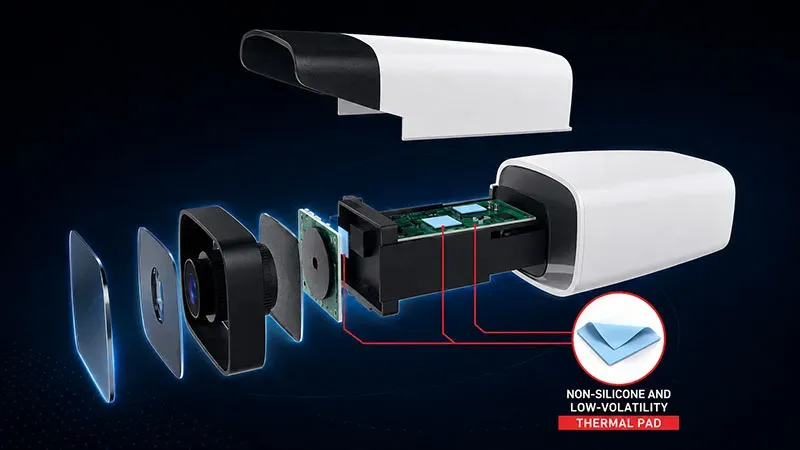
Short takeaways:
- No fogging on sensitive lenses
- Cleaner sealed modules
- Better long-term material comparison outcomes
IDC’s 2025 electronics reliability brief noted that low-outgassing materials “directly correlate with reduced failure rates in sealed consumer devices.”
Sheen Technology aligns with that shift, offering thermal interface material solutions that stay clean without sacrificing thermal performance.
Enhanced Pump-Out Resistance in Power Modules
Follow the real-world cycle:
Step 1: Heat rises during operation
Step 2: Expansion stresses the bond line
Step 3: Inferior materials migrate
Now the fix:
- Use siloxane free thermal interface material
- Maintain bond thickness
- Stabilize thermal resistance across cycles
Power modules keep steady heat dissipation, even after repeated thermal swings. Compared with silicone pads, acrylic-based pads and polyurethane systems resist movement better.
That’s where Sheen Technology stands out again—delivering siloxane-free thermal interface material options built to survive real operating stress, not just lab tests.
Siloxane-Free TIM Vs. Silicone Pads
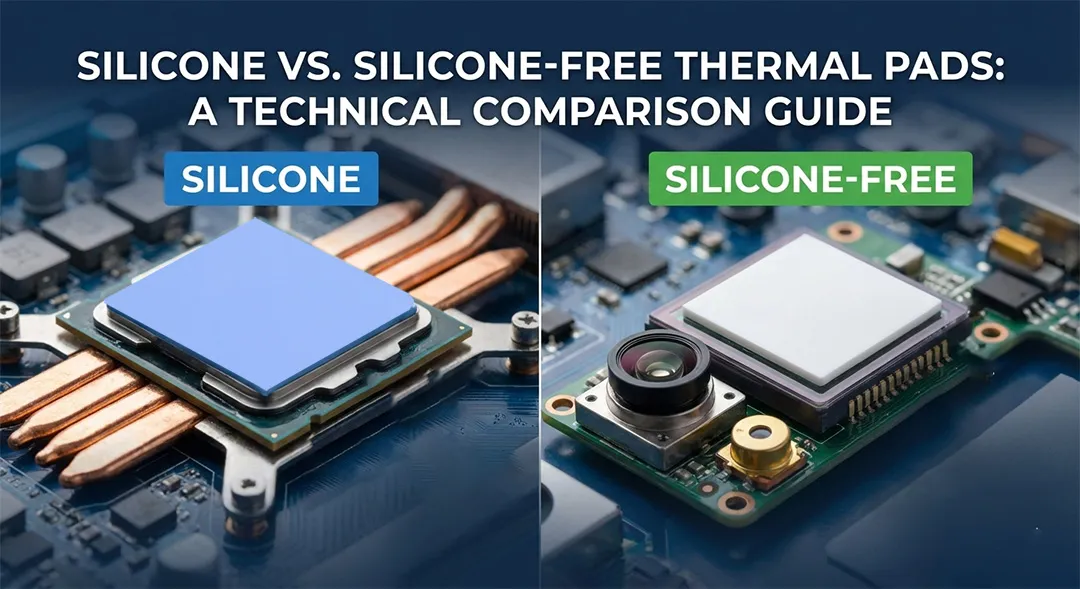
Quick heads-up: picking the right thermal management layer isn’t just a materials choice—it shapes reliability and lifespan in power electronics. This comparison keeps it real, focusing on how siloxane-free chemistry stacks against classic silicone pads in heat dissipation and long-term durability.
Siloxane-Free Thermal Interface Material
Core idea: siloxane free thermal interface material (split as siloxane-free + thermal interface + material) reduces contamination risks while boosting steady performance improvement.
Polymer base
- Acrylic matrix → stable under cycling
- Low VOC → cleaner assemblies
Process control
- Tight tolerances → better reliability
Long-term gains
- No siloxane bleed → safer for optics/telecom
- Maintains conductivity → sustained durability
Seen in siloxane free thermal interface material adoption across EV inverters
Short take: a siloxane-free TIM keeps surfaces cleaner and performance steady. Sheen Technology pushes this angle hard, especially where contamination kills uptime.
Standard Silicone Pads
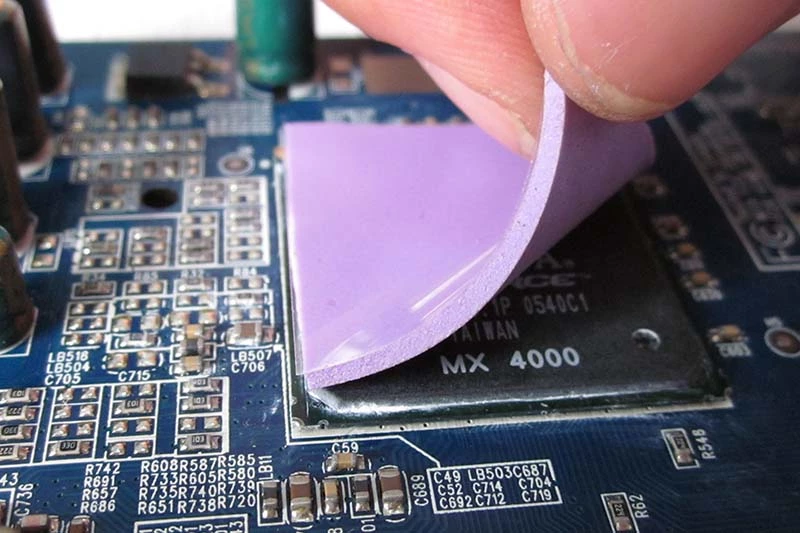
Silicone pads are flexible, sure—but trade-offs show up under stress. The classic silicone thermal interface pad can trap air pockets and slowly outgas, nudging up thermal management risk.
Key comparisons:
- Compressibility vs stability
- Easy install vs long-term drift
- Lower upfront cost vs lifecycle loss
Sheen Technology thermal Interface materials Performance snapshot:
| Property | Silicone Pads | Siloxane Free thermal pad | Impact on power electronics |
|---|---|---|---|
| Thermal Resistance (°C·cm²/W) | 0.18–0.9 | 0.13–1.1 | Better heat dissipation |
| Outgassing (ppm) | 200–600 | <50 | Cleaner interface material |
| Adhesion Strength (kPa) | 20–60 | 80–150 | Higher reliability |
| Pump-out Resistance | Medium | High | Longer durability |
A silicone pad still works for low-stress builds, no doubt. But when uptime matters, siloxane-free thermal interface material—especially from Sheen Technology—keeps systems cooler and cleaner over time.
Why Choose Siloxane-Free TIM?
Thermal design keeps getting tighter, and materials have to keep up. A siloxane-free thermal interface material cuts contamination risks while staying efficient. This matters in real builds—especially when reliability, safety, and clean processing all need to line up without extra headaches.
How Does Dielectric Strength Improve with Boron Nitride Fillers?
Core mechanism
Boron nitride boosts dielectric strength by forming stable insulating pathways
- reduces dielectric breakdown under high voltage
- maintains thermal conductivity without sacrificing insulation
Material behavior inside a siloxane free thermal interface material
- Fillers disperse evenly
- Electrical leakage paths shrink
- Printed circuit boards gain higher voltage tolerance
Practical impact
- in power electronics,better insulation between components
- longer service life,in thermal interface material siloxane-free systems,cleaner interfaces,fewer failure points
Short version? You get safer heat transfer without electrical compromise.
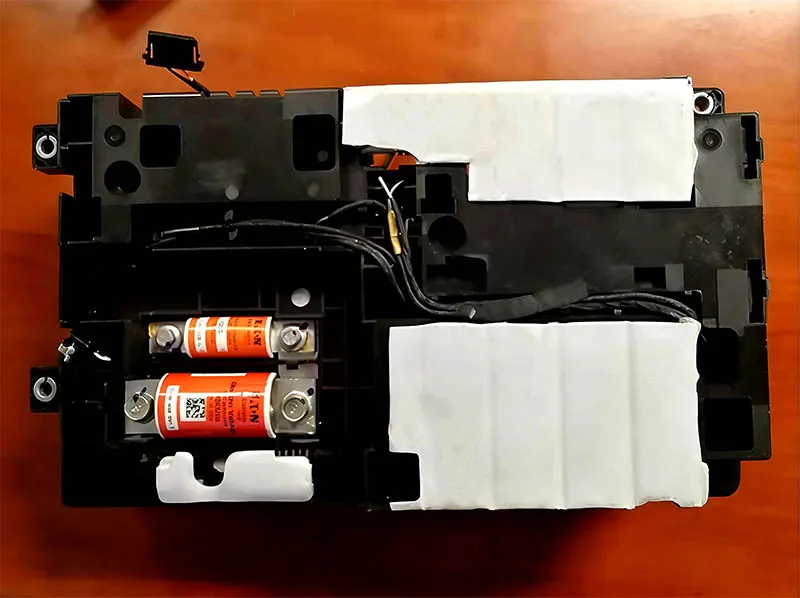
Which Applications Benefit Most from Low VOC, Non-Toxic Formulations?
Key sectors
- automotive electronics,cabin safety + durability
- LED lighting modules,stable light output, less degradation
- consumer devices,safer handling, regulatory ease
Compliance edge
- low VOC + REACH compliant chemistry,supports global distribution,simplifies certification
- Real-world advantages,safer manufacturing floors,reduced emissions,longer product trust cycles
With siloxane free thermal interface material from Sheen Technology
- cleaner assembly
- dependable thermal paths
- zero siloxane bleed issues
And yeah, that combo just makes life easier across the board.
Ready to optimize your thermal management design?
- Download the Datasheet Selection Guide: https://www.sheenmaterials.com/resource/datasheet-download/
- Refer to The Application Page for Details: https://www.sheenmaterials.com/applications/
- Schedule Technical Consultation: https://www.sheenthermal.com/feedback.html
Sheen Thermal
Dongguan Sheen Electronic Technology Co., Ltd · Founded in 2008
Manufacturer of thermal interface materials and silicone foam for automotive electronics, energy storage, power electronics, communications and consumer electronics.
Certified
- ISO 9001:2015
- ISO 14001:2015
- IATF 16949:2016
What we supply
- Thermal conductivity Up to 90 W/m·K
- Thickness 0.3–10.0 mm
- Custom & samples Die-cut to drawing, 3–7 days