
 English
 usheenthermal

Stop Overheating: Carbon Fiber Sheet for Drone Motor Heat Dissipation
Date:2026-05-13
Stop Overheating: Carbon Fiber Sheet for Drone Motor Heat Dissipation
Carbon fiber sheet for drone motor heat dissipation is the smartest fix when overheating starts killing flight time and frying components. High-RPM motors run hot, and aluminum housings just add weight without solving the root problem.
You need lighter material that pulls heat away fast and keeps vibration in check. That’s where carbon fiber stops playing defense and starts running the show.
Sheen Technology engineers confirm this.
Key Insights for Carbon Fiber Sheet for Drone Motor Heat Dissipation
→ Exceptional Conductivity: Leverages carbon and graphite networks to rapidly transfer motor heat to external sinks.
→ Thermal Stability: Maintains stiffness and shape under high RPM and extended load cycles.
→ Lightweight Cooling: Low density boosts airflow and heat dissipation without adding mass.
→ Vibration Damping: Fiber reinforcement and epoxy matrix reduce frictional heating and ensure stable mounting.
5 Reasons Carbon Fiber Sheet Controls Motor Heat
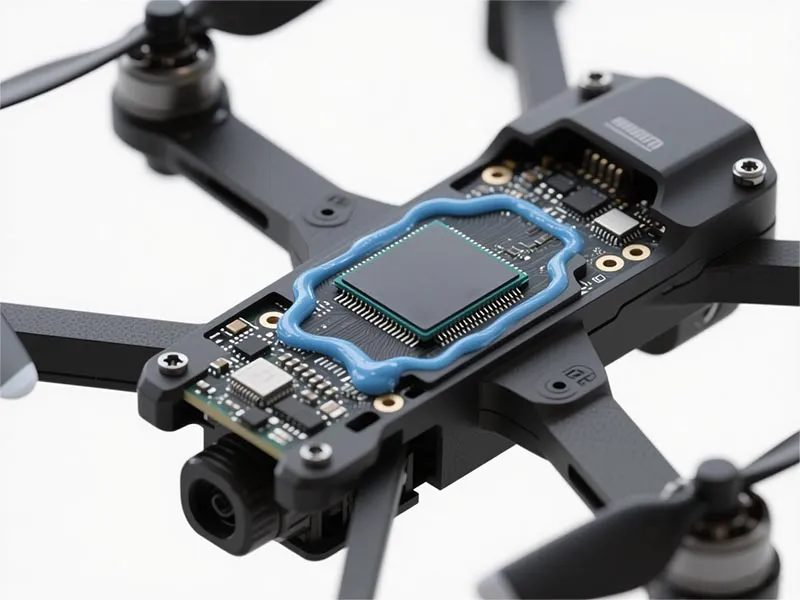
Drone motors heat up fast, especially during aggressive climbs and long flights. A smart Carbon fiber sheet for drone motor heat dissipation can seriously change the game, keeping temps steady and performance sharp without adding bulky metal sinks.
Exceptional Thermal Conductivity in Carbon Fiber Composites
When using a Carbon fiber sheet for drone motor heat dissipation, the magic starts with thermal conductivity inside the carbon fiber network.
Sheen technology carbon fiber thermal pad Performance snapshot:
| Product name | Color | Thermal Conductivity | Thermal Impedance (1mm,@20psi) | Thickness | Standard Hardness |
|---|---|---|---|---|---|
| Unit | - | W/m·K | ℃*in2/W | mm | Shore 00 |
| CSF15 | Black | 15.0 | 0.28 | 0.3 ~ 12.0 | 40/60±5 |
| CSF20 | Black | 20.0 | 0.18 | 0.3 ~ 12.0 | 40/60±5 |
| CSF25 | Black | 25.0 | 0.12 | 0.3 ~ 12.0 | 40/60±5 |
| CSF30 | Black | 30.0 | 0.10 | 0.3 ~ 12.0 | 40/60±5 |
| CSF35 | Black | 35.0 | 0.09 | 0.3 ~ 12.0 | 40/60±5 |
| CSF40 | Black | 40.0 | 0.08 | 0.3 ~ 12.0 | 40/60±5 |
| CSF45 | Black | 45.0 | 0.07 | 0.3 ~ 12.0 | 40/60±5 |
| Test Method | Visual | ASTM D5470 | ASTM D5470 | ASTM D374 | ASTM D2240 |
Core material advantage:
· High thermal conductivity supports fast heat transfer.
· Interwoven graphite paths improve heat dissipation.
· Stable material properties ensure consistent thermal management.
In real drone builds, this works because:
Internal Layer
· Continuous carbon fiber strands
· Create directional heat transfer channels
Surface Layer
· Thin laminate design
· Enhances exposure to cooling air
The result? A lighter alternative to aluminum plates, yet highly effective as a carbon fiber heat dissipation sheet.
Superior Thermal Stability Under High RPM Conditions
High-speed rotation pushes drone motors hard. Under intense high RPM and fluctuating operational conditions, a Carbon fiber sheet for drone motor heat dissipation keeps its shape and strength.
Performance stability comes from:
Temperature Behavior
· Strong thermal stability
· Maintains stiffness across wide ranges
Structural Response
· Preserved mechanical integrity
· Limits warping during extended motor operation
This matters because deformation reduces cooling contact. With stable temperature resistance, airflow paths stay open and efficient.
The International Energy Agency noted in its 2024 electrification update that “advanced composite materials are increasingly adopted to manage heat in high-speed electric drive systems due to their stability and lightweight characteristics.”
That shift is clear in UAV design. Sheen Technology applies aerospace-grade layup methods so the Carbon fiber sheet for drone motor heat dissipation performs reliably during racing bursts and industrial inspections alike.
Low Density Enhances Rapid Heat Dissipation
Weight kills efficiency. A heavy heat sink stores heat instead of moving it.
A Carbon fiber sheet for drone motor heat dissipation relies on:
· Low material density
· Improved cooling efficiency
· Reduced structural load on drone components
Here’s how it plays out:
Lightweight Base
· Lower low density structure
· Promotes faster ambient exchange
Frame Integration
· Thin mounting profile
· Supports direct airflow over motor housing
Less mass. Faster cooling. Better thermal efficiency.
Fiber Reinforcement Improves Vibration Damping
Heat isn’t only about temperature; vibration creates friction and micro-gaps.
With proper fiber reinforcement, a Carbon fiber sheet for drone motor heat dissipation boosts:
· Vibration damping
· Mechanical stability
· Long-term structural integrity
Mechanism breakdown:
Reinforced Matrix
· High tensile material strength
· Reduces micro-movement
Mounting Interface
· Stable composite structure
· Maintains contact with motor base
Steady contact equals consistent thermal flow. That’s a big win for drone performance, especially in mapping or delivery fleets where uptime matters.
Epoxy Resin Matrix Minimizes Thermal Resistance
The secret sauce isn’t just fiber. The epoxy resin counts.
In a Carbon fiber sheet for drone motor heat dissipation, the resin matrix manages internal thermal resistance between layers.
Process flow:
· Heat enters outer laminate.
· It crosses the material interface.
· Optimized thermal pathways guide it outward.
Design logic:
Fiber Layer
· Conductive direction control
Epoxy resin System
· Reduced interlayer gaps
· Smoother heat flow
A poor resin traps heat. A tuned one supports conduction. Sheen Technology fine-tunes resin ratios to balance rigidity and conduction, ensuring each Carbon fiber sheet for drone motor heat dissipation delivers stable output under daily flight stress.
For serious UAV builders, this isn’t hype. It’s practical thermal control built right into the structure.
Carbon Fiber Sheet vs. Aluminum for Cooling
Drone motors heat up fast, and nobody likes a fried ESC mid-flight. Choosing between aluminum and a carbon fiber sheet is not just about cost; it affects weight, airflow, and long-term stability. This comparison breaks down how Carbon fiber sheet for drone motor heat dissipation stacks up against traditional metal cooling options.
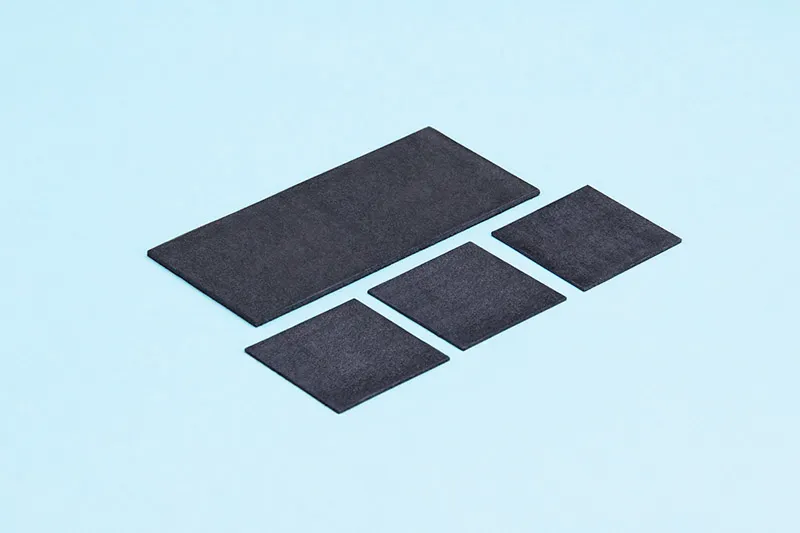
Carbon Fiber Sheet
When selecting Carbon fiber sheet for drone motor heat dissipation, performance depends on structure and orientation.
Material Core: carbon fiber composite material
· High stiffness from carbon fiber
· Tailored thermal conductivity through fiber alignment
· Anisotropic heat flow control for targeted heat dissipation
Mechanical Advantages
· Ultra-lightweight body for racing UAVs
· Low vibration transfer, ideal for drone motor balance
· Stable expansion due to controlled thermal growth
Application Layering
1) Surface-mounted cooling plate
2) Integrated motor housing liner
3) Hybrid heat sink backing structure
Engineers often choose Carbon fiber sheet for drone motor heat dissipation because it cools without adding bulk. The anisotropic nature pushes heat where it’s needed, not everywhere. Carbon fiber sheet for drone motor heat dissipation also pairs well with airflow ducts in compact frames.
“Lightweight composite materials are gaining traction in UAV thermal management as performance density increases,” noted a 2025 aerospace materials outlook from MarketsandMarkets.
Brands like Sheen Technology refine each composite material layer to balance stiffness and cooling efficiency. For serious builds, Carbon fiber sheet for drone motor heat dissipation simply feels like the smarter cooling solution.
Need exact thickness, thermal conductivity, and material details before you choose? Download the product datasheets to review carbon fiber sheet specifications, application guidance, and available custom options for drone motor heat dissipation.
Aluminum
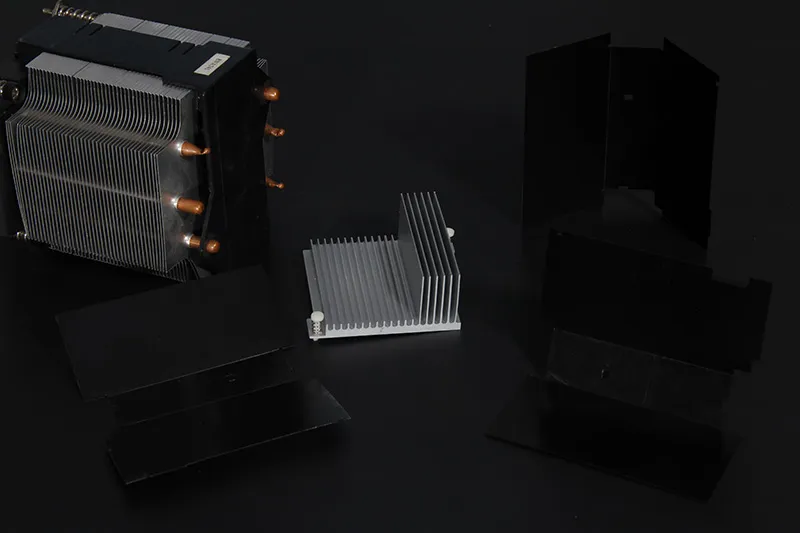
Aluminum still holds ground as a classic thermal conductor.
Material Traits
· Isotropic heat spread
· Easy machining due to high ductility
· Reliable aluminum metal supply chain
Cooling Performance
· Fast surface heat transfer
· Works well as external heat sink
· Common in standard motor housing shells
Trade-Off Factors
· Higher density than lightweight alloy composites
· Lower vibration damping
· Added mass affecting flight time
Aluminum spreads heat evenly, no surprises there. Yet in compact UAV builds, extra grams stack up quickly. For pilots chasing agility, Carbon fiber sheet for drone motor heat dissipation often beats bulkier aluminum plates.
Sheen Technology supports both materials, but its advanced carbon fiber sheet for drone motor heat dissipation solutions are tuned for modern high-RPM systems. In tight drone frames where every gram counts, that difference shows up in the air.
4 Steps to Apply Carbon Fiber Sheet Properly
Getting Carbon fiber sheet for drone motor heat dissipation right is not just about sticking a panel onto a motor. It’s about prep, precision, bonding, and proof. Do it right, and your drone motor heat stays under control.
Surface Pre-Treatment and Cleaning
Proper surface, pre-treatment, and cleaning decide how well a carbon fiber sheet handles drone motor heat. For Carbon fiber sheet for drone motor heat dissipation, bonding starts long before adhesive touches the panel.
· Remove visible contaminants from the substrate
· Control micro-roughness to improve adhesion
· Reduce moisture that affects a drone motor under load
Degrease using isopropyl alcohol.
· Lightly abrade to increase bonding area.
· Dry at controlled temperature to avoid trapped vapor.
For Carbon fiber sheet for drone motor heat dissipation, surface energy matters. A dusty aluminum housing or oxidized steel plate weakens the thermal path. Clean metal equals better motor heat flow. When applying carbon fiber for drone motor cooling, every micron counts.
Precision Cutting with Laser or CNC Machining
Accurate precision cutting ensures the carbon fiber sheet fits the motor base without stress points. Both laser and CNC machining support tight dimensions and repeatable accuracy during fabrication.
Cutting tolerance comparison for Carbon fiber sheet for drone motor heat dissipation
| Method | Thickness Tolerance (mm) | Edge Deviation (mm) | Fiber Alignment Error (°) | Batch Repeatability (%) |
| Manual Cutting | ±0.30 | 0.50 | 5.0 | 82 |
| Basic CNC | ±0.10 | 0.20 | 2.0 | 91 |
| Advanced CNC | ±0.05 | 0.10 | 1.0 | 96 |
| CO₂ Laser | ±0.08 | 0.15 | 1.5 | 94 |
| Fiber Laser | ±0.03 | 0.08 | 0.5 | 98 |
For Carbon fiber sheet for drone motor heat dissipation, cleaner edges reduce delamination risk. Tight alignment keeps thermal conduction stable. Sheen Technology supports custom-cut carbon fiber sheet for drone motor heat dissipation with strict dimensional control, helping maintain consistent motor heat management across production runs.
Adhesive Bonding and Controlled Curing
Strong adhesive bonding determines how well the carbon fiber sheet transfers heat transfer loads away from the motor.
Key bonding logic:
· Select compatible epoxy rated for high temperature
· Apply uniform pressure to maximize bond strength
· Monitor curing cycle for controlled polymer crosslinking
Curing is not just waiting around.
· Set initial tack stage at moderate heat.
· Raise temperature gradually to avoid trapped air.
· Hold peak temperature for full resin activation.
· Cool down slowly to prevent internal stress.
For Carbon fiber sheet for drone motor heat dissipation, controlled curing keeps porosity low. Lower void rate means smoother heat flow and better drone motor heat dissipation sheet performance. Carbon fiber thermal sheet systems rely on this stability to keep motor heat in check during long flights.
Final Inspection and Certification Protocols
A final inspection checks more than surface shine. It confirms compliance with certification protocols and strict quality control standards tied to drone performance, heat dissipation, and structural integrity.
Inspection layers include:
· Visual testing for surface cracks
· Thermal cycling tests for motor heat response
· Mechanical pull tests for bond durability
Testing connects directly to real drone flight loads. If the carbon fiber sheet for drone motor heat dissipation fails under vibration, the motor suffers. If thermal resistance drifts, performance drops.
Sheen Technology integrates traceability from raw sheet batch to final drone assembly. That means each carbon fiber sheet for drone motor heat dissipation is documented, verified, and ready to support stable motor heat control in demanding UAV applications.
FAQs about Carbon Fiber Sheet For Drone Motor Heat Dissipation
Why is carbon fiber sheet effective for drone motor heat dissipation?
Carbon fiber sheet for drone motor heat dissipation works as a lightweight thermal bridge between the motor housing and surrounding airflow. Its composite material structure blends carbon fiber and graphite within an epoxy resin or polymer matrix, forming controlled heat pathways.
· Thermal side: stable thermal conductivity, fast thermal diffusivity, reduced thermal resistance at contact surfaces.
· Physical side: low density and light weight improve overall heat dissipation rate without disturbing the aerodynamic profile.
· Mechanical side: high stiffness and vibration damping maintain tight motor mounting contact, limiting micro-gaps that trap heat.
When sheet thickness and fiber orientation are tuned, the panel spreads heat evenly while staying within the motor’s operating temperature range.
How does material composition influence cooling performance?
Cooling efficiency depends on how each layer of the composite material is engineered:
· Carbon fiber + graphite network – builds directional thermal conductivity and improves electrical conductivity when needed for electromagnetic shielding.
· Epoxy resin / prepreg polymer matrix – controls porosity, moisture absorption, and interfacial thermal resistance after the curing process.
· Fiber reinforcement layout – balances tensile strength, flexural modulus, fatigue life, and creep resistance under high RPM cycles.
Proper laminate layers and surface finish reduce surface roughness, improving adhesive bonding and heat sink integration.
What design factors matter before installing the sheet on drone motors?
Carbon fiber sheet for drone motor heat dissipation must match real motor mounting conditions rather than just lab data.
Key design checks:
· Sheet thickness and panel size aligned with motor geometry.
· Fiber orientation planned for both heat flow direction and vibration isolation.
· Cut-to-size accuracy via machining or laser cutting to avoid edge delamination.
· Surface treatment prior to adhesive bonding to limit thermal resistance.
Balanced correctly, the sheet supports weight reduction, environmental resistance, and stable thermal stability during long flights.
How can buyers ensure quality and consistency in bulk orders?
For large drone fleets, consistency matters as much as peak performance. Reliable suppliers control:
· Material specification and certification standards.
· Batch consistency of prepreg, resin infusion ratios, and curing process parameters.
· Inspection protocols covering density, porosity, tensile strength, and coefficient of thermal expansion.
· Full traceability and supplier qualification records.
Strong quality control protects heat capacity targets and keeps every composite panel performing within the required operating temperature range.
Not sure which carbon fiber sheet fits your drone motor design? 【Request a Custom Quote】Send us your motor dimensions, mounting surface, target operating temperature, and required thickness, and we can help recommend the right thermal solution for your build.
Sheen Thermal
Dongguan Sheen Electronic Technology Co., Ltd · Founded in 2008
Manufacturer of thermal interface materials and silicone foam for automotive electronics, energy storage, power electronics, communications and consumer electronics.
Certified
- ISO 9001:2015
- ISO 14001:2015
- IATF 16949:2016
What we supply
- Thermal conductivity Up to 90 W/m·K
- Thickness 0.3–10.0 mm
- Custom & samples Die-cut to drawing, 3–7 days