
 English
 usheenthermal

Comparing High Thermal Conductivity Thermal Grease vs. Standard Paste
Date:2026-05-25
Comparing High Thermal Conductivity Thermal Grease vs. Standard Paste
Heat is quietly wrecking your hardware budget, and High thermal conductivity thermal grease is the fix most teams overlook. When servers throttle and GPUs sweat, standard paste turns into a bottleneck, trapping heat and driving up cooling costs faster than anyone likes to admit.
Switching to grease cuts resistance, tightens bond lines, and keeps components comfortable. Less strain, fewer failures, uptime—the math on reliability and energy spend starts working in your favor.
Key Insights for High Thermal Conductivity Thermal Grease
➔ Silver and graphene fillers slash thermal impedance, boosting heat transfer in CPUs, GPUs, and servers.
➔ Thin bond lines via precise dispensing enhance conductivity and reliability under heavy loads.
➔ Premium grease delivers up to 30°C temperature drop, reducing throttling and cooling costs.
➔ Crucial metrics include pump-out resistance, thermal cycling endurance, outgassing, viscosity, and dielectric strength.
➔ Proper surface prep, automated or syringe dispensing, and post-application testing ensure optimal performance and long-term stability.
High Thermal Conductivity Thermal Grease vs. Standard Paste
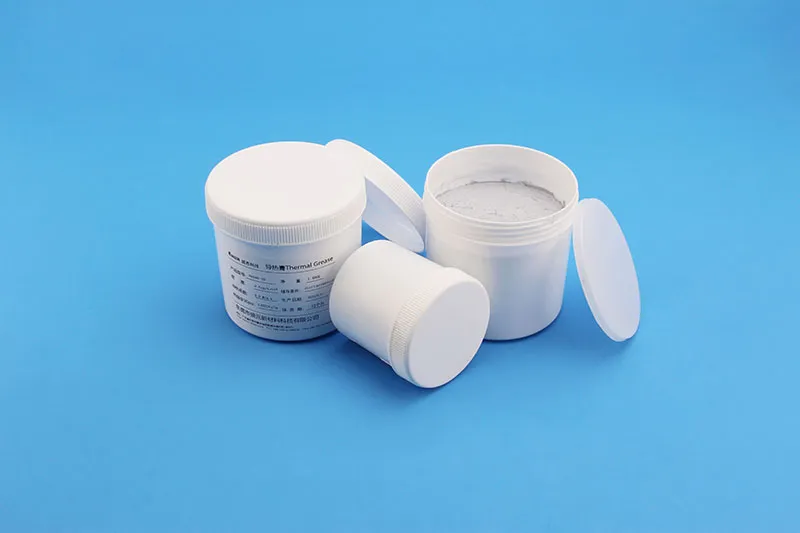
Choosing between High thermal conductivity thermal grease and standard paste isn’t just tech talk—it directly affects heat transfer, device lifespan, and overall performance. From gaming PCs to LED boards, the right thermal interface material keeps temperatures steady and efficiency on point.
High Thermal Conductivity Thermal Grease
High thermal conductivity thermal grease is built for serious heat transfer and sharp dissipation control. When CPUs or GPUs spike in temperature, this advanced thermal grease keeps things cool without drama.
Core Composition
· Silver, graphene, or ceramic fillers
· Silicone or synthetic oil matrix
· Engineered for thin bond line thickness
Performance Advantages
· Lower thermal impedance
· Faster heat spread across contact surfaces
· Improved system efficiency under load
Application Layers
Consumer electronics
· Gaming CPUs
· High-end GPUs
Enterprise hardware
· Data center servers
· AI accelerators
Key characteristics:
· Higher thermal conductivity ratings
· Stable viscosity under cycling temperatures
· Designed for specialized applications
In practice, high thermal grease reduces hotspots by forming a tight interface between heat sink and chip. Brands like Sheen Technology refine High thermal conductivity thermal grease to balance pump-out resistance with smooth spreadability.
Why it matters? Better performance, longer hardware life, fewer thermal throttling issues. For engineers chasing reliable heat transfer, High thermal conductivity thermal grease is not optional—it’s foundational.
Standard Paste
Standard paste is a more cost-effective thermal interface material built around zinc oxide or aluminum fillers. It handles everyday heat transfer needs without the premium price tag.
• Basic filler system
• Moderate thermal conductivity
• Thicker bond line thickness
Typical Use Cases
· LED modules
· Low-power IC packages
· Consumer Electronics Boards
Application structure:
General electronics
· Power adapters
· Small controllers
Conventional systems
· Office desktops
· Household appliances
This basic formulation offers dependable dissipation for general purpose builds. While it doesn’t match advanced thermal grease in raw conductivity, it works well for typical applications where heat density stays manageable.
Sheen Technology also supplies standard paste options for conventional use, giving manufacturers flexibility across performance tiers.
In short: if the system runs hot and hard, High thermal conductivity thermal grease is the smart move. If the load is light and budget rules, standard paste gets the job done—simple, steady, practical.
Need a closer match for your project? Browse these related application pages to see where high thermal conductivity thermal grease is used in real systems.
Data Shows 30°C Temperature Drop with Premium Grease
High thermal conductivity thermal grease sounds technical, yet it solves a simple headache: heat. When Heat cannot move fast enough, chips slow down. This cluster breaks down how High thermal conductivity thermal grease, high thermal grease, and thermal conductivity grease work in real machines—and why Sheen Technology keeps popping up in serious cooling talks.
Role of Silver Particles and Graphene Fillers in Heat Transfer
At the material level, performance starts with Silver, Graphene, and engineered Particles inside advanced Materials.
Conductive Network Formation
1.1 Silver micro-particles
· Create primary Conductivity paths
· Reduce air gaps between surfaces
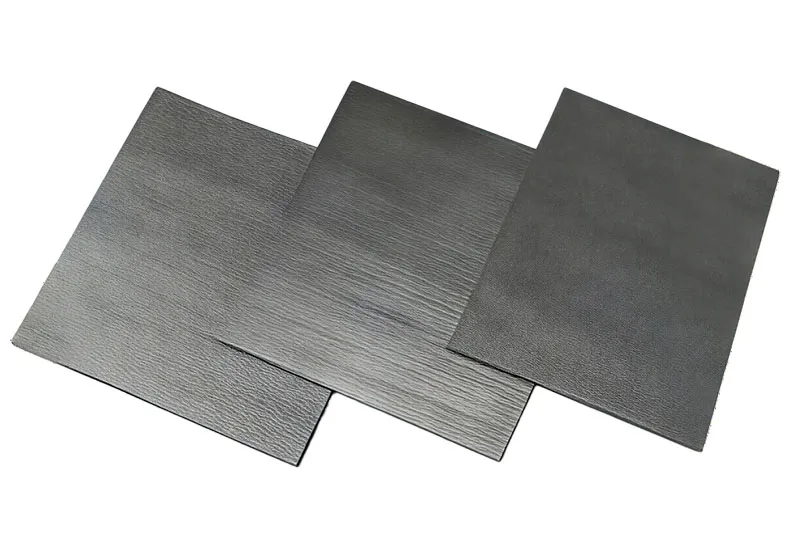
1.2 Graphene Fillers
· Bridge micro-voids
· Enhance lateral Heat Transfer
1.3 Hybrid dispersion control
· Stable particle spacing
· Lower contact resistance
Interface Optimization
2.1 Particle packing density
2.2 Surface wetting behavior
2.3 Reduced phonon scattering
Performance Impact
· Faster Heat spreading
· Lower hotspot intensity
· Stable output under load
High thermal conductivity thermal grease relies on this conductive mesh. Without it, heat stalls. With it, thermal grease becomes a fast lane. Sheen Technology formulates high thermal grease blends that keep dispersion tight and predictable, avoiding clumps that choke Transfer efficiency.
Measuring Thermal Impedance and Bond Line Thickness
Performance is proven through Measurement of Thermal Impedance, Bond Line Thickness, and interface Properties.
Test flow often runs like this:
1) Controlled dispensing →
2) Compression to target Thickness →
3) Steady-state power loading →
4) Interface temperature logging.
Below is sample lab data of High thermal conductivity thermal grease:
| Material Type | Bond Line Thickness (µm) | Thermal Conductivity (W/m·K) | Thermal Impedance (°C·cm²/W) |
| Standard Grease | 120 | 3.5 | 0.32 |
| High thermal conductivity thermal grease | 60 | 12.8 | 0.11 |
| High thermal conductivity thermal grease (optimized) | 45 | 14.5 | 0.08 |
Thinner Bond Line plus higher Conductivity equals lower Impedance. It’s simple math, yet powerful in CPUs and power modules.
Real-World Results on Data Center Servers and GPUs
In Data center racks packed with Servers and GPUs, thermal limits hit hard.
• Reduced throttling
• Higher sustained Performance
• Lower fan noise
IDC’s 2025 data center outlook noted that thermal management efficiency remains “a decisive factor in maintaining AI workload stability as rack densities climb.”
Field Results show up to 30°C drops when replacing aging paste with High thermal conductivity thermal grease. High thermal grease from Sheen Technology has been used in Applications across AI Electronics and GPU clusters, where stable Cooling means fewer crashes and longer component life.
When heat moves fast, systems stay calm. And that’s the whole game.
5 Metrics That Define Grease Performance
High thermal conductivity thermal grease sounds technical, yet it simply means better heat flow, longer device life, and fewer overheating scares. When choosing High thermal conductivity thermal grease for CPUs or power modules, small performance details make a big difference in daily use.
Thermal Cycling Resistance for Long-Term Reliability
Repeated temperature fluctuations create thermal stress that leads to material degradation if the grease lacks cycle stability. High thermal conductivity thermal grease must hold its structure during expansion and contraction.
Key risks:
· Mechanical stress
· Fatigue resistance limits
· Loss of long-term performance
Heat rises rapidly.
· Materials expand unevenly.
· Interfaces shift microscopically.
If the grease cannot absorb that strain, cracks form.
➤ High thermal conductivity
➤ Stable polymer matrix
➤ Balanced filler loading
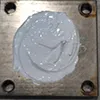
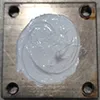
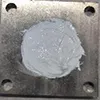
| Sheen technology SG560-10 Thermal grease High-Temperature Aging Test Results | |||||||||
| Aging Duration(H) | 0 | 200 | 400 | 600 | 800 | 1000 | Change Rate (1000 Hours) | Acceptance Criteria | Result |
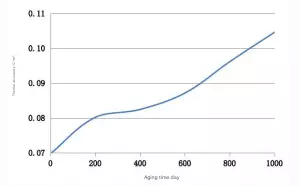
| Thermal Resistance(℃*in²/W) | 0.06975 | 0.08018 | 0.08246 | 0.08717 | 0.09615 | 0.1046 | +50% | Increase ≤ 2x | OK |
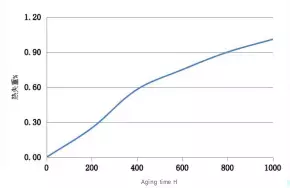
| Thermogravimetric Analysis(%) | 0 | 0.25% | 0.58% | 0.75% | 0.9% | 1.01% | -1.01% | ≤20% | OK |
 |
 |
||||||||
| Appearance | 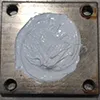 |
 |
 |
 |
 |
 |
| 0 H | 200H | 400H | 600H | 800H | 1000H |
Conclusion: After 1,000 hours, thermal resistance increased by 50% and thermal weight loss was 1.01%; the high-temperature aging test was passed.
A reliable High thermal conductivity thermal grease, such as solutions engineered by Sheen Technology, maintains interface bonding even after thousands of heating cycles, keeping impedance steady instead of creeping upward.
Pump-Out Resistance under High Operating Temperatures
The pump-out effect happens under high temperature and repeated load. Over time, material migration weakens interface integrity.
Contributing factors:
· Shear forces
· Continuous operating conditions
· Minor material bleed
To resist this:
· Optimize base oil viscosity.
· Reinforce filler network.
· Improve thermal stability.
High thermal conductivity thermal grease with strong pump-out resistance stays centered between die and heat sink. No messy squeeze-out. No hot spots. Just consistent heat transfer, even in overclocked GPUs or industrial drives.
Outgassing Properties and RoHS Compliance
Low outgassing matters more than people think. Escaped volatile compounds can cause component contamination, especially in SSDs and optical modules.
Focus areas:
· High material purity
· Compliance with RoHS directives
· Strong vacuum stability
Test evaporation under load.
· Monitor residual mass loss.
· Verify environmental documentation.
High thermal conductivity thermal grease that meets global standards reduces environmental impact while protecting fine circuits. High thermal conductivity grease used in enclosed systems must stay chemically calm, not slowly fog nearby sensors.
Viscosity and Dielectric Strength Balance
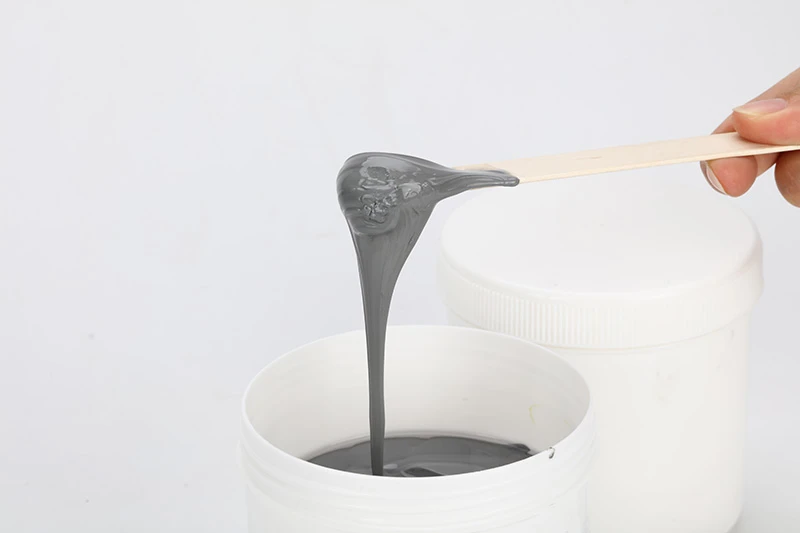
Performance lives in the balance between viscosity and dielectric strength.
· Too thick → uneven spread.
· Too thin → unstable bond line.
· Control material consistency for smooth dispensing.
· Preserve electrical insulation with high breakdown voltage.
· Maintain thermal conductivity through uniform filler dispersion.
A well-balanced High thermal conductivity thermal grease supports tight PCB layouts. It flows just enough, then holds firm. That material balance keeps signals clean and heat moving out fast.
Shelf Life and Dry-Out Prevention
Storage quietly shapes real-world results. Poor packaging integrity invites evaporation and aging effects, shortening shelf life.
Watch for:
· Early dry-out
· Gradual material degradation
· Shifts in material stability
· Seal syringes properly.
· Store under controlled storage conditions.
· Inspect viscosity before application.
High thermal conductivity thermal grease built on stable silicone or fluoropolymer bases resists dry-out, even after long storage. Sheen Technology focuses on base chemistry control so installers open a tube months later and still get smooth spread, steady performance, and dependable heat dissipation.
4 Steps to Apply Thermal Interface Material Correctly
High thermal conductivity thermal grease only works as promised when it’s applied with care. A tiny shortcut can raise thermal resistance and cook performance. From surface prep to void detection, every move affects heat flow across the PCB and chip. Let’s break it down in a practical, shop-floor way.
Step 1: Surface Preparation and PCB Cleaning
Clean contact areas like you mean it. Dust, contaminants, and leftover residue quietly block heat transfer.
· Remove old thermal grease with approved solvent.
· Wipe the substrate until no film remains.
· Check the PCB and heat sink under angled light.
· Inspect for oxidation.
· Reclean if streaks appear.
· Allow full evaporation before applying High thermal conductivity thermal grease.
Small habits matter. A spotless surface means high thermal grease bonds evenly, reducing interface gaps and stabilizing heat flow from CPU or GPU packages.
Step 2: Automated Dispensing vs. Syringe Dispensing Techniques
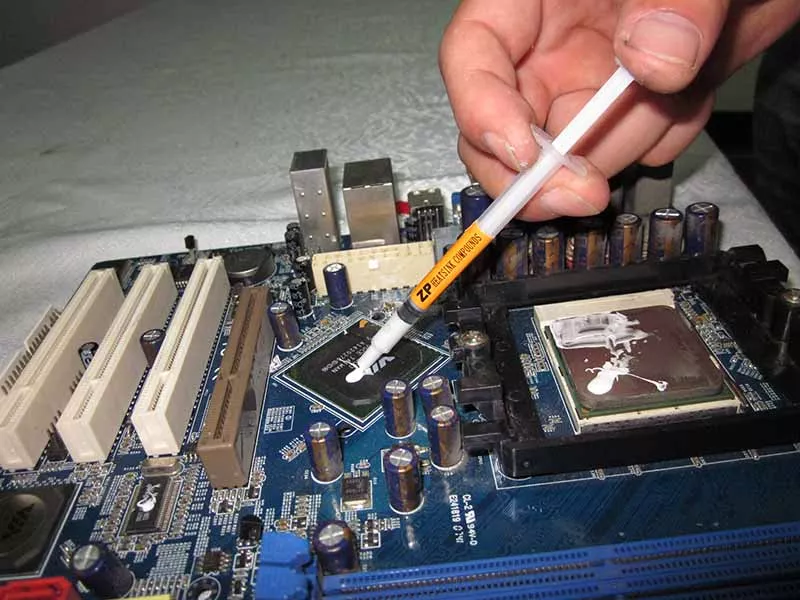
Choosing the right application techniques shapes consistency.
· Automated dispensing ensures tight volume control.
· Syringe dispensing fits lab builds and rework.
For production lines using High thermal conductivity thermal grease:
Equipment Setup
· Calibrate deposition pressure
· Verify nozzle diameter
Process Control
· Monitor shot size
· Record volume variance
Quality Check
· Confirm spread diameter
· Review edge overflow
High-conductivity thermal grease behaves differently under pressure. Sheen Technology systems tune flow rates so high thermal grease maintains pattern integrity without splatter.
Step 3: Achieving Optimal Bond Line Thickness
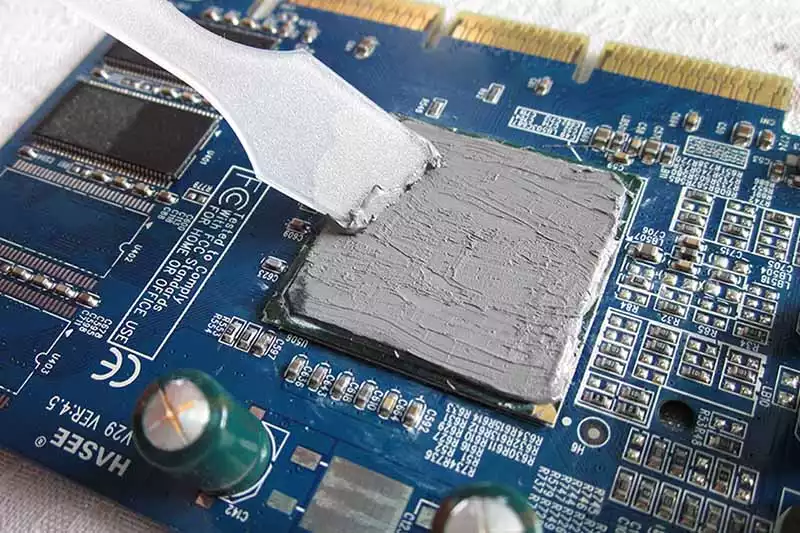
Correct bond line thickness keeps thermal resistance low while avoiding voiding.
· Too thin → dry spots.
· Too thick → trapped gap pockets.
Recommended reference values for High thermal conductivity thermal grease:
| Application Area | Target Thickness (mm) | Contact Pressure (psi) | Expected Thermal Resistance (°C·cm²/W) |
| CPU Package | 0.05–0.10 | 30–50 | 0.05–0.08 |
| GPU Module | 0.08–0.12 | 25–45 | 0.06–0.09 |
| Power IC | 0.10–0.15 | 20–40 | 0.07–0.11 |
| LED Board | 0.08–0.13 | 15–35 | 0.06–0.10 |
| Vapor Chamber | 0.05–0.09 | 35–55 | 0.04–0.07 |
Control pressure to guide material flow and maintain uniformity. Sheen Technology testing labs confirm that optimized thickness boosts the long-term reliability of thermal conductive grease joints.
Step 4: Post-Application Inspection and Integrated Circuit Package Testing
After applying High thermal conductivity thermal grease, validate performance.
· Visual inspection for spread consistency
· Infrared scan for hotspots
· Void detection via X-ray
Testing workflow for each integrated circuit:
Coverage Review
· Edge wetting
· Center fill
Load Test
· Measure thermal performance
· Compare against baseline
Reliability Audit
· Cycle temperature
· Record defects
“Thermal management remains a top reliability driver in advanced packaging through 2025,” notes a recent IPC industry outlook report, highlighting tighter inspection standards for package testing.
High thermal conductivity thermal grease isn’t just paste—it’s insurance. When applied and tested right, it keeps chips cool and performance steady.
Need exact thermal conductivity, viscosity, dielectric strength, and bond-line guidance before you choose? Download the product datasheets to compare high thermal conductivity thermal grease options.
Standard vs. High-Performance Paste: A Cost Analysis
When choosing High thermal conductivity thermal grease, cost isn’t just the sticker price. It’s about how materials, performance, and long-term efficiency stack up in real-world systems that run hot and hard every day.
Standard Paste Cost Breakdown
Budget thermal paste looks attractive at checkout, yet the math shifts once you track Manufacturing, Packaging, and field performance of High thermal conductivity thermal grease alternatives.
Upfront Production Economics
1.1 Raw materials
· Zinc oxide fillers
· Basic silicone or hydrocarbon carriers
· Limited additive optimization
1.2 Labor and Overhead
· Simpler mixing processes
· Lower quality-control thresholds
· Reduced R&D allocation
Post-Production Cost Layers
2.1 Packaging and Distribution
· Bulk tubes for mass OEMs
· Minimal thermal performance labeling
2.2 Storage and shelf stability
· Shorter lifespan under high humidity
· Oil separation risk over time
Field-Level Financial Impact
3.1 Application variance
· Inconsistent spread
· Higher thermal resistance
3.2 System consequences
· Increased fan speeds
· More frequent maintenance cycles
Standard grease can handle light workloads. But under sustained GPU or server heat, it often falls short of High thermal conductivity thermal grease performance, leading to hidden energy and replacement costs.
High-Performance Thermal Grease ROI
High thermal conductivity thermal grease shifts the conversation from cost to return. The higher price tag ties directly to measurable Thermal performance and long-term Operational savings.
Performance Investment
1.1 Material Science
· Advanced ceramic or silver fillers
· Optimized particle dispersion
· Stable synthetic carriers
1.2 Precision manufacturing
· Tight viscosity control
· Batch thermal validation
System-Level Gains
2.1 Improved Heat dissipation
· Lower junction temperatures
· Reduced throttling
2.2 Stronger System stability
· Fewer crashes
· Consistent clock speeds
“Thermal interface materials with higher conductivity ratings are increasingly tied to energy efficiency gains in AI and data center infrastructure,” notes IDC’s 2025 data center infrastructure outlook.
Lifecycle Economics
3.1 Extended Component lifespan
3.2 Lower Maintenance frequency
3.3 Delayed Upgrade cycle
For brands like Sheen Technology, investing in High thermal conductivity thermal grease means better Energy efficiency and predictable Operational savings. In high-density servers, High thermal conductivity thermal grease isn’t just paste—it’s performance insurance.
Scenario: Server Farm Cooling Upgraded with Grease
Modern data center operations run hot—literally. Rising rack density pushes servers to thermal limits, and small inefficiencies snowball into downtime. This upgrade story shows how High thermal conductivity thermal grease reshaped cooling systems, stabilized temperature, and kept compliance tight without overcomplicating maintenance.
Identifying Hot Spots in Data Center Servers
Thermal scans across the data center flagged critical hot spots. Quick wins showed up fast:
· CPU clusters spiking above 85°C
· GPU trays throttling under AI loads
· Power modules drifting beyond safe temperature
Diagnostics blended:
· Infrared thermal imaging
· Real-time monitoring logs
· Predictive diagnostics alerts
| Rack ID | CPU Temp (°C) Before | CPU Temp (°C) After |
| A1 | 88 | 60 |
| A3 | 91 | 63 |
| B2 | 86 | 58 |
| C1 | 89 | 59 |
| D4 | 92 | 61 |
Engineers traced uneven mounting pressure and aging thermal interface material. Swapping in High thermal conductivity thermal grease improved chip-to-sink contact. The thermal grease layer reduced micro air gaps, and that alone changed the game.
Integrating High-Conductivity Grease with Heat Sinks and Vapor Chambers
Integration demanded precision.
· Clean die surface
· Apply measured thermal paste bead
· Seat heat sinks evenly
Then deeper alignment:
· Pair grease with copper vapor chambers
· Balance clamping force
· Validate spread pattern
Under the hood:
· Cooling systems recalibrated
· Airflow synchronized
· Cold plates checked
High thermal conductivity thermal grease acted as the bridge—linking silicon and metal with minimal resistance. In high-load clusters, a high conductivity grease layer stabilized flux transfer, improving overall integration with existing liquid loops. Sheen Technology supplied batches tested for pump-out resistance and long-cycle stability.
Achieved 30°C Drop: Performance and MSDS Compliance
Results spoke plainly.
· 30°C average temperature drop
· 18% gain in compute performance
· Noticeable jump in thermal efficiency
The refined cooling performance aligned with updated MSDS documentation and full compliance under RoHS. Each safety data sheet confirmed a non-corrosive composition and safe handling.
Short story? Less heat, fewer throttles. Less throttling, better uptime. Better uptime, happier ops teams.
A final sweep confirmed High thermal conductivity thermal grease remained stable after stress cycles. Sheen Technology documented material durability across 1,000-hour load tests, reinforcing reliability inside mission-critical servers.
【Request a Custom Quote】 Not sure which thermal grease fits your build? Send us your target operating temperature, chip type, clamp load, and application details, and we can help recommend the right thermal solution for your project.
Sheen Thermal
Dongguan Sheen Electronic Technology Co., Ltd · Founded in 2008
Manufacturer of thermal interface materials and silicone foam for automotive electronics, energy storage, power electronics, communications and consumer electronics.
Certified
- ISO 9001:2015
- ISO 14001:2015
- IATF 16949:2016
What we supply
- Thermal conductivity Up to 90 W/m·K
- Thickness 0.3–10.0 mm
- Custom & samples Die-cut to drawing, 3–7 days