
 English
 usheenthermal

Low Thermal Resistance Thermal Grease vs. Standard Compounds
Date:2026-05-26
Low Thermal Resistance Thermal Grease vs. Standard Compounds
Low thermal resistance thermal grease isn’t some lab luxury; it’s the difference between a system cruising and one cooking itself when workloads spike and fans start screaming.
Standard paste gets the job done, but high-density chips and tight enclosures push it past comfort fast, driving heat, throttling, and rising energy bills.
Sheen Technology engineers in 2026 frame material choice as a control point, tying thermal resistance to stability, lifespan, and predictable performance.
Reading Notes: Low Thermal Resistance Thermal Grease Essentials
➔ Thermal Performance: Rapid heat transfer with minimal impedance keeps CPUs and GPUs at safe junction temperatures under heavy loads.
➔ Long-Life Stability: Superior pump-out resistance and compatibility with microprocessors ensure reliable operation through repeated thermal cycling.
➔ Optimized Application: Low-viscosity formulations allow ultra-thin bond lines for maximum contact, reducing air gaps and enhancing cooling efficiency.
➔ Cost-Benefit Balance: Silver-filled greases deliver top conductivity, while ceramic-based options offer budget-friendly performance with strong ROI in data centers.
Thermal Resistance: Units And Measurements
Thermal control can feel like a geeky topic, yet it decides if your chip runs cool or fries. From thermal conductivity to junction temperature, the numbers behind heat flow tell the real story—and yes, the right grease matters.
Decoding Thermal Conductivity and Its Units
When engineers talk about thermal conductivity, they mean how fast heat moves through a material. It’s rooted in Fourier's Law, measured in W/mK, and tightly linked to overall thermal resistance.
Break down Low thermal resistance thermal grease into intent-driven phrases:
· low thermal resistance
· thermal grease
· low thermal grease
· thermal resistance grease
All point to one goal—better heat transfer across tricky material properties.
Key unit relationships:
· Conductivity (W/mK) → material’s ability to conduct heat
· Thickness (m) → distance heat must cross
· Area (m²) → contact surface
· Result → calculated thermal resistance
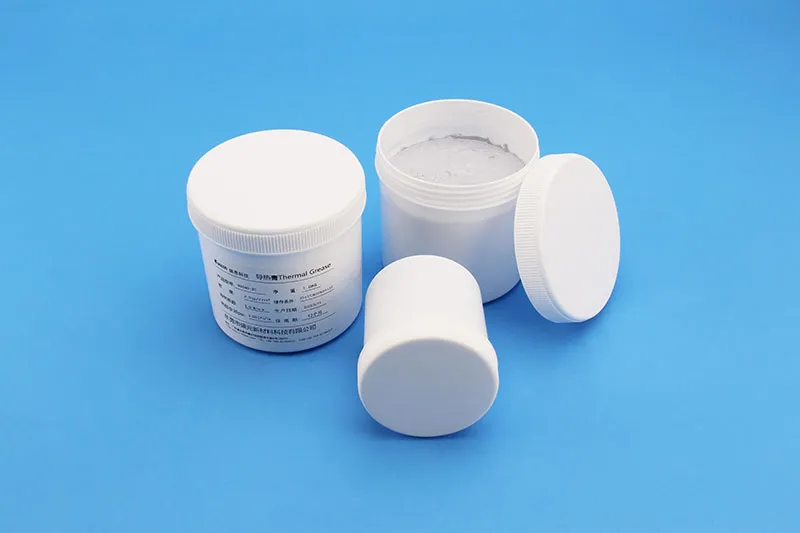
Sheen technology low thermal Resistance thermal grease comparison:
| Properties | Color | Thermal Impedance (@30psi) | Thermal Conductivity | Minimum Interface Thickness |
|---|---|---|---|---|
| Unit | - | ℃*in2/W | W/m·K | mm |
| SG560-10 | White | ≤0.15 | 1.0±0.1 | 0.06 |
| SG560-20 | White/Gray | ≤0.045 | 2.0±0.2 | 0.05 |
| SG560-30 | Gray | ≤0.03 | 3.0±0.3 | 0.05 |
| SG560-40 | Gray | ≤0.02 | 4.0±0.4 | 0.05 |
| SG560-50 | Gray | ≤0.016 | 5.0±0.5 | 0.05 |
| Test Method | Visual | ASTM D5470 | ASTM D5470 | - |
That’s why Low thermal resistance thermal grease is not hype—it reduces the math-driven bottleneck.
From Thermal Impedance to Junction Temperature
Heat starts at the die, travels through the package, then escapes to ambient temperature. This full thermal path defines thermal impedance.
· Power in (W) equals power dissipation
· Impedance (°C/W) × heat flow = rise in junction temperature
Multi-level breakdown:
Chip Level
a. Die attach
b. Substrate spread
Interface Level
a. TIM layer
b. Contact flatness
System Level
a. Heat sink
b. Airflow
Lower impedance keeps junction temperature inside a safe zone. Low thermal resistance thermal grease directly trims that interface slice. Brands like Sheen Technology fine-tune filler loading so that low thermal grease actually performs, not just promises.
Short take:
· Hot chip? High impedance.
· Cool chip? Better interface.
The right thermal resistance grease makes the difference.
Need a closer match for your project? Browse these related application pages to see where low thermal resistance thermal grease is used in real systems.
How Bond Line Thickness Affects Resistance
Bond line thickness controls how far heat must travel through an interface material or TIM.
Process logic:
· Apply Low thermal resistance thermal grease
· Mount the heat sink with controlled pressure
· Minimize thermal gap
· Maximize real contact area
· Shorten total heat transfer path
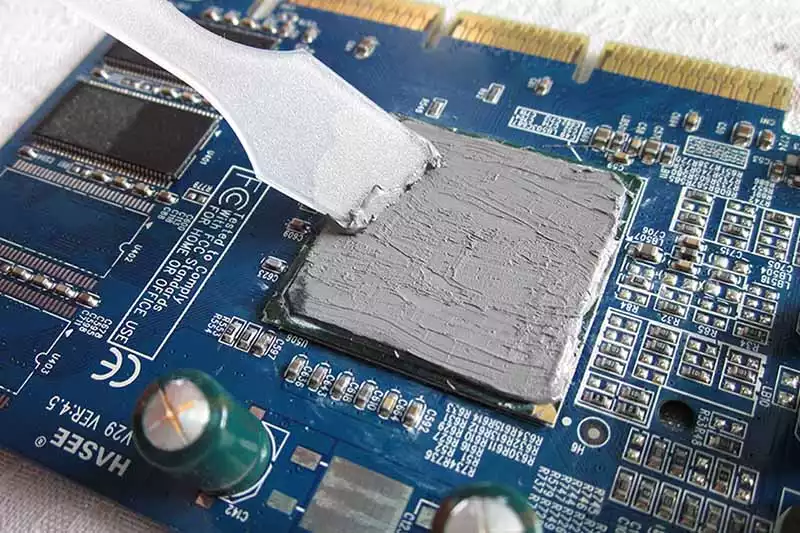
Too thick, and resistance climbs. Too thin, and dry spots appear.
Good practice checklist:
· Even spread
· Controlled torque
· Flat mating surfaces
In high-density GPUs or LED modules, trimming microns from bond lines can noticeably cut thermal resistance. That’s where Low thermal resistance thermal grease from Sheen Technology helps stabilize performance under heavy loads—no drama, just cooler silicon.
3 Benefits Of Low Thermal Resistance Grease
Low thermal resistance thermal grease sits quietly between a chip and a heat sink, yet it decides how cool your device runs. By optimizing heat transfer and trimming thermal impedance, this interface material keeps junction temperature under control. When Low thermal resistance thermal grease is selected wisely, device performance stays steady and component temperature drops without drama.
Faster Heat Dissipation for Lower Junction Temperature
When Low thermal resistance thermal grease is packed with high-grade fillers, thermal conductivity climbs and heat removal speeds up. That means lower junction temperature, better cooling efficiency, and fewer throttling events.
· Higher thermal conductivity shortens the heat path
· Lower contact resistance improves heat transfer efficiency
· Reduced component temperature stabilizes output
Apply optimized low thermal resistance grease evenly
· Minimize trapped air in the thermal gap
· Clamp with proper mounting pressure
· Monitor junction temperature under load
Market analysts at IDC noted in a 2025 thermal management outlook:
“As chip power density rises beyond 800W in AI accelerators, advanced thermal interface materials are no longer optional but foundational to sustained performance.”
That’s why Low thermal resistance thermal grease has become a go-to choice in data centers and high-load CPUs.
Enhanced Long-Term Reliability Under Thermal Cycling
Daily power swings cause expansion and contraction. Over time, weak interface material dries, pumps out, and raises thermal fatigue risk. A well-formulated Low thermal resistance thermal grease tackles this head-on.
· Maintains material stability during rapid thermal cycling
· Supports stress reduction across solder joints
· Extends component lifespan
Here’s how it plays out:
Under repeated load:
· Stable viscosity limits grease migration
· Strong adhesion protects the heat path
During cooldown:
· Elastic structure absorbs mechanical strain
· Lower performance degradation over thousands of cycles
Across product lifetime:
· Improved long-term reliability
· Reduced maintenance intervals
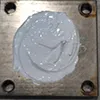
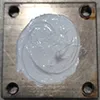
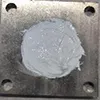
Sheen technology Low Thermal Resistance Thermal Grease aging Test:
| Sheen technology SG560-10 Thermal grease High-Temperature Aging Test Results | |||||||||
| Aging Duration(H) | 0 | 200 | 400 | 600 | 800 | 1000 | Change Rate (1000 Hours) | Acceptance Criteria | Result |
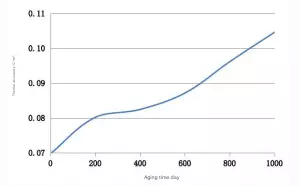
| Thermal Resistance(℃*in²/W) | 0.06975 | 0.08018 | 0.08246 | 0.08717 | 0.09615 | 0.1046 | +50% | Increase ≤ 2x | OK |
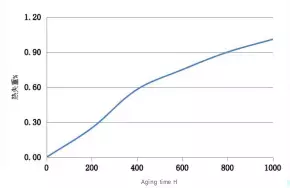
| Thermogravimetric Analysis(%) | 0 | 0.25% | 0.58% | 0.75% | 0.9% | 1.01% | -1.01% | ≤20% | OK |
 |
 |
||||||||
| Appearance | 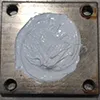 |
 |
 |
 |
 |
 |
| 0 H | 200H | 400H | 600H | 800H | 1000H |
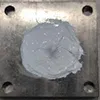
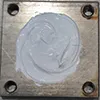
Conclusion: After 1,000 hours, thermal resistance increased by 50% and thermal weight loss was 1.01%; the high-temperature aging test was passed.
Need exact thermal conductivity, viscosity, dielectric strength, and bond-line guidance before you choose? Download the product datasheets to compare low thermal resistance thermal grease options.
In automotive ECUs and telecom base stations, even small gains in long-term reliability translate into real cost savings. Sheen Technology formulates compounds engineered to resist pump-out, keeping thermal fatigue in check year after year.
Thinner Bond Lines to Minimize Thermal Impedance
A thinner bond line thickness usually means lower thermal impedance—but only if the interface material spreads well. That’s where optimized viscosity matters.
• Lower viscosity improves surface wetting
• Uniform spread reduces contact resistance
• Narrower thermal gap boosts heat transfer efficiency
The sequence is straightforward:
· Dispense controlled volume of Low thermal resistance thermal grease
· Apply calibrated mounting force
· Achieve an ultra-thin interface layer
· Verify reduced thermal impedance
With tight manufacturing control:
At the material level:
· Balanced particle size distribution
· Stable rheology for print or dispense
At the assembly level:
· Consistent bond line thickness
· Cleaner heat removal path
At the system level:
· Lower peak component temperature
· Stronger sustained device performance
In high-density GPUs and compact power modules, that thin layer makes all the difference. Sheen Technology continues refining Low thermal resistance thermal grease so engineers can shrink margins on thickness without sacrificing reliability.
Low Thermal Resistance Grease Vs. Silicon Paste
Picking the right interface material can feel like splitting hairs, but in high-power builds, it truly matters. From gaming rigs to industrial drivers, Low thermal resistance thermal grease and silicon paste play very different roles in heat transfer and long-term cooling performance.
Low Thermal Resistance Grease
When engineers talk about serious thermal efficiency, Low thermal resistance thermal grease usually comes up fast. This advanced compound is designed to push heat dissipation to the limit by minimizing interface gaps between chip and sink.
· High filler loading for better thermal conductivity
· Stable under pressure cycling
· Built for demanding heat transfer loads
Performance snapshot:
| Material Type | Thermal Conductivity (W/m·K) | Typical Application | Thermal Impedance (°C·cm²/W) |
| Standard Silicone Paste | 1.0–5.0 | Consumer CPU | 0.20–0.35 |
| Ceramic-Based Grease | 4.0–8.5 | Gaming GPU | 0.10–0.18 |
| Silver-Filled Grease | 8.5–12.0 | Power Modules | 0.05–0.12 |
Why it works so well comes down to structure:
Interface Material Design
Particle network density
· Ceramic or silver pathways
· Reduced microscopic air pockets
Base Matrix
· Silicone or synthetic carrier
· Maintains spread
Result
· Lower resistance
· Higher thermal conductivity
· Faster heat dissipation
Low thermal resistance thermal grease is often the go-to for power amplifiers, EV controllers, and high-frequency boards. Sheen Technology engineers tune filler ratios so the grease spreads easily yet keeps ultra-low impedance. In tight builds, that difference isn’t hype—it’s measurable.
Silicon Paste
Silicon paste, often called thermal paste or silicone compound, keeps things simple and budget-friendly. It uses zinc oxide within a silicone base, offering moderate thermal conductivity and solid dielectric strength.
· Application is straightforward
· Works well on everyday CPUs
· Handles moderate heat sink interface demands
Structure-wise:
· Base: Silicone carrier
· Filler: Zinc oxide
· Purpose: Reliable heat transfer
For office PCs, LED drivers, or home electronics, Low thermal resistance thermal grease might be overkill. Standard silicon paste does the job without draining the budget. That said, when power density rises, many integrators upgrade to Low thermal resistance thermal grease from Sheen Technology to boost cooling performance and long-term stability.
In short, silicon paste fits general use; advanced low-resistance thermal grease supports high-performance hardware that runs hot and refuses to slow down.
Overclocking: Standard Paste Vs. Low-Resistance
Overclocking pushes hardware beyond factory limits, and heat becomes the real boss battle. The right interface material can mean stable gains or thermal throttling. Here’s how standard paste stacks up against low thermal resistance thermal grease.
Standard Thermal Paste
Standard paste works, but it plays it safe. Its thermal conductivity supports basic heat transfer, yet higher thermal resistance builds up under load.
Core Material Behavior
1.1 Viscosity and Spread
· A thicker compound may resist pump-out but can trap micro air pockets inside the interface gap.
1.2 Contact Efficiency
· Between the CPU IHS and heat sink, microscopic voids reduce transfer speed.
System-Level Impact
2.1 With a mid-range CPU cooler
· Stable at stock clocks
· Temperature climbs fast during stress tests
2.2 Under sustained GPU load
· Junction temperature rises
· Fans spin harder, noise increases
Overclocking Ceiling
· Acceptable for mild boosts
· Not ideal for voltage-heavy tuning
· Limits aggressive frequency scaling
Quick breakdown:
· Pros: Easy application method, budget-friendly
· Cons: Higher thermal resistance, weaker sustained heat transfer
Standard paste keeps systems running. Push harder, though, and thermal headroom shrinks fast.
Low-Resistance Thermal Grease
Low thermal resistance thermal grease changes the thermal game. By reducing thermal impedance, it strengthens heat dissipation right at the source.
Micro-Level Performance Gains
1.1 Enhanced high thermal conductivity
· Faster heat migration from die to heat sink
1.2 Reduced interface gap impact
· Better surface wetting
· Improved contact under mounting pressure
Overclocking Performance Gains
2.1 Voltage Stability
· Lower peak core temps
· Improved sustained boost clocks
2.2 Extreme Cooling Compatibility
· Works with air coolers
· Scales under liquid and sub-zero setups
Notice the drop in operating temperature. That gap often decides if a system throttles or holds steady.
Low thermal resistance thermal grease supports tighter thermal control in microprocessors and chipsets. It also improves overall thermal performance during extended gaming or rendering sessions.
Low thermal resistance thermal grease isn’t just for record chasers. Even daily overclockers feel the difference: cooler cores, quieter fans, steadier clocks. Brands like Sheen Technology engineer advanced thermal interface solutions, including low thermal resistance thermal grease, tuned for demanding builds.
In high-load environments, low thermal resistance thermal grease keeps thermal resistance low, heat flow high, and overclocking performance right where enthusiasts want it.
Prevent CPU Throttling With Low Resistance Grease
Keeping processors cool is not rocket science, but it does demand the right materials. Low thermal resistance thermal grease plays a key role in thermal management, helping CPUs stay fast under pressure while avoiding annoying slowdowns caused by heat spikes.
Optimizing Heat Sink Contact for CPU Cooling
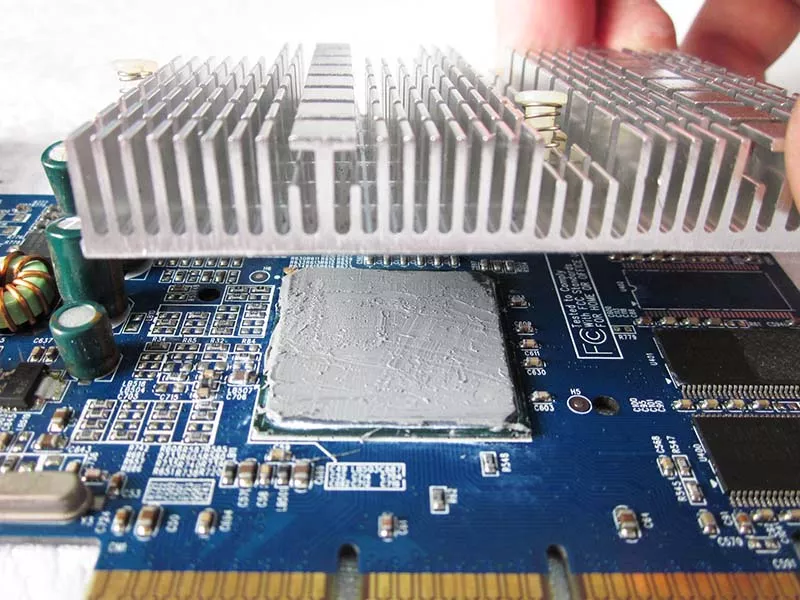
When applying Low thermal resistance thermal grease, contact quality defines everything. A proper thermal interface material must reduce gaps created by surface roughness between the CPU heat spreader and cooler base.
· Maintain steady contact pressure
· Control correct mounting force
· Ensure full gap filling
· Clean both surfaces.
· Apply a pea-sized drop of Low thermal resistance thermal grease.
· Secure evenly to stabilize bond line thickness.
Key factors:
→ Higher thermal conductivity improves heat transfer.
→ Balanced pressure avoids overflow.
→ Stable spread limits trapped air.
A thin, uniform layer of low thermal resistance grease allows efficient heat flow from die to cooler, cutting the risk of thermal throttling. Sheen Technology engineers fine-tune viscosity so the grease spreads smoothly without pump-out under stress.
Maintaining Operating Temperature Range Under Load
Heavy gaming or data processing pushes CPU temperature toward critical operating limits. Here, Low thermal resistance thermal grease supports steady power dissipation and controls heat flux.
Performance snapshot under 150W thermal load:
| Grease Type | Thermal Conductivity (W/m·K) | Avg CPU Temp (°C) | Temp Stability ±°C |
| Standard TIM | 4.5 | 92 | 6 |
| Mid-grade Grease | 8.0 | 86 | 4 |
| Low thermal resistance thermal grease | 12.5 | 78 | 2 |
| Advanced Low Resistance Thermal Grease | 14.0 | 75 | 1.5 |
Short takeaways:
· Lower temp, higher boost clock.
· Better temperature stability during stress testing.
· Reduced throttling events.
Using Low thermal resistance thermal grease keeps systems cool even when workloads spike hard.
Pump-Out Resistance During Intensive Thermal Cycling
Repeated heating and cooling cause thermal expansion, which can thin or push out ordinary thermal grease. That leads to TIM degradation and rising temperatures.To ensure long-term reliability:
· Select optimized viscosity for stability.
· Control consistent bond line thickness.
· Validate resistance to phase separation.
Under rapid cycling:
Internal stresses rise.
a) Material shifts.
b) Gaps reform.
c) Heat transfer drops.
d) CPU temperature climbs.
A stable Low thermal resistance thermal grease resists migration, maintaining material stability in gaming rigs and servers alike.
Ensuring Material Compatibility with Microprocessors
Compatibility is not optional. A microprocessor includes delicate substrate material and microstructures that demand safe compounds.
Critical checks:
· Strong corrosion resistance
· Reliable electrical insulation
· Verified dielectric properties
· Low outgassing
Evaluation path:
· Chemical screening for chemical inertness.
· Long-cycle testing for material degradation.
· Electrical validation to maintain insulation integrity.
Sheen Technology formulates low thermal resistance grease to protect sensitive packages while maximizing cooling efficiency. In short, Low thermal resistance thermal grease keeps performance high, components safe, and throttling out of the equation.
Is Low Thermal Resistance Thermal Grease Worth It?
Low thermal resistance thermal grease sounds technical, yet the idea is simple: better heat flow, less waste, longer life. Let’s break down how Low thermal resistance thermal grease performs in real operations and where the money really goes.
Evaluating ROI in Data Centers and Power Electronics
When ROI, efficiency, and operational costs are tracked closely, Low thermal resistance thermal grease becomes more than a maintenance item.
· Lower junction temperature
· Reduced cooling load
· Improved reliability
Heat leaves chips faster.
· Cooling systems work less.
· Energy bills shrink over time.
In data centers and power electronics, thermal management links directly to uptime. A 2–5°C drop can extend component lifespan noticeably. That’s why Low thermal resistance thermal grease is increasingly specified in high-density racks.
The International Energy Agency noted in its 2025 data center outlook that cooling efficiency remains one of the top three drivers of operating margin improvement in hyperscale facilities.
For operators using low thermal resistance grease:
✓ Lower failure rates
✓ Better PUE numbers
✓ Stronger long-term asset value
Sheen Technology supports these environments with formulations tuned for stable thermal management under sustained loads.
Cost vs. Performance: Silver Particles vs. Ceramic Fillers
Material choice shapes cost, performance, and heat transfer stability.
| Filler Type | Thermal Conductivity (W/m·K) | Relative Cost | Electrical Conductivity | Stability |
| Silver particles | 8–12 | High | Conductive | Moderate |
| Aluminum oxide | 3–5 | Low | Insulating | High |
| Boron nitride | 4–8 | Medium | Insulating | Very High |
| Zinc oxide | 2–4 | Low | Insulating | High |
| Hybrid blends | 6–10 | Medium-High | Controlled | High |
Silver-based Low thermal resistance thermal grease offers أعلى conductivity but raises material cost. Ceramic-filled thermal grease with low resistance balances insulation and durability. For many filler types, boron nitride hits the sweet spot between material properties and budget.
Dispensing Options: Syringes, Tubes and Bulk Containers
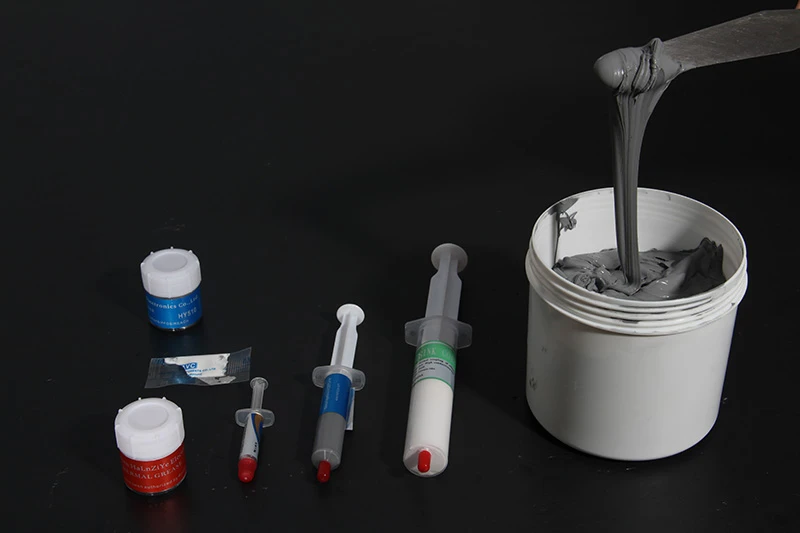
Application impacts volume, consistency, and manufacturing speed.
· Syringes for precise rework
· Tubes for field maintenance
· Bulk containers for automated lines
A practical flow looks like this:
· Select packaging based on production scale.
· Match dispensing pressure to viscosity.
· Verify bond line thickness after cure.
Low thermal resistance thermal grease performs best when spread evenly. Inconsistent application cancels out its benefits. Sheen Technology provides packaging aligned with both manual and robotic dispensing systems, keeping application methods predictable.
Compliance Factors: RoHS, REACH and JEDEC Standards
No one wants compliance drama later. RoHS, REACH, and JEDEC standards guide material selection in regulated markets.
For Low thermal resistance thermal grease, compliance checklist:
· Environmental substance limits
· Documentation traceability
· Electrical safety validation
· Long-term aging tests
Meeting regulations protects brand reputation and supports global deployment. A well-documented low thermal resistance grease that satisfies industry standards isn’t just safe—it’s easier to specify, approve, and scale.
In short, Low thermal resistance thermal grease pays off when performance, compliance, and real-world application align.
【Request a Custom Quote】 Not sure which thermal grease fits your build? Send us your target operating temperature, chip type, clamp load, and application details, and we can help recommend the right thermal solution for your project.
Sheen Thermal
Dongguan Sheen Electronic Technology Co., Ltd · Founded in 2008
Manufacturer of thermal interface materials and silicone foam for automotive electronics, energy storage, power electronics, communications and consumer electronics.
Certified
- ISO 9001:2015
- ISO 14001:2015
- IATF 16949:2016
What we supply
- Thermal conductivity Up to 90 W/m·K
- Thickness 0.3–10.0 mm
- Custom & samples Die-cut to drawing, 3–7 days