
 English
 usheenthermal

Boost Device Longevity: Consumer Electronics Insulating Thermal Film
Date:2026-03-23
Boost Device Longevity: Consumer Electronics Insulating Thermal Film
Consumer electronics insulating thermal film is the quiet bodyguard inside your devices—the bouncer keeping heat from crashing the party. Phones slim down, processors bulk up, and suddenly your battery’s sweating like it ran a marathon. When heat lingers, components age fast, warranties spike, and brand trust takes a hit.
The U.S. Department of Energy notes that excessive heat is a leading factor in electronic failure. Short and simple: cooler circuits last longer.
Think of insulation film like sunscreen for your circuitry—thin, flexible, and lifesaving. Pick the right one, and your products stay cool under pressure while profits stop slipping through the cracks.
Combat Overheating: Consumer Electronics Insulating Film Tips
Phones, tablets, and power modules are getting thinner yet hotter. That’s why Consumer electronics insulating thermal film matters more than ever. By combining consumer electronics insulation, insulating thermal layers, and advanced thermal film materials, brands can manage heat without bulking up devices. Here’s how smart design keeps things cool and safe.
Leverage Low Thermal Conductivity for Cool Smartphone Components
When heat builds up near chips, performance drops fast. A well-designed Consumer electronics insulating thermal film with low thermal conductivity slows heat transfer and supports stable temperature regulation.
• Isolate hotspots near SoCs
• Improve heat dissipation paths
• Protect sensitive smartphone components
Application focus
1)Chip shielding
2)Battery perimeter lining
3)Compact PCB layering
Material selection logic
Core layer
• Ceramic-filled polymer
• Aerogel-enhanced film
Surface layer
• High-adhesion coating
• Scratch-resistant finish
This approach keeps device performance steady, even during gaming or fast charging. Sheen Technology fine-tunes insulating film thickness so consumer electronics stay slim but cool.
Enhance Dielectric Strength in Power Electronics Modules
High voltage demands serious dielectric strength. In power electronics modules, poor electrical insulation risks voltage breakdown and costly failure.
Key evaluation metrics
• Breakdown voltage
• Thermal resistance
• Aging stability
Component protection efficiency
| Film Type | Dielectric Strength (kV/mm) | Temp Resistance (°C) | Thickness (µm) | Application |
| PET-based | 18 | 130 | 50 | Adapters |
| PI film | 220 | 260 | 25 | Inverters |
| Silicone | 25 | 200 | 80 | Modules |
| Ceramic PI | 300 | 300 | 20 | EV power |
| Hybrid | 150 | 240 | 35 | UPS units |
A reliable Consumer electronics insulating thermal film also supports thermal management, balancing insulation and controlled heat flow. Sheen Technology aligns material choice with voltage class and real-world load cycles.
Boost Flame Retardancy with Silicone-Based Coatings
Fire risk is no joke. Silicone-based coatings enhance flame retardancy while keeping strong material properties and steady thermal stability.
Fire safety framework
Compliance
• UL94 V-0 rating
• IEC safety tests
Structure
• Base insulating layer
• Ceramic filler network
Performance
• Low smoke density
• Stable arc resistance
In compact electronic devices, this added layer acts like a quiet bodyguard. It resists ignition and maintains insulation integrity under stress.
Improve Flexibility and Adhesion Properties via Lamination
Slim gadgets need bendable materials. A smart lamination process improves flexibility and long-term adhesion properties.
Process flow
• Surface cleaning
• Primer coating
• Acrylic bonding layer
• Pressure-controlled lamination
• Thermal curing
Material bonding goals
• Secure curved housings
• Support tight device assembly
• Increase overall durability
By integrating advanced consumer electronics thermal insulation film into layered builds, Sheen Technology helps brands create lighter products that still feel tough. The right insulating thermal film doesn’t just block heat—it quietly upgrades the whole device experience.
Can Heat Damage Reduce Device Lifespan?
Heat is that silent troublemaker inside your gadgets. From laptop batteries to smart bands and display panels, rising temperatures quietly chip away at performance. That’s why Consumer electronics insulating thermal film matters so much. By combining consumer electronics, insulating layers, and thermal film materials, smart heat control keeps devices cool, stable, and alive longer.
Understanding Temperature Resistance Limits in Laptop Batteries
When discussing laptop batteries, the issue revolves around temperature resistance, defined by strict thermal limits tied to chemistry and structure.
Core Thermal Boundaries
• Normal operating temperature range keeps chemical reactions stable.
• Extended heat exposure pushes internal resistance higher.
• Crossing safety thresholds speeds up battery degradation.
Material Protection Strategy
Insulating Layer
• Controls internal heat spread.
• Shields nearby circuits.
Thermal Barrier Film
• Acts as a buffer against external spikes.
• Stabilizes surface temperature swings.
Practical Reinforcement
• Integrating Consumer electronics insulating thermal film inside battery packs reduces localized overheating.
• Advanced consumer electronics thermal insulation film improves safety margins.
• Sheen Technology designs insulating thermal film solutions tailored for compact battery layouts.
Without proper consumer electronics heat insulation film, capacity fades faster than expected. That’s just the reality of chemistry under stress.
Thermal Aging Tests: Predicting Wear in Wearable Devices
Wearable devices live close to the skin, so constant warmth adds pressure. Thermal aging labs recreate years of heat exposure in weeks using accelerated aging cycles.
• Adhesives soften.
• Polymers stiffen.
• Micro-cracks creep into flexible circuits.
1) Simulate elevated temperature storage.
2) Add humidity stress.
3) Measure electrical drift and component wear.
Short bursts of heat might seem harmless. Long-term buildup isn’t. Repeated stress reduces device lifespan, especially in fitness trackers and AR glasses.
Using Consumer electronics insulating thermal film around processors and batteries helps manage micro-heat zones. Sheen Technology applies predictive testing before mass production, making consumer electronics thermal film performance less of a gamble.
Impact of Repeated Thermal Cycling on Display Modules
Thermal cycling sounds technical, but it’s simple: heat up, cool down, repeat. Over time, display modules suffer from temperature fluctuations that cause material fatigue.
Step 1: Expansion begins. Glass, adhesive, and metal layers expand at different rates.
Step 2: Cooling contracts materials unevenly, stressing bonding points.
Step 3: Tiny separations form, reducing module reliability and triggering performance degradation.
⚠ Expansion mismatch is the real villain here.
Applying Consumer electronics insulating thermal film behind display stacks softens these swings. The insulating thermal film absorbs part of the stress, reducing crack growth.
For brands aiming at longer device life, Sheen Technology integrates consumer electronics heat insulation film directly into module architecture. Four layers of protection beat one overheated panel every time.
Which Material Yields Best Insulation Performance?
Consumer electronics keep getting thinner and hotter. That’s why Consumer electronics insulating thermal film matters so much today. From insulating film in smartphones to thermal film in power boards, picking the right electronics insulation material can make or break reliability.
Polyimide Film
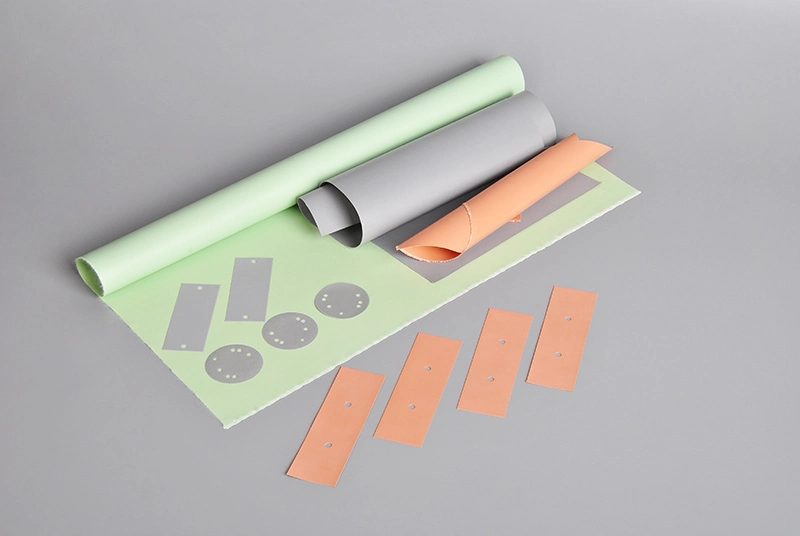
When high heat shows up, Consumer electronics insulating thermal film based on polyimide usually takes the lead.
Core Performance
1.1 Thermal Capability
• Maintains High Temperature Resistance above 250°C
• Preserves Thermal Stability during continuous operation
1.2 Electrical Safety
• Strong Electrical Insulation under high voltage
• Reliable Dielectric Properties for compact PCB layouts
1.3 Mechanical Integrity
• Outstanding Mechanical Strength
• Resists cracking in thin consumer electronics thermal film formats
Application Fit in Consumer Electronics
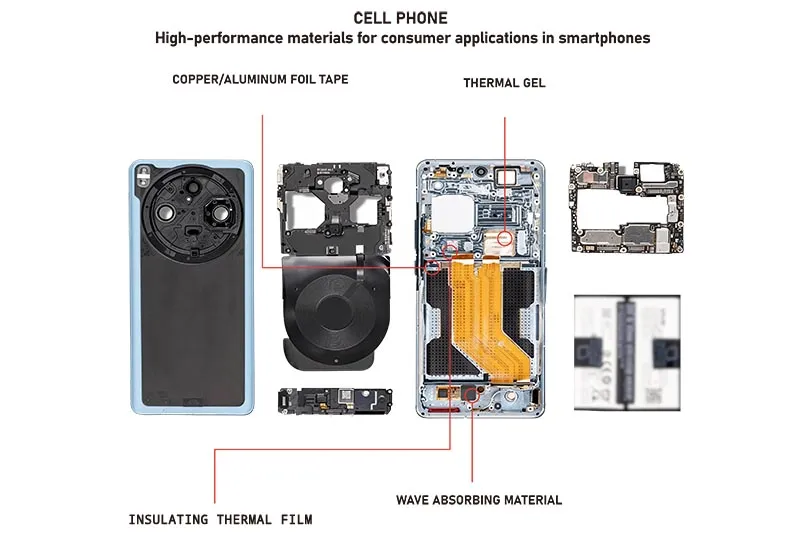
2.1 Smartphones
• Flexible printed circuits
• Battery wrapping insulation film
2.2 Power Electronics
• Inverter boards
• Fast-charging modules
Key Data Snapshot
| Property | Polyimide Film | PET Film | Silicone Composite | Test Standard |
| Max Temp (°C) | 260 | 150 | 200 | UL 746B |
| Dielectric Strength (kV/mm) | 200 | 150 | 120 | ASTM D149 |
| Thermal Conductivity (W/m·K) | 0.12 | 0.15 | 1.5 | ASTM E1461 |
| Elongation (%) | 50 | 120 | 80 | ASTM D882 |
For premium Consumer electronics insulating thermal film, polyimide simply handles heat like a pro. Sheen Technology fine-tunes thickness tolerance and coating control so performance stays consistent across mass production.
PET Film
PET-based Consumer electronics insulating thermal film feels like the practical choice. Not flashy, just dependable.
• Good Electrical Insulation for LED drivers
• Dimensional Stability during lamination
• Moisture Resistance in humid storage
• Chemical Resistance against cleaning agents
• Cost-Effectiveness for large-scale electronics
In consumer electronics insulation film for TVs or adapters, PET balances price and function.
Here’s how it plays out in real use:
1) Cut to thin gauges for compact devices.
2) Laminate onto copper traces.
3) Heat-bond under controlled pressure.
Short bursts of heat? No problem. Long exposure to extreme temperatures? That’s where limits appear.
Still, for mainstream Consumer electronics insulating thermal film, PET covers most daily electronics needs without pushing budgets too hard.
Silicone-Based Composite
Silicone-based composite Consumer electronics insulating thermal film steps in when flexibility and heat dissipation must coexist.
Material Architecture
1.1 Silicone Matrix
• Delivers Flexibility
• Offers strong Adhesion Properties
1.2 Ceramic Fillers
• Provide Excellent Thermal Conductivity
• Expand Wide Operating Temperature Range
Functional Advantages
2.1 Mechanical
• Natural Vibration Damping in automotive electronics
2.2 Thermal
• Stable heat flow in power control units
“Thermal management materials for automotive and high-power electronics continue to grow above 8% annually, driven by electrification and compact device design.” — IDC Materials Research Brief, 2025
For demanding environments, silicone composite thermal insulation film keeps circuits safe while moving heat away fast. Sheen Technology adapts filler ratios and coating processes so each Consumer electronics insulating thermal film solution matches real-world stress, not just lab numbers.
Consumer Electronics Insulating Thermal Film: 5 Key Benefits
Consumer electronics keep getting thinner and hotter, so smart insulation matters more than ever. Consumer electronics insulating thermal film helps balance heat and safety without adding bulk. Let’s break down why this insulating thermal film is a solid pick for modern devices.
Superior Electrical Insulation for Automotive Electronics
In automotive electronics, stability isn’t optional. Consumer electronics insulating thermal film supports both electrical insulation and thermal management in high-demand circuits.
Core protection layers
• High dielectric barrier for high voltage zones
• Stable resistance under temperature swings
Performance outcomes
• Improved reliability in control units
• Stronger component protection for sensors and LED drivers
When voltage spikes hit, this electronics thermal film keeps current where it belongs. That means smoother performance and fewer surprise failures on the road.
RoHS Compliance and UL Certification Assurance
Compliance builds trust. With RoHS compliance, UL certification, and strict regulatory standards, the film supports:
1)Safer material selection
2)Verified material testing results
3)Faster product approval in global markets
Under the hood, quality assurance systems track every batch. For brands like Sheen Technology, that translates into smoother exports and fewer headaches at customs.
Halogen-Free and Low VOC Emissions for Green Sourcing
Sustainability is no side note.
Halogen-free chemistry
• Reduced environmental impact
• Safer recycling streams
Low VOC emissions
• Better air quality indoors
• Supports eco-friendly product lines
Green sourcing isn’t just talk; sustainable materials help meet tighter ESG targets without sacrificing insulation strength.
Custom Dimensions and Material Traceability from Suppliers
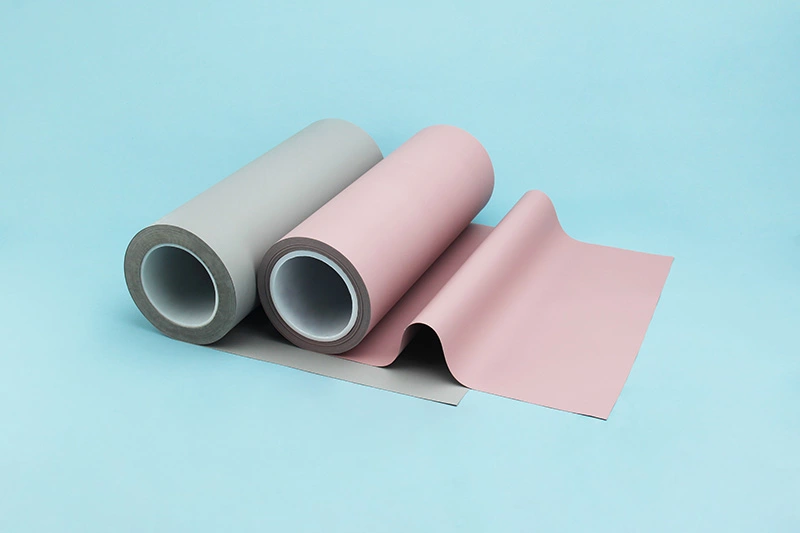
Flexibility keeps production moving. Format options
• Roll stock
• Precision-cut sheets
Control systems
• Full material traceability
• ISO-based quality control
Operational value
• Stronger supplier management
• Easier component integration across the supply chain
With custom dimensions, electronics insulation film fits neatly into tight assemblies, boosting manufacturing flexibility.
Die-Cutting Precision for Complex LED Lighting Layouts
For dense LED lighting boards, detail matters.
Tooling accuracy
• Clean die-cutting edges
• Tight precision tolerances
Assembly gains
• Fewer alignment errors
• Faster manufacturing cycles
Visual results
• Stable thermal paths
• Improved optical performance in complex layouts
A well-cut Consumer electronics insulating thermal film means less rework and smoother assembly. That’s why teams working with Sheen Technology keep it in their go-to material list.
Scenario: Smartphone Longevity Using Thermal Film
Smartphones run hot, work hard, and age fast. Extending device life now depends heavily on Consumer electronics insulating thermal film solutions that balance insulation and heat control. From SoCs to batteries and displays, smart thermal design keeps performance steady and repairs minimal.
Coating Techniques to Shield High-Power SoCs
High-performance chips demand serious SoC shielding backed by precise thermal management. In high-power devices, the right coating materials act as both electrical guard and heat buffer. Consumer electronics insulating thermal film plays a central role here.
Coating Material Selection
1.1 Electrical Insulation Layer
• Polyimide-based thermal film for dielectric strength
• Ceramic-filled coatings for heat dissipation
1.2 Thermal Stability Range
• 150°C continuous tolerance
• Short bursts above 200°C
Application Methods
2.1 Spray Coating
• Uniform thickness control
• Fast curing for volume production
2.2 Spin Coating
• Thin-film precision
• Reduced material waste
Performance Impact on device protection
• Lower thermal stress on solder joints
• Stable clock speed under load
• Extended chip lifespan
Sheen Technology integrates Consumer electronics insulating thermal film into multilayer coatings, improving both insulation and thermal control without adding bulk.
Graphite Sheets for Even Heat Spreading Under OLED Displays
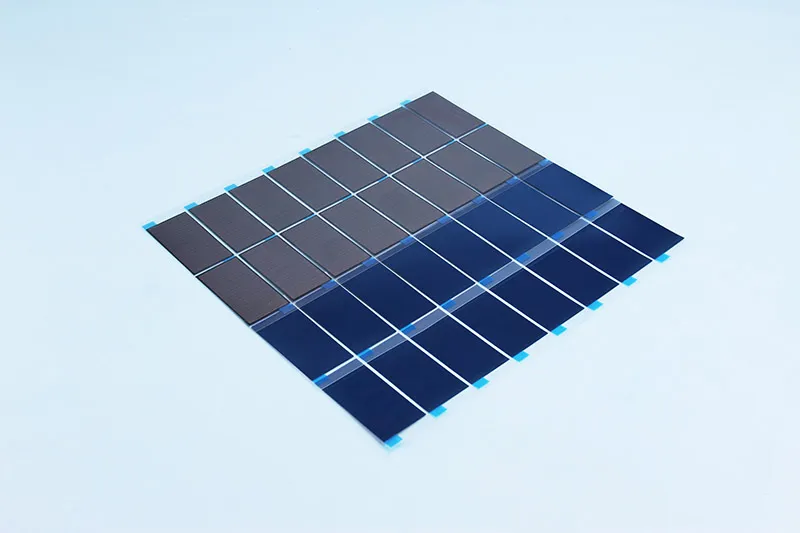
Under bright OLED panels, heat builds up quickly. Pairing graphite sheets with Consumer electronics insulating thermal film keeps uniform temperature across sensitive layers.
Heat Spreading Structure
1.1 Upper OLED Layer
1.2 Graphite Heat Spreader
1.3 Insulating Thermal Film Barrier
1.4 Mid-frame Support
Key Performance Metrics
| Material Layer | Thermal Conductivity (W/m·K) | Thickness (mm) | Hotspot Reduction (%) |
| Graphite Sheet | 800–1200 | 0.03–0.05 | 35 |
| Thermal Film | 1.5–5 | 0.02–0.04 | 18 |
| Combined Stack | — | 0.06–0.09 | 48 |
Cooling Benefits
• Better component cooling
• Reduced color shift
• Longer display stability
By combining heat spreading graphite with Consumer electronics insulating thermal film, Sheen Technology supports slim devices without sacrificing safety.
Acrylic Adhesive Lamination around Battery Packs
Battery zones are sensitive. Acrylic adhesive bonding must survive vibration, drops, and repeated charging cycles. Here, Consumer electronics insulating thermal film reinforces battery packs and stabilizes energy storage systems.
Lamination Stack Design
1.1 Outer Casing
1.2 Acrylic Adhesive Layer
1.3 Insulating Thermal Film
1.4 Battery Core
Assembly Control
• Precise pressure during lamination
• Controlled curing temperature
• Alignment with thermal interface pads
Reliability Outcomes
• Maintained adhesion after 1,000+ cycles
• Reduced swelling stress
• Safer component assembly
An effective electronics insulating film layer around cells limits thermal runaway risk. That’s where Sheen Technology fine-tunes bonding strength and insulation balance.
Recyclability and Biodegradable Options for End-of-Life
Sustainability now shapes material choice. Consumer electronics insulating thermal film must support recyclability without compromising performance.
Material Pathways
1.1 Recyclable Polyimide Blends
1.2 Bio-based Substrate Options
1.3 Low-residue Adhesive Systems
End-of-Life Processing
• Easier layer separation
• Reduced toxic residue
• Cleaner material disposal streams
Environmental Impact Control
• Lower carbon footprint
• Support for sustainable electronics programs
• Compliance with global end-of-life management policies
Eco-conscious biodegradable materials are entering pilot production, showing that thermal insulation and environmental care can coexist. With carefully engineered Consumer electronics insulating thermal film, longer device life and smarter recycling no longer feel out of reach.
Data Proves: 60°C Reduction In Junction Temperature
Modern devices run hot, and no one likes a phone or laptop that feels like a mini heater. That’s where Consumer electronics insulating thermal film steps in. By combining smart Thermal Management design with advanced materials, manufacturers are cutting junction temperatures by up to 60°C, extending Device Longevity and boosting everyday reliability.
Film Extrusion vs Coating Techniques in Thermal Management
When selecting Film Extrusion or Coating Techniques for Consumer electronics insulating thermal film, performance starts at the material level and moves through processing control.
Material Formation Path
1.1 Film Extrusion
• Continuous melt processing ensures uniform thickness.
• Stable polymer alignment improves Heat Dissipation.
• Consistent dielectric strength supports electronics thermal insulation film needs.
1.2 Coating Techniques
• Layer-by-layer application tailors conductivity.
• Filler dispersion enhances localized Thermal Management.
• Adjustable thickness supports custom consumer electronics thermal film layouts.
Performance Impact on Junction Temperature
2.1 Thickness Uniformity
• Extrusion variance: ±3%
• Coating variance: ±8%
2.2 Thermal Conductivity Control
• Extruded composite: balanced in-plane flow
• Coated layers: directional heat spreading
Material Science Considerations
• Polymer matrix selection
• Ceramic filler loading ratios
• Interface adhesion strength
| Process Type | Avg. Thermal Conductivity (W/m·K) | Thickness Tolerance (%) | Max Junction Temp Reduction (°C) |
| Standard Extrusion | 1.5 | ±3 | 42 |
| Advanced Extrusion | 2.3 | ±2 | 55 |
| Basic Coating | 1.2 | ±8 | 35 |
| Multi-layer Coating | 2.0 | ±5 | 50 |
| Hybrid Structure | 2.6 | ±3 | 60 |
In real-world devices using Consumer electronics insulating thermal film, hybrid structures often deliver the sharpest drop in junction temperature. That’s not hype; it’s measurable physics grounded in Material Science and heat flow control.
ISO 9001–Certified Solutions Driving Measurable Performance Gains
Consistency wins. ISO 9001 Certification ties Manufacturing Standards to repeatable Thermal Performance results, especially for consumer electronics insulating thermal film used in tight device layouts.
• Controlled lamination pressure keeps air gaps low.
• Calibrated thermal cycling validates Reliability Testing targets.
• Statistical sampling supports real Junction Temperature Reduction claims.
Incoming material inspection
• In-line thickness scanning
• Post-production thermal aging at 125°C
• Failure rate tracking below 0.2%
Recent industry analysis backs the push for certified systems:
“Thermal interface and insulation materials with verified quality systems are seeing accelerated adoption in consumer electronics, driven by rising power density and miniaturization trends.” — IDC Materials Research Update, 2025
Short story? Fewer defects. Lower thermal drift. Longer device life.
For brands relying on Consumer electronics insulating thermal film, pairing process discipline with validated testing turns thermal insulation film performance from guesswork into hard data. That’s how a 60°C reduction stops being marketing talk and becomes engineering reality.
FAQs about Consumer Electronics Insulating Thermal Film
How does consumer electronics insulating thermal film reduce overheating in compact devices?
Inside crowded smartphone components and wearable devices, heat builds fast and has nowhere to go. Consumer electronics insulating thermal film works through a balance of control and release:
• Low thermal conductivity isolates battery zones and sensitive chips.
• High dielectric strength protects circuits from shorting.
• Integrated graphite sheets gently spread heat away from display modules.
• Strong adhesion properties keep layers stable during daily drops and charging cycles.
The result is steadier temperature resistance, less thermal stress, and longer life for laptop batteries and LED lighting boards.
Which materials offer the best balance of insulation and flame safety?
Choosing materials is a tension between thinness and protection.
1)Polyimide film – excellent electrical insulation, high temperature resistance, trusted in power electronics.
2)Silicone based composites + ceramic fillers – enhanced flame retardancy, often aligned with UL certification for automotive electronics.
3)PET film – flexible and cost-effective, suited for lighter thermal demands.
For global distribution, RoHS compliance and REACH regulation matter as much as performance. Many brands now prefer halogen-free formulas with low VOC emissions and growing recyclability focus.
Why are manufacturing processes critical to film performance?
Performance is shaped long before installation.
• Film extrusion → uniform thickness, stable dielectric strength.
• Coating techniques → tailored thermal conductivity or flame retardancy layers.
• Lamination with acrylic adhesive → flexibility around curved smartphone components.
• Slitting and die-cutting → precision fit for LED lighting and display modules.
ISO 9001 systems and thermal aging tests confirm that the film will not crack, shrink, or lose adhesion properties after years of heat cycling.
What supplier capabilities matter most for bulk purchasing?
Beyond price, reliability decides everything.
Key expectations include:
• Custom dimensions in roll stock or sheet form,
• Clear material traceability
• Responsive technical support during die-cutting trials.
A capable supplier also understands sustainable sourcing trends—offering halogen-free options, exploring biodegradable options, and documenting UL certification and RoHS compliance without delay. In high-volume consumer electronics insulating thermal film orders, that assurance protects both production speed and brand reputation.
Sheen Thermal
Dongguan Sheen Electronic Technology Co., Ltd · Founded in 2008
Manufacturer of thermal interface materials and silicone foam for automotive electronics, energy storage, power electronics, communications and consumer electronics.
Certified
- ISO 9001:2015
- ISO 14001:2015
- IATF 16949:2016
What we supply
- Thermal conductivity Up to 90 W/m·K
- Thickness 0.3–10.0 mm
- Custom & samples Die-cut to drawing, 3–7 days