
 English
 usheenthermal

Advanced Thermal Interface Materials Selection Guide: Graphene vs Carbon Fiber vs Boron Nitride Thermal Pads
Date:2026-03-16
Advanced Thermal Interface Materials Selection Guide: Graphene vs Carbon Fiber vs Boron Nitride Thermal Pads
Every single watt of electrical power eventually has a mid-life crisis and decides to retire as thermal energy. If that heat doesn’t find an exit strategy fast enough, your electronics start acting like a laptop on a 40°C afternoon—sluggish, irritable, and prone to "taking a nap" (shutting down) right in the middle of your most important task.
Enter Thermal Interface Materials (TIMs). These are the ultimate middlemen of the hardware world. They sit quietly between your screaming-hot components and your cooling hardware, making sure heat travels smoothly from the silicon to the safety of heat sinks, cold plates, or chassis structures.
But let’s be real: traditional thermal pads are starting to feel a bit "last decade" for modern systems. As we cram more power into smaller boxes, engineers are calling in the elite squad:
Choosing the right one isn't about finding the "best" material in a vacuum; it’s about picking the right thermal personality to survive your specific design disaster.
Understanding Advanced Thermal Interface Materials
What Are Thermal Interface Materials? (The "Air" Intervention)
Thermal interface materials exist because of one annoying universal truth: Air is a terrible roommate for heat.
When you look at a processor or a heat sink under a microscope, they don't look smooth. They look like tiny, jagged mountain ranges. When you press them together, they only touch at the peaks. The valleys are filled with air, which acts like a thermal bottleneck—or worse, a brick wall.
TIMs are the "translators" that fix this communication breakdown. Their job is to:
• Evict the air pockets: Kick out the insulating air.
• Bridge the gap: Create a solid, microscopic connection between surfaces.
• Grease the wheels: Ensure heat flows without hitting a "toll booth."
Without a good TIM, your $500 high-performance chip might spend its life thermal-throttling while its expensive heat sink sits half a millimeter away doing absolutely nothing. It’s the thermal equivalent of having a fire extinguisher… locked in a building across the street.
Why Advanced TIM Materials are the 2026 Essential
The thermal challenges we’re facing today aren't just "warm"—they’re aggressive. Several trends are pushing us past the limits of standard silicone:
• The "Sun in a Box" Problem (Power Density): AI accelerators and GPUs are now pulling 300W to 700W+ in a single package. That’s a lot of heat concentrated in a very small "neighborhood."
• The Shrinkage: Consumer tech is getting thinner than a credit card, leaving zero room for old-school, bulky cooling towers.
• EV Ambitions: Electric vehicles need thermal control that is both high-performance and "don't-blow-up" safe.
• The 24/7 Grind: Data centers and 5G/6G towers don't get weekends off. They generate mountain ranges of cumulative heat that standard pads can't handle long-term.
Traditional pads are great for your smart toaster, but high-stakes designs need materials with superpowers: higher conductivity, better spreading, and the ability to not melt when things get spicy
What Is a Graphene Thermal Pad?
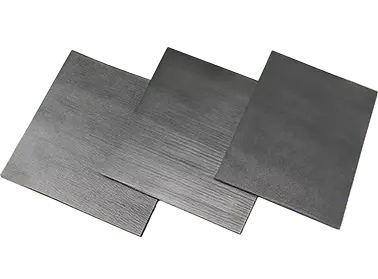
In practical thermal interface products, graphene layers are stacked or combined into thin sheets that behave like extremely efficient heat spreaders.
Material Structure and Heat Transfer Mechanism
Think of the graphene thermal pad as the "X-axis Legend." Utilizing a honeycomb lattice of carbon atoms, graphene is famous for its incredible lateral thermal conductivity.
Instead of just moving heat from the chip to the heatsink (Z-axis), graphene excels at spreading heat across its entire surface (X-Y axis). It’s essentially a "radiator in a sticker."
Typical Applications
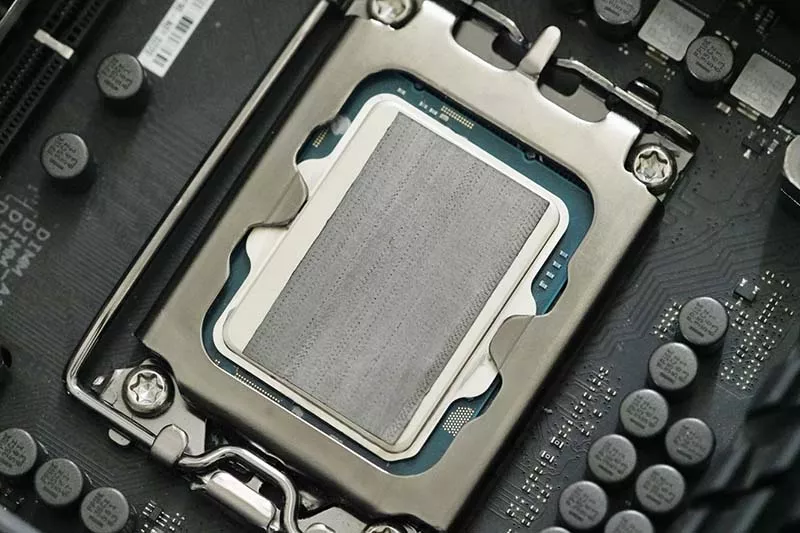
Graphene thermal pads appear most frequently in compact electronics such as:
• smartphones
• tablets
• ultrathin laptops
• wearable electronics
• gaming devices
In these systems, engineers often lack the space for large heat sinks, so spreading heat across the device chassis becomes critical.
Think of the graphene thermal pad as the "X-axis Legend." Utilizing a honeycomb lattice of carbon atoms, graphene is famous for its incredible lateral thermal conductivity.
Instead of just moving heat from the chip to the heatsink (Z-axis), graphene excels at spreading heat across its entire surface (X-Y axis). It’s essentially a "radiator in a sticker."
What Is a Carbon Fiber Thermal Pad?
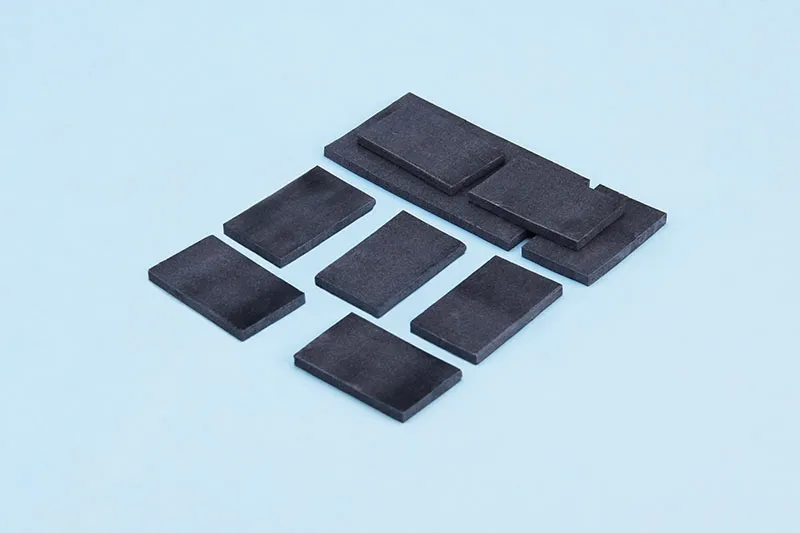
Material Structure and Thermal Behavior
If graphene is the lateral spreader, the carbon fiber thermal pad is the vertical speed demon. By vertically aligning carbon fibers in the Z-axis, we create a literal phonon expressway.
While other pads are busy "spreading" heat, carbon fiber is obsessed with one goal: getting the heat out of the chip and into the cooling system now.
Typical Applications
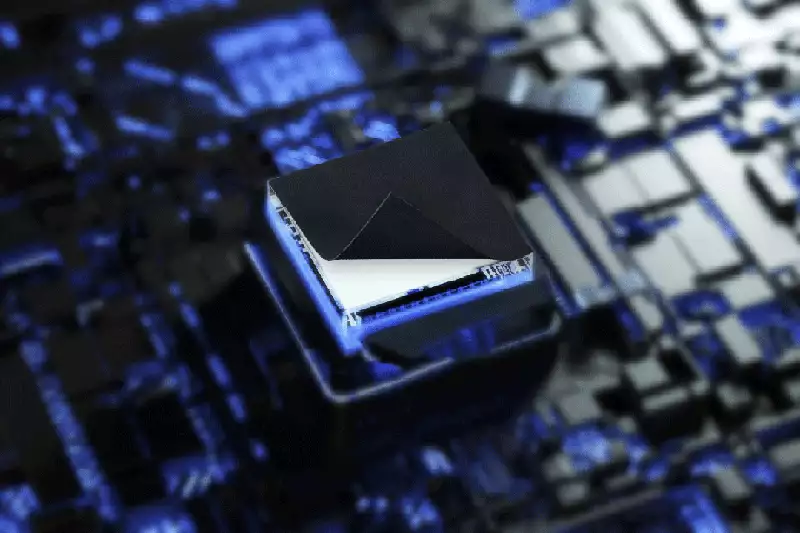
Carbon fiber thermal pads are widely used in high-performance electronics such as:
• GPUs and CPUs
• high-performance computing systems
• aerospace electronics
• EV battery cooling systems
• data center hardware
Carbon fiber is the heavyweight champion for AI & Data Centers. When you have a 700W GPU that needs to stay under 85℃, the massive vertical conductivity of carbon fiber is often the only solution that works.
What Is a Boron Nitride Thermal Pad?
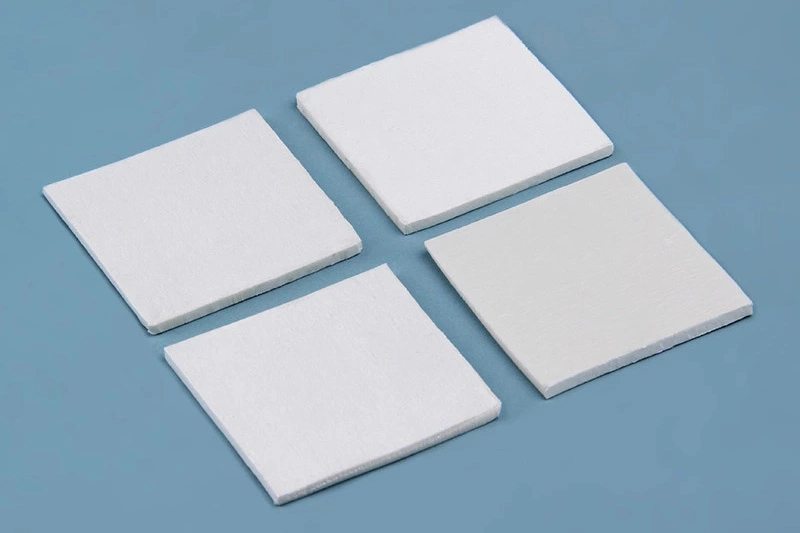
The boron nitride thermal pad is often called "White Graphite." It’s a ceramic powerhouse that achieves the "Holy Grail" of thermal management: it moves heat efficiently but acts as a total wall for electricity.
Material Composition and Structure
Boron nitride thermal pads typically contain:
• hexagonal boron nitride ceramic fillers
• silicone or polymer matrices
• thermally conductive additives
Typical Applications
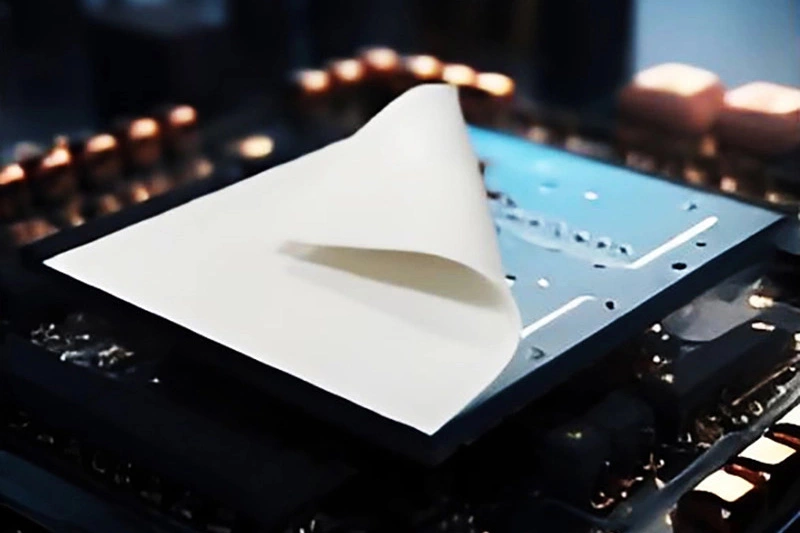
Boron nitride thermal pads are commonly used in:
• LED lighting systems
• automotive electronics
• power supplies
• industrial control systems
• telecom infrastructure
Their flexibility and insulation make them extremely popular in large-scale electronics manufacturing.
Graphene vs Carbon Fiber vs Boron Nitride Thermal Pads — Core Differences
Now that we’ve met the three contenders, let’s compare them directly.
Thermal Conductivity Comparison
| Material | In-Plane Conductivity | Heat Spreading |
| Graphene | Extremely high | Excellent |
| Carbon fiber | Very high | Excellent |
| Boron nitride | Moderate | Good |
Graphene and carbon fiber dominate when it comes to spreading heat across surfaces.
Boron nitride focuses more on reliable interface conduction.
Electrical Properties
| Material | Electrical Behavior |
| Graphene | Conductive |
| Carbon fiber | Conductive |
| Boron nitride | Insulating |
In electronics assemblies, insulation is often critical, which gives boron nitride a major advantage.
Mechanical Flexibility and Surface Conformity
| Material | Compressibility | Gap Filling |
| Graphene | Low | Moderate |
| Carbon fiber | Low | Moderate |
| Boron nitride | High | Excellent |
Boron nitride pads adapt easily to uneven surfaces, improving thermal contact.
Weight and Structural Characteristics
| Material | Density | Structural Strength |
| Graphene | Ultra-light | Moderate |
| Carbon fiber | Very light | High |
| Boron nitride | Moderate | Flexible |
Carbon materials are especially attractive in weight-sensitive designs.
Cost and Manufacturing Complexity
| Material | Cost Level |
| Graphene thermal pad | Higher |
| Carbon fiber thermal pad | Moderate-High |
| Boron nitride thermal pad | Moderate |
Graphene materials often require more advanced production processes.
Application Selection Guide for Engineers
Different industries prioritize different thermal properties.
| Industry | Recommended Material | Reason |
| Smartphones | Graphene thermal pad | Thin heat spreading |
| Ultrabooks | Graphene thermal pad | Compact cooling |
| GPUs and AI processors | Carbon fiber thermal pad | Hotspot control |
| Aerospace electronics | Carbon fiber thermal pad | Lightweight |
| LED lighting | Boron nitride thermal pad | Electrical insulation |
| Automotive electronics | Boron nitride thermal pad | Reliability |
| Power electronics | Boron nitride thermal pad | Safe thermal transfer |
| Telecom equipment | Boron nitride thermal pad | Stable interface cooling |
Thermal Pad Selection Checklist for Designers
When selecting an advanced thermal interface material, engineers should consider:
Thermal load
How much heat must be transferred?
Electrical insulation
Can the material safely contact conductive components?
Surface flatness
Are the surfaces smooth or uneven?
Mechanical stress
Will the system experience vibration or expansion?
Weight constraints
Is lightweight design important?
Cost targets
Can the system support higher-cost materials?
Choosing the right material often involves balancing all these factors.
Frequently Asked Questions About Advanced Thermal Pads
Q: Can I stack a graphene pad on top of a carbon fiber pad?
A: Technically yes, but every interface adds "thermal resistance." It's usually better to pick one material that fits the primary heat path.
Q: Is carbon fiber safe for consumer laptops?
A: Yes, provided the PCB is designed with "keep-out" zones around the die to prevent the fibers from touching electrical components.
Q: Why is Boron Nitride always white?
A: It’s the natural color of the ceramic crystals. If it’s another color, it likely has added pigments or binders.
Q: Can graphene replace traditional thermal pads?
A: In some designs, yes—particularly in compact consumer electronics.
Still stuck between "Extreme Speed" and "Absolute Safety"? Stop guessing and start measuring. The difference between 70 ℃ and 90℃ isn't just a number—it’s the lifespan of your product.
• Graphene pads excel at ultra-fast heat spreading in compact electronics.
• Carbon fiber pads provide high-performance heat distribution for powerful computing systems.
• Boron nitride pads offer reliable thermal transfer with essential electrical insulation.
The key is not choosing the most impressive specification on paper.
The real goal is selecting the material that fits your system architecture, thermal load, and reliability requirements.
Because in thermal engineering, heat behaves like a determined houseguest.
Ignore it long enough, and it will absolutely take over the entire room.
Sheen Thermal
Dongguan Sheen Electronic Technology Co., Ltd · Founded in 2008
Manufacturer of thermal interface materials and silicone foam for automotive electronics, energy storage, power electronics, communications and consumer electronics.
Certified
- ISO 9001:2015
- ISO 14001:2015
- IATF 16949:2016
What we supply
- Thermal conductivity Up to 90 W/m·K
- Thickness 0.3–10.0 mm
- Custom & samples Die-cut to drawing, 3–7 days