
 English
 usheenthermal

How to Choose Closed Cell Silicone Foam for Gasketing & Sealing
Date:2026-08-14
In the electronics industry, engineers must address not only thermal management challenges but also seal failure issues. Once seals fail or become damaged, they can lead to catastrophic failures in electronic products, such as water ingress, leakage, and short circuits.
By studying the structural characteristics, advantages, and application cases of closed-cell silicone, Sheen Technology provides you with suitable sealing material selection solutions.
Seal failure is one of the most expensive failure modes in field-deployed electronics. For outdoor telecom enclosures, an IP67 ingress-protection failure can mean complete radio replacement; for EV battery housings, moisture ingress can trigger thermal runaway risks. Selecting the correct closed-cell silicone foam gasket — the right density, thickness, compression, and adhesive system — is therefore a reliability-critical engineering decision, not a commodity purchase.
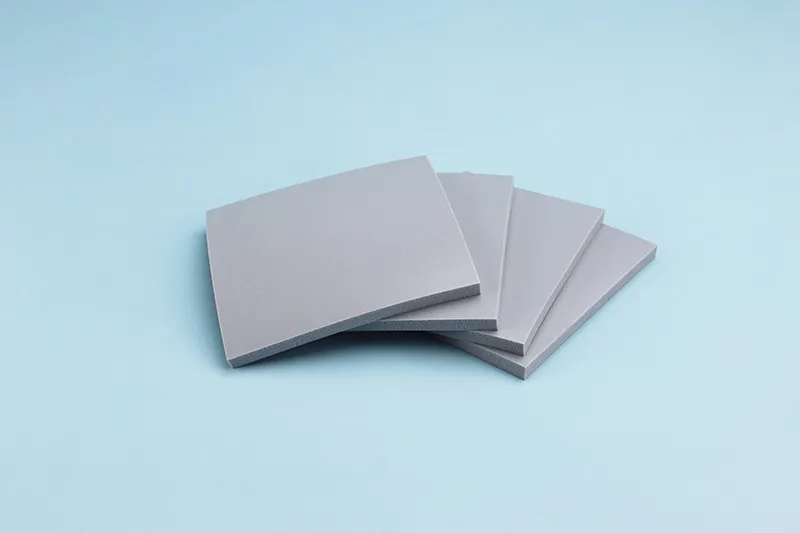
Understanding Closed Cell Silicone Foam Properties & Specifications
The Science Behind Material Composition
The core essence of closed-cell silicone foam is a chemically foamed high-performance elastomer. During manufacturing, gas is injected into liquid silicone, forming millions of independent, non-interconnected bubbles.
Closed vs. open cell mechanics
The defining characteristic of closed-cell foam is that each gas bubble is fully encapsulated by a polymer cell wall, forming a network of sealed micro-balloons. This structure creates three engineering properties simultaneously:
- watertightness — liquids cannot penetrate through the closed cells;
- compressibility — the trapped gas compresses elastically, acting as a pneumatic spring;
- low thermal conductivity — trapped gas is a poor heat conductor (SA700: ≤0.2 W/m·K), which is desirable for sealing but means the foam should NOT be specified as a thermal interface material.
Closed-cell silicone foam manufacturing process
Closed-cell silicone foam is produced via two primary routes:
- chemical foaming, where a blowing agent decomposes during vulcanization to generate gas;
- gas-injection foaming, where pressurized gas (typically nitrogen or CO₂) is mechanically dispersed into liquid silicone before curing.
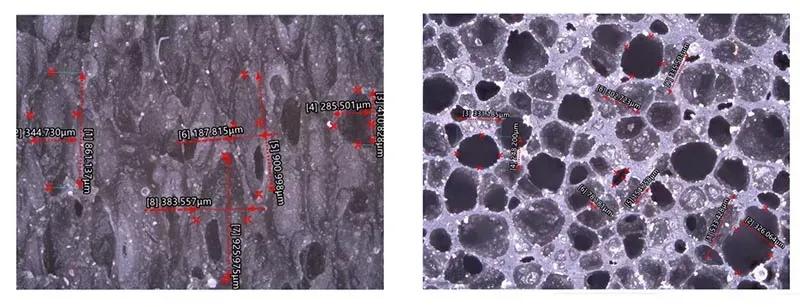
Gas-injection generally yields more uniform cell size distribution and better lot-to-lot consistency — a key consideration for high-volume gasket production. Sheen Technology controls cell size distribution as part of its SA700 series manufacturing process.
Cell structure-property relationship
Density (kg/m³) is the primary proxy for foam mechanical behavior:
- lower density (200 kg/m³) = larger cells, softer, more compressible, for uneven/lightweight housings;
- higher density (400 kg/m³) = smaller cells, firmer, higher sealing force, for heavy-duty vibration damping.
Cell size typically ranges from 50–300 μm, with smaller cells providing better watertightness at equivalent compression.
Sheen technology silicone foam Material Performance Parameters Table
| Model | SA700-200 | SA700-260 | SA700-300 | SA700-350 | SA700-400 |
| Color | White,Black | Grey,Black | Grey,Black | Black | Grey,Black |
| Density(kg/m³) | 200 | 260 | 300 | 350 | 350 |
| Thickness(mm) | 1.0~10.0 | 1.0~10.0 | 1.0~10.0 | 1.0~10.0 | 1.0~10.0 |
| Compression Set(@100℃) | <5% | <5% | <5% | <5% | <5% |
| Tensile Strength(kPa) | 126 | 180 | 168 | 300 | 260 |
| Tear Strength(N/mm) | 2.5 | 2.8 | 3 | 3.9 | 3.3 |
| Thermal Conductivity(W/m·K) | ≤0.2 | ≤0.2 | ≤0.2 | ≤0.2 | ≤0.2 |
| Breakdown Voltage(Kv) | ≥8 | ≥8 | ≥8 | ≥8 | ≥8 |
| Flame Retardancy Rating(UL 94) | V-0 | V-0 | V-0 | V-0 | V-0 |
| Electrical Insulation | >1*1017Ω·cm | >1*1016Ω·cm | >1*1016Ω·cm | >1*1015Ω·cm | >1*1015Ω·cm |
→ Download the SA700 Series Datasheet
Why Choose Closed Cell Silicone Foam for Gasketing & Sealing?
Closed-Cell Structure: Similar to bubble wrap, containing air inside for waterproofing.
Open-Cell Structure: Similar to sponge, absorbs water but is not waterproof.
The Difference Between “Foam” and “Sponge” and Solid Rubber
Silicone Sponge: Primarily made of rubber with a tough, rough outer layer.
Silicone Foam: Produced by heating and vulcanizing liquid silicone, offering superior compressibility, resilience, and sealing performance.
| Property | Closed-Cell Silicone Foam | Open-Cell Silicone Sponge | Solid Silicone Rubber | Engineering Implication |
| Water Ingress | Blocks liquids (watertight) | Absorbs liquids | Blocks liquids | Closed-cell = sealing Open-cell = cushioning |
| Compressibility | 25–50% (high) | 30–60% (very high) | ~0% (incompressible) | Foam/sponge fill gaps Rubber needs precision fit |
| Recovery/Resilience | Excellent (<5% set) | Good | Excellent | Foam = long-term seal Sponge = one-time cushion |
| Sealing Force | Moderate–High (density-dependent) | Low–Moderate | Very High | Foam = balanced seal Rubber = max force |
| Typical Application | IP-rated gaskets, enclosure seals | Cushioning, filters, wicks | High-force static seals, O-rings | Selection = ingress + force + recovery |
Seal and Gasket Performance Evaluation: Compression, Rebound, and Aging
In specific applications, the hardness of sealing gaskets can be measured by density:
- Low Density: Suitable for lighter equipment housings or uneven surfaces.
- Medium Density: The industry standard for general-purpose gaskets.
- High density: Used for heavy-duty vibration damping sealing requirements.
| Density (kg/m³) | Typical Shore OO | Compression @ 50% Force | Best Application |
| 200–230 | 20–35 | Low | Lightweight housings, uneven flanges, low clamping force |
| 290 | 35–50 | Moderate | General-purpose gaskets, telecom enclosures |
| 350–400 | 50–70 | High | Vibration damping, heavy clamping, EV battery seals |
When compression reaches 30-50%, this range ensures the material fills all voids without rupturing the foam cell walls.
Understanding Compression Set and Stress Relaxation
The silent killer of gaskets is Compression Set. This measures the material's ability to rebound after being compressed for an extended period. If a gasket is compressed to 50% for a year and fails to spring back when the enclosure is opened (or when the gap expands due to thermal expansion), the seal is lost.
High-quality closed cell silicone foams exhibit a compression set of <5% (at 100°C), vastly outperforming materials like Neoprene, which can permanently deform (taking a "set") and lose sealing pressure over time.
Adhesive Compatibility (PSA Selection)
A gasket is only useful if it stays in place during assembly. Closed cell foams are frequently supplied with a Pressure Sensitive Adhesive (PSA) backing.
Acrylic PSA: High tack, lower cost. Bonds well to most metals and plastics but has a lower temperature limit (~150°C).
Silicone PSA: Lower initial tack but extreme temperature resistance matching the foam itself. Essential for low-surface-energy materials or extreme heat applications.
Industry Case Studies: Closed Cell Silicone Foam in Action
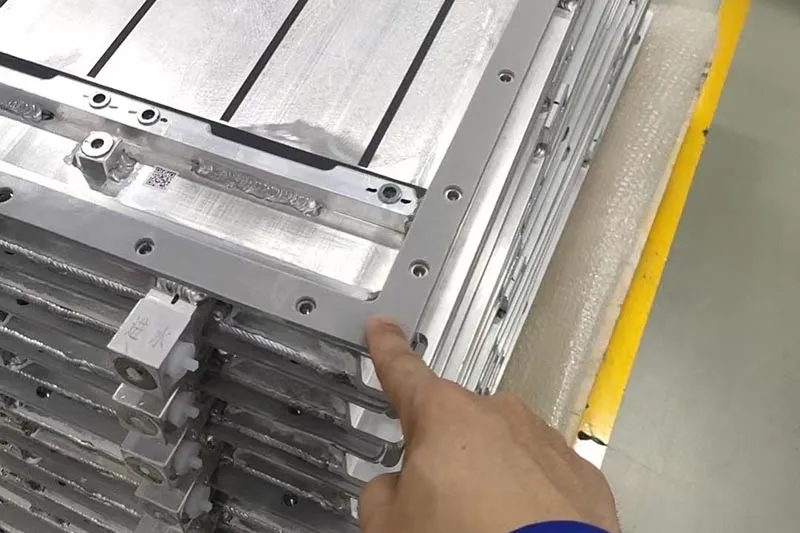
EV Battery Housing Gasket
- Challenge: maintain dielectric isolation and prevent moisture ingress over temperature extremes and vibration.
- Solution: high-density closed cell silicone foam with specified dielectric strength and low compression set; die-cut preforms with PSA backing.
Outdoor 5G/Telecom Enclosure
- Challenge: long service life under sun, rain, salt fog and frequent site maintenance.
- Solution: UV-stable closed cell silicone foam with silicone adhesive on one face; gasket geometry to divert water.
Medical Device Enclosure Gasket
- Challenge: withstand repeated cleaning/sterilization and preserve IP while meeting biocompatibility.
- Solution: medical-grade silicone foam, validated for repeated disinfectant exposure.
Outdoor Telecom Cabinet (installation optimization)
- Challenge: large flange gaps and ease of assembly in the field.
- Solution: thick closed cell foam with mechanical retention and finger-friendly die-cuts to speed install.
→ View Closed-Cell Silicone Foam Application Page
Frequently Asked Questions regarding Silicone Foam Gaskets
Q: What is the difference between closed-cell silicone foam and open-cell silicone foam?
A: Closed-cell foam traps air bubbles and blocks liquids; open-cell foam absorbs and adsorbs moisture.
Q: What is the difference between silicone foam and silicone rubber?
A: The primary difference lies in compressibility. Solid silicone rubber is incompressible, while silicone foam contains air bubbles and can be compressed to a smaller volume.
Q: Can closed-cell silicone foam be used for sound insulation?
A: Yes, but open-cell foam is typically better suited for absorbing sound waves, while closed-cell foam is more effective at blocking sound transmission.
Q: Can silicone foam be used for electromagnetic shielding?
A: Use conductive silicone foam grades or combine foam gaskets with conductive fabrics/metal contacts.
Q: Does silicone foam have flame retardant ratings?
A: Certain formulations achieve UL 94 or equivalent ratings.
Closed-cell silicone foam gasket selection is a reliability engineering exercise: the material must maintain sealing force across years of thermal cycling, environmental exposure, and mechanical stress, while integrating into cost-effective production. The SA700 series, with its documented compression set <5%, UL 94 V-0 rating, and full specification transparency, provides a solid foundation for IP-rated enclosure designs across EV, telecom, medical, and industrial applications. Sheen Technology supports the selection process with application engineering, compression-deflection data, custom die-cutting, and sample kits for in-situ validation.
Ready to validate your design? Don't guess on your next prototype. Contact us today to request a Silicone Foam Material Selector Card or a free sample kit to test different densities in your own housing.
Sheen Thermal
Dongguan Sheen Electronic Technology Co., Ltd · Founded in 2008
Manufacturer of thermal interface materials and silicone foam for automotive electronics, energy storage, power electronics, communications and consumer electronics.
Certified
- ISO 9001:2015
- ISO 14001:2015
- IATF 16949:2016
What we supply
- Thermal conductivity Up to 90 W/m·K
- Thickness 0.3–10.0 mm
- Custom & samples Die-cut to drawing, 3–7 days