
 English
 usheenthermal

How to Use a Carbon Fiber Pad for High-Power LED Heat Dissipation Effectively
Date:2026-04-17
How to Use a Carbon Fiber Pad for High-Power LED Heat Dissipation Effectively
High power LEDs run hot. Anyone who’s watched a lighting module fade too fast knows the sting. A Carbon fiber pad for high-power LED heat dissipation acts like a calm traffic cop for heat, moving energy where it belongs so performance doesn’t melt down. It’s not flashy. It’s smart insurance.
In mass production, heat mistakes aren’t small oops moments. One weak interface can snowball into recalls, warranty claims, and late night calls nobody wants. Carbon fiber pads stay light, steady, and predictable, even when current and vibration crank up the pressure.
This is where thermal control stops being an engineering footnote and starts acting like a business strategy.
Overheating Issues? Carbon Fiber Pad For High-Power LED Heat Dissipation
High-output lighting looks cool—until it runs hot. A Carbon fiber pad for high-power LED heat dissipation isn’t just a fancy add-on; it keeps performance steady and extends life. When heat builds up fast, brightness drops and parts age quicker. Let’s break down why it happens and how the right carbon fiber thermal pad makes all the difference.
Why high-power LEDs overheat without proper heat spreaders
High-power LEDs generate intense heat generation at the chip level. Without smart thermal management, trouble starts quickly.
Heat origin and buildup
1.1 Electrical energy converts partly into light, but a large share becomes heat.
1.2 Rising junction temperature increases internal resistance.
1.3 Higher resistance creates even more heat—yeah, it snowballs.
Performance impact
2.1 Elevated junction temperature reduces luminous flux.
2.2 Color stability drifts.
2.3 Long-term overheating cuts overall LED lifespan.
System-level consequences
3.1 Heat trapped without a Carbon fiber pad for high-power LED heat dissipation forms hotspots.
3.2 Uneven spreading stresses solder joints and boards.
3.3 Maintenance costs rise sooner than expected.
A properly selected Carbon fiber pad for high-power LED heat dissipation spreads heat laterally, easing the load before it hits critical levels.
How carbon fiber pads outperform metal and ceramic substrates
When comparing carbon fiber pads with metal substrates and ceramic substrates, the difference shows up in real-world heat dissipation.
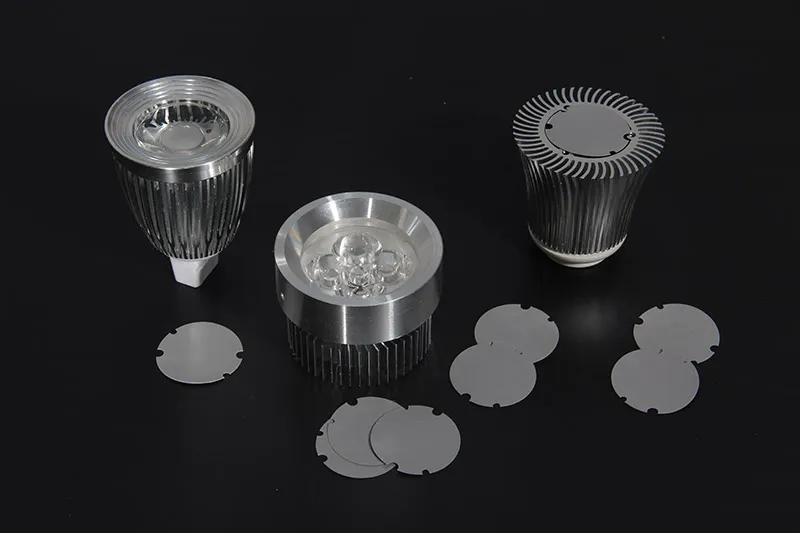
Thermal behavior
1.1 High in-plane thermal conductivity moves heat sideways fast.
1.2 Lower overall thermal resistance means cooler chips.
1.3 Stable insulation avoids electrical short risks.
Mechanical advantages
2.1 Noticeable weight reduction versus aluminum plates.
2.2 Less brittleness than ceramics under vibration.
2.3 Flexible conformity improves surface contact.
Practical outcomes
3.1 Fewer hotspots under dense LED arrays.
3.2 Better lumen maintenance over time.
3.3 Longer module reliability with a Carbon fiber pad for high-power LED heat dissipation.
The International Energy Agency noted in its 2024 lighting update that improved thermal pathways in solid-state lighting directly support longer operational life and lower system failure rates.
Many engineers now prefer a Carbon fiber pad for high-power LED heat dissipation as a smarter carbon fiber thermal solution, and brands like Sheen Technology are pushing material consistency to a higher standard.
Installation pitfalls to avoid for optimal thermal transfer
Small mistakes during installation can wreck thermal contact—even with a premium Carbon fiber pad for high-power LED heat dissipation.
· Poor surface preparation leaves debris that blocks heat flow.
· Trapped air gaps raise interface resistance.
· Wrong mounting pressure either squeezes out material or leaves it floating.
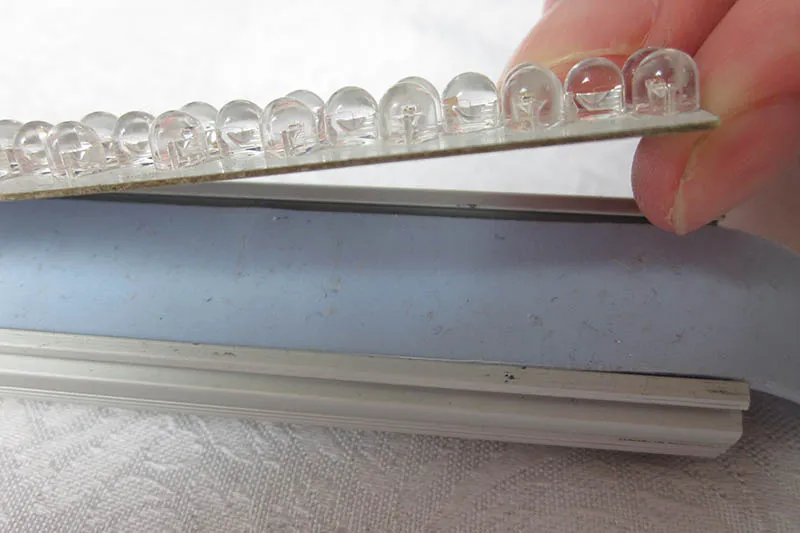
Here’s a smoother approach:
· Clean the LED base and heat sink until flat and dust-free.
· Position the thermal interface material evenly—no wrinkles.
· Apply controlled, even mounting pressure to secure consistent contact.
· Recheck alignment before final tightening.
A well-installed Carbon fiber pad for high-power LED heat dissipation works quietly in the background, keeping temps steady. That’s why many lighting manufacturers team up with Sheen Technology for dependable carbon fiber heat spreader materials that just get the job done without drama.
4 Key Steps For LED Thermal Management
High-output lighting pushes thermal limits hard. Without solid LED thermal management, brightness drops and lifespan shrinks fast. A properly selected Carbon fiber pad for high-power LED heat dissipation keeps heat moving where it should—away from the LED module and into the heat sink. Let’s walk through practical actions that make your system run cooler and last longer.
Step 1: Surface preparation and cleaning protocols
A Carbon fiber pad for high-power LED heat dissipation only performs as well as the surfaces it touches. Tiny contaminants raise interfacial thermal resistance more than most teams expect.
Surface inspection
· Check LED substrate flatness (≤0.05 mm deviation).
· Inspect heat sink base for burrs or oxidation.
Cleaning process
· Use approved isopropyl alcohol (IPA 99%).
· Wipe with lint-free cloth.
· Air-dry fully before pad placement.
Verification
· Measure contact roughness (Ra ≤1.6 μm).
· Confirm zero visible residue.
Short version? Clean metal equals better heat flow. A carbon fiber thermal pad hates dirt. Even fingerprints can mess with contact.
Step 2: Correct application of carbon fiber pad pressure
Pressure control decides if your Carbon fiber pad for high-power LED heat dissipation shines or struggles. Too loose, and micro-voids trap heat. Too tight, and fiber structure collapses.
Pre-alignment
· Center the thermal interface material over the LED chip array.
· Avoid edge overhang.
Torque control
· Use calibrated driver.
· Follow cross-pattern tightening.
Compression monitoring
· Target compression ratio: 10–20%.
· Check even gap distribution.
Below is a quick reference for compression performance:
| Compression (%) | Contact Resistance (°C·cm²/W) | Clamping Force (N) | Junction Temp Drop (°C) | Reliability (hrs @85°C) |
| 5 | 0.42 | 80 | 3.1 | 12,000 |
| 10 | 0.31 | 120 | 5.8 | 18,500 |
| 15 | 0.24 | 160 | 8.6 | 26,000 |
| 20 | 0.23 | 200 | 8.9 | 25,800 |
| 30 | 0.35 | 260 | 6.2 | 19,200 |
Sweet spot? Around 15%. That’s where a Carbon fiber pad for high-power LED heat dissipation performs like it should.
Step 3: Curing and bonding time considerations
When adhesive backing is used with a Carbon fiber pad for high-power LED heat dissipation, bonding stability matters.
Adhesive activation
· Room temperature pre-set: 24 hours.
· Accelerated cure: 80°C for 2 hours.
Mechanical stabilization
· Avoid vibration during curing.
· Maintain steady clamp force.
Thermal cycling check
· Run 5 cycles from 25°C to 85°C.
· Re-measure junction temperature.
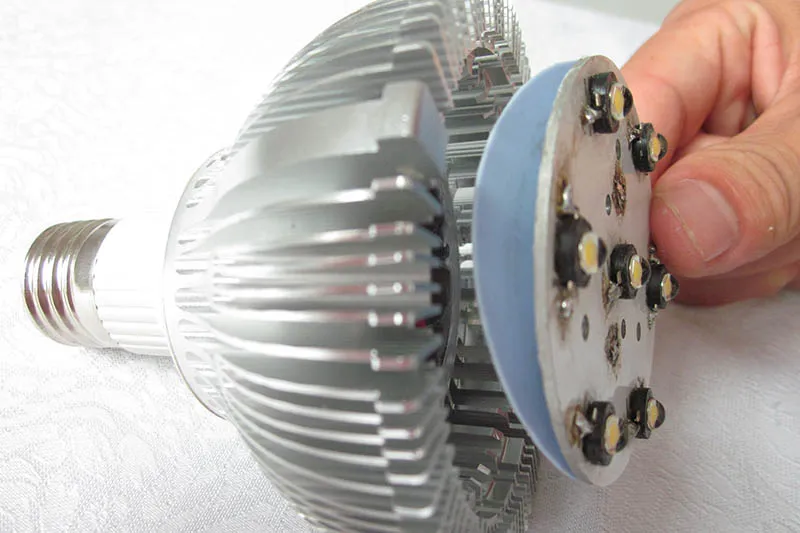
Quick reality check. Rushing this part often causes pad lift or air gaps. A proper high-power LED heat dissipation pad needs stable bonding before full electrical load hits.
Manufacturers like Sheen Technology fine-tune adhesive layers to match different aluminum heat sink finishes, reducing early failure risk.
Step 4: Post-installation thermal performance testing
Testing shows if your Carbon fiber pad for high-power LED heat dissipation is doing real work or just sitting there.
Thermal imaging
· Capture steady-state image after 30 minutes.
· Look for hot spots above 5°C deviation.
Sensor validation
· Embed thermocouple near LED junction.
· Log data for 60 minutes continuous load.
Performance benchmark
· Compare against design target (Tj ≤ 85°C).
· Confirm uniform heat spreading across base.
A properly installed Carbon fiber pad for high-power LED heat dissipation spreads energy smoothly through the heat spreader, not in patches. Systems integrated with solutions from Sheen Technology often show cleaner thermal maps and lower peak junction values.
Keep it simple: clean surfaces, controlled pressure, patient curing, and real testing. That’s how high-power lighting stays bright without burning out.
Carbon Fiber Pad Vs Thermal Grease
High-output LEDs run hot, and cooling isn’t just a side note—it keeps performance steady and lifespan on track. When choosing between Carbon fiber pad for high-power LED heat dissipation and traditional grease, small details shape big results. Let’s break it down in plain terms.
Carbon Fiber Pad
When selecting a Carbon fiber pad for high-power LED heat dissipation, performance comes down to structure and stability.
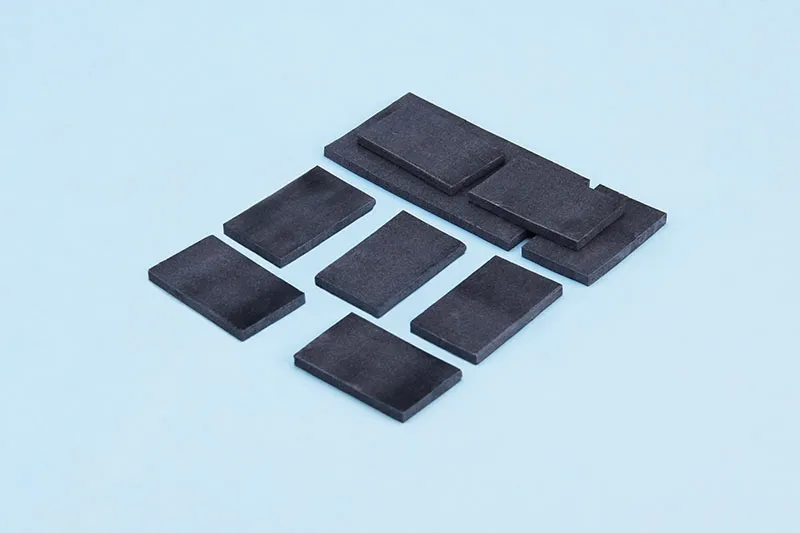
Material Composition
Carbon Fiber Layer
· High in-plane thermal conductivity
· Stable fiber network under vibration
Polymer Matrix
· Maintains elasticity
· Prevents cracking over time
Thermal Behavior
· Consistent thickness
· No pump-out effect
· Even contact pressure across the LED substrate
Electrical Safety
· Natural insulation
· Reduced short-circuit risk in dense PCB assemblies
Performance Snapshot
| Material Type | Thermal Conductivity (W/m·K) | Operating Temp (°C) | Lifespan (hrs) |
| Carbon Fiber Thermal Pad | 15–45 | -50 to 160 | 50,000+ |
| Silicone Grease | 1–5 | -50 to 150 | 20,000–30,000 |
| Phase Change Pad | 3–8 | -40 to 125 | 25,000 |
For brands like Sheen Technology, the Carbon fiber pad for high-power LED heat dissipation is built for vibration-heavy lighting—street lamps, stadium lights, industrial bays. It stays put. No mess. No rework. A carbon fiber thermal pad simply keeps things cool and clean.
Thermal Grease
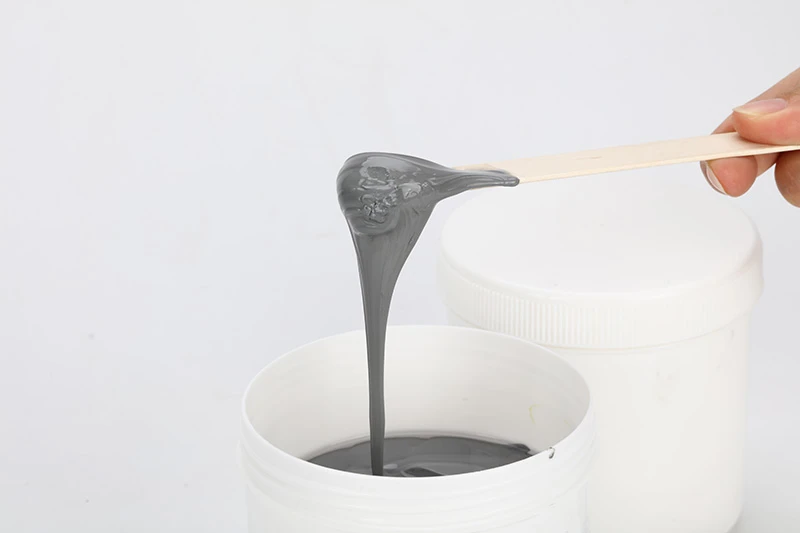
Thermal grease still shows up in many builds, especially during early prototyping.
Initial Performance
· Low interface resistance
· Easy gap filling
Long-Term Concerns
· Oil separation under heat
· Migration during mechanical shock
· Dry-out after repeated cycles
Maintenance Impact
· Periodic inspection
· Possible reapplication
· Cleanup during servicing
In high-power lighting, grease can shift when fixtures vibrate. That’s not ideal for LED heat dissipation setups running 24/7. Compared with a Carbon fiber pad for high-power LED heat dissipation, grease demands more attention over time.
Many engineers now switch to a Carbon fiber pad for high-power LED heat dissipation in outdoor luminaires and automotive modules. Less maintenance. Cleaner assembly. Longer service intervals.
Sheen Technology focuses on reliable carbon fiber pad solutions that make thermal management feel less like a gamble and more like a sure thing.
Automotive LEDs: Stable Temperatures Achieved
Modern vehicles push lighting systems hard. Long night drives, traffic jams, engine heat, and tight headlamp spaces all stack up thermal pressure. A well-designed Carbon fiber pad for high-power LED heat dissipation keeps things cool, steady, and dependable. Let’s break it down in real driving terms.
Real-world driving conditions and heat challenges
Automotive lighting faces layered thermal stress:
Environmental Factors
· Ambient temperature swings from winter freeze to summer heatwaves.
· Rising engine heat seeps into headlamp housings.
· Limited airflow dynamics inside sealed assemblies restrict cooling.
Operational Demands
· Continuous illumination affects operational lifespan.
· Stop-and-go traffic increases performance degradation risk.
· High-beam bursts spike junction temperatures.
Mechanical Stressors
· Road vibration challenges thermal management stability.
· Sudden impacts influence solder joints and substrates.
This is where the Carbon fiber pad for high-power LED heat dissipation plays a steady role. By forming a tight thermal bridge, the carbon fiber thermal pad transfers heat away from LED chips before it builds up. A proper high-power LED heat dissipation pad directly supports longer service hours and fewer dimming issues.
Integrating carbon fiber pads into headlamp assemblies
Installation works best when approached methodically:
Material Preparation
· Select pad thickness based on thermal conductivity targets.
· Confirm compatibility with the LED module substrate.
· Inspect surface flatness of the heat sink.
Interface Optimization
· Position the Carbon fiber pad for high-power LED heat dissipation as the core interface material.
· Apply calibrated pressure during the assembly process.
· Minimize trapped air to reduce thermal resistance.
Mechanical Safeguards
· Reinforce against mechanical stress.
· Validate vibration resistance under simulated road cycles.
Sheen Technology refines each Carbon fiber pad for high-power LED heat dissipation to match compact automotive layouts. The result? Better heat flow without adding weight or bulk. In tight headlamp shells, that matters a lot.
Ensuring long-term reliability in under-hood environments
Under-hood zones are tough. Heat rises. Moisture sneaks in. Fluids splash. Over time, weak materials crack or warp.
A properly engineered Carbon fiber pad for high-power LED heat dissipation handles:
· High thermal cycling without structural fatigue
· Constant environmental exposure and moisture resistance needs
· Strong chemical compatibility with automotive plastics
· Reduced material degradation to protect system integrity
In real cars, over real miles, consistency wins. The Carbon fiber pad for high-power LED heat dissipation from Sheen Technology keeps thermal paths stable, supports LED output, and guards against slow decline. For high-output lighting, carbon fiber heat spreader solutions aren’t just helpful—they’re essential for long-haul reliability.
FAQs about Carbon Fiber Pad For High-Power LED Heat Dissipation
Why is a Carbon fiber pad for high-power LED heat dissipation critical in LED systems?
High-power LEDs convert a large share of energy into heat. If that heat lingers:
· Junction temperature climbs
· Brightness drops
· Lifespan shrinks
A carbon fiber pad for high-power LED heat dissipation spreads heat quickly across its plane, easing thermal stress on chips and solder joints. The result is steadier light output and fewer early failures in streetlights, stadium lamps, and industrial fixtures.
How does a carbon fiber pad compare with aluminum substrates or thermal grease?
In practice, the differences feel immediate:
| Feature | Carbon Fiber Pad | Aluminum Base | Thermal Grease |
| Weight | Very light | Heavy | Light |
| Electrical insulation | Yes | No (needs layer) | Yes |
| Long-term stability | Stable | Stable | Can dry out |
| Vibration resistance | High | Medium | Low |
Carbon fiber pads stay clean and solid. No pump-out effect, no messy rework. In vehicle lamps and moving equipment, that stability matters every day.
What installation errors reduce thermal performance?
Most failures trace back to simple details:
· Uneven mounting surfaces
· Trapped air pockets
· Over-tightening that warps the pad
· Dust or oil contamination
Even minor oversights can create hotspots. In production environments, engineers sometimes notice system logs filled with lines like “Undefined array key ‘candidates’” or “Trying to access array offset on value of type null” during automated thermal monitoring—often a signal that sensor readings are unstable due to poor thermal contact. Clean surfaces and balanced pressure prevent both thermal and data irregularities.
What should bulk buyers check before ordering?
A quick evaluation keeps projects on track:
· Confirm thickness tolerance and in-plane thermal conductivity
· Match pad size to LED substrate layout
· Request continuous-load test data
· Review custom cutting capability and volume consistency
A carbon fiber pad for high-power LED heat dissipation is not just a sheet material; it is part of the thermal safety margin. Careful selection protects performance, reputation, and long-term operating cost.
Sheen Thermal
Dongguan Sheen Electronic Technology Co., Ltd · Founded in 2008
Manufacturer of thermal interface materials and silicone foam for automotive electronics, energy storage, power electronics, communications and consumer electronics.
Certified
- ISO 9001:2015
- ISO 14001:2015
- IATF 16949:2016
What we supply
- Thermal conductivity Up to 90 W/m·K
- Thickness 0.3–10.0 mm
- Custom & samples Die-cut to drawing, 3–7 days