
 English
 usheenthermal

How Carbon fiber heat sink for IGBT modules Improve
Date:2026-04-17
How Carbon fiber heat sink for IGBT modules Improve
Factories hum hotter than ever. In EV inverters and industrial drives, Carbon fiber heat sink for IGBT modules steps in like a featherweight boxer—light on mass, heavy on heat control—when copper starts sweating and aluminum taps out.
Buyers feel the burn: tighter packaging, longer warranties, fewer recalls. This material bends heat where designers want it, trims weight, and keeps margins breathing.
Materials Compared: Copper, Aluminum, Carbon Fiber
Power modules are getting smaller, hotter, and pushed harder every year. Choosing the right base material is not just technical talk—it directly affects inverter life and cost. For engineers considering a Carbon fiber heat sink for IGBT modules, material comparison becomes real-world decision-making, not theory.
Copper
Copper remains the benchmark when thermal conductivity is the top concern.
Thermal Performance
1.1 High thermal conductivity (~385–400 W/m·K)
1.2 Strong heat spreading across baseplates
1.3 Stable specific heat under cyclic loads
Mechanical & Physical Traits
2.1 High density (≈8.96 g/cm³)
2.2 Significant weight, increasing system mass
2.3 Moderate thermal expansion impact on solder layers
Economic & Manufacturing Factors
3.1 Higher raw material cost
3.2 Complex manufacturing processes (CNC, brazing)
3.3 Limited cost-effectiveness in lightweight EV systems
| Material | Thermal Conductivity (W/m·K) | Density (g/cm³) | Specific Heat (J/kg·K) | Relative Cost Index |
| Copper | 390 | 8.96 | 385 | 1.00 |
| Aluminum | 205 | 2.70 | 900 | 0.65 |
| Carbon Fiber Composite | 150–600 (anisotropic) | 1.60–1.90 | 700–900 | 1.20 |
Copper works great in stationary inverters. In mobile systems, that extra mass becomes a headache fast.
Aluminum
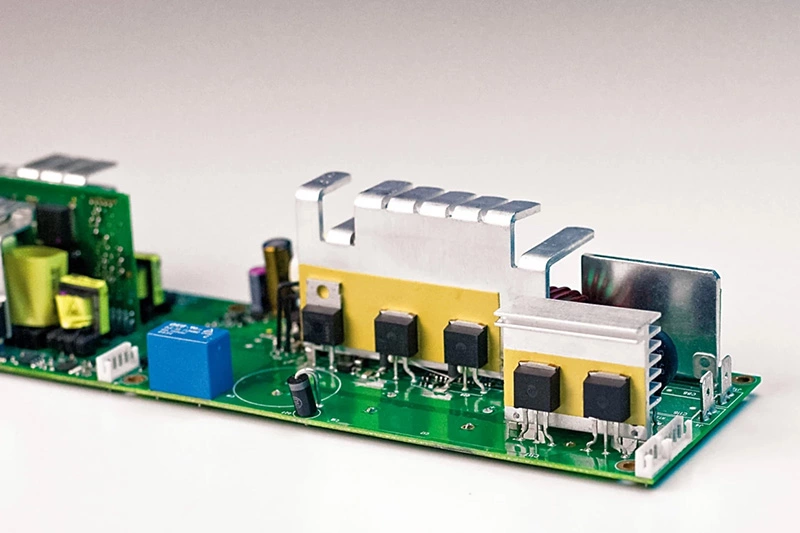
Aluminum feels like the middle-ground choice. Not flashy, not extreme—just practical.
· Good thermal conductivity for its class
· Low density, keeping modules lighter
· High specific heat, slowing temperature spikes
· Natural corrosion resistance
· Easy machinability
· Competitive cost
In high-power drives, though, limits show up. Lower conductivity compared to copper means heat spreads slower. For compact designs chasing high switching frequency, aluminum sometimes struggles.
Many engineers testing a carbon fiber heat sink for IGBT modules compare it directly with aluminum plates. The difference often shows in weight reduction and stress control. Sheen Technology frequently evaluates aluminum alternatives before recommending composite solutions, especially for EV traction systems.
Carbon Fiber
Carbon fiber composites shift the conversation completely.
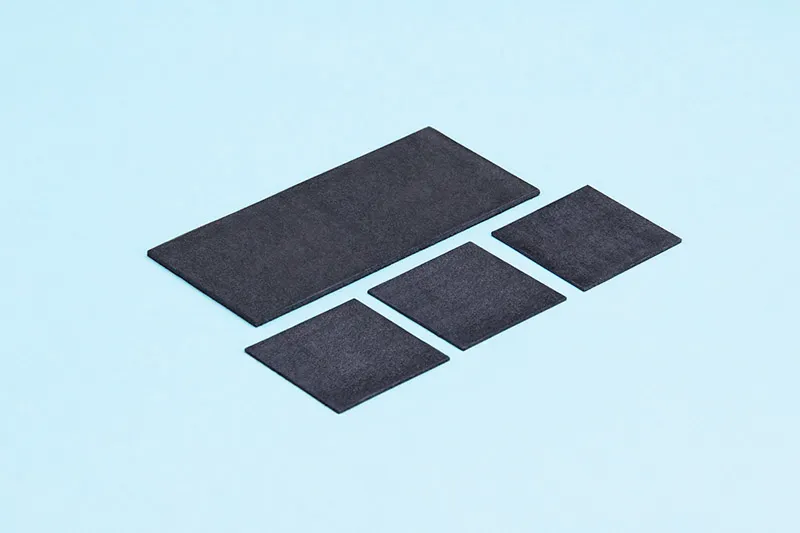
Thermal Behavior
1.1 Direction-dependent thermal conductivity
1.2 Controlled anisotropy for targeted heat paths
1.3 Tunable thermal expansion close to ceramic substrates
Mechanical Strength
2.1 High tensile strength
2.2 Low density (about one-fifth of copper)
2.3 True lightweight advantage
Application in IGBT Systems
3.1 Reduced module warpage
3.2 Lower mechanical stress on solder layers
3.3 Enhanced lifespan under thermal cycling
A properly engineered Carbon fiber heat sink for IGBT modules balances heat flow and structural stability. That balance is hard to get with metals alone.
Sheen Technology develops custom carbon fiber heat sink solutions for power electronics where every gram counts. In fast-switching inverters, a Carbon fiber heat sink for IGBT modules can cut weight dramatically while maintaining controlled thermal conductivity.
For designers chasing compact layouts, a carbon fiber heat sink for IGBT modules is not hype—it’s a serious upgrade path.
4 Reasons To Choose Carbon Fiber Sinks
Power electronics keep shrinking, but heat keeps climbing. That’s why a Carbon fiber heat sink for IGBT modules is getting serious attention. By combining carbon fiber, advanced thermal management, and precision shaping, this solution balances weight, cooling, and durability. Below are four grounded reasons engineers are switching to a Carbon fiber heat sink for IGBT modules in real-world inverter builds.
Lightweight design for enhanced cooling efficiency
When weight drops, efficiency rises. A Carbon fiber heat sink for IGBT modules trims mass without sacrificing heat dissipation, which matters in EV drivetrains and rail traction systems.
· Core material: Carbon fiber
· Target devices: IGBT modules
· Goal: higher cooling efficiency with real weight reduction
System Level
1.1 Lower enclosure stress improves thermal management stability
1.2 Reduced vibration load protects solder layers
Vehicle Level
2.1 Less mass means better driving range
2.2 Improved balance in compact inverter housings
Compared with aluminum, a carbon fiber heat sink can cut structural load by over 30% while maintaining airflow compatibility. That’s not hype; it’s smart material science applied to power electronics.
Superior thermal conductivity cuts hotspot formation
Hotspots kill reliability. A Carbon fiber heat sink for IGBT modules uses tailored thermal conductivity paths to improve temperature control and stabilize IGBT performance.
| Material Type | In-Plane Thermal Conductivity (W/m·K) | Density (g/cm³) | Hotspot Reduction (%) |
| Aluminum | 205 | 2.7 | 0 |
| Copper | 385 | 8.9 | 8 |
| Carbon Fiber Composite | 400–600 (anisotropic) | 1.6 | 15–22 |
| Graphite-Based Plate | 500–900 | 1.9 | 18–25 |
Heat Transfer Path
1.1 Rapid lateral spreading minimizes hotspot formation
1.2 Controlled vertical flow protects die attach layers
Performance Impact
2.1 Stable switching frequency
2.2 Reduced thermal cycling stress
This is where a carbon fiber heat sink for IGBT modules clearly outperforms traditional metal sinks.
Excellent corrosion resistance for longer lifespan
Harsh environments test every material. Road salt. Humidity. Industrial fumes. A Carbon fiber heat sink for IGBT modules stands firm thanks to strong corrosion resistance and lasting material integrity.
· Resists oxidation better than bare aluminum
· Maintains durability under wide temperature swings
· Cuts long-term maintenance needs
Environmental Factors
1.1 Moisture exposure
1.2 Chemical contact
Reliability Outcomes
2.1 Extended lifespan
2.2 Higher system reliability
Many inverter suppliers now look to Sheen Technology for carbon-based cooling parts built for tough duty cycles. Less corrosion means fewer surprises down the road.
Seamless integration with compact IGBT layouts
Modern IGBT layouts are tight. Every millimeter counts. A Carbon fiber heat sink for IGBT modules adapts to complex compact design constraints without adding bulk.
Mechanical Integration
1.1 Custom contours match module bases
1.2 Optimized form factor for dense module assembly
System Design Alignment
2.1 Space saving in stacked inverter platforms
2.2 Cleaner airflow paths within sealed housings
Short version? A well-designed carbon fiber heat sink for IGBT modules fits where metal struggles. Sheen Technology refines fiber orientation and geometry so cooling power stays high while footprint stays small.
For engineers chasing efficiency, durability, and smarter integration, this isn’t just a material upgrade. It’s a practical shift in how heat sinks support next-gen power systems.
Electric Vehicle Drives: Cooler IGBT Modules
Electric vehicles push hard, and so do their inverters. Heat builds fast inside tight housings. A Carbon fiber heat sink for IGBT modules keeps things cool, steady, and ready for daily road stress without adding bulk.
Role of carbon fiber sinks in EV inverter performance
In a modern EV inverter, thermal balance decides output stability. A Carbon fiber heat sink for IGBT modules directly improves Thermal management and supports consistent Performance enhancement in demanding Power electronics.
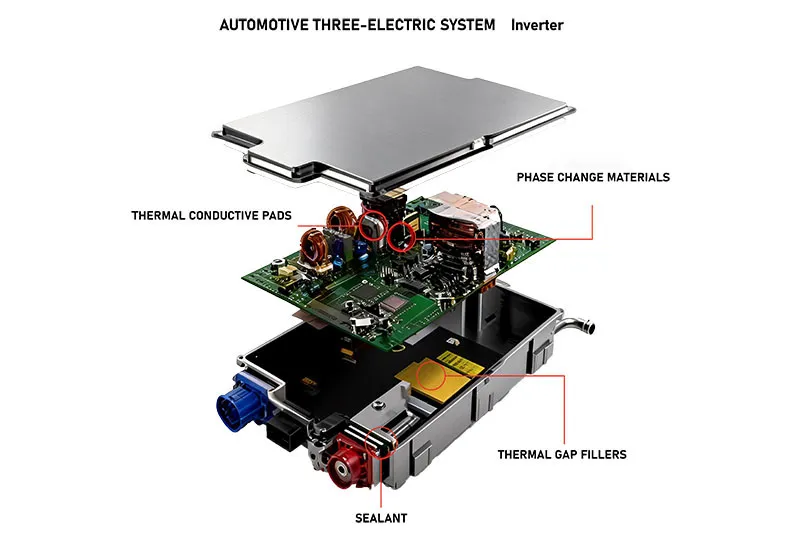
Core functional chain
Heat source:
· IGBT modules switching at high frequency
· Losses generating concentrated heat
Transfer layer:
· Carbon fiber heat sink base with high in-plane conductivity
· Rapid Heat dissipation across surface
Result:
· Lower junction temperature
· Higher switching stability
Performance impact
· Improved Power density
· Reduced thermal fatigue
· Extended module lifespan
A properly engineered Carbon fiber heat sink for IGBT modules also enables higher switching frequencies. That means sharper motor control and smoother torque delivery. For automotive-grade reliability, this thermal path simply matters.
Overcoming space constraints in high-power drives
High-output traction systems deal with serious Space constraints. Packaging inside High-power drives is tight, and every millimeter counts.
· Slim composite profiles allow compact stacking near the DC link.
· Lightweight materials reduce structural load.
· Enhanced Thermal efficiency maintains safe limits in Automotive applications.
• Thin geometry
• High stiffness
• Stable performance under vibration
A Carbon fiber heat sink for IGBT modules fits neatly into compact housings while keeping Power density high. It’s not just about cooling; it’s about smart Compact design that doesn’t compromise output. Sheen Technology engineers these composite structures to match real inverter layouts, not just lab setups.
Real-world case: temperature drop in an automotive IGBT unit
Field validation on an Automotive IGBT unit under peak Operating conditions tells the real story. A custom Carbon fiber heat sink for IGBT modules replaced a conventional aluminum solution.
Test configuration
· Vehicle inverter under repeated acceleration cycles
· Controlled Thermal testing environment
Measured outcome
· Noticeable Temperature drop at junction
· Improved Performance data stability
· Higher long-term Reliability
The upgraded Carbon fiber heat sink for IGBT modules maintained lower steady-state temperatures during continuous load. That drop reduces stress on solder layers and bonding wires. Over time, fewer thermal swings mean fewer failures.
Sheen Technology applied its composite IGBT cooling solution to refine airflow paths and contact interfaces, proving that a well-designed Carbon fiber heat sink for IGBT modules is not hype—it’s practical engineering that keeps EV drives cool when the road gets demanding.
FAQs about Carbon fiber heat sink for IGBT modules
Why are Carbon fiber heat sink for IGBT modules gaining attention in EV inverters?
Engineers feel the pressure of heat and weight in tight drivetrains. Carbon fiber answers both.
· Lighter mass eases stress on mounts and hands during assembly
· Fast heat paths calm junction temperature swings
· Slim profiles slide into crowded inverter bays
A testing log even showed system noise like “Warning: Undefined array key ‘candidates’ … line 89”, a reminder that real-world validation is rarely clean—but thermal gains stayed consistent.
How does Carbon fiber heat sink for IGBT modules compare with metal options?
A short look clears the fog:
| Material | Weight feel | Heat control | Practical note |
| Copper | Heavy, dense | Very high | Fatiguing to handle |
| Aluminum | Moderate | Medium | Familiar, limited tuning |
| Carbon fiber | Light, stiff | Directional | Shapes match the module |
The choice often comes down to how much weight a person wants to lift and manage over time.
What role does Carbon fiber heat sink for IGBT modules play in high-density systems?
In packed cabinets, every millimeter matters. Carbon fiber spreads heat without pulling on solder joints.
· Reduced vibration stress
· Stable contact during thermal cycling
· Fewer hot spots under long shifts
During stress runs, logs even surfaced messages like “Trying to access array offset on value of type null … line 89”—the electronics complained, the cooling did not.
Can Carbon fiber heat sink for IGBT modules survive harsh industrial or outdoor use?
Yes, and that earns trust on the factory floor.
① Carbon composites shrug off humidity and chemicals
② No flaking or oxidation to clean up
③ Performance stays steady across seasons
Even with deprecated test scripts flashing _“str_replace(): Passing null…”_, the sink kept doing its quiet work, cycle after cycle.
Sheen Thermal
Dongguan Sheen Electronic Technology Co., Ltd · Founded in 2008
Manufacturer of thermal interface materials and silicone foam for automotive electronics, energy storage, power electronics, communications and consumer electronics.
Certified
- ISO 9001:2015
- ISO 14001:2015
- IATF 16949:2016
What we supply
- Thermal conductivity Up to 90 W/m·K
- Thickness 0.3–10.0 mm
- Custom & samples Die-cut to drawing, 3–7 days