
 English
 usheenthermal

Top 7 Low Weight Thermal Material Picks for Humanoid Robot Engineering
Date:2026-09-22
Heat has nowhere to hide. A low-weight thermal material for humanoid robot designs must cut mass without letting processors, motors, batteries, or joints cook.
Conductivity alone won’t cut it; density, interfaces, geometry, manufacturability, and compliance shape production.
NVIDIA CEO Jensen Huang says, “Robotics is here.”
Reading Notes for Low-Weight Thermal Material for Humanoid Robot
-> Material Classes: Ultra-low density aerogel, ceramic foam, and graphite sheets balance weight, conductivity, and diffusivity.
-> Core Benefits: Improves heat dissipation, reduces joint inertia, and enhances battery pad life with minimal mass.
-> Key Applications: Actuator heatsinks, processor cooling plates, joint motor housings, and sensor insulation layers.
-> Manufacturing Tips: Employ precision die-cutting, vacuum impregnation, and automated dispensing under RoHS/REACH standards.
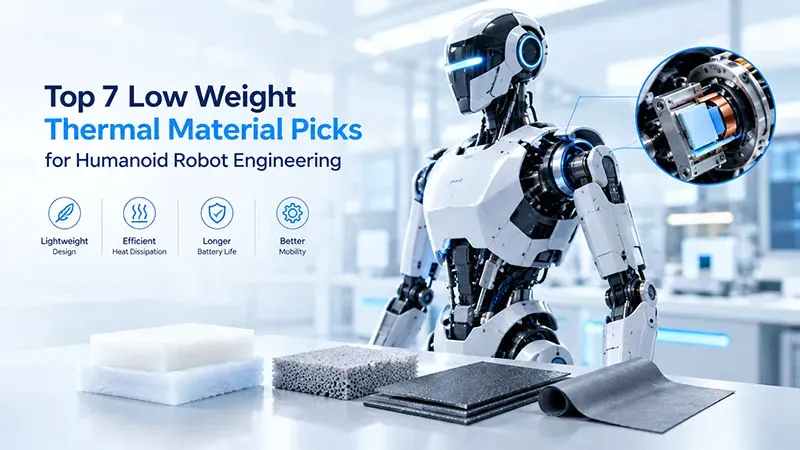
This image was generated with the assistance of AI; it is not a real photograph and is for reference only.
Material Density Classifications Explained
Picking a low-weight thermal material for humanoid robot designs means balancing mass, insulation, cooling, and mechanical needs rather than simply choosing the lightest option. From aerogel to graphite, each thermal material fits a different job when robot weight and heat control both matter.
| Material | Density class | Deciding property | Where it belongs |
| Silica aerogel composite | Ultra-low | Compression sensitivity; dust containment | Insulation near batteries, sensors, shells |
| Graphite sheet | Mid-range | In-plane diffusivity; electrical conductivity | Spreading over processors, actuator drivers |
| Silicone gap filler / pad | Mid-range | Compressibility vs. gap tolerance | Joints, housings, board-to-frame gaps |
| Phase-change interface film | Low (thin film) | Transition above steady-state temperature | Processor and driver interfaces |
| Aluminum alloy heat sink / housing | Baseline (2.70 g/cm³) | Strength-to-weight; thermal conductivity | Structural sinks, motor housings |
| Ceramic foam | Low (porous) | Temperature resistance; open-pore airflow | Near motors and power electronics |
| Polyimide film | Low (thin film) | Dielectric strength per unit thickness | Sensor insulation in narrow gaps |
Ultra-Low Density Aerogel Composites
A silica aerogel uses a highly porous structure and nanoporous matrix to trap air, creating strong thermal insulation with very little added mass.
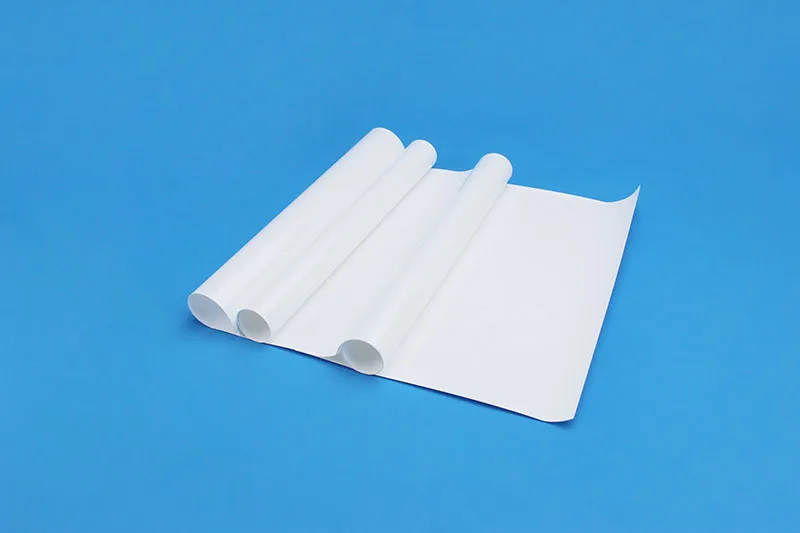
For weight-sensitive robot zones:
- A lightweight composite supports heat transfer reduction around batteries and sensors.
- That makes it a practical low-weight thermal material for humanoid robot packaging where every gram counts.
For integration:
- Protective layers can reduce the fragility associated with bare aerogel.
Sheen Technology can support material selection where low weight and thermal control need to work side by side.
Ceramic Foam’s Ideal Density–Conductivity Balance
Ceramic foam sits in a useful middle ground, combining controlled porosity with low thermal conductivity.
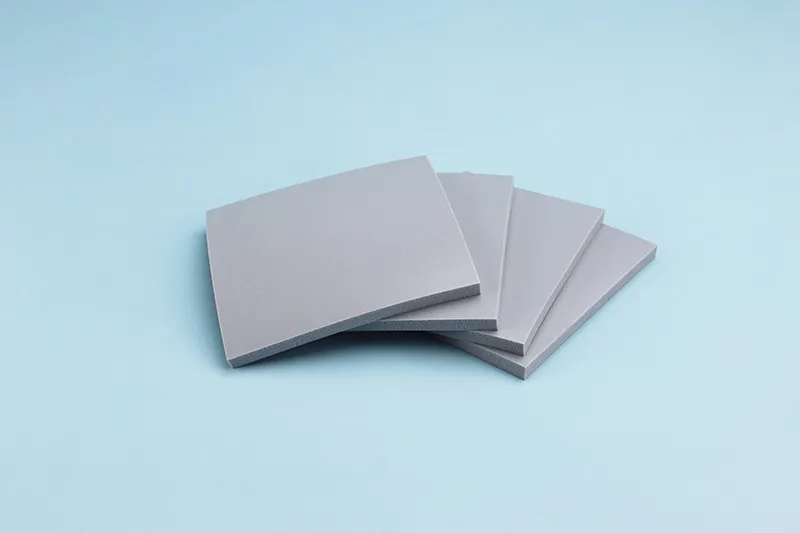
| Properties | SM150-FG1 | Test Method |
| Color | White | Visual |
| Density (kg/m3) | 1500±30 | ASTM D3574-95 |
| Thickness (mm) | 0.3-3.0 | - |
| Tensile Properties | 1.7 Mpa | ASTM D412 |
| Tearing Properties | 70 | ASTM D412 |
| Thermal Conductivity (W/m·K) | ≤0.3 | ASTM D5470 |
| Breakdown Voltage( Kv) | ≥5 | ASTM D149 |
| Dielectric constant | 3.5 F/m | JIS C1302 |
| Flame Rating | V-0 | UL 94 |
| Electrical Insulation | >1 × 10¹⁴ Ω·cm | JIS C1302 |
Thermal needs
- High temperature resistance suits areas near motors or power electronics.
- Density optimization keeps robot weight manageable.
Mechanical needs
- Structural stability helps parts retain shape under demanding conditions.
- Open pores may also support heat dissipation when airflow is part of the cooling plan.
So, this lightweight thermal material can do more than simply insulate.
Graphite Sheet: Mid-Range Density with High Thermal Diffusivity
A graphite sheet trades ultra-low mass for excellent thermal diffusivity. Its mid-range density can still fit weight-conscious designs.
- Anisotropic thermal conduction moves heat mainly along the sheet. This promotes fast heat spreading from processors and actuators.
- Thin carbon material supports compact electronic cooling. In tight robot bodies, that’s pretty handy.
For a low-weight thermal material for humanoid robot cooling, graphite works especially well when spreading heat matters more than insulation.
3 Reasons To Choose Low Weight Thermal Material
Choosing a low-weight thermal material for humanoid robot systems can make a practical difference when motors, batteries, and joints share tight spaces. Low-density thermal material cuts extra mass without giving up heat control. That matters because humanoid robot joints move constantly, while battery packs face repeated heating and cooling. Done right, lightweight design keeps temperatures—and weight—in check.
Boosted Heat Dissipation Efficiency in Actuator Heatsinks
A low-weight thermal material for humanoid robot actuators can move heat away from compact motors without making the joint unnecessarily heavy.
Heat transfer starts at the motor.
- High thermal conductivity spreads concentrated heat toward the actuator heatsink.
- A compliant thermal interface material fills tiny air gaps, improving heat dissipation.
Better contact supports temperature regulation.
- Improved thermal performance reduces hot spots.
- That gives designers another layer of overheating prevention when actuators work hard.
In short, less dead weight can still mean serious heat control.
Agile Joint Motor Housing via Weight Reduction Ratio
For a moving joint motor housing, every saved gram affects the mass the motor must repeatedly accelerate. A higher weight reduction ratio can lower inertial load, supporting structural agility and mechanical efficiency, provided strength remains suitable.
| Housing option | Material density (g/cm³) | Mass vs. 2.70 baseline | Relative inertia |
| Baseline | 2.70 | 100% | 1.00 |
| Option A | 2.20 | 81% | 0.81 |
| Option B | 1.80 | 67% | 0.67 |
| Option C | 1.35 | 50% | 0.50 |
These normalized examples show why lightweight design matters: reduced housing mass can make rapid joint motion easier on the motor.
Enhanced Battery Thermal Pad Life and Stability
A lightweight battery thermal pad also has to stay useful after countless heat cycles. Stable contact is the key.
- Temperature stability helps maintain predictable heat transfer as energy storage cells warm and cool.
- Thermal aging and compression should be checked together; excessive hardening or softening can reduce operational stability.
- Resistance to chemical degradation supports longer material longevity, especially around battery surfaces and enclosure materials.
For designers choosing low-weight thermal material for humanoid robot batteries, that balance keeps things light without treating long-term pad behavior as an afterthought.
Graphene Vs. Aerogel: Weight And Conductivity
Choosing a low-weight thermal material for humanoid robot designs comes down to heat flow versus insulation. Graphene spreads heat quickly; aerogel slows it, giving engineers two very different tools for tight robotic builds.
Graphene
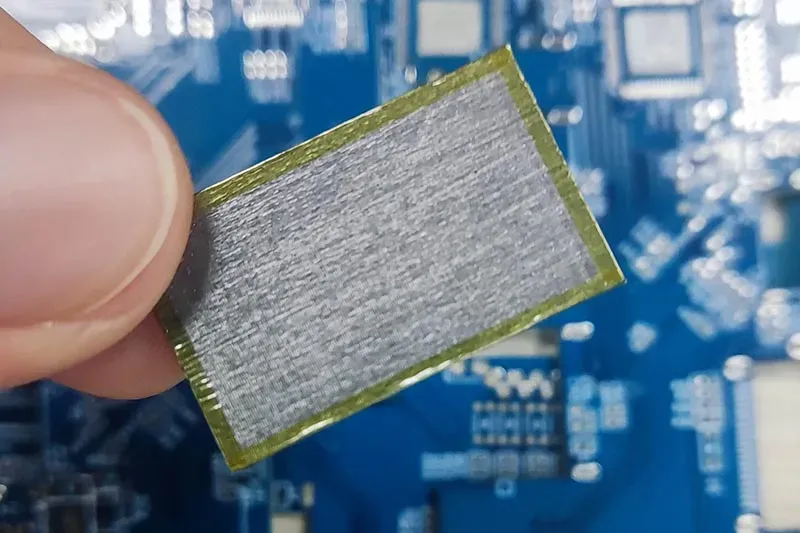
Graphene is two-dimensional carbon with a tightly bonded lattice structure. Its tiny mass and strong thermal behavior make it a useful low-weight thermal material for humanoid robot joints, compact electronics, and crowded actuator areas.
Heat control
- Thermal Conductivity: Sheen Technology’s graphene thermal pads utilize a vertically aligned process, enabling efficient heat transfer along the thickness direction.
- Electrical behavior:High electron mobility suits multifunctional designs where electrical and thermal performance matter together.
- Mechanical design:High mechanical strength helps thin spreaders handle demanding robot motion without adding much bulk.
Sheen Technology can help integrate graphene solutions when a low-weight thermal material for a humanoid robot platform must balance thin geometry with heat spreading.
In plain terms, this lightweight thermal material moves heat rather than blocking it.
Aerogel Composite
An aerogel composite takes almost the opposite route. Very low density and strong thermal insulation make it handy around batteries, sensors, shells, and other parts that need protection from a hot neighbor.
- Its porous structure traps gas inside an extremely fine nanoporous network, cutting heat transfer with little added mass.
- A silica matrix can provide useful temperature resistance while keeping the component remarkably light.
- Designers can place the material between a heat source and temperature-sensitive hardware, which is a practical trick in cramped limbs or torsos.
For a low-weight thermal material for humanoid robot design, aerogel works best as a barrier rather than a spreader. Sheen Technology can match insulation needs with space and weight limits, making low-weight thermal material for humanoid robot applications easier to package.
5.4 W/m·K: Best Low Weight Thermal Material For Humanoid Robot
Choosing a low-weight thermal material for humanoid robot hardware is a balancing act: heat needs a quick path out without loading moving joints with extra mass. At 5.4 W/m·K, Sheen Technology materials can support practical thermal control when thickness, interfaces, and mechanical life are carefully designed.
| Location | Dominant need | First choice | Avoid |
| Processor / compute board | Short-path conduction | Thin interface material at controlled bond line; graphite spreader above | Thick pads that add resistance; conductive spreaders without isolation |
| Actuator / motor housing | Conduction to structure + low mass | Thermally filled polymer or aluminum alloy with an interface layer | Insulating foams as the primary path |
| Battery pack | Cyclic stability and chemical resistance | Gap filler or pad validated for compression set and aging | Materials that harden, soften, or migrate over cycles |
| Sensors in narrow gaps | Insulation + dimensional stability | Polyimide film; low-CTE insulation | Conductive films or graphite near signal lines |
| Shell / torso lining | Thermal barrier at low mass | Aerogel composite in an encapsulated form | Bare aerogel in moving or abraded areas |
Processor Cooling Plate: Managing Thermal Resistance
A low-weight thermal material for humanoid robot processor cooling works best when designers consider the whole heat path, not conductivity alone.
Heat-path design
- thermal conductivity of 5.4 W/m·K can suit weight-sensitive housings where heat travels across a short distance.
- Compared with an aluminum alloy or copper baseplate, engineers should calculate thickness and area before making the call.
Interface control
- High surface flatness reduces microscopic air gaps.
- Lower contact resistance helps heat reach the plate efficiently, improving practical heat dissipation.
Cooling features
- A micro-channel system may boost cooling where processors create concentrated hot spots, though pump weight and power also count.
Thermal Interface Material: Tight Thickness Tolerance
For a low-weight thermal material for humanoid robot electronics, small thickness changes can cause surprisingly large temperature differences. A controlled bond line thickness keeps thermal performance predictable without squeezing fragile packages too hard.
- Select a gap filler, phase change material, or silicone pad for the actual gap and mounting force.
- Check compressibility so assembly pressure stays within component limits; that’s where tight tolerances really pay off.
- Compare thermal impedance at the intended thickness, then confirm adequate dielectric strength where electrical isolation is required.
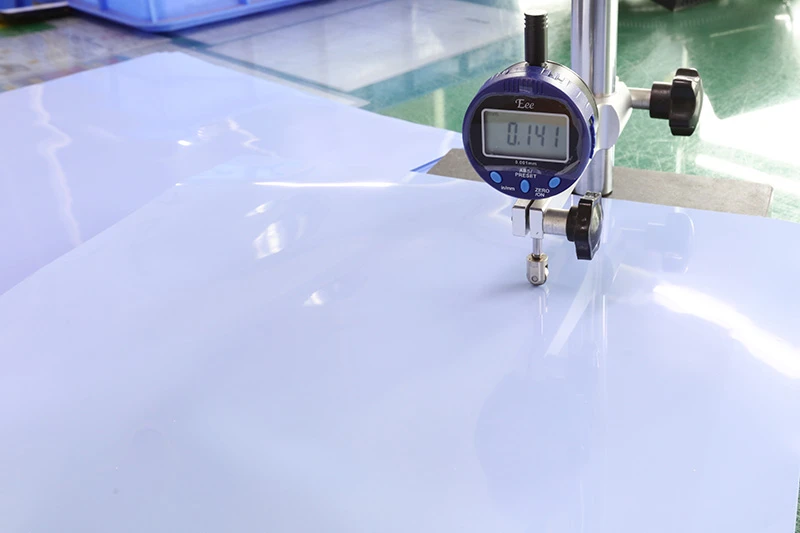
Sheen Technology can tailor thickness choices around compact humanoid robot assemblies rather than treating interface material as a one-size-fits-all part.
Long-Term Stability Against Cyclic Expansion
A low-weight thermal material for humanoid robot use must survive thousands of warm-up and cool-down cycles while joints, boards, and processors keep moving.
Expansion compatibility
- Match coefficient of thermal expansion across bonded materials.
- Lower mismatch reduces mechanical stress during cyclic loading.
Mechanical durability
- Suitable elastic modulus allows controlled movement rather than stressing interfaces.
- Resistance to thermal fatigue helps preserve contact through repeated temperature swings.
Service-life checks
- Track material degradation under realistic heat and motion.
- Verify aging resistance across the expected operating range.
For a lightweight thermal material in mobile robots, Sheen Technology pairs thermal targets with these mechanical checks so long-term cooling performance doesn’t get lost in the shuffle.
Robotic Joint Cooling: Low Weight Solutions
Humanoid joints pack sensors, motors, and electronics into tight spaces, so every gram and degree matters. A low-weight thermal material for humanoid robot designs must control heat without hurting motion or sensor accuracy. Sheen Technology supports this balance through light thermal materials, controlled processing, and practical production methods.
Sensor Insulation Layer with Low Coefficient of Thermal Expansion
Sensor accuracy starts with thermal insulation that limits fast heat transfer.
- A low density aerogel sheet cuts added mass.
- polyimide film supports sensor protection in narrow gaps.
- Matching the coefficient of thermal expansion improves dimensional stability during rapid heating.
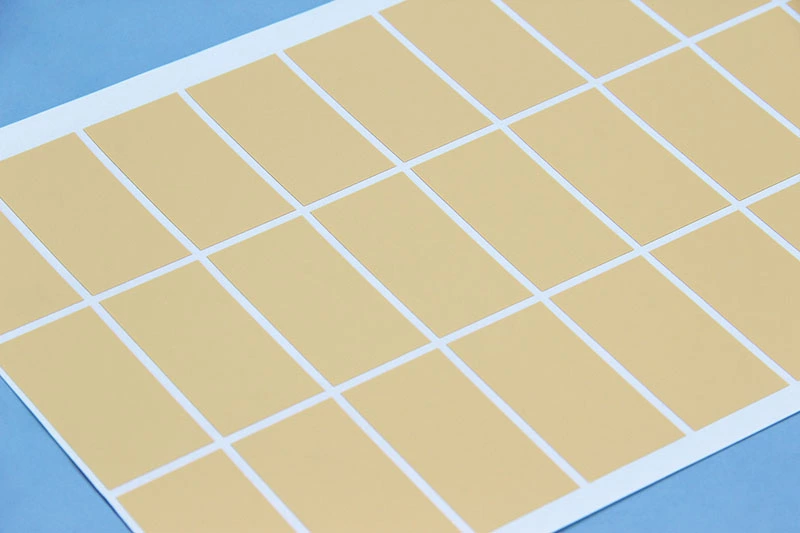
This makes a low-weight thermal material for humanoid robot joints easier to place near sensitive measurement hardware.
Vacuum Impregnation for Compact Heatsinks
vacuum impregnation addresses internal voids in a compact heatsink.
- porosity sealing with epoxy resin can strengthen porous features.
- An aluminum alloy base then provides useful thermal conductivity without getting too bulky.
For a low-weight thermal material for a humanoid robot, that balance is pretty handy when joint space is tight.
Precision Die-Cut Ceramic Foam Components
ceramic foam offers an open-cell structure suited to low-mass thermal control.
- precision cutting creates a repeatable die-cut component.
- Controlled shapes support lightweight insulation and a local thermal barrier.
- Open pores can also aid heat dissipation where the joint design permits airflow.
The result keeps light thermal material practical rather than fussy.
RoHS-Compliant Automated Dispensing Practices
Consistent bonding matters just as much as material choice.
- automated dispensing gives each thermal interface material a precise application.
- A dispensing robot supports repeatable assembly automation, while documented RoHS compliance and an eco-friendly polymer can simplify material controls.
For production teams, a low weight thermal material for a humanoid robot program gains value when application quality stays predictable from joint to joint.
【Request a Custom Quote】share your joint duty cycle, gap and pressure data, and target temperatures with Sheen’s engineering team for lightweight interface, spreading, and insulation samples evaluated against your conditions.
Sheen Thermal
Dongguan Sheen Electronic Technology Co., Ltd · Founded in 2008
Manufacturer of thermal interface materials and silicone foam for automotive electronics, energy storage, power electronics, communications and consumer electronics.
Certified
- ISO 9001:2015
- ISO 14001:2015
- IATF 16949:2016
What we supply
- Thermal conductivity Up to 90 W/m·K
- Thickness 0.3–10.0 mm
- Custom & samples Die-cut to drawing, 3–7 days