
 English
 usheenthermal

Stop Thermal Runaway: New Energy Vehicle Specialized Insulating Sheet
Date:2026-04-02
Stop Thermal Runaway: New Energy Vehicle Specialized Insulating Sheet
Thermal runaway isn’t some lab-coat horror story—it’s the spark that can turn a billion dollar battery line into headline news. As EV sales climb past 14 million units globally in 2023, according to the IEA, the heat is on—literally. The New Energy Vehicle Specialized Insulating Sheet steps in like a fireproof referee, keeping high voltage in its lane and runaway reactions on a short leash.
Battery packs are like city blocks packed tight; one bad actor and the whole neighborhood feels it. This is about stopping the domino effect before it even wobbles.
Lyrical Insights: New Energy Vehicle Specialized Insulating Sheet
➔ Optimizes thermal conductivity and high temperature resistance to safeguard battery packs and power electronics under heavy load.
➔ Ensures dielectric strength per IEC 60243 and ASTM D149 for reliable high-voltage insulation in inverters and DC-DC converters.
➔ Achieves UL 94 V-0 flame retardancy and combines thin, lightweight design with mechanical robustness to extend battery life and enhance environmental durability.
Critical Properties of Insulating Sheets
Electric vehicles are pushing materials to the edge. A New Energy Vehicle Specialized Insulating Sheet must handle heat, voltage, flame, and weight all at once. Break the phrase down—New Energy, Vehicle, Specialized, Insulating, Sheet—and each word carries real pressure. From battery packs to inverters, the right insulating sheet keeps everything cool, safe, and light.
Balancing Thermal Conductivity with Temperature Resistance
For any New Energy Vehicle Specialized Insulating Sheet, heat is the daily battle.
Thermal management
Core focus:
· Thermal conductivity tuned for fast heat dissipation.
· Stable operating temperature under continuous load.
Application zones:
· Battery module gaps.
· Power electronics base layers.
High temperature performance
· Material maintains temperature resistance above 150°C.
· No softening, no cracking.
Key reference data:
| Property | Typical Value | Test Condition |
| Thermal Conductivity | 1.5 W/m·K | ASTM E1461 |
| Continuous Use Temp | 155°C | IEC 60216 |
| Peak Temp | 200°C | 100h aging |
| Thickness Range | 0.2–1.0 mm | Standard |
This balance defines a serious new energy insulating sheet.
Ensuring Dielectric Strength and High Voltage Resistance
Inside high-voltage systems, a New Energy Vehicle Specialized Insulating Sheet must guard against failure.

Sheen SC2000FG Thermal Insulating Sheet: Performance Parameters:
| Properties | Unit | SC2000FG | Test Method |
|---|---|---|---|
| Color | - | White&Green | Visual |
| Reinforcement Carrier | - | Fiberglass | - |
| Thermal Conductivity | W/m·K | 5.0 | ASTM D5470 |
| Thickness | mm | 0.2 ~ 0.5 | ASTM D374 |
| Standard Hardness | Shore 00 | 85 ~ 95 | ASTM D2240 |
| Breakdown Voltage(@AC) | kV | ≥ 5.0 | ASTM D149 |
| Dielectric Constant (@1MHz) | F/m | ≤5.0 | ASTM D150 |
| Volume Resistivity | Ω·cm | ≥1*1013 | ASTM D257 |
| Operating Temp. | ℃ | -40 ~ 150 | - |
| Flame Rating | - | V-0 | UL94 |
| RoHS | - | PASS | IEC 62321 |
| Halogen | - | PASS | EN 14582 |
| REACH | - | PASS | EN 14372 |
Electrical insulation foundation
· Verified dielectric strength per ASTM D149.
· Controlled breakdown voltage margins.
High voltage safety layers
· Inverter busbars.
· DC-DC converter interfaces.
· Motor controller barriers.
Arc resistance control
· Enhanced voltage resistance.
· Reduced carbon tracking.
· Long-term arc resistance stability.
Compliance alignment
· ASTM D149 validation.
· Real-world surge simulation.
A qualified electric vehicle insulating material doesn’t just block current; it prevents risk before it starts.
Achieving Flame Retardancy through UL 94 V-0 Compliance
Fire safety is non-negotiable.
Flame retardancy
· Certified UL 94 V-0.
· Rapid self-extinguishing response.
Combustion resistance
· Limited melt dripping.
· Controlled material flammability.
Application assurance
· On-board chargers.
· Motor insulation housings.
A reliable New Energy Vehicle Specialized Insulating Sheet slows flame spread and boosts fire safety, giving engineers breathing room during thermal events.
Lightweight Design via Thin Profile and Mechanical Strength
Weight matters. Every gram counts in a New Energy Vehicle platform.
Lightweight design
· Reduced material density.
· Optimized thickness without compromise.
Structural balance
· Reinforced mechanical strength.
· High impact resistance.
· Long-term durability.
Integrity under stress
· Maintained structural integrity during vibration.
· Stable thin profile under compression.
A high-performance New Energy Vehicle Specialized Insulating Sheet blends slim form with toughness. That’s exactly where Sheen Technology focuses—engineering insulating sheets that stay light, stay strong, and keep new energy vehicle systems running safely mile after mile.
How Insulating Sheets Extend Battery Life
In the fast-moving world of New Energy Vehicle systems, keeping batteries cool, isolated, and sealed is the name of the game. A well-designed New Energy Vehicle Specialized Insulating Sheet quietly supports safety, stability, and long service life.
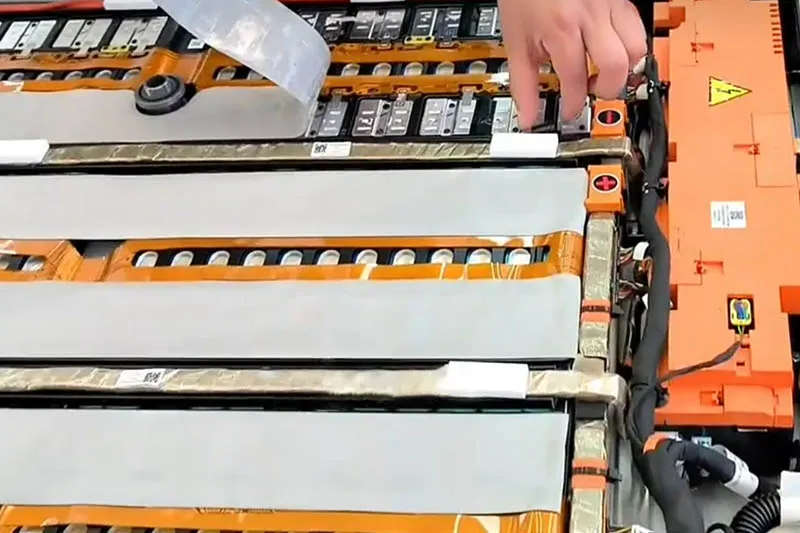
Reducing Thermal Runaway in Battery Pack Insulation
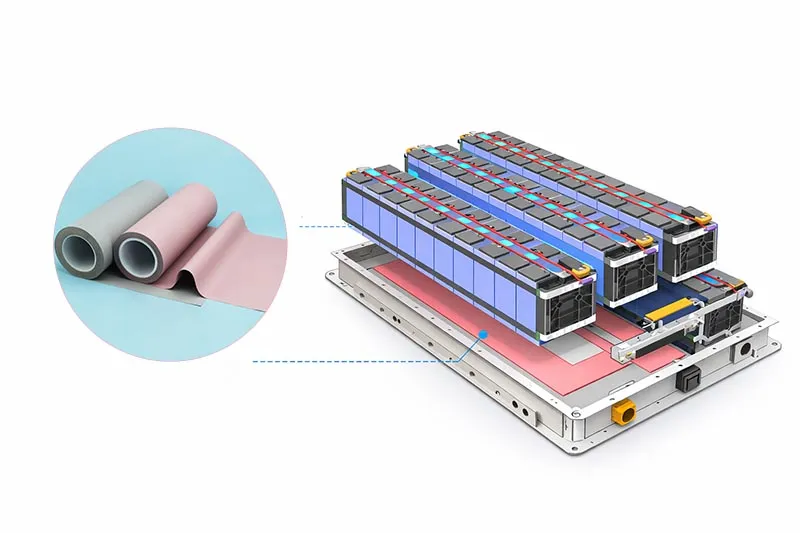
A New Energy Vehicle Specialized Insulating Sheet plays a direct role in controlling thermal runaway inside a battery pack. Heat builds up fast. Smart insulation slows it down.
Core safety control
· Heat dissipation pathways are guided through layered materials.
· Internal temperature control stays within target ranges.
· Passive fire prevention barriers delay flame spread.
Material design logic
· Ceramic-coated surfaces reflect radiant heat.
· Multi-layer structures trap and release heat gradually.
· Compression stability maintains contact under vibration.
System-level protection
· Module spacing supports airflow.
· Thermal pads link hot spots to cooling plates.
· Integrated safety margins extend service life.
The International Energy Agency noted in its 2025 EV Outlook that improved battery thermal management remains “a decisive factor in reducing fire incidents and extending pack durability.”
Sheen Technology fine-tunes every New Energy Vehicle Specialized Insulating Sheet to support safer New Energy Vehicle battery modules in real driving conditions.
Enhancing Cell-to-Cell Isolation with Polyimide Film Laminates
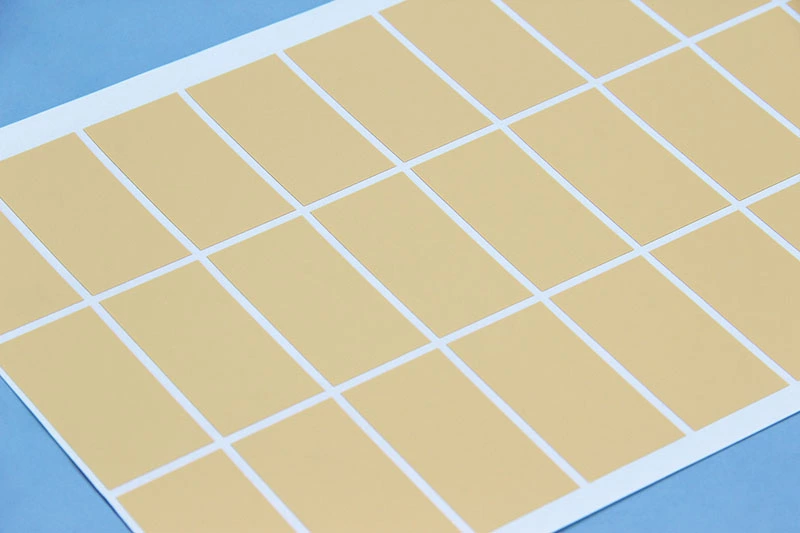
Inside high-density modules, cell-to-cell isolation is serious business. A New Energy Vehicle Specialized Insulating Sheet often integrates polyimide film and precision laminates to strengthen electrical insulation.
Electrical barrier upgrade
· High dielectric strength blocks current drift.
· Reinforced layers reduce short circuit prevention risks.
Thermal balance support
· Thin-film design assists thermal management.
· Even heat spread boosts battery performance.
Practical advantages
· Lightweight structure keeps pack weight in check.
· Flexible forming adapts to compact layouts.
A New Energy Vehicle insulating sheet built with advanced polyimide film keeps energy where it belongs. Sheen Technology engineers test every New Energy Vehicle Specialized Insulating Sheet under voltage stress, heat cycling, and vibration. The result feels simple: steadier output, longer battery life, fewer headaches.
Improving Environmental Durability using Silicone Rubber Gaskets
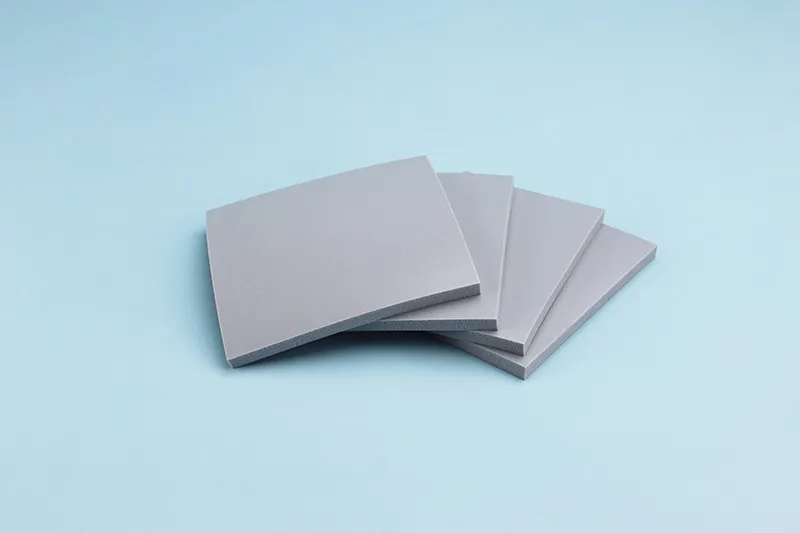
Road life is rough. Dust, water, shock—no mercy. A New Energy Vehicle Specialized Insulating Sheet combined with silicone rubber gaskets boosts true environmental durability.
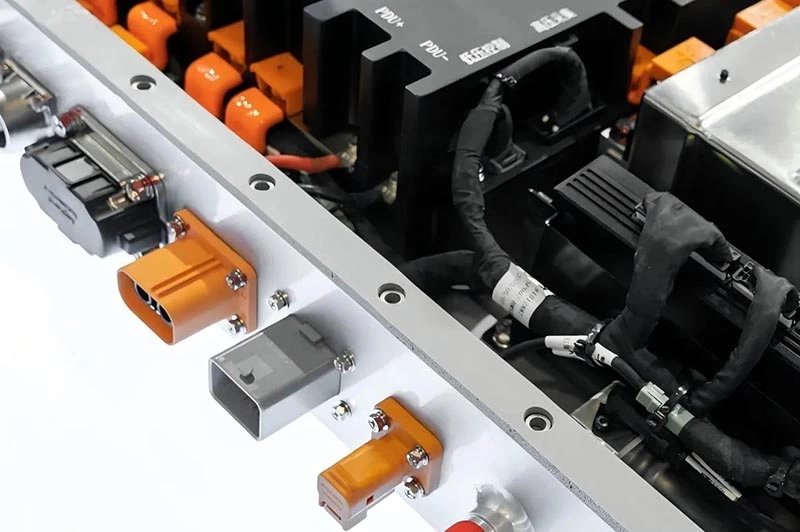
Sealing performance
· Tight sealing blocks moisture entry.
· Strong water resistance protects active materials.
· Fine-edge design improves dust protection.
Mechanical buffering
· Elastic structure provides vibration damping.
· Compression recovery maintains gap stability.
Long-term value
· Chemical stability resists coolant exposure.
· Aging resistance supports long-term reliability.
From city traffic to humid highways, a New Energy Vehicle Specialized Insulating Sheet keeps the pack stable and clean. Sheen Technology designs each New Energy Vehicle Specialized Insulating Sheet to match real automotive stress, helping New Energy Vehicle battery systems stay safer, drier, and ready for the long haul.
New Energy Vehicle Insulating Sheet Vs Standard Film
Electric cars are getting smarter and hotter inside—literally. That’s why choosing between a New Energy Vehicle Specialized Insulating Sheet and a standard film isn’t just technical talk; it’s about real battery safety and long-term reliability.
New Energy Vehicle Specialized Insulating Sheet
The New Energy Vehicle Specialized Insulating Sheet is built for demanding battery systems. In a new energy vehicle power pack, insulation is not optional—it’s survival gear.
Core Material System
Polyimide film base
· Delivers High temperature resistance under continuous load.
· Maintains Electrical insulation in high-voltage modules.
Aramid paper reinforcement
· Enhances Thermal runaway prevention.
· Strengthens mechanical stability during vibration.
Mica laminate layers
· Improves arc resistance.
· Supports long-term Thermal management.
Functional Integration in EV Packs
· Cell-to-cell insulation barrier.
· Module-level Electromagnetic shielding.
· Pack housing dielectric protection.
Performance Priorities
✅ Battery safety under extreme charging.
✅ Stable dielectric strength beyond standard film limits.
✅ Reliable new energy vehicle insulating sheet durability.
A New Energy Vehicle Specialized Insulating Sheet from Sheen Technology is engineered specifically for electric mobility platforms. This EV specialized insulating sheet is tuned for voltage spikes, heat buildup, and compact battery architecture—stuff a standard film just can’t handle.
Standard Film
Standard film sounds simple because it is.
Manufacturing Route
· Extrusion or casting.
· Designed for General insulation.
· Suitable for non-specialized application.
Application Scope
· Low-voltage housings.
· Consumer electronics barriers.
· Light industrial wraps.
Technical Limits
· Low temperature resistance compared with a New Energy Vehicle Specialized Insulating Sheet.
· Only a Basic electrical barrier.
· Limited thermal performance in high-energy battery systems.
When placed inside a new energy vehicle battery pack, a standard film may struggle with sustained heat and voltage stress. It works fine in mild conditions, yet it lacks the layered defense required for advanced thermal management.
That’s why many EV manufacturers turn to Sheen Technology for a proven New Energy Vehicle Specialized Insulating Sheet—a solution purpose-built for electric vehicles, not adapted from general film products.
FAQs about New Energy Vehicle Specialized Insulating Sheet
What makes New Energy Vehicle Specialized Insulating Sheet suitable for high-voltage systems?
In inverter systems and DC-DC converters, insulation failure is not an option. This sheet is built for high voltage resistance and stable dielectric strength under heat and vibration.
Key factors include:
· Compliance with IEC 60243 and ASTM D149 for dielectric strength.
· UL 94 V-0 flame retardancy to limit fire spread.
· Strong temperature resistance to protect power electronics modules.
Its laminated structure—often combining polyimide film, mica paper, and aramid paper—supports battery pack insulation and motor insulation where electrical stress is constant.
How does it manage heat while staying lightweight?
Heat builds quickly inside battery pack insulation and on-board chargers. The sheet balances thermal conductivity with a thin profile, reducing weight without sacrificing mechanical strength.
Performance focus:
· Excellent thermal management for continuous high-load operation.
· Lightweight sheets and rolls to support vehicle efficiency.
· Stable structure during lamination, slitting, and die-cutting.
The result is reliable protection with less material mass—an advantage in large-scale EV production.
What materials and manufacturing processes are used?
This product is typically a laminate engineered for layered protection.
Common raw materials:
· Polyimide film – high temperature resistance.
· Aramid paper – mechanical strength.
· Mica paper – enhanced dielectric stability.
· Silicone rubber – chemical stability and environmental durability.
Manufacturing path often combines lamination, molding, extrusion, casting, and precision die-cutting to deliver sheets, tapes, gaskets, and punched parts tailored for power electronics modules.
How can buyers ensure compliance and long-term reliability?
For automotive programs, documentation is critical. Buyers should confirm:
· UL 94 V-0 flame retardancy.
· IEC 60243 and ASTM D149 test data.
· RoHS compliance and REACH compliance.
· Consistent quality in slitting and laminates.
| Verification Area | Why It Matters |
| Dielectric strength data | Protects inverter systems from breakdown |
| Flame retardancy rating | Reduces fire risk in motor insulation |
| Chemical stability reports | Ensures durability in harsh environments |
| ISO 23076 process control | Supports batch consistency |
A qualified supplier treats insulation not as a simple film, but as a safety barrier at the heart of every New Energy Vehicle Specialized Insulating Sheet application.
Sheen Thermal
Dongguan Sheen Electronic Technology Co., Ltd · Founded in 2008
Manufacturer of thermal interface materials and silicone foam for automotive electronics, energy storage, power electronics, communications and consumer electronics.
Certified
- ISO 9001:2015
- ISO 14001:2015
- IATF 16949:2016
What we supply
- Thermal conductivity Up to 90 W/m·K
- Thickness 0.3–10.0 mm
- Custom & samples Die-cut to drawing, 3–7 days