
 English
 usheenthermal

Solve Thermal Issues: Phase Change Heat Dissipation for High-Power LEDs
Date:2026-05-27
Solve Thermal Issues: Phase Change Heat Dissipation for High-Power LEDs
Heat is eating your margins, and phase-change heat dissipation for high-power LEDs stops the bleed. When junction temps spike, lifespans crash, colors drift, and warranty claims pile up.
Heatsinks alone can’t keep up with dense, spiky loads or tight designs.
In 2025 briefs, Sheen Technology engineers and managers emphasize that PCM stabilizes junction temperature and reduces failure risk.
Melodic Quick Notes for Phase Change Heat Dissipation for high-power LEDs
➔ Optimize Interface Materials: Choose high-conductivity, gap-filling TIM to eliminate bottlenecks and ensure uniform heat transfer.
➔ Calibrate PCM Selection: Match PCM melting point and thermal capacity to your LED’s peak junction temperature for stable performance.
➔ Balance Layer Thickness: Apply PCM at the manufacturer’s recommended thickness—too thick lowers conductivity, too thin limits latent heat storage.
➔ Validate with Testing: Use thermal imaging or junction measurements under real-world loads to confirm PCM effectiveness and spot installation flaws.
➔ Integrate Hybrid Design: Combine PCMs with conductive pathways or micro-heat sinks for enhanced response to intermittent high-power spikes.
3 Key Factors In LED Overheating
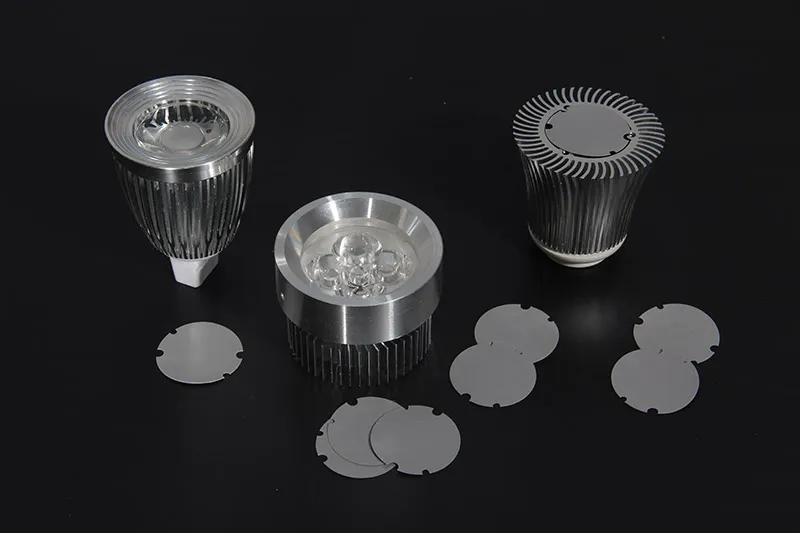
Modern fixtures push brightness hard, so heat sneaks up fast. When cooling slips, output fades and failures stack up. This cluster breaks down how thermal stress builds, why materials matter, and where layouts go wrong. The lens stays practical, with a nod to Sheen Technology and real-world fixes around Phase change heat dissipation for high-power LEDs.
Thermal Runaway’s Impact on LED Lifespan
Core behavior
· Rising junction temperature feeds thermal runaway, not gently but aggressively.
· Extra leakage current means more overheating, less control, and faster degradation.
What breaks down
· Semiconductor layers age early, slicing LED lifespan.
· Light output drops through steady lumen depreciation, hurting reliability.
Why it matters in practice
· Phase change heat dissipation for high-power LEDs slows the loop.
· Smart thermal paths keep junctions calm, which Sheen Technology treats as non negotiable.
Interface Materials: Conduction Bottlenecks
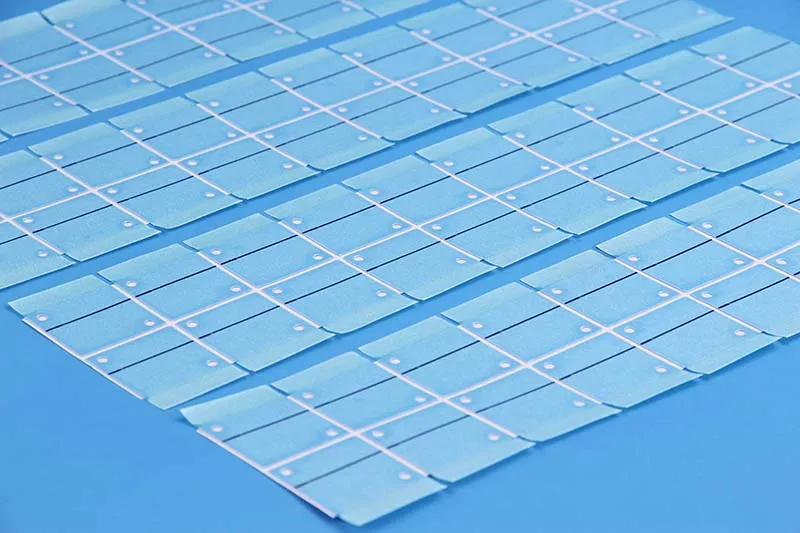
Contact reality check
· Interface materials decide how heat leaves the chip.
· Low thermal conductivity equals high thermal resistance.
Common failure paths
· Poor spread creates gaps, turning heat transfer into a conduction mess.
· Local hot spots pop up, then spread.
Applied fixes
· Match material to pressure and surface finish.
· Phase change heat dissipation for high-power LEDs benefits when interfaces stay uniform, a rule baked into Sheen Technology builds.
PCB and Heat Spreader Design Flaws
Layout hierarchy
PCB design sets the ceiling for thermal management.
· Thin copper raises spreading resistance.
· Weak vias choke the heat spreader.
Material choices
· Substrate and material selection steer heat sideways, or trap it.
Design a flow that works
· Size the spreader, then tune the layout.
· Recheck under load using Phase change heat dissipation for high-power LEDs.
· That loop defines how Sheen Technology keeps high power LEDs steady, not stressed.
Understanding Phase Change Heat Dissipation Basics
Phase change heat dissipation for high-power LEDs sounds heavy, but it’s pretty down-to-earth. This intro breaks down how smart materials tame heat, keep LEDs calm, and help brands like Sheen Technology ship reliable lighting.
Defining Phase Change Materials
· Phase Change Materials (PCM) store thermal energy storage during a phase transition.· The melting point acts like a speed bump for heat spikes.
· Solidification sends stored energy back out once things cool.
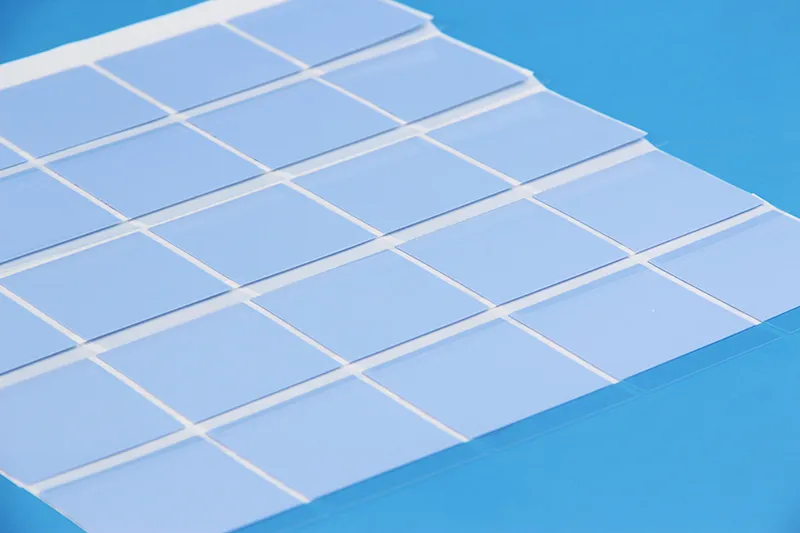
Sheen Technology Phase Change Thermal Materials Performance Parameters:
| Properties | Color | Reinforcement Carrier | Thermal Conductivity | Thermal Impedance (@50psi) | Thickness | Phase Change Temp. |
|---|---|---|---|---|---|---|
| Unit | - | - | W/m·K | ℃*in2/W | mm | ℃ |
| SP205A-30 | Gray | - | 3.0 | 0.05 | 0.2 | 45 ~ 55 |
| SP205A-35 | Gray | - | 3.5 | 0.04 | 0.2 | 45 ~ 55 |
| SP205A-40 | Gray | - | 4.0 | 0.03 | 0.2 | 45 ~ 55 |
| SP205A-50 | Gray | - | 5.0 | 0.02 | 0.3 | 45 ~ 55 |
| SP205A-60 | Gray | - | 6.0 | 0.015 | 0.3 | 45 ~ 55 |
| SP205A-AL-40 | Green/Gray | Aluminum Foil | 4.0 | 0.06 | 0.18 | 50 ~ 60 |
| SP350P | Green | Polyimide | 1.8 | 0.4 (30psi) | 0.13 ~ 0.5 | 45 ~ 55 |
| Test Method | Visual | - | ASTM D5470 | ASTM D5470 | ASTM D751 | ASTM D3418 |
That’s the quick take. Dig deeper, and the latent heat behavior explains why phase change heat dissipation for high-power LEDs feels steady instead of jumpy. Material properties matter, from wax-based blends to salt hydrates, all tuned for repeatable thermal energy storage. Sheen Technology often frames PCM as a thermal buffer, not a miracle cure, which keeps expectations real.
Need exact thermal conductivity, melting temperature, thickness range, and test data before you choose? Download the product datasheets to compare phase change thermal material options for high-power LEDs.
Latent Heat Absorption: How It Works
Heat hits the LED board.
· Latent heat absorption kicks in during the melting process.
· Energy shifts into energy storage, not temperature rise.
· The isothermal process holds the line on temperature regulation.
Small chunks of heat transfer mechanism stack up fast. That’s why phase change heat dissipation for high-power LEDs keeps junction temps from going wild during power surges.
Comparing Thermal Conductivities
★ Thermal conductivity in PCMs stays modest.★ Metals still win raw heat transfer rate.
★ Mix both, and thermal resistance drops.
Now the layered view:
Performance goals
· Fast spread: aluminum plates
· Heat soak: PCM cores
Outcomes
· Better heat dissipation efficiency
· Balanced thermal performance and heat flux
This hybrid mindset dominates phase change heat dissipation for high-power LEDs across the market.
Selecting the Right PCM for LEDs
Picking PCM isn’t guesswork. It’s a short checklist that loops back on itself:
LED thermal management targets
· Operating temperature range
· Desired melting temperature
Design fit
· Encapsulation method
· Heat sink integration
Long game
· Thermal cycling stability
· Material compatibility
Blend those, and phase change heat dissipation for high-power LEDs becomes predictable. Sheen Technology keeps stressing that reliability beats flashy specs, especially in high-power LED cooling, where downtime hurts.
Need a closer match for your project? Browse these related application pages to see where phase change materials are used in real lighting and electronics builds.
Phase Change PCM Vs. Traditional Heat Sinks
This cluster breaks down how two cooling paths behave when heat surges hit hard. The focus stays practical, friendly, and tuned for Phase change heat dissipation for high-power LEDs in real products.
Phase Change PCM
When phase change material enters the conversation, the tone shifts from airflow to timing. This approach banks on latent heat and a tuned melting point, turning heat spikes into manageable pauses.
Core behavior
Heat arrives fast
· Heat absorption kicks in during a solid-liquid transition
· Energy parks itself as thermal energy storage
Cooling happens quietly
· No fans
· No vibration
Design logic
· Encapsulation keeps the PCM stable and clean
· Compact layouts suit tight LED boards
In use
· Short bursts from high-power LEDs
· Repeated cycles without user attention
IEEE Spectrum noted in a 2024 thermal management review that passive phase-change solutions are gaining ground in LED systems where peak loads matter more than steady averages.
For Phase change heat dissipation for high-power LEDs, this method feels calm under pressure. Sheen Technology applies this style when space is tight and thermal buffering matters.
Traditional Heat Sinks
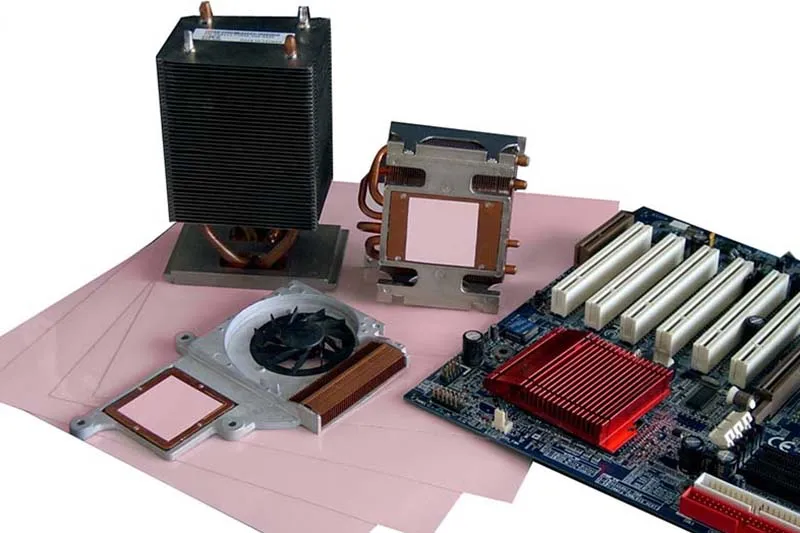
A heat sink plays the long game. It leans on thermal conduction through a base plate, then hands heat to air by convection.
Heat path basics
· Chip to sink via material contact
· Spread shaped by fin geometry
Performance traits
· Predictable heat transfer
· Depends on airflow and material properties
Trade-offs
· Larger mass
· Higher thermal resistance during sudden spikes
Some designers mix slang and call it “brute-force cooling,” and that fits. For steady loads, it works. For Phase change heat dissipation for high-power LEDs, it can lag during sudden surges. Sheen Technology often pairs sinks with other tools when spikes refuse to behave.
Phase Change Heat Dissipation Installation Guide
This guide keeps things real and practical. It explains how phase change heat dissipation for high-power LEDs works on the shop floor, not just on paper. From prep to testing, the focus stays on stable output, fewer surprises, and cleaner installs that support long-term LED performance using phase change heat dissipation for high-power LEDs.
Surface Preparation for PCM Application
Surface cleaning and contaminant removal matter more than fancy materials. Dust, oil, and oxide layers quietly wreck thermal paths.· Substrate material choice sets the tone; aluminum behaves differently than copper at the thermal interface.
· Surface roughness should feel controlled, not polished glass.
Inspect bare metal for oxidation.
· Apply solvent wipe-downs.
· Use light abrasion if adhesion feels weak.
· Adhesion promotion improves PCM spread without forcing pressure.
· Primer application only helps when surfaces fight wetting.
Short notes follow. Smooth isn’t always better. Slight texture helps PCM grip. Installers working with phase change heat dissipation for high-power LEDs often skip this and pay later. Even Sheen Technology flags prep as a top failure point.
Ensuring Proper PCM Layer Thickness
Thickness is a balancing act for phase change heat dissipation for high-power LEDs.
· PCM layer coverage must stay continuous.
· Thickness uniformity beats raw volume.
· Gap control protects against pump-out.
A quick check table helps:
| Area | Target Thickness (mm) | Thermal Resistance (°C/W) |
| LED die | 0.15 | 0.12 |
| MCPCB | 0.20 | 0.15 |
| Heat sink | 0.25 | 0.18 |
| Edge zones | 0.18 | 0.14 |
Apply using controlled dispensing method tools, verify with layer measurement, and adjust. Too thick traps heat. Too thin a starve phase change heat dissipation for high-power LEDs.
“Interface thickness variation remains one of the largest contributors to LED thermal inefficiency,” noted in a 2024 IEA solid-state lighting update.
Post-Installation Thermal Testing: Ensuring Efficiency
Testing keeps phase change heat dissipation for high-power LEDs honest.
· Thermal performance gets checked under real load.
· Temperature measurement beats guesswork.
· Heat flux trends tell more than single readings.
Steps flow naturally:
· Power to rated current.
· Capture IR images.
· Log junction data.
· Run data analysis against spec limits.
Nested checks help:
Validation loop
Testing protocols alignment
· Repeat runs
· Outlier review
Thermal efficiency confirmation
· Pass/fail flags
· Validation process sign-off
Results that stay flat mean phase change heat dissipation for high-power LEDs is doing its job, just like Sheen Technology designs intend.
【Request a Custom Quote】 Not sure which PCM fits your LED design? Send us your target junction temperature, operating profile, thickness target, and application details, and we can help recommend the right thermal solution for your build.
Sheen Thermal
Dongguan Sheen Electronic Technology Co., Ltd · Founded in 2008
Manufacturer of thermal interface materials and silicone foam for automotive electronics, energy storage, power electronics, communications and consumer electronics.
Certified
- ISO 9001:2015
- ISO 14001:2015
- IATF 16949:2016
What we supply
- Thermal conductivity Up to 90 W/m·K
- Thickness 0.3–10.0 mm
- Custom & samples Die-cut to drawing, 3–7 days