
 English
 usheenthermal

Why Engineers Prefer Silicone-free Thermal Dissipation for Sensors
Date:2026-06-11
Why Engineers Prefer Silicone-free Thermal Dissipation for Sensors
Silicone-free Thermal dissipation for high-precision sensors isn’t a luxury—it’s damage control. Tiny silicone vapors sneak around like uninvited guests, nudging sensors off their mark and quietly wrecking consistency.
Scale that mess across production lines, and you’re burning cash on recalibration, downtime, and awkward customer calls.
Sheen Technology’s 2025 briefs emphasize contamination control as a requirement, pushing silicone-free materials for stable sensor performance.

Harmonic Highlights: Silicone-free Thermal dissipation for high-precision sensors
➔ Eliminating Contamination Risks: Outgassing-free materials protect sensor optics and contacts from silicone vapors.
➔ Extended Sensor Lifespan: No residue buildup ensures stable thermal performance over repeated cycles.
➔ Calibration Stability: Reduced baseline shifts cut down recalibration frequency and maintenance overhead.
➔ Industry-Proven Reliability: Automotive, medical, and optical systems achieve consistent readings with silicone-free pads.
Why Choose Silicone-free Thermal Dissipation?
High-precision sensors hate surprises. Heat spikes, residue, drifting signals—none are welcome. Silicone-free Thermal dissipation for high-precision sensors keeps things calm and predictable. This approach fits clean environments, tight tolerances, and long duty cycles, all while sounding less lab-coat and more real-world practical.
Eliminating Contamination Risks
Silicone-free Thermal dissipation for high-precision sensors focuses on contamination prevention without drama. No sneaky vapor trails. No mystery films.
· outgassing reduction keeps sealed systems honest
· residue-free operation protects sensitive components
· cleanroom compatibility supports process integrity
A nested view makes it clearer:
· Risk sources:Material behavior,material purity limits migration.
· Environmental stress:Heat accelerates silicone spread.
· Results:Optical paths stay clean,Contacts stay conductive.
This is why Silicone-free Thermal dissipation for high-precision sensors shows up in metrology labs and inspection rigs.
How Silicone-free Dissipation Extends Sensor Lifespan?
Here’s the practical flow behind Silicone-free Thermal dissipation for high-precision sensors:
· Stable heat paths protect thermal stability
· No residues means less sensor degradation
· Surfaces maintain material integrity
· Net effect: longer operational lifespan
Quick comparison helps:
| Material Type | Heat Transfer Efficiency | Residue Risk | long-term reliability |
| Silicone-based | Medium | High | Limited |
| Hybrid pads | Medium-High | Medium | Variable |
| Silicone-free | High | Low | Strong |
For component protection, Silicone-free Thermal dissipation for high-precision sensors simply ages better. Sheen Technology designs around that reality.
Selecting the right thermal interface material for precision sensors requires more than thermal conductivity data alone. Download detailed product datasheets to compare silicone-free thermal pads, graphite-based materials, and contamination-sensitive thermal solutions for sensor applications.
Real-world Application: Precision Sensor Stability
In daily use, Silicone-free Thermal dissipation for high-precision sensors supports precision measurement under messy conditions.
· Automotive: heat cycles, oil mist, vibration
· Medical: sterilization, zero drift tolerance
· Optics: dust-free paths, stable focus
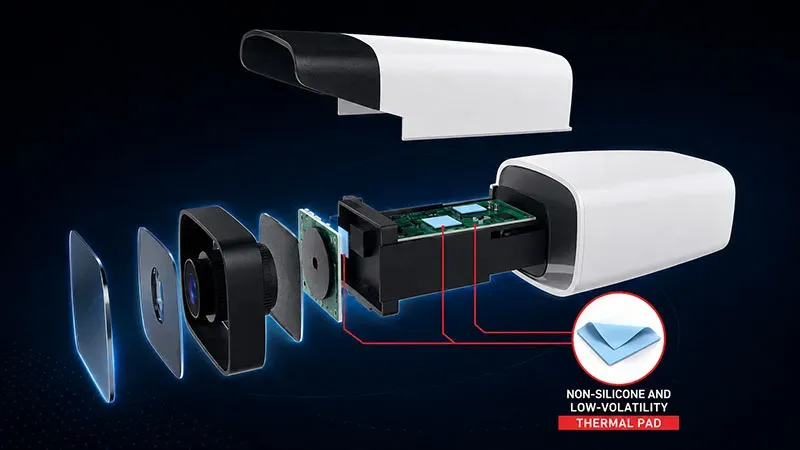
Nested performance logic looks like this:
environmental factors
· Temperature swings
· Chemical exposure
Control outcome
· sensor accuracy holds
· data integrity stays intact
· performance consistency follows
That’s why critical teams lean on Silicone-free Thermal dissipation for high-precision sensors—and why Sheen Technology keeps it in play.
4 Reasons Engineers Avoid Silicone In Sensors
Modern labs want Silicone-free Thermal dissipation for high-precision sensors because small material choices quietly decide data trust. This cluster breaks down why silicone keeps getting sidelined, using plain talk, real lab behavior, and practical thermal management lessons engineers live with daily.
Outgassing Effects on Measurement Precision
In sealed systems, Outgassing isn’t abstract; it’s a slow mess.
· Volatile compounds creep out under heat
· Contamination coats optics and MEMS
· Measurement accuracy slips before alarms ever trigger
Engineers often map the damage like this:
1) Heat rises
2) Silicone releases vapors
3) Precision drift appears
4) Sensor performance degrades
Nested impacts show up fast:
Device level
· Device reliability weakens
· Environmental stability collapses
That’s why Silicone-free Thermal dissipation for high-precision sensors keeps popping up in spec sheets, including solutions from Sheen Technology.
Is Silicone Hindering Your Sensor Calibration?
Calibration teams see Silicone residue as a silent saboteur.
· Calibration stability erodes
· Sensor drift grows
· Recalibration frequency spikes
A recent industry outlook noted rising concern around long-term drift control:
“Materials with volatile byproducts remain a top contributor to recalibration cycles in precision sensing systems.” — 2024 industrial sensing market outlook
Grouped effects feel familiar:
Process side
· Calibration process slows
· Measurement error compounds
Outcome
· Long-term accuracy fades
· Performance degradation follows
This is where silicone-free thermal dissipation designs pull ahead.
Maintenance Overhead: A Hidden Cost of Silicone-based Pads
On paper, silicone pads look cheap. In practice, Maintenance costs say otherwise.
· Cleaning procedures eat time
· Pad replacement adds Labor hours
· Downtime hurts throughput
| Issue Source | Impact Area | Cost Signal |
| Outgassing film | Rework | High |
| Residue buildup | Cleaning | Medium |
| Pad aging | Replacement | High |
| Thermal shift | Operational expenses | Rising |
Nested cost layers show why Thermal interface materials without silicone win long-term. Sheen Technology often highlights this during system audits.
Achieving Consistent Thermal Paths
Reliable sensors crave steady heat flow, not surprises.
✓ Thermal conductivity stays flat
✓ Heat transfer remains predictable
✓ Thermal resistance doesn’t wander
Engineers tune systems stepwise:
1) Lock Interface consistency
2) Control Temperature uniformity
3) Protect Heat dissipation
Grouped outcomes matter most:
· Stable Thermal management
· Strong Material stability
That’s why Silicone-free Thermal dissipation for high-precision sensors keeps gaining ground, especially in high-accuracy platforms supported by Sheen Technology.
Silicone Vs. Silicone-free Thermal Pads
Thermal design choices feel simple until sensors start drifting or sealed housings fail early. This comparison keeps it real, mixing shop-floor logic with lab-grade concerns. You’ll see how material chemistry, long-term behavior, and clean assembly all shape Silicone-free Thermal dissipation for high-precision sensors, especially where stability and trust matter most.
Silicone Thermal Pads
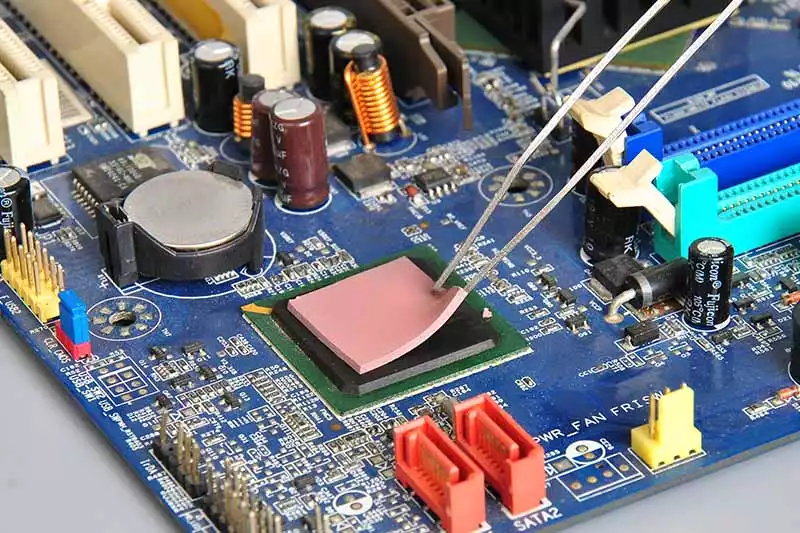
Silicone-based solutions are everywhere, mostly because they’re easy to use and forgiving under pressure. That convenience comes with trade-offs.
Material behavior
· Built from a flexible Polymer, often blended into Thermal grease or Thermal paste
· Known for steady Thermal conductivity and solid Dielectric properties
Operational concerns
Outgassing increases as temperature cycles stack up
· Leads to airborne residues
· Triggers surface Contamination on optics and sensors
· Volatility rises in sealed or vacuum-like environments
Long-term reality
· Short-term performance feels fine
· Extended use risks drift, residue, and cleanup headaches
That’s why silicone still fits consumer electronics, yet feels risky around precision sensing.
Silicone-free Thermal Pads

Non-silicone options target clean heat flow without chemical side effects. This is where Silicone-free Thermal dissipation for high-precision sensors earns its reputation.
Core composition
· Non-silicone Thermal interface material (TIM)
· Includes Graphite layers or Phase change material
Performance logic
· Low Low outgassing protects calibration
· Consistent Thermal performance over long duty cycles
· Built-in Sensor protection boosts Reliability
| Property | Silicone Pads | Silicone-free Pads |
| Outgassing rate | Moderate–High | Very Low |
| Thermal stability | Medium | High |
| Sensor compatibility | Limited | Excellent |
| Service lifespan (yrs) | 3–5 | 7–10 |
Manufacturers like Sheen Technology push this approach for non-silicone thermal dissipation, especially in tight sensor stacks. For teams chasing dependable Silicone-free Thermal dissipation for high-precision sensors, this path simply feels safer.
【Request Technical Consultation】 Every sensor platform has unique thermal, contamination, and reliability requirements. Whether you're designing optical modules, MEMS devices, automotive sensors, medical instruments, or industrial measurement equipment, our engineering team can help identify the most suitable silicone-free thermal management solution.
Sheen Thermal
Dongguan Sheen Electronic Technology Co., Ltd · Founded in 2008
Manufacturer of thermal interface materials and silicone foam for automotive electronics, energy storage, power electronics, communications and consumer electronics.
Certified
- ISO 9001:2015
- ISO 14001:2015
- IATF 16949:2016
What we supply
- Thermal conductivity Up to 90 W/m·K
- Thickness 0.3–10.0 mm
- Custom & samples Die-cut to drawing, 3–7 days