
 English
 usheenthermal

How to Improve Silicone-Free Thermal Dissipation for New Energy Batteries
Date:2026-06-11
How to Improve Silicone-Free Thermal Dissipation for New Energy Batteries
EV batteries are heating up fast, and Silicone-free thermal dissipation for new energy batteries is becoming a must-fix, not a side project.
Silicone materials crack under pressure, risking safety, contamination, and costly redesigns when production ramps.
Sheen Technology engineers noted in a 2025 brief that non-silicone interfaces improve stability and extend service life.
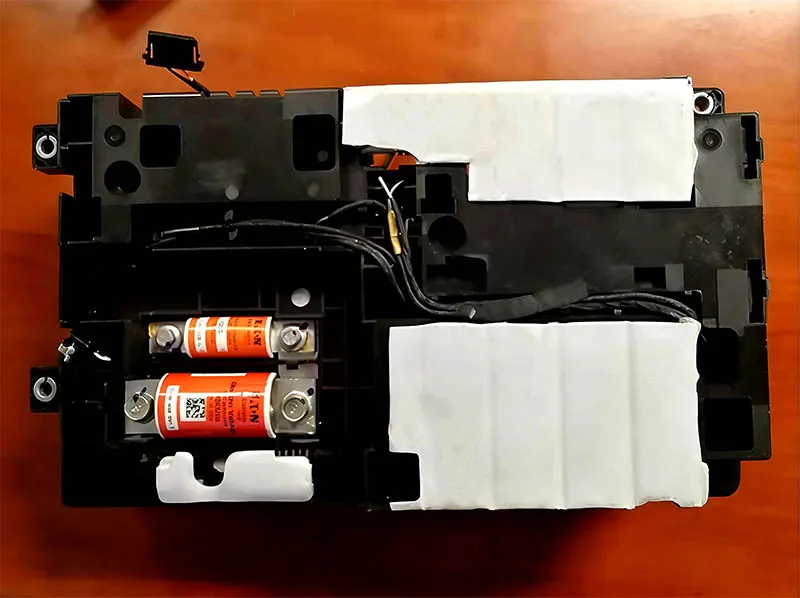
Key Points: Silicone-free thermal dissipation for new energy batteries
· Ensuring Uniform Heat Spread: Leverage high-conductivity non-silicone interfaces like boron nitride or graphene films to maintain consistent cell temperatures and prevent hotspots.
· Reducing Chemical Risks: Eliminate silicone to avoid outgassing and electrolyte contamination, enhancing long-term safety and stability within sealed battery modules.
· Enhancing Sustainability: Adopt recyclable ceramic or aluminum nitride composites for scalable thermal management, simplifying end-of-life processing and lowering environmental impact.
Why Silicone-Free Thermal Dissipation Matters for EV Packs
The push for cleaner mobility keeps shining a light on how battery packs stay cool, calm, and reliable. Silicone-free thermal dissipation for new energy batteries is no longer a niche idea. It’s a practical move that affects safety, lifespan, and recycling. With input from Sheen Technology, this discussion keeps it real, readable, and grounded in daily engineering choices.
Ensuring Uniform Heat Spread Without Silicone
· At the core sits uniform heat distribution, built on stable thermal conductivity and predictable heat transfer.· In a battery thermal management setup, a silicone-free thermal interface avoids soft spots that slow heat spreading.
Material behavior
· Silicone-free materials:keep contact pressure steady,limit pump-out during vibration.
Pack-level impact
· Cells:age at similar rates,dodge hot corners.
Silicone-free thermal dissipation for new energy batteries shows up here as smoother temperature maps. Short story: less guessing, fewer surprises, better nights of sleep for pack designers working with Sheen Technology.
Reducing Chemical Risks in EV Battery Modules
Chemical peace of mind matters. Chemical safety improves when hazardous materials like volatile silicones are removed from battery modules.
· Lower outgassing inside sealed packs
· Better material compatibility with electrolytes
· Clear wins in risk mitigation around toxic substances
A recent note from BloombergNEF (2025) hinted that material simplification is now a top-three safety driver in EV packs.
“Reducing internal chemical interactions is becoming as critical as thermal control in next-generation battery design.” — BloombergNEF, 2025
That’s why silicone-free thermal dissipation for new energy batteries keeps popping up in safety reviews.
Enhancing Sustainability in Large-Scale Battery Systems
· Sustainable materials:align with cleaner lifecycle assessment goals.· Resource efficiency:fewer additives,simpler sourcing.
· End-of-life:stronger recyclability,smaller environmental footprint.
For large-scale systems, these choices stretch battery longevity while easing recycling lines. Silicone-free thermal dissipation for new energy batteries fits naturally into this loop, and Sheen Technology continues to align thermal performance with long-term responsibility.
Types of Heat Conductive Materials for New Energy Batteries
Keeping batteries cool isn’t just engineering talk—it’s the difference between long life and early failure. As demand grows for Silicone-free thermal dissipation for new energy batteries, material choices now focus on safety, conductivity, and electrical insulation. From boron nitride powders to advanced graphene films, each solution supports safer, lighter, and more efficient battery cooling without silicone-based risks.
Hexagonal Boron Nitride Powder
When discussing Silicone-free thermal dissipation for new energy batteries, boron nitride or h-BN powder often tops the list. It works as a thermally conductive yet electrically insulating filler, ideal for battery modules operating at high temperature.
· High thermal conductivity
· Reliable electrical insulation
· Chemical stability in battery packs
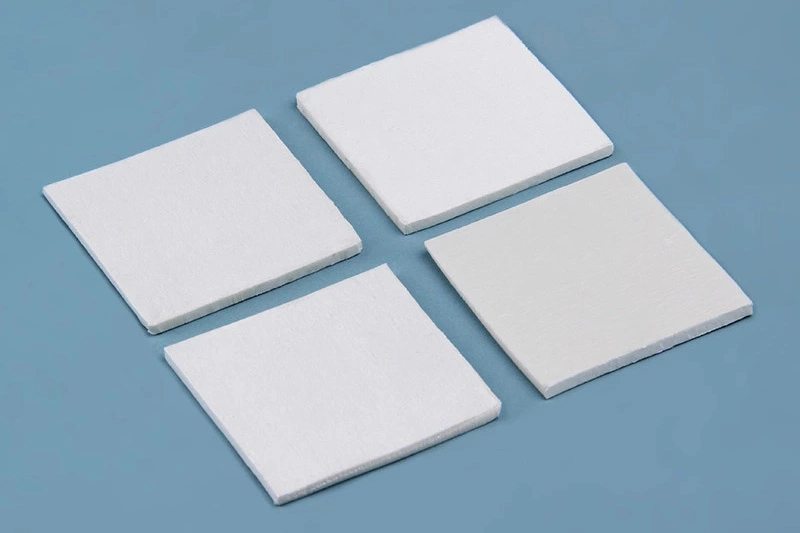
Sheen Technology Boron Nitride Thermal Pad Performance Snapshot:
| Properties | Unit | BSF1600-03(0.3mm) | BSF1600-05(0.5mm) | BSF1600-07(0.7mm) | Test Method |
| Color | - | White | White | White | Visual |
| Thermal Conductivity | W/m·K | ≥15(linear fitting) | ≥15(linear fitting) | ≥15(linear fitting) | ASTM D5471 |
| Thermal Resistance (@40psi) | ℃*in2/W | ≤0.06 | ≤0.08 | ≤0.1 | ASTM D5470 |
| Thickness | mm | 0.3 | 0.5 | 0.7 | ASTM D374 |
| Breakdown voltage | KV,@AC | ≥3.5 | ≥6 | ≥8 | ASTM D149 |
| Dielectric constant | F/m, @ 1MHz | ≤4.2 | ≤4.2 | ≤4.2 | ASTM D150 |
| Flammability rating | - | V-0 | V-0 | V-0 | UL 94 |
| RoHS | - | PASS | PASS | PASS | IEC 62321 |
| Halogen | - | PASS | PASS | PASS | EN 14582 |
| REACH | - | PASS | PASS | PASS | EN 14372 |
At Sheen Technology, optimized dispersion methods help maintain insulation while pushing heat away fast. Simple idea, serious impact.
Graphene-Enhanced Thermal Films
Graphene thermal film solutions are ultra-thin and incredibly efficient. In compact battery modules, lateral heat spreading matters more than ever.
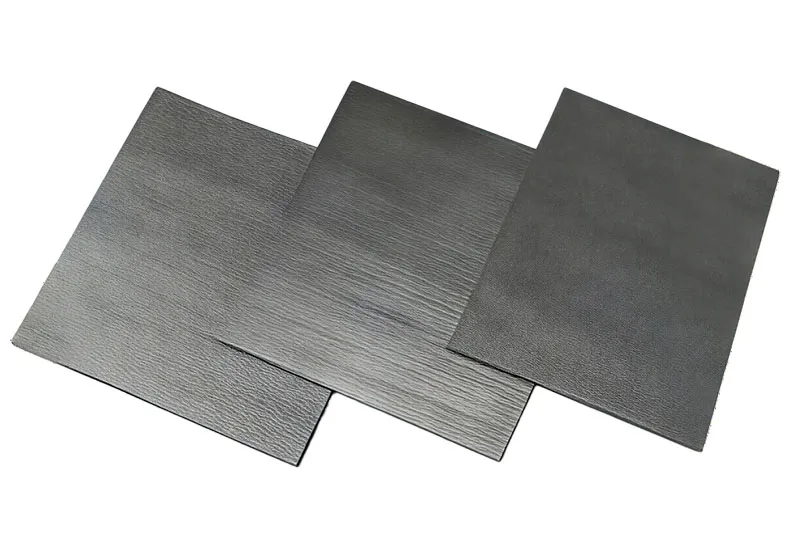
Key traits include:
♦ High in-plane high conductivity
♦ Flexible interface material
♦ Lightweight composite layers
For Silicone-free thermal dissipation for new energy batteries, these films sit between cells, spreading heat before it builds up. The result? Lower hotspot concentration and better pack consistency.
BloombergNEF noted in its 2025 battery materials outlook:
“Advanced thermal interface materials are becoming critical to next-generation EV battery reliability, particularly as energy density continues to rise.”
That shift explains why non-silicone thermal management options are gaining serious traction.
Aluminum Nitride Composites
Aluminum nitride (AlN) combines thermal conductivity, mechanical strength, and strong electrical insulation inside one structured matrix.
Application flow looks like this:
· Raw AlN composite preparation
· Compression molding into structural plates
· Integration within battery housing
· Heat transfer toward cooling plate
Short bursts of benefit:
· Tough under vibration
· Stable dielectric behavior
· Handles elevated temperature cycling
Compared to silicone-based fillers, this approach supports long-term silicone free battery cooling strategies, especially in high-voltage modules. Sheen Technology refines composite ratios to balance cost and performance without overdesign.
Ceramic-Based Thermal Pads
Ceramic thermal pad materials act as compressible interface material layers. Their strength lies in consistent heat transfer plus dielectric safety.
Under pressure, they:
· Adapt through slight conformability
· Maintain electrical insulation
· Resist breakdown at elevated heat
In multi-cell assemblies:
· ↓ Ceramic pad layer
· → Cooling plate
· → Liquid channel
That stacked path supports Silicone-free thermal dissipation for new energy batteries in real-world cycling. No silicone bleed. No pump-out. Just stable thermal contact.
For manufacturers aiming at long-life EV systems, ceramic solutions close the gap between performance and safety—clean, efficient, and built to last.
3 Reasons Silicone-Free Methods Boost Battery Lifespan
Silicone-free thermal dissipation for new energy batteries is getting real attention lately. Break the phrase down—silicone-free + thermal dissipation + new energy batteries—and it’s clear the focus is safer heat flow and longer life. Here’s why that shift matters.
Improved Thermal Cycling Resistance
Silicone-free thermal dissipation for new energy batteries strengthens thermal stability when temperature fluctuations hit hard during daily charging.
Core impact:
· Lower mechanical stress under repeated expansion.
· Reduced material degradation at bonding points.
· Extended cycle life in fast-charge fleets.
Structural advantages:
· Stable heat channels protect structural integrity.
· Better fatigue resistance across modules.
· Balanced thermal gradients improve battery lifespan.

Sheen Technology AF800 Silicone-free Thermal Pad Reliability Test Report:
| Test Items | Test Conditions | Test Equipment |
| High-Temperature Aging | 120℃,1008H | Precision Oven |
Criteria for Judging Test Results
| Performance Parameter | Initial Value | Acceptance Criteria |
| Thermal Conductivity(W/m*K) | 8.12 | ±15% |
| Hardness(shore 00) | 82 | ±10% |
| Density(g/cm³) | 3.43 | ±10% |
High-Temperature Aging Test Results
| High-Temperature Aging Test Record Sheet | ||||||||||
| Aging Time | H | 0 | 168 | 336 | 504 | 672 | 840 | 1008 | Change | Assessment |
| Thermal Conductivity | W/m*k | 8.12 | 8.46 | 8.32 | 8.64 | 8.01 | 8.33 | 8.29 | 2.05 | OK |
| Hardness | Shore00 | 82 | 76 | 83 | 82 | 85 | 88 | 90 | 8 | OK |
| Compression (20% Compression Rate) | g/cm³ | 3.43 | 3.43 | 3.42 | 3.44 | 3.43 | 3.41 | 3.45 | 0.58 | OK |
Test Conclusion: After undergoing 1008 hours of aging under various conditions, the AF800 passed performance testing and maintained an acceptable appearance. Therefore, the AF800 has passed reliability testing.
Need exact thermal conductivity, hardness, density, and aging-test data before you choose? Download the product datasheets to compare silicone-free thermal dissipation options for new energy batteries.
At Sheen Technology, engineers fine-tune thermal interfaces so heat moves smoothly, not in bursts. That steady rhythm keeps cracks and warping in check, especially in high-usage EV packs.
Minimized Electrochemical Compatibility Issues
When silicone interacts with electrolyte systems, trouble can brew. Silicone-free thermal dissipation for new energy batteries reduces risky electrolyte interaction and preserves electrode stability.
· Cleaner interfaces mean fewer parasitic reactions.
· Stable bonding lowers interface resistance.
· Improved material compatibility protects long-term charge transfer.
The IEA’s Global EV Outlook 2025 notes that battery durability and chemistry stability are now central to next-generation electric mobility competitiveness.
Sheen Technology applies silicone-free thermal management materials that limit chemical degradation, helping maintain internal purity over years of cycling.
Sustained Performance Under High Discharge Rates
High loads push power density to the edge. Heat rises fast. Voltage can dip.
Silicone-free thermal dissipation for new energy batteries tackles this through:
· Controlled heat generation pathways
· Lower internal resistance
· Reduced voltage drop
Result?
• Stronger capacity retention
• Smarter thermal management
• Better energy efficiency
In real-world driving—rapid acceleration, hill climbs, commercial fleets—silicone-free cooling materials keep discharge stable. Less heat spike, less stress, longer battery life. That’s the practical win behind silicone-free thermal solutions for modern energy storage.
Need a closer match for your project? Browse these related application pages to see where silicone-free thermal dissipation is used in real systems.
Battery Hotspots? Targeted Cooling Tactics
Battery packs don’t fail loudly; they overheat quietly. This cluster breaks down hands-on cooling tricks that chase heat right where it spikes. The focus stays practical, a bit street-smart, and grounded in silicone-free thermal dissipation for new energy batteries, the kind that keeps packs calm under pressure. Sheen Technology keeps this thinking close to real production floors.
Focused Heat Pipes for Localized Cooling
· Hotspots pop up fast, so Heat pipes step in with two-phase heat transfer that moves heat without drama.· For localized cooling, the wick structure matters as much as placement.
· In battery thermal management, this approach keeps hotspot mitigation tight.
Dig a layer deeper:
· Thermal dissipation stays silicone-free.
· Silicone-free thermal dissipation for new energy batteries fits well here, especially when heat pipes bridge cells to cooler frames.
Sheen Technology often pairs this with passive layouts to cut system complexity.
Phase Change Materials in Critical Zones
· Phase Change Materials soak heat using latent heat storage.· Melting and solidification buy time during peak load.
· Critical zones stay stable, even when current surges.
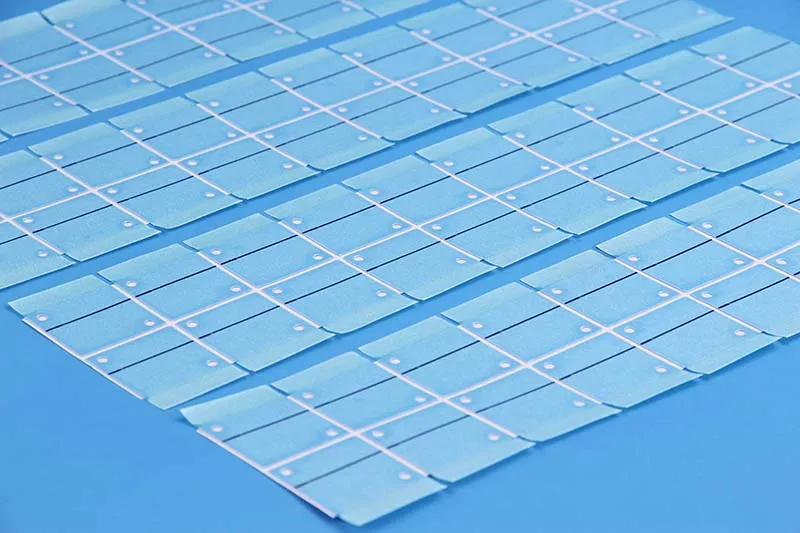
Short bursts of insight:
· No pumps.
· No noise.
· Strong battery temperature control.
This silicone-free path supports silicone-free thermal dissipation for new energy batteries, especially when PCMs sit near tabs and busbars. It’s quiet protection, baked into the thermal management system.
Microchannel Cold Plates Integration
Here’s how microchannel cold plates play out in real packs:
· Liquid cooling enters through tight flow distribution paths.
· Dense channels boost convective heat transfer.
· The plate acts as a compact heat exchanger.
BloombergNEF’s 2024 battery outlook notes that tighter cold-plate integration is now a baseline expectation for high-density EV packs.
Add context:
· Works cleanly with new energy batteries.
· Keeps thermal dissipation uniform.
Supports silicone-free thermal dissipation for new energy batteries at scale, something Sheen Technology designs around.
Active Liquid Jet Impingement Cooling
✓ Liquid jet impingement fires coolant straight at trouble spots.✓ Smart nozzle design handles high heat flux removal.
✓ This is true active cooling, fast and aggressive.
How it rolls out:
· Jets target cells with repeat heating.
· Convective cooling spikes right where needed.
· Hotspot mitigation improves without drowning the pack.
It’s bold, but still aligned with silicone-free thermal dissipation for new energy batteries. Used sparingly, it rounds out advanced battery thermal management, a direction Sheen Technology keeps exploring.
【Request a Custom Quote】 Not sure which silicone-free thermal dissipation solution fits your battery pack? Send us your target operating temperature, thickness target, application type, and performance requirements, and we can help recommend the right thermal solution for your project.
Sheen Thermal
Dongguan Sheen Electronic Technology Co., Ltd · Founded in 2008
Manufacturer of thermal interface materials and silicone foam for automotive electronics, energy storage, power electronics, communications and consumer electronics.
Certified
- ISO 9001:2015
- ISO 14001:2015
- IATF 16949:2016
What we supply
- Thermal conductivity Up to 90 W/m·K
- Thickness 0.3–10.0 mm
- Custom & samples Die-cut to drawing, 3–7 days