
 English
 usheenthermal

Get Custom Solutions from a Premier Silicone Thermal Pads Manufacturer
Date:2026-05-13
Get Custom Solutions from a Premier Silicone Thermal Pads Manufacturer
If your devices keep overheating, a silicone thermal pads manufacturer shouldn’t hand you cookie-cutter sheets; you need custom-built heat control that actually fits.
Downtime burns cash, engineers get grumpy, and deadlines slip through the cracks.
Sheen Technology engineers stated in their 2025 technical materials that precision formulation and controlled curing safeguard long-term thermal stability at scale.
Key Insights for Silicone Thermal Pads Manufacturer
➔ Tailor elastomer blends with boron nitride and aluminum oxide for unmatched thermal conductivity and stable operating temperatures.
➔ Employ precision die-cutting and controlled curing to ensure consistent Shore hardness, repeatable compressibility, and tight tolerances.
➔ Maintain ISO 9001, RoHS, REACH, and UL 94 V-0 compliance for traceable materials, validated safety data, and rigorous quality control.
➔ Accelerate development with quick-turn prototyping, thermal cycling tests, and integrated supplier qualification to minimize lead times and bolster supply-chain resilience.
Why Choose A Custom Silicone Thermal Pads Manufacturer
Choosing the right silicone thermal pads manufacturer can make or break your device’s heat control. From thermal conductivity to certifications, a serious thermal pads manufacturer brings real value, not just materials. Here’s what actually matters.
Unmatched Thermal Conductivity Through Silicone Elastomer Formulation
A high-level silicone thermal pads manufacturer focuses heavily on material formulation. It’s not just mixing a polymer and hoping for the best.
Core Material Design
1.1 Silicone elastomer base
· Stable across wide temperatures
· Excellent dielectric strength
1.2 Ceramic filler system
· Boron nitride for directional heat transfer
· Aluminum oxide to boost thermal conductivity
1.3 Optimized compound blending
· Even filler dispersion
· Reduced air voids in the thermal interface
Performance Benchmarks
| Material Type | Thermal Conductivity (W/m·K) | Operating Temp (°C) |
| Standard Silicone Pad | 1.0–15.0 | -40 to 120 |
| Boron Nitride Thermal Pad | 4.0–6.0 | -40 to 150 |
| Carbon Fiber Thermal Pad | 15.0-45.0 | -50 to 160 |
| Graphene Thermal Pad | 75.0-90.0 | -40 to 150 |
Application Impact
· Better contact with heat sinks
· Lower junction temperature in power modules
· Stable thermal interface for long-term cycling
A trusted silicone pad supplier like Sheen Technology tunes every material formulation to match LED drivers, EV battery packs, and telecom boards. That’s what separates a basic vendor from a true silicone thermal pads manufacturer.
Precision Die-Cutting & Molding for Consistent Shore Hardness
When sourcing from a silicone thermal pads manufacturer, production control matters just as much as raw materials.
Start with controlled molding. The manufacturing process regulates temperature, pressure, and curing time. That’s how stable shore hardness is achieved.
Then comes die-cutting:
· Tight dimensional accuracy
· Clean edge finish
· Repeatable fabrication results
Tooling design affects everything. A skilled thermal pad manufacturer calibrates tooling depth and cutting force to avoid material tearing. That protects material consistency and compressibility.
Quick breakdown:
· Mold preparation
· Controlled curing
· Precision die-cutting
· Final thickness inspection
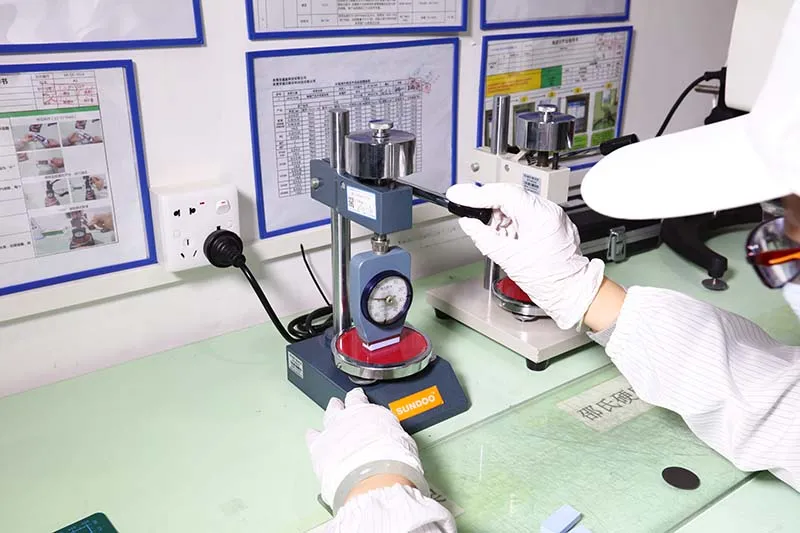
Small differences in Shore 00 hardness can shift contact resistance. Good thermal pad suppliers track every batch. A serious silicone thermal pads manufacturer documents curing curves and tolerance data so your converters and MOSFET modules don’t overheat.
ISO 9001 & RoHS Compliance: Quality Control You Can Trust
Compliance isn’t paperwork. For a silicone thermal pads manufacturer, it’s daily discipline.
ISO 9001 Framework
1.1 Documented quality control procedures
1.2 Traceable raw material batches
1.3 Continuous audit cycles aligned with global manufacturing standards
RoHS compliance & Environmental Safety
· Heavy metal restriction testing
· Verified regulatory standards
· Support for REACH declarations
Safety & Reliability Certifications
· UL 94 V-0 flame rating
· MSDS validation
· Long-term product reliability testing
According to the International Organization for Standardization (ISO) 2024 annual review, certified quality systems continue to reduce manufacturing defects and improve supply chain transparency across industrial components.
For buyers searching “silicone thermal pads manufacturer” online, certifications reduce risk fast. Sheen Technology aligns certification management with real production data, not just files on a shelf.
In the end, picking a capable silicone thermal pads manufacturer means stronger thermal conductivity, stable shore hardness, and verified RoHS compliance. That’s how a thermal interface manufacturer earns long-term trust.
4 Key Benefits Of Custom Thermal Pad Solutions
Custom solutions from a trusted silicone thermal pads manufacturer can make or break thermal control in high-density electronics. From CPU cooling to telecom cabinets, tailored materials boost stability and safety. If you're sourcing from a serious silicone thermal pads manufacturer, here’s what really counts in day-to-day applications.
Benefit 1: Optimized Operating Temperature Range in CPU Cooling
A qualified silicone thermal pads manufacturer tunes formulations for stable thermal management across a wide operating temperature span.
In CPU and SSD environments:
Peak loads push electronic components hard
· Stable heat dissipation prevents throttling
· Balanced temperature range reduces aging
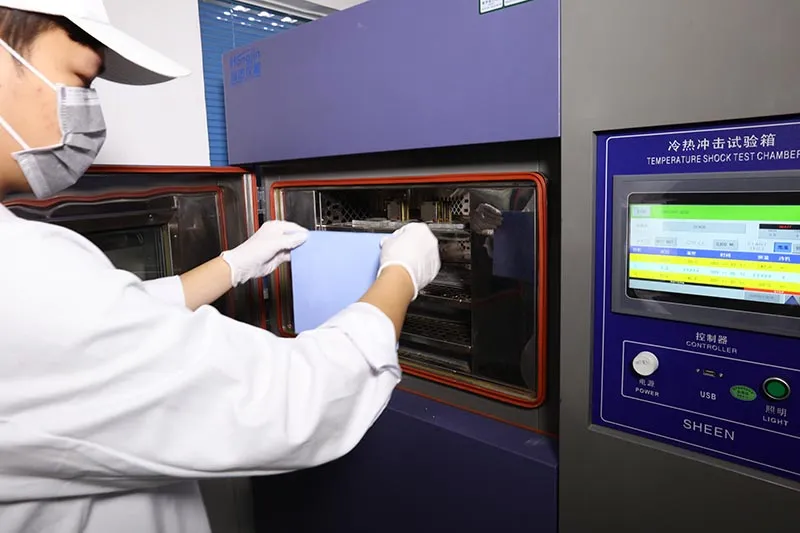
Material design focus:
· Controlled filler dispersion:Consistent conductivity at 25°C–150°C
· Silicone elasticity:Maintains surface contact during thermal cycling
For gaming rigs and data servers, steady cooling isn’t a luxury. It’s survival.
Benefit 2: Superior Dielectric Strength for Telecom Infrastructure
In telecom infrastructure, electrical safety matters as much as cooling.
Core requirements:
· High dielectric strength
· Protects power electronics
· Supports dense communication systems
Reliable electrical insulation
· Prevents short circuits in compact electronic devices
From a thermal pad manufacturer perspective:
· Material purity
· Uniform thickness control
· Stable breakdown voltage performance
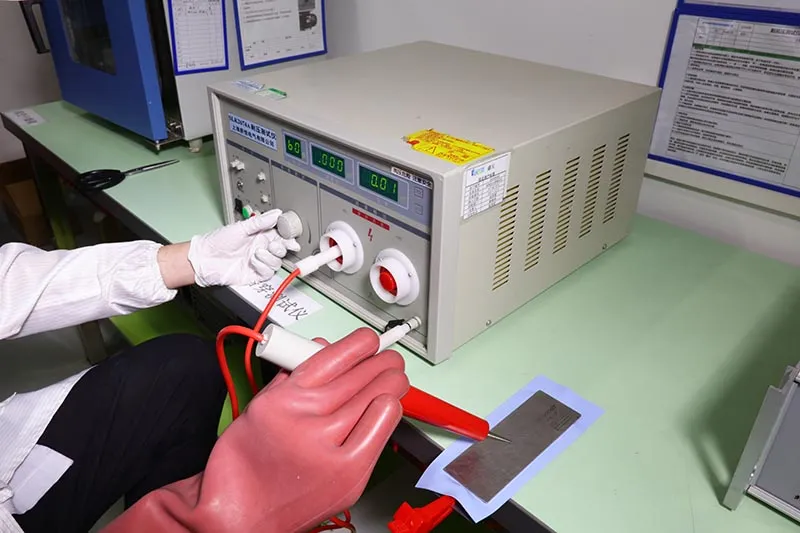
A professional silicone thermal pads manufacturer aligns insulation and heat flow so base stations stay online, even in rough climates.
Benefit 3: Enhanced Compressibility with Boron Nitride Fillers
Compressibility isn’t just a spec on paper.
· Fine-tuned boron nitride distribution
· Balanced material properties
· Controlled rebound after compression
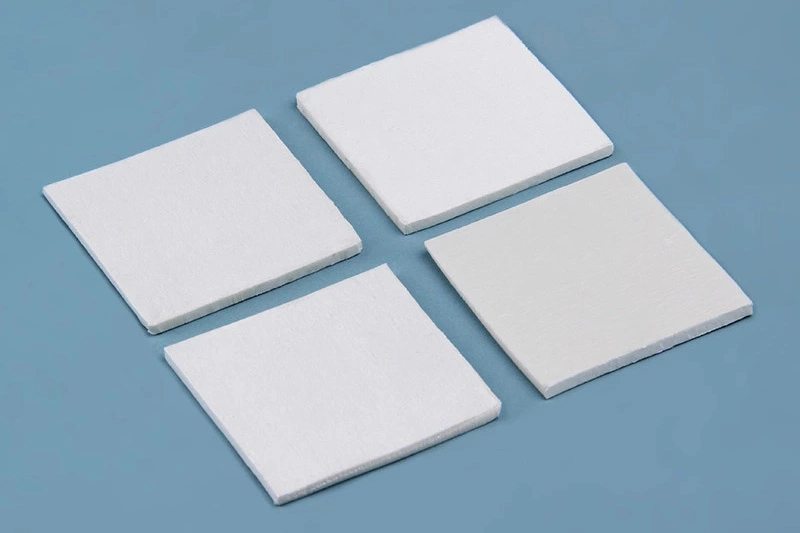
This mix improves gap filler action inside tight housings.
· Better surface wetting
· Lower interface pressure
· Improved heat transfer
For consumer electronics, that means fewer hotspots and longer device life. A dependable silicone thermal pads manufacturer understands how filler loading shapes every thermal interface material performance curve.
Benefit 4: Reduced Thermal Impedance via High-Purity Aluminum Oxide
Lower thermal impedance equals faster heat flow. High-grade aluminum oxide boosts heat conduction while controlling thermal resistance in automotive modules.
| Material Composition | Thermal Conductivity (W/m·K) | Thermal Impedance (°C·cm²/W) | Purity Level (%) |
| Standard Al₂O₃ Mix | 1.5 | 0.45 | 92 |
| Mid-Grade Blend | 2.0 | 0.32 | 95 |
| High-Purity Al₂O₃ | 3.0 | 0.21 | 99 |
| Optimized Custom | 3.5 | 0.18 | 99+ |
Impact on control units:
· Faster heat spread to sinks
· Stable interface material bonding
· Longer service life
That’s why manufacturers turn to Sheen Technology, a proven silicone thermal pads manufacturer delivering precision-built silicone pads for demanding heat control jobs.
3 Steps To Design Your Ideal Thermal Pad
Designing a high-performance pad isn’t guesswork. A skilled silicone thermal pads manufacturer balances materials, compliance, and production control to hit tight specs. If you're sourcing from a reliable silicone thermal pads manufacturer like Sheen Technology, you’ll notice how precision shapes real-world heat control.
Step 1 – Specify Thermal Conductivity & Flammability Rating
A professional silicone thermal pads manufacturer begins with clear material specification targets. Performance starts on paper before it hits the lab.
Core performance requirements
Thermal control
· Target thermal conductivity (W/m·K) based on device watt density
· Required heat transfer efficiency across gaps
Electrical insulation
· Dielectric strength (kV/mm)
· Volume resistivity
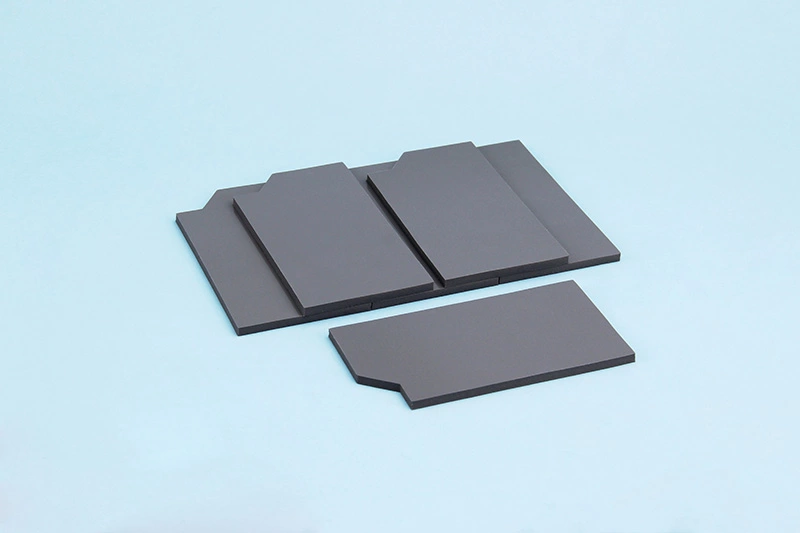
Sheen Thermal pad UL 90 Flame test records
| Sample: | Thermal Pad | ||
| Thickness: | 3.0mm | Colo: | Grey |
| Ambient Temp: | 23.5℃ | Humidity: | 50 %RH |
Materials classifications:
| Criteria conditions | V-0 | V-1 | V-2 |
| After flame time for each individual specimen t1 or t2 | ≤10s | ≤30s | ≤30s |
| Total after flame time for any condition set (t1 plus t2 for the 5 specimens | ≤50s | ≤250s | ≤250s |
| After flame plus afterglow time for each Individual specimen after the second flame application (t2 +t3 ) | ≤30s | ≤60s | ≤60s |
| After flame or afterglow of any specimen up to the holding clamp | No | No | No |
| Cotton indicator ignited by flaming particles or drops | No | No | Yes |
| No. | t1(s) | t2(s) | t3(s) | All sample t1+t2≤50S | Single sample t2+t3≤30S | Does it light the cotton | Whether the burnt out | Level of compliance |
| 1 | 0.9 | 0.8 | 0.2 | Meet | Meet | No | No | V-0 |
| 2 | 0.8 | 0.6 | 0.2 | No | No | |||
| 3 | 0.8 | 0.5 | 0.2 | No | No | |||
| 4 | 0.8 | 0.6 | 0.2 | No | No | |||
| 5 | 0.7 | 0.5 | 0.2 | No | No |
Safety compliance
· UL 94 flammability rating (commonly V-0)
· Industry safety standards for EV, telecom, or consumer electronics
Environmental boundaries
· Operating temperature range (e.g., -40°C to 200°C)
· Long-term aging stability
An experienced silicone pad supplier translates these specs into validated lab data, not vague promises.
Step 2 – Choose Raw Material Constituents and Filler Particles
Material chemistry defines feel, durability, and thermal flow. A trusted silicone thermal pads manufacturer fine-tunes material composition down to micro-scale dispersion.
Silicone matrix
· Polymer chain structure
· Crosslink density
Curing chemistry
· Peroxide or platinum system
Functional additives
· Adhesion promoter
· Processing additives
Thermal enhancement
· Ceramic filler particles
· Alumina
· Aluminum nitride
· Filler loading ratio
· Impacts hardness and impedance
A capable thermal interface manufacturer balances compressibility and output, so the pad doesn’t feel like a brick under pressure.
Step 3 – Finalize Manufacturing Process: Mixing, Laminating, Slitting
Production discipline separates average factories from a dependable silicone thermal pads manufacturer.
Controlled manufacturing process
Precision mixing
· Vacuum dispersion of fillers
· Uniform particle distribution
Sheet formation
· Calender coating
· Thickness calibration
Surface finishing
· Laminating with release liner
· Adhesive layering if required
Downstream fabrication
· CNC or die-cut customization
· Tight-tolerance slitting
· Post-curing stabilization
Sheen Technology manages these production steps under strict process control, ensuring dimensional stability and repeatable thermal output. That’s how a serious silicone thermal pads manufacturer delivers pads that work right the first time—and keep working.
Thermal Pad Thickness Selection Chart
Use the chart below as a practical starting point when selecting thermal pad thickness. Final selection should always account for compression, surface flatness, mounting pressure, and the actual gap between components.
| Measured Gap | Suggested Starting Thickness | Compression Target | Typical Applications |
|---|---|---|---|
| 0.15–0.30 mm | 0.3 mm | 10–20% | Flat ICs, SSD controllers, low-profile modules |
| 0.35–0.70 mm | 0.5 mm | 15–25% | Compact boards, memory modules, thin assemblies |
| 0.80–1.20 mm | 1.0 mm | 20–30% | General electronics, laptops, telecom boards |
| 1.30–1.80 mm | 1.5 mm | 20–30% | VRMs, MOSFETs, power devices, uneven layouts |
| 1.90–2.50 mm | 2.0 mm | 20–35% | PSU sections, large gaps, vibration-prone systems |
If the gap falls between two sizes, choose the thickness that achieves full contact without over-compressing the pad. Too little compression can leave air gaps; too much can reduce recovery and long-term stability. If you Need exact thickness, conductivity, or compliance details before you choose? Download the product datasheets to review thermal conductivity, operating temperature range, dielectric strength, and available custom thickness options.
Scenario: Rapid Prototyping With Custom Thermal Pads
Speed matters when hardware teams are racing against launch dates. Working with a reliable silicone thermal pads manufacturer keeps Prototyping, validation, and sourcing tight, practical, and drama-free.
Faster Iterations with Quick-Turn Die-Cutting Samples
When a silicone thermal pads manufacturer supports fast Die-cutting and custom Samples, iteration stops being a bottleneck.
Iterations in early Development
· Rapid CAD-to-tool conversion
· Short-cycle Manufacturing process adjustments
· On-demand thickness tuning for tight Design tolerances
Rapid turnaround workflow
Material selection from qualified silicone thermal pad manufacturer inventory
· Prototype die-cut within 48–72 hours
· Fit check on PCB and heat sink stack-up
· Compression and conductivity validation
Prototyping performance checks
· Thermal conductivity range comparison
· Compression set under 30% strain
· Adhesion stability after rework
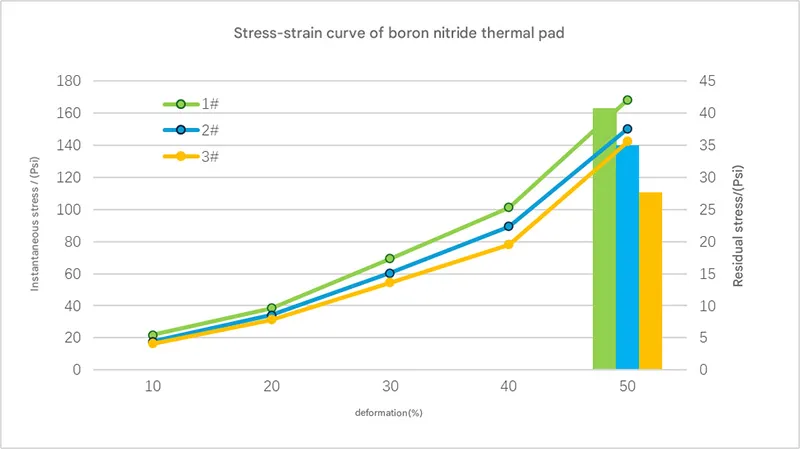
Boron Nitride Thermal Pad: Instantaneous Compressive Stress Performance test
| Test Item | Test Data | Deformation | ||||
| Instantaneous Stress (Psi) at 10–50% Deformation | Sample | 10% | 20% | 30% | 40% | 50% |
| 1 | 21.80 | 38.51 | 69.42 | 101.14 | 168.26 | |
| 2 | 17.65 | 34.12 | 60.32 | 89.35 | 150.37 | |
| 3 | 16.35 | 31.28 | 54.36 | 78.24 | 142.35 | |
| Average Value | 18.60 | 34.63 | 61.36 | 89.57 | 153.66 | |
Boron Nitride Thermal Pad: Residual Stress Performance test
| Test Item | Test Data | Sample | Average Value | ||
| 50% Deformation | 1 | 2 | 3 | ||
| Instantaneous Stress (Psi) at 50% Deformation | / | 40.61 | 34.96 | 27.62 | 34.40 |
Boron Nitride Thermal Pad: Recovery Rate test
| Test Item | Test Data | Sample | Average Value | ||
| 50% Deformation | 1 | 2 | 3 | ||
| Recovery Rate (%) | / | 28 | 27 | 26 | 27 |
A trusted silicone thermal pads manufacturer like Sheen Technology helps teams skip endless revisions. Instead of waiting weeks, engineers tweak hardness, filler ratio, or surface treatment and get updated Samples fast. That’s how real-world Development keeps moving.
Thermal Cycling Test Insights for Automotive Control Units
Automotive Control units demand serious Reliability. A seasoned silicone thermal pads manufacturer plans for harsh Thermal cycling from day one.Testing framework
· High/low temperature cycling: -40°C to 125°C
· Thermal shock transfer under 5 minutes
· Continuous Heat dissipation monitoring
Performance validation layers
· Initial thermal impedance baseline
· Post-500-cycle impedance shift review
· Elongation at break after aging
· Surface crack inspection
Automotive-grade checkpoints
· Material creep resistance
· Oil and humidity tolerance
· Long-term Validation stability
“Automotive electronics will remain a key driver for advanced thermal interface materials through 2025 and beyond,” notes a 2025 MarketsandMarkets report, highlighting steady growth tied to EV control systems and power modules.
Working with Sheen Technology, a dedicated silicone thermal pads manufacturer, ensures pads keep shape, maintain Performance, and stay consistent after brutal cycling.
Integrating Supplier Qualification into Lead Time Management
A dependable silicone thermal pads manufacturer is more than a vendor; it’s part of your Supply chain rhythm.
Start with clear Supplier qualification criteria: material traceability, in-house mixing, and stable filler sourcing. Add a tight Evaluation process covering:
· Factory audit results
· Capacity planning data
· Backup raw material channels
Then align Procurement and engineering. Short Lead time only works when forecasts match die-cut capacity. Good Management connects:
· Forecast sharing
· Safety stock planning
· Logistics buffer windows
A strategic Partnership with Sheen Technology, an experienced thermal pad manufacturer, boosts Efficiency and keeps custom silicone pads flowing even during peak demand. That’s how smart teams stay ahead without scrambling at the last minute.
Need Request a Custom Thermal Pad Recommendation?Send your stack-up drawing, measured gap, target operating temperature, and application type, and our team can help recommend the right silicone thermal pad structure, thickness, and filler system for your build.
FAQs about Silicone Thermal Pads Manufacturer
Why choose a professional silicone thermal pads manufacturer for critical electronics?
A qualified silicone thermal pads manufacturer shapes performance at the material level and the production line.
· Material design: Silicone elastomer blended with ceramic fillers such as boron nitride or aluminum oxide to tune thermal conductivity and thermal impedance.
· Process control: Mixing → molding → curing process → die-cutting or slitting, all governed by ISO 9001 quality control procedures.
· Application focus: Stable compressibility and dielectric strength for CPU cooling, LED modules, and power converters.
Behind every pad is disciplined supplier qualification, RoHS compliance, and a clear material safety data sheet—small details that protect high-value assemblies.
What determines the thermal conductivity and overall performance of a thermal pad?
Performance begins inside the polymer matrix and ends at the heat sink surface.
· Filler particles: Type, size, and loading of boron nitride or aluminum oxide directly affect thermal conductivity.
· Formulation balance: Ratio of silicone polymer, crosslinker, and curing agent influences Shore hardness and compressibility.
· Curing process stability: Temperature and time alter thermal impedance and operating temperature range.
Final validation often includes thermal cycling tests, differential scanning calorimetry, and thermal gravimetric analysis to confirm long-term reliability.
How is consistent quality maintained in mass production?
Consistency is built step by step, not inspected in at the end.
· Incoming raw materials checked for viscosity and filler distribution
· Inprocess tensile strength measurement and elongation at break monitoring
· Final inspection for uniform Shore hardness and surface integrity
Compliance layers add security: ISO 9001 systems, REACH regulation records, RoHS compliance, and UL 94 V-0 flammability rating for telecommunication infrastructure or automotive control units. The result is predictable performance under pressure.
How can Shore hardness and compressibility be customized for different devices?
Each device demands a different touch.
Adjustment begins in mixing, where silicone polymer, adhesion promoter, and flame retardant additives are balanced. During molding and laminating, fiberglass reinforcement or acrylic adhesive can be integrated for structural support.
| Parameter | Adjustment Method | Typical Application |
| Shore hardness | Modify crosslinker ratio | Consumer electronics |
| Compressibility | Optimize filler loading | Solid-state drives |
| Dielectric strength | Refine polymer matrix | Power converters |
Prototype trials followed by thermal shock tests ensure the pad conforms without sacrificing dielectric strength.
How does supplier capability affect lead time and large-scale delivery?
A reliable silicone thermal pads manufacturer protects both schedule and performance.
Strong supplier reliability supports material availability for silicone elastomer and ceramic fillers. Coordinated logistics planning and inventory optimization reduce production pauses. A clear global sourcing strategy strengthens supply chain resilience during sudden demand spikes.
When manufacturing discipline meets smart lead time management, projects for automotive control units or CPU cooling systems move forward without costly delays.
Sheen Thermal
Dongguan Sheen Electronic Technology Co., Ltd · Founded in 2008
Manufacturer of thermal interface materials and silicone foam for automotive electronics, energy storage, power electronics, communications and consumer electronics.
Certified
- ISO 9001:2015
- ISO 14001:2015
- IATF 16949:2016
What we supply
- Thermal conductivity Up to 90 W/m·K
- Thickness 0.3–10.0 mm
- Custom & samples Die-cut to drawing, 3–7 days