
 English
 usheenthermal

Testing the Phase Change Thermal Pad: Is It Worth the Hype?
Date:2026-06-01
Testing the Phase Change Thermal Pad: Is It Worth the Hype?
Phase change thermal pad hype is everywhere, but overheating hardware and messy grease still drain budgets, stall production, and quietly wreck reliability in real operations.
Sheen Technology engineers in 2025 briefs describe controlled melt behavior, stable thickness, and resistance to pump out, cutting interface resistance under heavy cycling.
So the real question sticks: does it really earn its keep on the line, or just sound slick on paper?
Symphony of Heat: Phase change thermal pad Key Points
➔ Combining paraffin wax and silicone base yields optimal conformability and lowers interface resistance on uneven CPU, GPU, and ASIC surfaces.
➔ Graphite fillers form efficient thermal pathways in the polymer matrix, boosting conductivity and cutting thermal impedance under heavy cycling.
➔ Engineered phase change temperature and encapsulation layer ensure wide operating range, strong pump-out resistance, and long-term thermal cycling stability for reliable performance.
Why Choose A Phase Change Thermal Pad
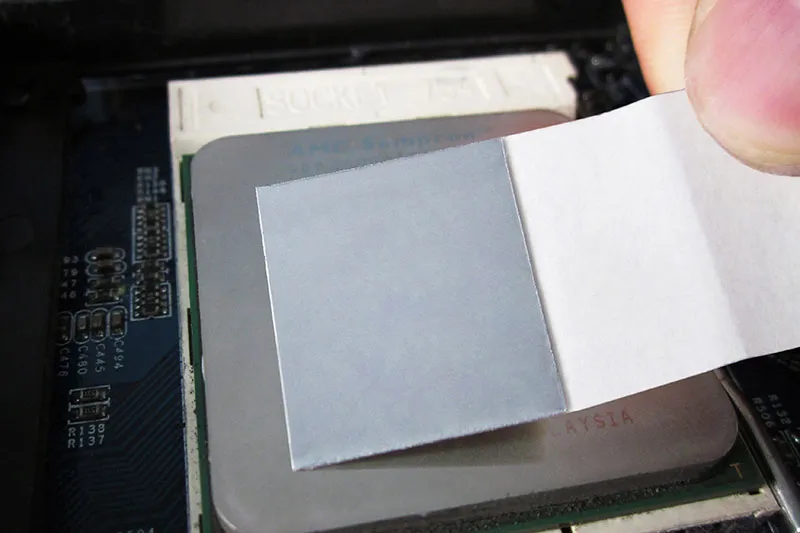
Choosing a Phase change thermal pad isn’t just about swapping out grease for something cleaner. It’s about smarter heat control, tighter contact, and long-term peace of mind. From data centers to gaming rigs, a well-designed phase change pad keeps chips cool without the mess.
Combining Paraffin Wax and Silicone Base for Optimal Conformability
A Phase change thermal pad works because of its Material Combination. At the core:
· Paraffin Wax activates during Phase Change
· Silicone Base maintains elasticity
· The Thermal Pad adapts for Optimal Conformability
Here’s how the layers interact:
· Heat rises from the chip.
· Paraffin Wax softens at its designed phase transition point.
· The softened layer flows microscopically.
· The Silicone Base controls spread and keeps structure intact.
This creates:
· Better surface wetting
· Reduced air gaps
· Lower contact resistance
Nested performance logic:
Conformability depends on
· Surface roughness
· Mounting pressure
· Controlled flow range
Stability relies on
· Elastic recovery
· Consistent phase temperature
With Sheen Technology, the Phase change thermal pad balances softness and structure, so CPUs and GPUs stay tightly coupled to heat sinks without messy squeeze-out.
How Graphite Fillers Boost Thermal Conductivity and Cut Thermal Impedance
Inside the polymer matrix, Graphite Fillers act like express lanes for heat. That’s the real Performance Boost.
Core effects include:
· Higher Thermal Conductivity
· Reduced Thermal Impedance
· Faster Heat Transfer
Mechanism breakdown:
· Graphite particles align under pressure.
· Conductive pathways form.
· Heat spreads laterally and vertically.
Performance layers:
Base polymer
· Provides flexibility
Embedded graphite network
· Enhances conduction
· Maintains structural integrity
Compared with silicone-only pads, a phase change interface filled with graphite transfers heat more efficiently under load spikes. That’s why a phase change thermal pad often outperforms standard gap fillers in compact electronics.
Wide Operating Temperature Range Suits CPUs, GPUs, and ASICs
An advanced Phase change thermal pad must handle real-world heat swings.
Key factors:
· Controlled Operating Temperature Range
· Stable polymer backbone
· Reliable Temperature Suitability
Application alignment:
· Consumer hardware:CPUs、GPUs
· Industrial systems:ASICs,Edge servers
Compatibility layers:
· Start-up phase:Pad remains solid for clean assembly
· Active phase:Softens for optimal interface contact
· Cool-down:Re-solidifies without migration
This temperature adaptability ensures consistent Component Compatibility, from gaming PCs to telecom racks.
Ensuring Long-Term Reliability with Superior Thermal Cycling Stability
Durability isn’t optional. It’s the baseline.
A quality Phase change thermal pad delivers:
· Long-Term Reliability
· Strong Thermal Cycling Stability
· Resistance to pump-out
Reliability framework:
Material level
· Stable phase transition chemistry
· Controlled expansion rate
Structural level
· Encapsulation layer
· Anti-bleed formulation
Lifecycle level
· Maintained softness
· Stable thermal resistance
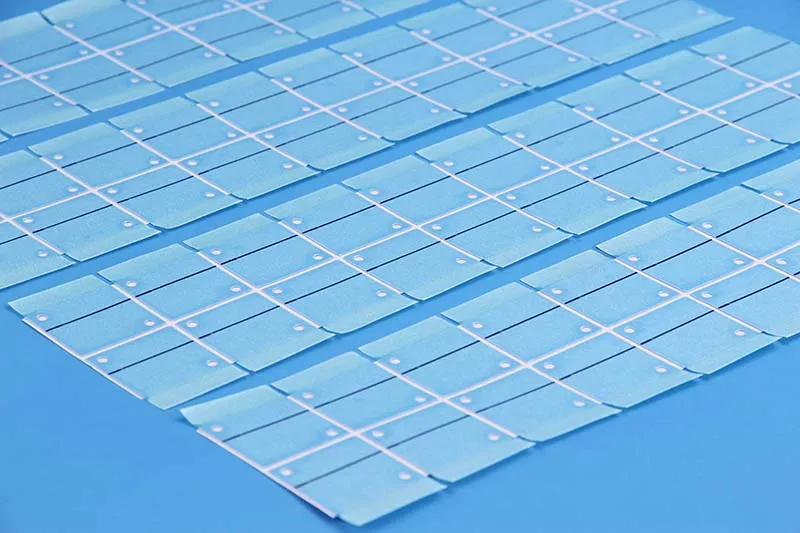
Sheen technology SP205A-60 phase change thermal sheet Reliability Test Report
| Test Items | Test Conditions | Test Equipment |
| High-Temperature Aging | 100℃,1000H | Precision Oven |
| Constant Temperature & Humidity | 85℃、85%RH,1000H | Constant Temperature & Humidity Chamber |
| Thermal Shock | -20℃~80℃,1000H | Constant Temperature & Humidity Chamber |
Criteria for Judging Test Results
| Performance Parameter | Initial Value | Acceptance Criteria |
| Thermal Conductivity(W/m*K) | 6.07 | ±30% |
| Thermal Resistance(℃*in²/W,@10 psi) | 0.082 | ±40% |
| Appearance | Smooth surface, uniform color | No abnormalities (e.g., powdering, discoloration) |
High-Temperature Aging Test Results
| High-Temperature Aging Test Record Sheet | |||||||||
| Aging Time | H | 0 | 200 | 400 | 600 | 800 | 1000 | Change | Assessment |
| Thermal Conductivity | W/m*k | 6.07 | 5.74 | 5.45 | 5.25 | 5.08 | 5.00 | -17.6% | OK |
| Thermal Resistance | ℃*in²/W,@10 psi | 0.082 | 0.084 | 0.089 | 0.095 | 0.102 | 0.107 | +30.5% | OK |
| Appearance | / | No change | No change | No change | No change | Slightly yellow | Slightly yellow | Slightly yellow | OK |
Constant Temperature and Humidity Test Results
| Constant Temperature and Humidity Test Record Sheet | |||||||||
| Aging Time | H | 0 | 200 | 400 | 600 | 800 | 1000 | Change | Assessment |
| Thermal Conductivity | W/m*k | 6.07 | 5.81 | 5.50 | 5.31 | 5.22 | 5.09 | -16.1% | OK |
| Thermal Resistance | ℃*in²/W,@10 psi | 0.082 | 0.090 | 0.094 | 0.098 | 0.101 | 0.105 | +28.0% | OK |
| Appearance | / | No change | No change | No change | No change | Slightly yellow | Slightly yellow | Slightly yellow | OK |
Thermal Shock Test Results
| Thermal Shock Test Record Sheet | |||||||||
| Aging Time | H | 0 | 200 | 400 | 600 | 800 | 1000 | Change | Assessment |
| Thermal Conductivity | W/m*k | 6.07 | 5.72 | 5.50 | 5.33 | 5.18 | 5.07 | -16.5% | OK |
| Thermal Resistance | ℃*in²/W,@10 psi | 0.082 | 0.086 | 0.092 | 0.099 | 0.105 | 0.110 | +34.1% | OK |
| Appearance | / | No change | No change | No change | No change | Slightly yellow | Slightly yellow | Slightly yellow | OK |
Test Conclusion: After aging for 1000 hours under various conditions, the SP205A-60 phase change thermal sheet maintained satisfactory performance with no changes to its appearance. Therefore, the reliability test results are deemed satisfactory.
Repeated heating and cooling can break weak interfaces. A well-engineered phase change pad maintains Durability, Stability, and Performance Longevity over thousands of cycles.
That’s the edge Sheen Technology builds into every thermal interface solution—cool, clean, and built to last.
Need exact thermal conductivity, phase change temperature, thickness range, and reliability data before you choose? Download the product datasheets to compare phase change thermal pad options.
Phase Change Pad Vs. Thermal Grease
Thermal management is not just lab talk anymore. From gaming rigs to EV power modules, picking the right interface material matters. Here’s how Phase change thermal pad solutions stack up against traditional grease in real-world use.
Phase Change Thermal Pad
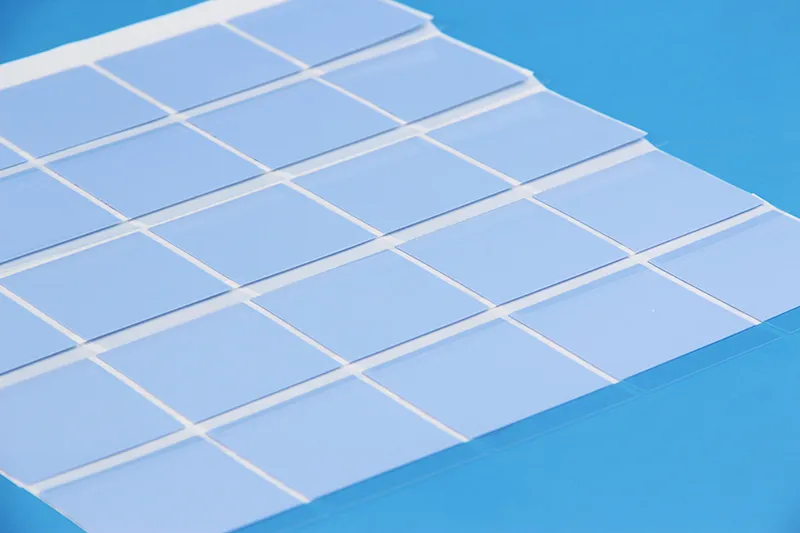
A Phase change thermal pad works through controlled phase transition, softening at its defined melting temperature to fill surface voids without messy squeeze-out. It acts as a stable thermal interface material, designed for repeatable thermal performance across cycles.
At a material level:
· Thermal conductivity remains consistent after cycling
· Predictable application method reduces assembly errors
· Limited reusability, but stable structure
Sheen technology phase change thermal pad Performance snapshot:
| Properties | Color | Reinforcement Carrier | Thermal Conductivity | Thermal Impedance (@50psi) | Thickness | Phase Change Temp. |
|---|---|---|---|---|---|---|
| Unit | - | - | W/m·K | ℃*in2/W | mm | ℃ |
| SP205A-30 | Gray | - | 3.0 | 0.05 | 0.2 | 45 ~ 55 |
| SP205A-35 | Gray | - | 3.5 | 0.04 | 0.2 | 45 ~ 55 |
| SP205A-40 | Gray | - | 4.0 | 0.03 | 0.2 | 45 ~ 55 |
| SP205A-50 | Gray | - | 5.0 | 0.02 | 0.3 | 45 ~ 55 |
| SP205A-60 | Gray | - | 6.0 | 0.015 | 0.3 | 45 ~ 55 |
| SP205A-AL-40 | Green/Gray | Aluminum Foil | 4.0 | 0.06 | 0.18 | 50 ~ 60 |
| SP350P | Green | Polyimide | 1.8 | 0.4 (30psi) | 0.13 ~ 0.5 | 45 ~ 55 |
| Test Method | Visual | - | ASTM D5470 | ASTM D5470 | ASTM D751 | ASTM D3418 |
A modern phase change pad avoids the guesswork of spreading compound. In dense power electronics, a Phase change thermal pad keeps contact uniform, especially where mounting pressure varies.
“Advanced phase change interface materials are gaining share in power electronics due to improved reliability under thermal cycling,” noted a 2025 thermal management outlook from Yole Group.
Manufacturers like Sheen Technology refine phase change thermal pad formulations to balance thermal conductivity and controlled flow, making the switch feel practical, not experimental.
Thermal Grease
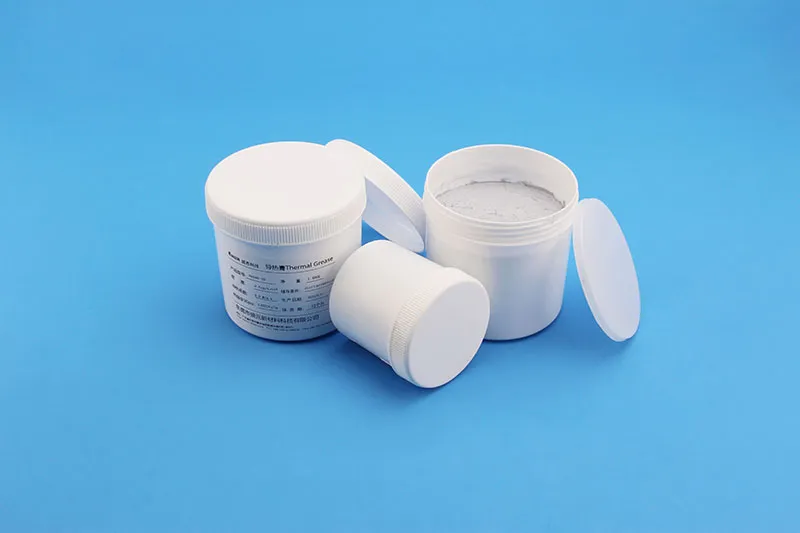
Thermal grease, also called thermal paste, starts strong. Freshly applied, its conductivity supports fast heat transfer by filling microscopic gaps between surfaces.
Pros
· High initial heat dissipation
· Flexible for uneven surfaces
Challenges
· Variable viscosity during application
· Risk of pump-out under cycling
· Thickness inconsistency
In practice:
· Clean surface
· Dispense paste
· Spread evenly
· Mount and compress
Small errors during the application process can trap air. Over time, repeated heating may thin the material, reducing effective thermal interface stability.
Sheen technology thermal grease Performance snapshot:
| Properties | Color | Thermal Impedance (@30psi) | Thermal Conductivity | Minimum Interface Thickness |
|---|---|---|---|---|
| Unit | - | ℃*in2/W | W/m·K | mm |
| SG560-10 | White | ≤0.15 | 1.0±0.1 | 0.06 |
| SG560-20 | White/Gray | ≤0.045 | 2.0±0.2 | 0.05 |
| SG560-30 | Gray | ≤0.03 | 3.0±0.3 | 0.05 |
| SG560-40 | Gray | ≤0.02 | 4.0±0.4 | 0.05 |
| SG560-50 | Gray | ≤0.016 | 5.0±0.5 | 0.05 |
| Test Method | Visual | ASTM D5470 | ASTM D5470 | - |
Compared side by side, a Phase change thermal pad offers predictable bond-line thickness, while grease depends heavily on technician skill. For long-life electronics, that difference can decide maintenance cycles.
Sheen Technology continues to promote Phase change thermal pad solutions where reliability, not just peak lab numbers, drives the spec sheet.
3 Benefits Of Phase Change Thermal Pad
Modern chips run hot, and nobody likes throttled performance. A Phase change thermal pad makes thermal control simple, clean, and reliable across devices from gaming laptops to power modules.
Benefit 1: Latent Heat of Fusion Enables Superior Heat Transfer Coefficient
A Phase change thermal pad works because latent heat absorbs sudden thermal spikes during fusion, stabilizing junction temperature fast.
Core thermal mechanism
Phase change material softens at target temperature
· Fills microscopic surface gaps
· Reduces contact resistance
Energy absorption through latent heat
· Buffers peak loads
· Smooths rapid thermal swings
Improved heat transfer pathway
· Higher effective thermal conductivity
· Lower overall interface resistance
· Impact on high-power components
IGBTs and power MOSFETs
· Faster heat dissipation
· Stable switching cycles
CPUs and GPUs
· Reduced throttling
· Sustained boost clocks
In short, this phase change pad transforms from solid to semi-liquid right when needed, acting as a smart thermal interface material that reacts to temperature instead of just sitting there.
Benefit 2: Environmental Stability and Pump-Out Resistance for Long-Term Reliability
Reliability is where a Phase change thermal pad quietly shines.
· Strong pump-out resistance under pressure cycling
· Excellent environmental stability in humid or dusty setups
· Reduced material degradation over time
Here’s how it plays out in real use:
1) During repeated thermal cycling, the polymer structure keeps shape.
2) Under vibration, the pad stays in place.
3) Across years of thermal aging, performance drift stays minimal.
That means better long-term reliability and real durability, especially in telecom racks or automotive control units.
A thermal pad phase change solution from Sheen Technology is engineered to maintain contact integrity even after thousands of on/off cycles. No messy bleed. No dry-out drama. Just steady performance from your phase change thermal interface layer.
Benefit 3: Versatile Custom Geometries for Consumer Electronics and Data Centers
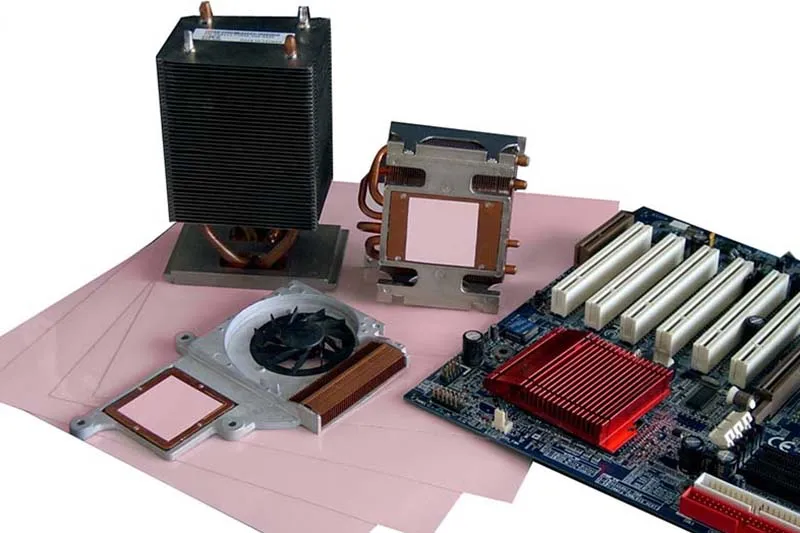
Design freedom matters. A Phase change thermal pad adapts to tight builds and large systems alike.
Format flexibility
· Roll stock for automated assembly
· Die-cut parts for precise device integration
· Ultra-thin sheets for compact form factor products
Application coverage
Consumer electronics
· Laptops
· VR headsets
· Smart home hubs
Data centers
· Server CPUs
· AI accelerators
· Power distribution modules
Engineering value
· Tight tolerance custom geometries
· Broad application flexibility
· Scalable thermal management solutions
The International Energy Agency noted in its 2025 data center outlook that rising AI workloads are accelerating demand for advanced cooling materials to control power density growth.
That’s exactly where a Phase change thermal pad earns its spot. From slim gadgets to dense racks, Sheen Technology supports tailored builds that keep temperatures in check without complicating assembly.
【Request a Custom Quote】 Not sure which phase change thermal pad fits your build? Send us your target operating temperature, thickness target, gap size, and application details, and we can help recommend the right thermal solution for your project.
Sheen Thermal
Dongguan Sheen Electronic Technology Co., Ltd · Founded in 2008
Manufacturer of thermal interface materials and silicone foam for automotive electronics, energy storage, power electronics, communications and consumer electronics.
Certified
- ISO 9001:2015
- ISO 14001:2015
- IATF 16949:2016
What we supply
- Thermal conductivity Up to 90 W/m·K
- Thickness 0.3–10.0 mm
- Custom & samples Die-cut to drawing, 3–7 days