
 English
 usheenthermal

Analyzing Thermal Pad Thermal Cycling Reliability Under Stress
Date:2026-08-20
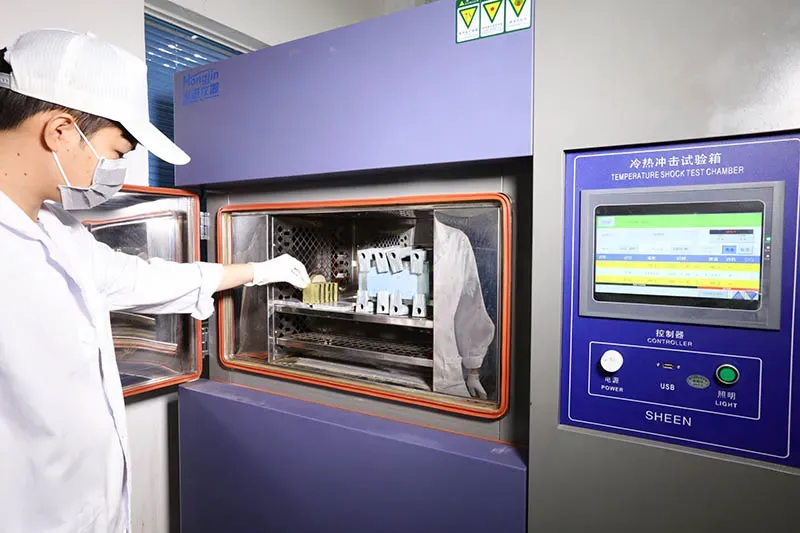
Thermal pad thermal cycling reliability exposes the catch: conductivity numbers mean little if repeated heat slowly wrecks contact or insulation.
CTE mismatch can turn temperature swings into voids, pump-out, delamination, and production surprises.
IEA’s 2025 Global EV Outlook reports electric car sales exceeded 17 million worldwide in 2024.
Quick Notes on Thermal Pad Thermal Cycling Reliability
➔ Understand CTE Mismatch: Track coefficient of thermal expansion differences between pad, component, and heat sink to predict shear stress, delamination, and contact loss over 200°C swings.
➔ Monitor Degradation Modes: Watch for pump-out, void formation, and material dry-out that increase thermal resistance and impair heat transfer after repeated cycling.
➔ Optimize Material Selection: Choose silicone matrices with stable phase-change temperatures, fillers (e.g., boron nitride) for toughness, and tight thickness tolerance to ensure consistent compression and long-term interface stability.
How 200°C Swings Affect Thermal Pad Thermal Cycling Reliability
A 200°C swing puts thermal interfaces through serious strain. Tracking thermal pad thermal cycling reliability helps engineers see how changing thermal resistance, contact quality, and mechanical behavior can gradually affect long-term cooling performance.
Thermal Conductivity Shifts During Extreme Temperature Swings
Temperature effects
- Repeated extreme temperature swings can change filler contact and silicone structure, so thermal conductivity may drift.
- A steep temperature gradient can worsen local heat transfer, especially as material degradation develops. That matters for thermal pad reliability.
Engineering check
- Sheen Technology can evaluate thermal pad thermal cycling reliability against application-specific temperatures, compression, and cycle counts rather than relying on room-temperature conductivity alone.
Mechanical Fatigue and Delamination under 200°C Cycling
Cycling drives repeated expansion and contraction. Over time, mechanical fatigue and stress concentration can reduce structural integrity; at bonded surfaces, interface debonding or delamination may raise contact resistance.
| Cycle count | Low °C | High °C | ΔT °C | Mode to inspect |
| 0 | -50 | 150 | 200 | Baseline |
| 100 | -50 | 150 | 200 | Edge lift |
| 250 | -50 | 150 | 200 | Cracking |
| 500 | -50 | 150 | 200 | Debonding |
| 1000 | -50 | 150 | 200 | Fatigue |
These are test-plan points, not measured lifetime results. Real thermal pad thermal cycling reliability depends on dwell time, compression, materials, and cyclic loading.
Shear Stress Analysis in Silicone Matrix Thermal Pads
Material behavior
- Model shear stress in the silicone matrix, including viscoelasticity and polymer chain response.
Assembly movement
- Add thermal expansion mismatch to estimate pad deformation.
- Use finite element analysis when geometry makes stress paths tricky.
This approach connects thermal pad thermal cycling reliability with thermal cycling endurance, helping Sheen Technology assess thickness, Shore OO hardness, and boron-nitride filler choices before qualification.
Classification Of Thermal Pad Degradation
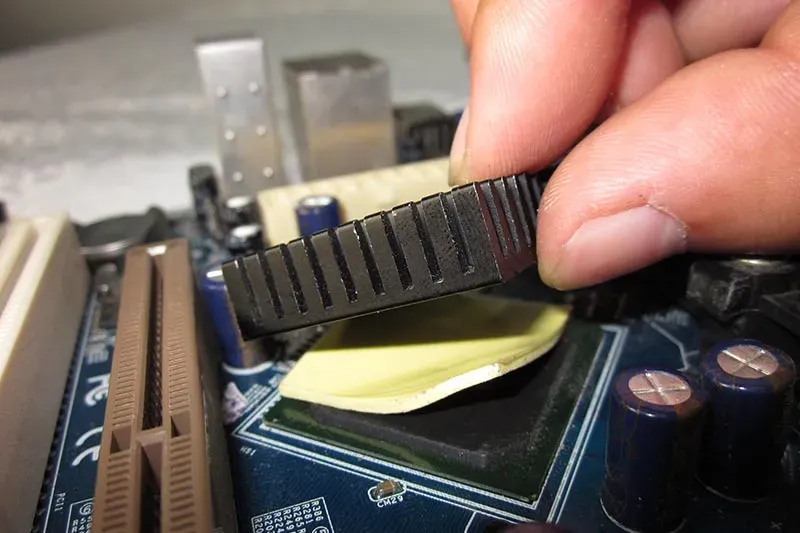
Long-term thermal performance depends on how a pad changes after repeated heating and cooling. Testing thermal pad thermal cycling reliability reveals small shifts before heat control becomes a headache. Sheen Technology evaluates pad aging, contact quality, and thermal cycling behavior so engineers can connect visible material changes with reliability and real cooling performance.
Pump-Out Effect
Repeated heating creates expansion and shear stress, so soft thermal interface material may creep away from the hottest contact area.
Key checks include:
- displacement and material migration
- changes in joint thickness
- any growing interface gap
These signs make thermal pad thermal cycling reliability easier to judge after cyclic loading.
Material Dry-Out
A pad can gradually lose flexibility during high temperature exposure.
- volatile loss changes the polymer matrix.
- hardening reduces surface contact.
- filler separation may lower thermal conductivity.
Sheen Technology uses these changes to assess thermal pad thermal cycling reliability without overcomplicating the diagnosis.
Void Formation
Thermal stress can trigger nucleation of air pockets or expose trapped gas within the pad. Over time:
- microstructure changes may encourage delamination.
- Local separation can become interface failure.
Heat then detours around low-conductivity gaps.
That makes thermal cycling reliability a practical indicator of contact stability.
Thermal Resistance Degradation
Thermal pad thermal cycling reliability ultimately shows up in cooling results.
Rising interface resistance
- weakens heat transfer
- increases the temperature gradient
- raises junction temperature
The outcome is poorer heat dissipation, measurable performance loss, and an efficiency drop.
Consolidated degradation-mode table:
| Degradation Mode | Mechanism | Detection / Sign | Impact on Reliability |
| Pump-Out | Shear stress drives soft TIM creep away from hot zone | Displacement, migration, thinning at interface | Rising contact resistance; reduced heat transfer |
| Dry-Out | Volatile loss from polymer matrix under high temp | Hardening, loss of flexibility, filler separation | Reduced conformability; lower conductivity |
| Void Formation | Thermal stress nucleates air pockets / trapped gas | Microstructure change; delamination onset | Local hot spots; interface failure |
| Thermal Resistance Rise | Combined effect of above three modes | Measured Δ impedance before vs. after cycling | Higher junction temp; performance loss |
For Sheen Technology, tracking resistance before and after cycling ties material aging directly to working thermal performance.
3 Key Factors Affecting Thermal Pad Reliability
Reliable interfaces have to survive more than a good first test: heat, movement, and production variation all add up over time. For thermal pad thermal cycling reliability, engineers should watch expansion behavior, phase transitions, and dimensional control closely. Sheen Technology addresses these factors during material selection and quality checks.
Mismatch in Coefficient of Thermal Expansion
A mismatch in thermal expansion means the pad, chip, and heat sink change size at different rates as temperatures swing. That’s where trouble can creep in.
Mechanical loading
A steep temperature gradient changes stress distribution across the interface.
- Repeated shear strain drives cyclic fatigue and permanent material deformation.
- Over many cycles, interface delamination can raise thermal resistance.
Matching materials and controlling compression therefore support thermal pad thermal cycling reliability during repeated heating and cooling.
Is Phase Change Temperature Compromising Cyclic Endurance?
Crossing the phase change point repeatedly changes pad viscosity and contact pressure. It sounds minor, but the effect can stack up.
- Below the melting point, the interface should retain shape and thermal stability.
- Near transition, absorbed latent heat changes material behavior.
- Repeated softening may cause the pump-out effect.
- Lost interface coverage reduces cyclic endurance.
Testing thermal pad thermal cycling reliability across actual operating temperatures helps expose these risks early.
Sheet Thickness Tolerance and Lot Traceability Impact
Check thickness tolerance because bond-line variation changes compression force and thermal resistance.
- Tight limits reduce manufacturing variance.
- Stable dimensions improve material consistency.
Record lot traceability for incoming sheets.
- Batch records strengthen quality control and make failure analysis far less of a guessing game.
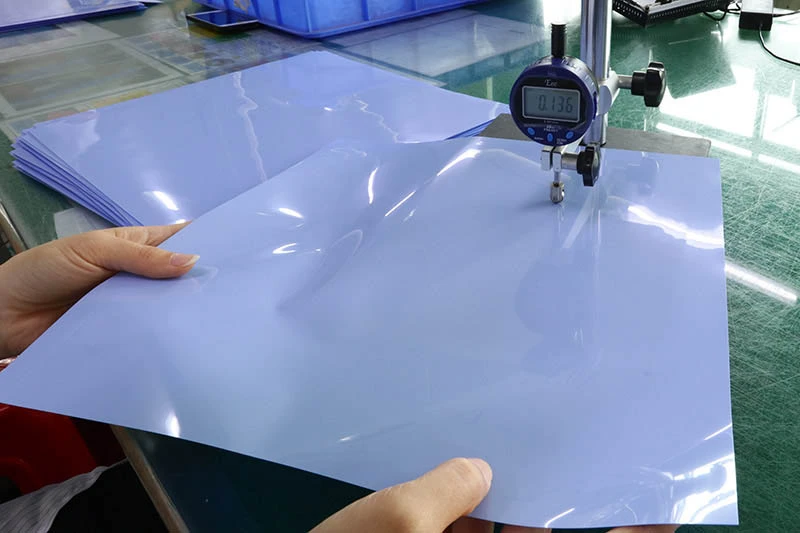
For qualification work, consistent thickness plus traceable batches gives thermal pad thermal cycling reliability data a clearer manufacturing context.
Electric Vehicle Inverters: Longevity Under Cyclical Loads
EV inverters face heat, high voltage, vibration, and repeated load changes, so thermal pad thermal cycling reliability has a direct bearing on long-term cooling and electrical safety. Sheen Technology addresses these everyday automotive stresses by matching thermal pads to power-module design, insulation needs, operating temperatures, and production tolerances.
Automotive Electronics Demand High Dielectric Strength
A thermal pad does more than move heat; in high-voltage automotive electronics, it can also provide electrical insulation between power modules and grounded heat sinks.
Electrical protection
- Dielectric strength indicates resistance to electrical failure through a given material thickness.
- Adequate insulating materials help reduce voltage breakdown risk.
Thickness must stay controlled after compression.
Yet thermal pad thermal cycling reliability matters too, since repeated expansion can change contact pressure over time.
Thermal Shock Resistance in EV Inverter Environments
An EV inverter can swing through major temperature extremes, putting repeated mechanical stress on every interface. That makes thermal pad reliability a long-haul concern.
| Test condition | Example range | Reliability concern |
| Cold exposure | -40°C | Hardening |
| Hot exposure | 125°C | Softening |
| Repeated cycles | 500 cycles | Fatigue |
| Interface check | Post-test | Delamination |
Good thermal shock performance supports cycling reliability and environmental durability by limiting cracks, gaps, and loss of contact. Sheen Technology can assess material behavior around the target application, where thermal pad thermal cycling reliability really earns its keep.
Custom Pre-Cut Pad vs Bulk Sheet for Power Modules

Pre-cut pad formats can simplify handling around power modules, while bulk sheet gives production teams more freedom to cut shapes as needed.
- Application precision: Die-cut dimensions promote repeatable placement and cleaner alignment.
- Manufacturing efficiency: Ready-to-fit parts can cut handling time and liner mix-ups.
- Thermal interface material control: Stable thickness supports predictable compression and heat transfer.
Thermal pad thermal cycling reliability is governed by CTE mismatch, material degradation modes, and dimensional control. Qualification must go beyond room-temperature conductivity to include cycling-induced pump-out, dry-out, void formation, and resistance rise. Sheen Technology supports this with ASTM/IEC-referenced test data, application-specific cycling recommendations, and traceable batch documentation.
→ Contact Sheen Technology for Thermal Cycling Qualification Support
Sheen Thermal
Dongguan Sheen Electronic Technology Co., Ltd · Founded in 2008
Manufacturer of thermal interface materials and silicone foam for automotive electronics, energy storage, power electronics, communications and consumer electronics.
Certified
- ISO 9001:2015
- ISO 14001:2015
- IATF 16949:2016
What we supply
- Thermal conductivity Up to 90 W/m·K
- Thickness 0.3–10.0 mm
- Custom & samples Die-cut to drawing, 3–7 days