
 English
 usheenthermal

Engineering Insights: Thermal Pad vs Thermal Grease for IGBT Module
Date:2026-08-20
“Choosing thermal pad vs thermal grease for IGBT module production can turn into a thermal cliffhanger: cool hardware, tight tolerances, and no room for assembly surprises. The real contest is repeatability versus bond-line control.
IDTechEx’s 2025 research identifies thermal interface materials as important to power-electronics thermal management, with material selection tied to performance and manufacturing requirements.
For buyers, conductivity isn’t the whole ball game. Compression, dispensing, insulation, aging, consistency, and cost decide what survives production.
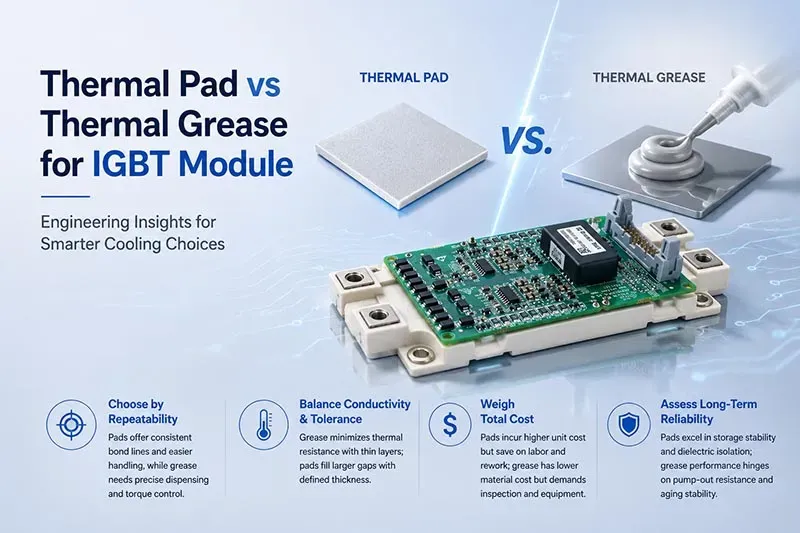
This image is a conceptual illustration and does not represent the actual appearance, size, or internal structure of the product.
Swift Insights: Thermal Pad vs Thermal Grease for IGBT Module
➔ Choose by Repeatability: Pads offer consistent bond lines and easier handling, while grease needs precise dispensing and torque control.
➔ Balance Conductivity & Tolerance: Grease minimizes thermal resistance with thin layers; pads fill larger gaps with defined thickness.
➔ Weigh Total Cost: Pads incur higher unit cost but save on labor and rework; grease has lower material cost but demands inspection and equipment.
➔ Assess Long-Term Reliability: Pads excel in storage stability and dielectric isolation; grease performance hinges on pump-out resistance and aging stability.
What Is A Thermal Pad?
A thermal pad creates a controlled path from a hot IGBT to its cooler. In a thermal pad vs thermal grease for IGBT module decision, engineers usually compare heat flow, electrical isolation, assembly tolerance, and long-term contact rather than conductivity alone.
Composition and Structure of Phase Change Material Pads
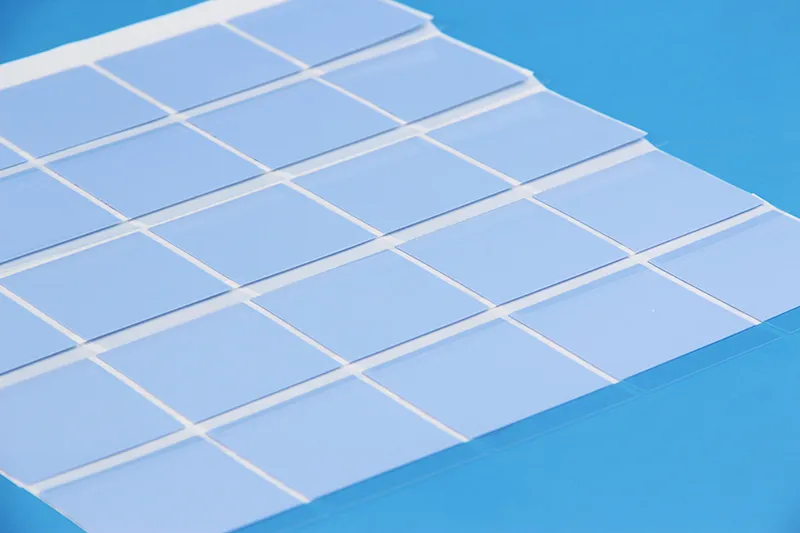
Material system
- A phase change material often combines a polymer matrix, paraffin wax, and conductive filler particles.
- Near its transition temperature, lower viscosity helps the thermal interface fill tiny surface flaws.
Operating effect
- Latent heat accompanies the phase transition, while controlled placement keeps assembly less messy than grease.
That behavior matters when comparing thermal pad vs thermal grease for IGBT module assembly.
Thermal Conductivity vs. Material Thickness Trade-Off
A high conductivity coefficient helps heat transfer, but thicker material raises thermal resistance. So, bigger is not always better.
- Minimize bond line thickness where tolerances permit.
- Set compression rate and interface pressure to maintain contact without overstressing the IGBT.
Sheen Technology Phase Change thermal materials performance properties:
| Properties | Color | Reinforcement Carrier | Thermal Conductivity | Thermal Impedance (@50psi) | Thickness | Phase Change Temp. |
| Unit | - | - | W/m·K | ℃*in2/W | mm | ℃ |
| SP205A-30 | Gray | - | 3.0 | 0.05 | 0.2 | 45 ~ 55 |
| SP205A-35 | Gray | - | 3.5 | 0.04 | 0.2 | 45 ~ 55 |
| SP205A-40 | Gray | - | 4.0 | 0.03 | 0.2 | 45 ~ 55 |
| SP205A-50 | Gray | - | 5.0 | 0.02 | 0.3 | 45 ~ 55 |
| SP205A-60 | Gray | - | 6.0 | 0.015 | 0.3 | 45 ~ 55 |
| SP205A-AL-40 | Green/Gray | Aluminum Foil | 4.0 | 0.06 | 0.18 | 50 ~ 60 |
| SP350P | Green | Polyimide | 1.8 | 0.4 (30psi) | 0.13 ~ 0.5 | 45 ~ 55 |
| Test Method | Visual | - | ASTM D5470 | ASTM D5470 | ASTM D751 | ASTM D3418 |
For thermal pad vs thermal grease for IGBT module selection, practical thermal performance depends on both conductivity and thickness. Need thermal conductivity, thermal resistance, dielectric strength, shore hardness, and pump-out resistance data for IGBT module thermal interface materials? Download the product datasheets to compare thermal pads, thermal grease, phase change materials, and ceramic-filled silicone pads for IGBT modules, power semiconductor packages, and aluminum heatsink assemblies.
Dielectric Strength in Ceramic Filled Silicone Pads
Insulating base
- Silicone elastomer provides compliant electrical insulation and helps limit leakage current.
Ceramic loading
- Alumina filler improves heat conduction.
- Breakdown voltage, volumetric resistivity, and dielectric constant describe electrical behavior.
That combo is handy when a thermal pad must isolate an IGBT from grounded cooling hardware.
Procurement Specs: Custom Die-Cut Dimensions & Batch Inspection
Production purchasing needs more than a thermal pad datasheet.
- Define die-cut dimensions and tolerance control.
- Verify thickness, dimensional stability, and relevant mechanical property limits.
- Record raw material lots on the specification sheet.
- Apply visual inspection and batch-level quality assurance before release.
These controls make thermal interface material performance more repeatable across IGBT production runs.
How Does Thermal Grease Work?
Choosing thermal pad vs thermal grease for IGBT module designs comes down to fit, heat transfer, and assembly needs. Thermal interface material fills tiny gaps that trap air. In practice, thermal grease can create a thinner interface, while thermal pads offer handy handling where gap filling matters.
Silicone-Based Thermal Grease: Viscosity Level & Interfacial Contact Pressure
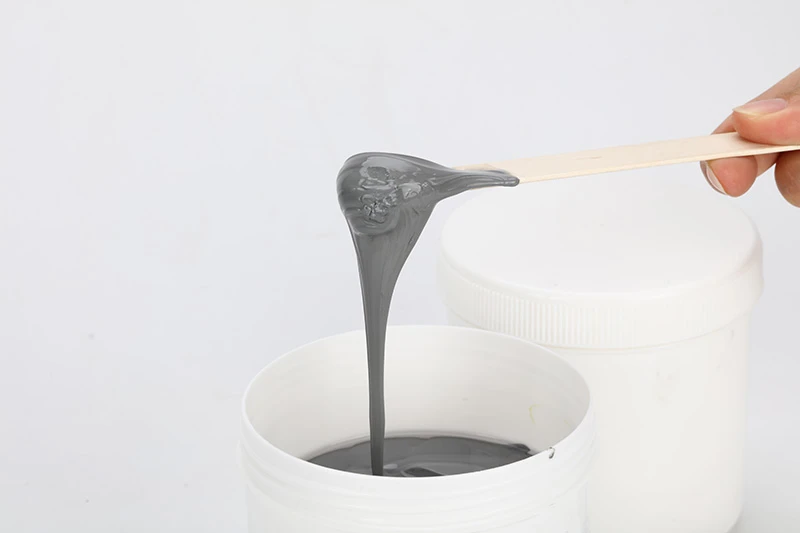
Silicone-based thermal grease depends on balanced rheological properties.
- A suitable viscosity level lets grease spread into microscopic voids without running all over the place.
- Proper clamping force creates interfacial contact pressure, squeezing excess material out and keeping the thermal path thin.
This helps explain thermal pad vs thermal grease for IGBT module selection at the contact level.
Heat Dissipation Efficiency Across Baseplate Mounting Surfaces
Across uneven baseplate mounting surfaces, grease replaces insulating air and lowers contact resistance.
- For an IGBT module, lower thermal resistance supports stronger heat dissipation efficiency.
- Better contact carries heat flux toward the cooler, helping control junction temperature.
So, thermal grease for IGBT hardware can be a good fit when surfaces mate closely; a thermal pad may suit larger gaps.
Long-Term Pump-Out Resistance and Thermal Aging Stability
Long-life performance hinges on two traits:
Pump-out resistance
- limits grease movement during thermal cycling.
- reduces bleed out.
Thermal aging stability
- slows material degradation.
- helps preserve bondline thickness through reliability testing.
For thermal pad vs thermal grease for IGBT module decisions, long-term movement matters just as much as initial cooling.
Automated Dispensing System for Precise Application
An automated dispensing system makes precise application repeatable.
Process control
- regulates volume control and dispensing pattern.
- forms a consistent interface layer.
Production options
- include controlled dispensing or stencil printing.
- fit a scalable manufacturing process.
Sheen Technology can support controlled thermal grease application, helping keep assembly variation in check.
3 Key Benefits Of Thermal Pads
Choosing thermal pad vs thermal grease for IGBT module assembly affects heat flow, mounting work, and material storage. Pads bring controlled dimensions to the IGBT module interface, while grease behaves differently under pressure. For production teams comparing an IGBT thermal pad and thermal grease, the practical benefits below show where a stable interface can make day-to-day assembly easier.
Benefit 1: Consistent Thermal Resistance with Controlled Shore Hardness
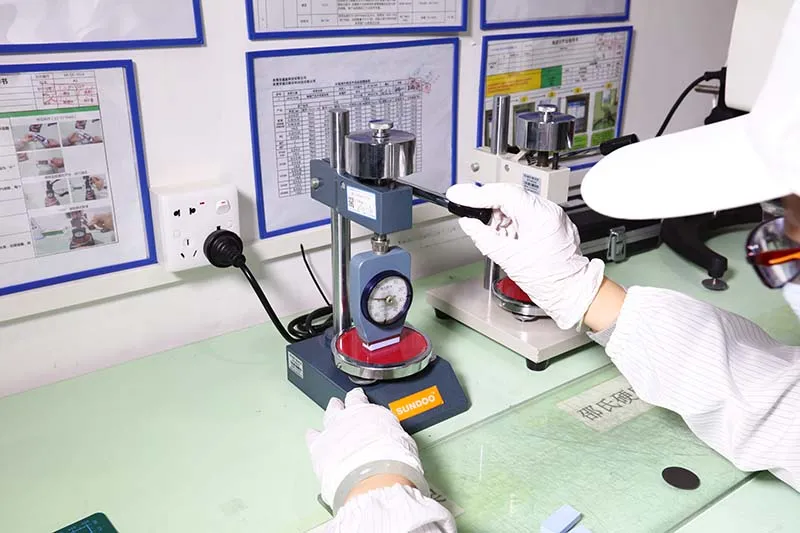
With thermal pad vs thermal grease for IGBT module designs, controlled thickness and Shore hardness help engineers manage compression despite mechanical tolerance changes.
Compression control
- A compliant elastomer adapts to small gaps.
- Stable interface pressure supports repeatable thermal resistance.
Thermal design
- Specified thermal conductivity makes heat-transfer calculations more predictable.
Typical specification comparisons can look like this:
| Pad thickness (mm) | Shore 00 hardness | Compression target (%) |
| 0.5 | 40 | 10 |
| 1.0 | 50 | 20 |
| 2.0 | 60 | 30 |
These figures are illustrative engineering targets, not universal product ratings; actual limits depend on the selected pad.
Benefit 2: Simplified Installation on Aluminum Heatsink Extrusions
For thermal pad vs thermal grease for IGBT module mounting, pre-cut material can make the assembly process pretty straightforward.
- Place the interface material on the aluminum heatsink and align it with the extrusion profile.
- Seat the module while maintaining cleanliness.
- Apply specified torque control so mounting pressure stays even.
That approach removes grease dispensing and can reduce application variation.
Benefit 3: Extended Storage Shelf Life for Bulk Supply Formats
A thermal pad vs thermal grease for IGBT module purchasing decision also reaches the stockroom.
Bulk supply
- Sheets and rolls support die cutting and simpler inventory control.
- Suitable packaging protects unused material.
Storage planning
- Verify supplier-rated shelf life and storage stability.
- Control heat and contamination to limit material degradation.
Unlike some phase change materials, pad behavior does not rely on melting during installation.
Sheen Technology can support pad formats suited to production conversion and planned stocking.
Thermal Pad Vs Thermal Grease For IGBT Module: Cost Analysis
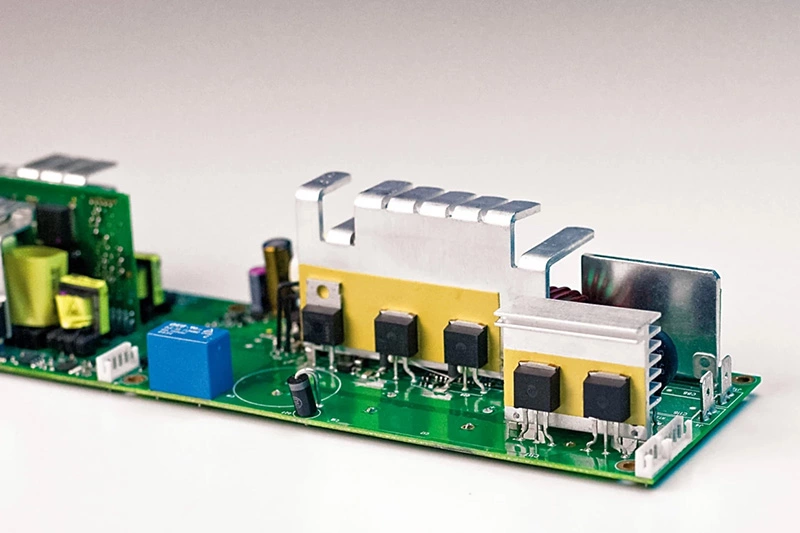
Choosing thermal pad vs thermal grease for IGBT module cooling is about more than the purchase price. Assembly time, process gear, inspection, waste, and later servicing can quickly change the math. For a fair comparison, buyers should calculate cost per finished IGBT interface while also checking heat transfer and insulation needs. That keeps budgeting practical from day one.
Consolidated cost comparison table:
| Cost Factor | Thermal Pad | Thermal Grease | Engineering Note |
| Material cost/unit | Higher (custom die-cut) | Lower (bulk tube) | Pad premium offset by labor + rework savings |
| Application | Pick-and-place (no dispensing) | Automated dispense + inspection | Pad: faster assembly Grease: more steps |
| Inspection | Visual + dimensional (light) | Dispense volume + BLT verification | Grease needs more process control |
| Rework | Peel + replace | Solvent clean + re-dispense | Pad: cleaner rework |
| Total installed cost | Lower at high volume | Lower at low volume | Calculate per finished interface |
Thermal Pad
A thermal pad often costs more per piece, yet its predictable application thickness makes production pretty straightforward.
Production cost
- Custom die-cut silicone material can cut placement time and scrap.
- A pad providing electrical insulation and suitable dielectric strength may remove the need for another insulating layer.
Thermal design
- Check thermal resistance under the intended clamping load.
- Phase change products suit some flat interfaces, while a gap filler handles larger surface variation.
For repeat assembly, Sheen Technology can supply controlled pad formats that simplify the thermal pad vs thermal grease for IGBT module cost calculation.
Thermal Grease
Grease is usually cheaper as a raw interface material, but process costs deserve attention. Comparing thermal pad vs thermal grease for IGBT module production means tracking dispensing and inspection too.
| Cost factor | Grease A | Grease B | Unit |
| Material/interface | 0.18 | 0.27 | USD |
| Dispensing time | 12 | 8 | sec |
| bond line thickness | 80 | 60 | µm |
| thermal conductivity | 3.0 | 5.0 | W/m·K |
Control the dispensing method for even surface wetting.
- Set consistent interface pressure.
- Watch for pump out effect during thermal cycling.
Grease containing silicone oil may require extra handling, so the cheapest tube does not always mean the lowest installed cost.
Thermal Pad Vs Thermal Grease For IGBT Module Reliability
Choosing thermal pad vs thermal grease for IGBT module reliability is not just about picking the lowest thermal resistance. Long-term heat cycling changes interface behavior. A thermal pad vs thermal grease for IGBT module comparison should account for mounting force, insulation, surface condition, and aging, since small interface changes can eventually push semiconductor junction temperatures higher.
Thermal Pad
A pad creates a controlled interface between the IGBT module and cooler, making installation pretty straightforward.
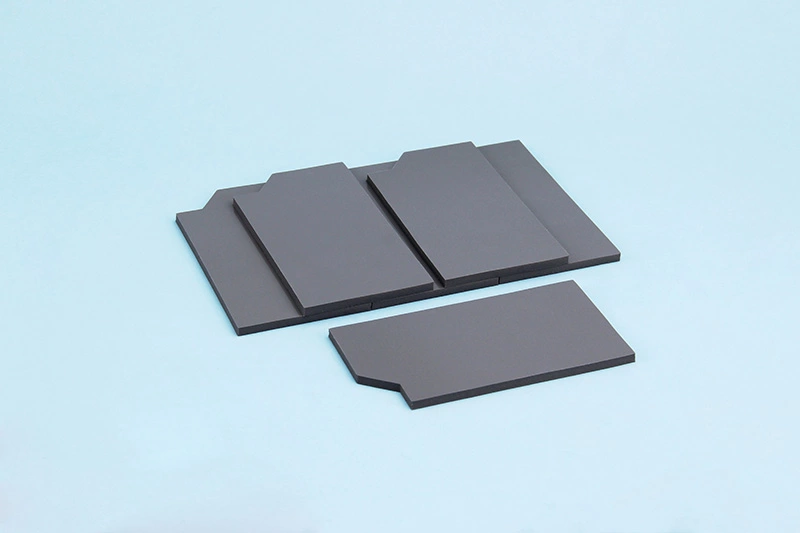
Contact performance
- Interface pressure helps the pad conform to uneven surfaces.
- Good Gap filling limits trapped air while stable Thermal conductivity carries heat away.
Long-term behavior
- Phase change material can soften at operating temperature, improving contact.
- Dielectric breakdown ratings matter where electrical isolation is required.
- Reusability varies by material; repeated removal can damage compressed pads.
- Easy installation reduces grease-mess issues.
For thermal pad vs thermal grease for IGBT module designs, Shore hardness and compression must suit mounting pressure without stressing the module.
Thermal Grease
Thermal grease wets microscopic surface features, so Surface wetting can produce a thin interface with low Thermal impedance.
- Control Bond line thickness during mounting; too much grease can raise Thermal resistance.
- Check the Pump-out effect during repeated heating and cooling, since grease can slowly move away from hot contact areas.
- Watch for Silicone oil bleed and Void formation, both of which can weaken heat transfer over time.
In a thermal pad vs thermal grease for IGBT module reliability test, grease should be judged after thermal cycling, not just from fresh application data. For this IGBT thermal interface choice, stable viscosity and mounting pressure are key.
Future Of IGBT Cooling Materials
Cooling choices are getting trickier as IGBT power density rises. Engineers comparing thermal pad vs thermal grease for IGBT module designs now look beyond headline conductivity toward interface thickness, reliability, and compliance. Sheen Technology supports this practical shift with cooling options designed around stable heat dissipation, easier assembly, and documented material performance for demanding power electronics.
Graphite Thermal Sheets for Ultra-Low Thermal Resistance
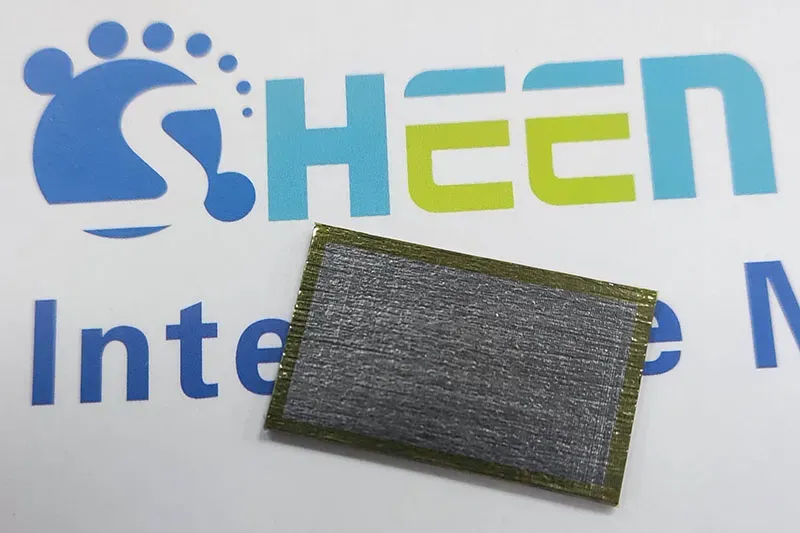
A graphite sheet spreads concentrated heat laterally through strong anisotropic thermal conductivity, which can reduce hot spots around an IGBT module. Still, contact quality matters; an interfacial thermal barrier can spoil otherwise impressive results.
Design checks:
- Compare thermal pad vs thermal grease for IGBT module contact conditions.
- Control thickness and pressure to lower thermal resistance.
- Match graphite orientation to the main heat path.
| Material | Conductivity (W/m·K) | Thickness (mm) |
| Graphite sheet | 300–1500(in-plane) | 0.06–0.17 |
| Sheen Graphene sheet | 75-90(through-plane) | 0.3–2.0 |
| Thermal pad | 1–15 | 0.3–10.0 |
| Thermal grease | 1–5 | 0.05 |
Note: graphite sheet in-plane conductivity (300–1500 W/m·K) is lateral; through-plane is much lower. For TIM applications, through-plane conductivity governs interface resistance. For this reason, Sheen Technology's graphene thermal pads use a vertical orientation process to perfectly compensate for this shortcoming.
Thermally Conductive Epoxy in Power Semiconductor Packages
Thermally conductive epoxy provides power semiconductor permanent bonding plus heat transfer.
- A ceramic filler raises thermal conductivity.
- Good mechanical adhesion keeps joints secure.
- Thermal cycling testing checks aging.
- An encapsulation resin can protect sensitive parts.
For thermal pad vs thermal grease for IGBT module decisions, epoxy offers a bonded alternative. Sheen Technology can help match thermal-interface choices to assembly needs.
Environmental Compliance Certification Trends for Next-Gen Cooling
Material paperwork is no longer just red tape.
Environmental compliance
- RoHS directive substance limits
- REACH regulation declarations
Cooling material qualification
- halogen-free status
- applicable certification standard
- batch traceability supporting sustainable manufacturing
That documentation belongs alongside thermal pad, thermal grease, electrical, and reliability data when suppliers are approved.
Thermal pad vs. thermal grease selection for IGBT modules is a system-level decision balancing bond-line thickness, dielectric strength, pump-out resistance, assembly process, and total cost. Pads offer repeatability and integrated isolation; grease offers thin bond lines and low material cost. Sheen Technology supports the selection with ASTM/IEC-referenced data, cost modeling, and application engineering.
→ Contact Sheen Technology for IGBT TIM Selection Support
Sheen Thermal
Dongguan Sheen Electronic Technology Co., Ltd · Founded in 2008
Manufacturer of thermal interface materials and silicone foam for automotive electronics, energy storage, power electronics, communications and consumer electronics.
Certified
- ISO 9001:2015
- ISO 14001:2015
- IATF 16949:2016
What we supply
- Thermal conductivity Up to 90 W/m·K
- Thickness 0.3–10.0 mm
- Custom & samples Die-cut to drawing, 3–7 days