
 English
 usheenthermal

How a Thermally Conductive Insulator Improves Energy Storage Safety
Date:2026-08-07
Energy systems are running hotter, and failures hit wallets fast; a thermally conductive insulator for energy storage stops small heat spikes from turning into shutdowns.
Sheen Technology engineers' choice controls safety, linking dielectric strength and heat flow to reliability.
Pick the right insulator, and downtime shrinks while lifespan stretches across cycles.
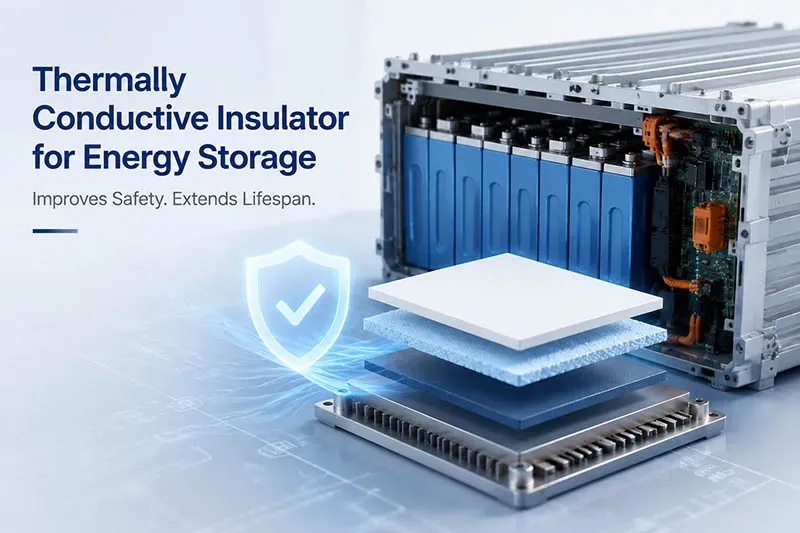
Quick Insights into Thermally Conductive Insulator for Energy Storage
- Define thermal conductivity and dielectric strength to balance heat flow and voltage withstand.
- Compare ceramic (AlN, BN) versus polymeric forms (sheets, gels) for interface adaptability.
- Prioritize low thermal expansion and high specific heat capacity for cycling stability.
- Ensure high electrical resistivity and chemical stability to prevent failures and extend service life.
What Is A Thermally Conductive Insulator
A thermally conductive insulator for energy storage sounds like a paradox, right? It moves heat fast while blocking electricity, which is exactly what modern packs and modules crave. From safer batteries to cooler electronics, this material quietly keeps things stable and efficient.
Defining Thermal Conductivity and Dielectric Strength
At the core of any thermally conductive insulator for energy storage:
- thermal conductivity drives heat transfer away from hotspots
- dielectric strength prevents electrical breakdown under high voltage
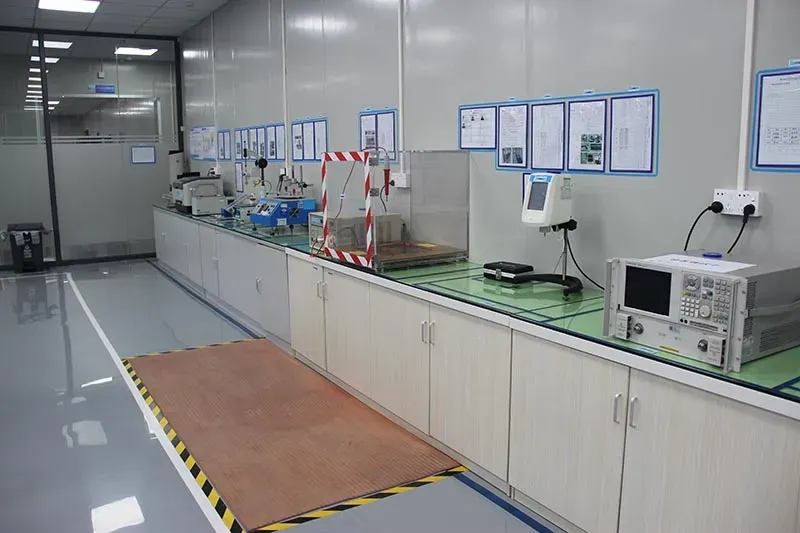
Heat flows
- low thermal resistance → faster cooling
- high flow → safer insulator performance
Electricity stays locked
- strong electrical insulation → no leakage
- stable under stress
“Advanced insulation materials are now expected to combine thermal management with electrical reliability,” notes a 2025 IDTechEx energy materials brief.
For a thermally conductive insulator for energy storage, both traits must balance, not compete.
Exploring Material Forms: Sheets, Films, Pads, and Gels
A thermally conductive insulator for energy storage comes in flexible material forms that adapt easily:
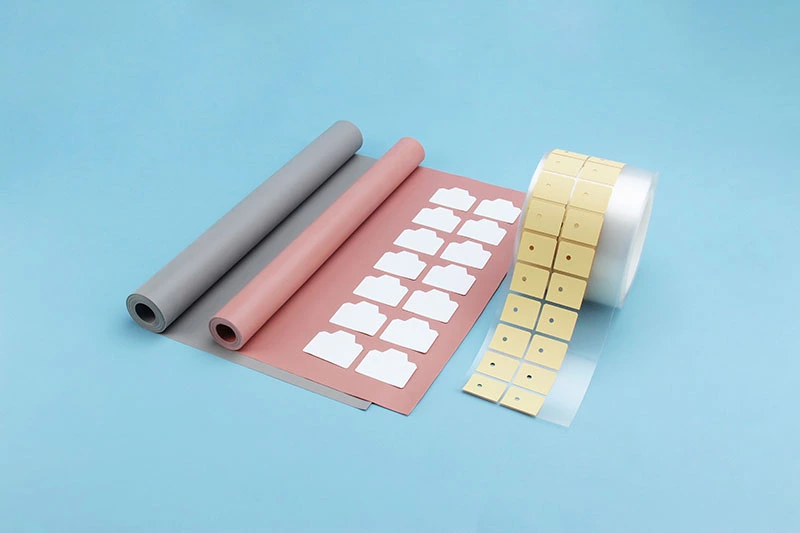
- thin, precise
- ideal for layered electronics
- soft, conformable
- fill gaps in a thermal interface
Key flow: contact → reduce air gaps,improved heat path,better cooling consistency.
Sheen Technology tunes these flexible materials so battery packs stay tight, cool, and reliable.
Comparing Ceramic Materials and Polymeric Materials
When picking a thermally conductive insulator for energy storage, material choice shapes performance:
ceramic materials (inorganic)
- alumina, AlN:high temperature endurance,strong conductivity
polymeric materials (organic)
- silicone-based composites:better flexibility,easier processing
- Hybrid composites:blend benefits,balance rigidity + adaptability
Sheen Technology often bridges these worlds, optimizing material properties for both durability and usability.
Key Material Properties: Thermal Expansion Coefficient & Specific Heat Capacity
A reliable thermally conductive insulator for energy storage must stay stable through constant heating cycles:
- low expansion:reduced thermal stress,fewer cracks during temperature change
- higher capacity:better heat absorption,smoother thermal stability
Quick breakdown:
- absorb heat
- resist deformation
- maintain contact
Put together, these traits keep systems steady, even when things heat up fast.
3 Key Properties Of Thermally Conductive Insulator For Energy Storage
A solid thermally conductive insulator for energy storage keeps heat moving while electricity stays put. That balance drives safer packs and longer life. From ceramics to system design, picking the right thermally conductive insulating material matters. Here’s how boron nitride and aluminum nitride compare, why resistivity protects, and how stability keeps performance steady.
High Thermal Conductivity: Boron Nitride vs Aluminum Nitride
Material selection for a thermally conductive insulator for energy storage
- anisotropic thermal conductivity
- excels in layered thermal management
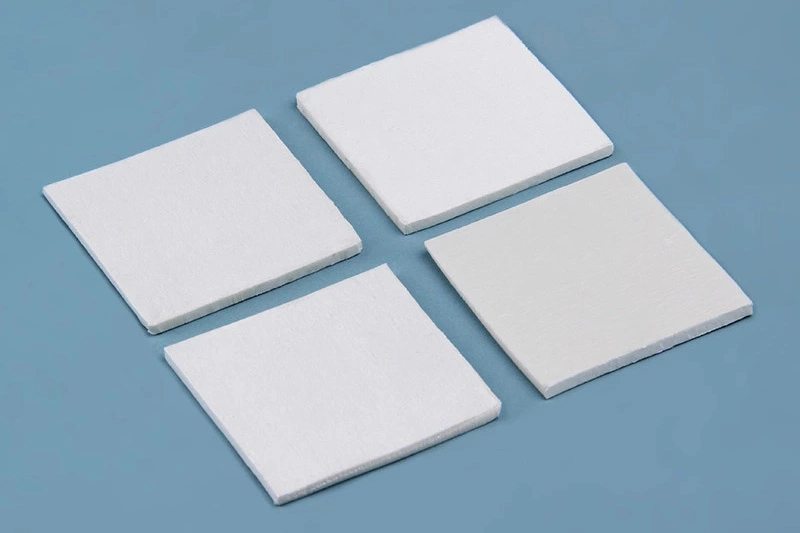
Sheen Technology Boron Nitride thermal pad performance properties:
| Properties | Unit | SF1600-BN-03 | SF1600-BN-05 | SF1600-BN-07 | SF1600-BN-10 | SF1600-BN-15 | SF1600-BN-20 | SF1600-BN-30 | Test Method |
| Color | - | White | White | White | White | White | White | White | Visual |
| Thermal Conductivity | W/m·K | 16 | 16 | 16 | 16 | 16 | 16 | 16 | ASTM D5470 |
Thermal Resistance (@40psi) | ℃*cm²/W | ≤0.3 | ≤0.5 | ≤0.7 | ≤0.8 | ≤1.1 | ≤1.4 | ≤1.7 | ASTM D5470 |
Application temperature | ℃ | -40~150 | -40~150 | -40~150 | -40~150 | -40~150 | -40~150 | -40~150 | - |
Thermal weight loss rate | % | ≤1 | ≤1 | ≤1 | ≤1 | ≤1 | ≤1 | ≤1 | - |
| Thickness | mm | 0.2~5.0 | 0.2~5.0 | 0.2~5.0 | 0.2~5.0 | 0.2~5.0 | 0.2~5.0 | 0.2~5.0 | ASTM D374 |
| Breakdown voltage | KV,@AC | ≥4 | ≥5 | ≥6 | ≥10 | ≥12 | ≥12 | ≥12 | ASTM D149 |
| Dielectric constant | F/m, @ 1MHz | ≤4.2 | ≤4.2 | ≤4.2 | ≤4.2 | ≤4.2 | ≤4.2 | ≤4.2 | ASTM D150 |
| Volume resistivity | Ω*cm, @250V | ≥10¹³ | ≥10¹³ | ≥10¹³ | ≥10¹³ | ≥10¹³ | ≥10¹³ | ≥10¹³ | ASTM D257 |
| Rebound rate | % | ≥90 | ≥80 | ≥70 | ≥70 | ≥60 | ≥60 | ≥60 | - |
| Density | g/cm³ | 1.6±0.2 | 1.6±0.2 | 1.6±0.2 | 1.6±0.2 | 1.6±0.2 | 1.6±0.2 | 1.6±0.2 | ASTM D792 |
| Hardness | shore 00 | 60~80 | 60~80 | 60~80 | 60~80 | 60~80 | 60~80 | 60~80 | ASTM D2240 |
| Flammability rating | - | V-0 | V-0 | V-0 | V-0 | V-0 | V-0 | V-0 | UL 94 |
Need dielectric strength, thermal conductivity, thermal expansion coefficient, and specific heat capacity data for thermally conductive insulator materials? Download the product datasheets to compare ceramic-based (AlN, BN) and polymeric insulator sheets, pads, and gels for battery packs, supercapacitors, and grid-scale energy storage systems.
aluminum nitride
- higher bulk thermal conductivity
- ideal for dense heat dissipation
Performance fit
- substrates needing uniform spreading → AlN
- directional heat paths → BN
Integration notes
- interface quality governs insulating materials efficiency
- pairing with Sheen Technology fillers boosts system-level cooling
Short take: both serve as a thermally conductive insulator for energy storage, but geometry and heat flow decide.
Electrical Resistivity’s Role in Battery Packs and Supercapacitors
Why electrical resistivity matters in a thermally conductive insulator for energy storage:
- Blocks leakage in battery packs
- Preserves dielectric properties in supercapacitors
- Strengthens electrical insulation as currents spike
1) Design flow
- choose high-resistivity ceramics
- validate under load cycling
- seal interfaces to avoid moisture paths
“High-resistivity thermal interface materials are now baseline for advanced energy storage systems safety,” notes a 2025 IDTechEx briefing.
Sheen Technology options keep heat moving without compromising insulation—key for a reliable thermally conductive insulator for energy storage.
Chemical Stability & Operating Temperature Range for Long-term Reliability
Step-by-step for a durable thermally conductive insulator for energy storage:
- Start with chemical stability against oxidation and electrolytes.
- Verify wide operating temperature window to limit thermal degradation.
- Add coatings for environmental resistance (moisture, salts).
- Track material lifespan under cycling to ensure performance consistency.
Result: fewer failures, steadier output, and a thermal conductive insulator for energy storage that lasts in real-world grids.
Scenario: Grid-Scale Storage Emergencies Averted
Grid operators don’t get second chances when heat spikes hit hard. In grid-scale storage, even small thermal issues can spiral fast. That’s where a thermally conductive insulator for energy storage earns its keep—quietly managing heat flow, cutting risk, and keeping systems stable without adding complexity.
Case Study: Preventing Thermal Runaway in Power Electronics Modules
Root issue:
- Thermal runaway begins with uneven heat dissipation
- localized module overheating
- stress on power electronics
Thermally conductive insulator for energy storage
- aluminum nitride substrates
- silicone gel interfaces
- improves energy storage safety
- stabilizes thermally conductive insulator pathways
System-level impact:
- reduced hotspot gradients
- consistent thermal spreading
- longer module lifespan
A similar rollout by Sheen Technology showed that pairing a thermally conductive insulator for energy storage with optimized layouts can quietly eliminate cascading failures before alarms even trigger.
Implementation Steps: Coating Application, Quality Control, and ASTM Standards
Getting a thermally conductive insulator for energy storage to perform isn’t just about picking the right material—it’s about execution.
Key moves:
- coating application via curing or lamination
- adhesion checks tied to quality control
- performance verified through ASTM standards
“Thermal interface reliability is now a top-three priority in energy storage safety audits,” noted a 2025 report from Wood Mackenzie.
Short checkpoints keep things grounded:
- clean material deposition
- confirm bonding integrity
- run thermal shock loops
Sheen Technology Lab: High-Temperature Aging Test for Boron Nitride Thermal Pads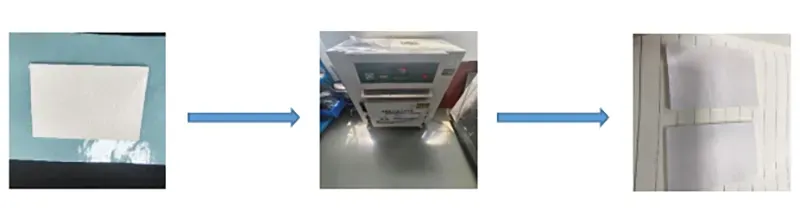
Test Method: A sample measuring 50mm x 40mm x 1.5mm was placed in a high-temperature oven at 125°C for 1,000 hours. Upon completion, the thermal resistance was measured and recorded.
Test Results: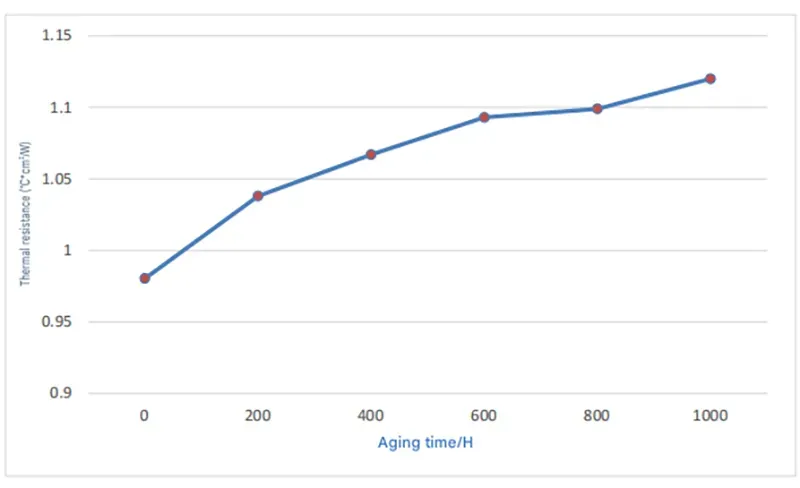
Conclusion: As shown in the figure and the data above, the boron nitride thermal pad demonstrated stable thermal resistance performance during the short-term aging test; after 1,000 hours, the thermal resistance increased by 14.2%, remaining within the acceptable range of variation.
Then a tighter flow:
- Apply coating evenly
- Cure under controlled conditions
- Test for process validation
- Document under manufacturing guidelines
Sheen Technology integrates these steps into a repeatable system, ensuring each thermally conductive insulator material holds up under pressure—no guesswork, just steady performance.
【Request a Custom Quote】Not sure whether a ceramic or polymeric thermally conductive insulator best fits your energy storage safety requirements? Send us your operating voltage, temperature range, interface gap, target thermal conductivity, and cycling profile, and our engineers can recommend the most suitable insulation solution for your project.
Sheen Thermal
Dongguan Sheen Electronic Technology Co., Ltd · Founded in 2008
Manufacturer of thermal interface materials and silicone foam for automotive electronics, energy storage, power electronics, communications and consumer electronics.
Certified
- ISO 9001:2015
- ISO 14001:2015
- IATF 16949:2016
What we supply
- Thermal conductivity Up to 90 W/m·K
- Thickness 0.3–10.0 mm
- Custom & samples Die-cut to drawing, 3–7 days