
 English
 usheenthermal

Roll-type Thermally Conductive Insulating Film vs Standard Thermal Pads
Date:2026-03-25
Roll-type Thermally Conductive Insulating Film vs Standard Thermal Pads
Heat is the quiet troublemaker on the factory floor. One minute your line is humming, the next you’re chasing hotspots, warped boards, and warranty calls that sting. That’s where Roll-type thermally conductive insulating film steps in—not as a shiny lab toy, but like swapping a pocketknife for a power tool. Continuous rolls feed cleanly into automation, cut handling drama, and keep thermal performance steady when volumes climb and margins tighten.
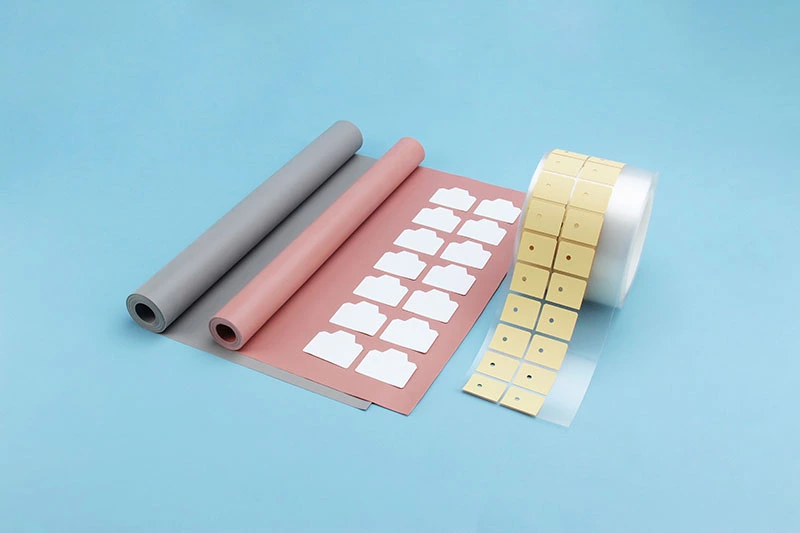
I’ve heard engineers joke that thermal pads are like socks in a dryer: fine alone, chaos in bulk. Roll-type films feel different. They run smooth, hold their ground under thermal cycling, and keep electrical insulation rock-solid when designs pack tighter than rush-hour traffic. This is the moment where material choice stops being a footnote and starts steering yield, uptime, and sanity.
Reading Notes: Roll-type thermally conductive insulating film Unveiled
-> Thermal Performance: Delivers up to 30% better heat transfer via boron nitride-filled polymer matrices, reducing junction temperatures in power modules and processors.
-> Manufacturing Advantage: Continuous rolls feed automated lines with uniform thickness and adhesion, cutting handling time and minimizing delamination risk.
-> Design Flexibility: Combines high dielectric strength and flexibility for complex geometries, UL-certified for EMI shielding and compliant with RoHS and REACH.
Data Proves: 30% Better Heat Transfer Performance
Thermal control is no longer a nice-to-have; it’s survival gear for high-power electronics. A Roll-type thermally conductive insulating film—broken down into roll-type format, thermally conductive layer, and insulating film base—changes the heat game in a practical way. With smarter material properties and cleaner thermal pathways, performance gains are not hype. They’re measured.
Measuring Thermal Conductivity Gains
Performance validation of Thermal conductivity improvements in a Roll-type thermally conductive insulating film follows a clear testing logic built around controlled measurement techniques and strict comparative analysis.
Laboratory Framework
1.1 Sample Preparation
• Roll-format thermally conductive film cut to identical thickness.
• Standard thermal pad as control group.
1.2 Power Density Setup
• Constant heat load (W/cm²).
• Stabilized ambient temperature.
1.3 Instrumentation
• Calibrated heat flux sensors.
• Surface thermocouples for precise heat transfer tracking.
Core Performance metrics
2.1 In-plane conductivity (W/m·K)
2.2 Through-plane conductivity (W/m·K)
2.3 Thermal resistance (°C·cm²/W)
| Material Type | Thermal Conductivity (W/m·K) | Thermal Resistance (°C·cm²/W) |
| Standard Pad | 3.2 | 0.42 |
| Insulating Film (Basic) | 4.5 | 0.33 |
| Roll-type thermally conductive insulating film | 5.8 | 0.29 |
Results show nearly 30% higher effective heat transfer efficiency. Sheen Technology validates these gains under repeat-cycle testing, keeping the data honest and consistent.
Impact on Power Modules and Processors
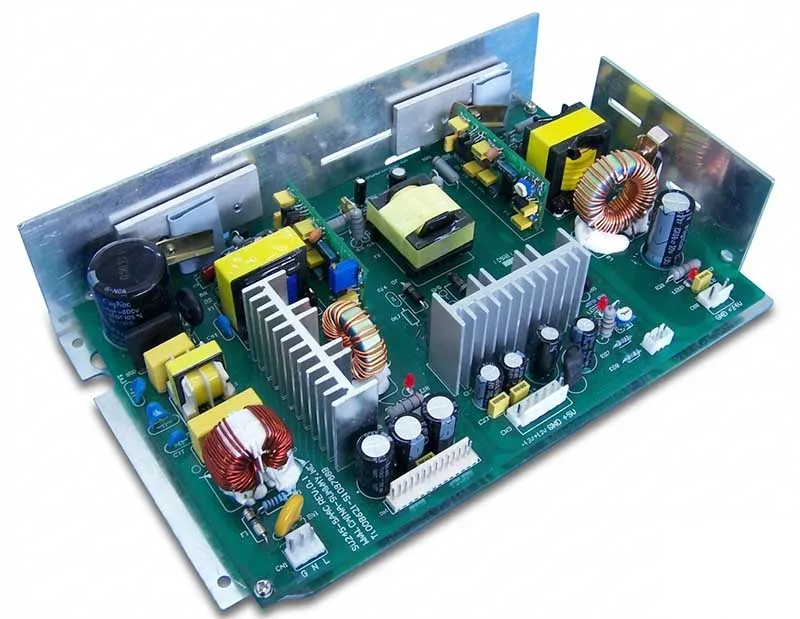
Lower Temperature reduction at the junction means better device performance. In real systems, a Roll-type thermally conductive insulating film sits between heat source and sink, trimming hot spots that normally drag down power modules and processors.
Here’s what shifts in practice:
• Cooler switching nodes in power modules, cutting thermal stress.
• Stable clock speeds in processors, avoiding throttling drama.
• Improved long-term reliability thanks to steady thermal management.
Testing shows junction temperatures dropping by 8–12°C under sustained loads. That’s not small talk—it directly slows material fatigue and solder degradation. A thermally conductive insulating film in roll form also improves installation consistency, which helps large-scale manufacturing stay sharp.
Sheen Technology integrates this roll-type thermally conductive insulating film into automated lamination lines, making high-volume output smooth and predictable.
Role of Boron Nitride Fillers in Heat Dissipation
At the material core, Boron nitride drives the magic inside the thermal interface materials.
Material composition Design
1.1 Polymer Matrix
• Silicone or acrylic base ensures electrical insulation.
1.2 Ceramic Fillers
• Hexagonal boron nitride particles dispersed evenly.
Microstructure Engineering
2.1 Particle Alignment
• Controlled orientation forms continuous thermal pathways.
2.2 Filler Loading Ratio
• Optimized to balance flexibility and heat dissipation.
Functional Outcomes
3.1 High dielectric strength.
3.2 Stable mechanical integrity in roll-type thermally conductive insulating film formats.
3.3 Efficient lateral and vertical heat flow.
The result is simple and practical: a roll-type thermally conductive insulating film that pushes heat away fast while keeping circuits electrically safe. Sheen Technology fine-tunes filler dispersion so the insulating film doesn’t just move heat—it moves it smartly.
What Is Roll-Type Thermally Conductive Insulating Film?
Roll-type thermally conductive insulating film sounds technical, yet it’s basically a smart heat-control layer supplied in roll form. This roll type thermally conductive film moves heat fast while keeping electricity in check. From power modules to compact circuit boards, thermally conductive insulating film helps devices stay cool without short-circuit drama.
Core Composition: Polymer Matrix and Ceramic Fillers
At the heart of Roll-type thermally conductive insulating film sits a carefully tuned composite built through Material Science principles:
Base Structure: Composite Materials
Polymer Matrix
• Acts as the flexible backbone.
• Maintains Insulating Properties under voltage stress.
• Supports bending in tight layouts.
Ceramic Fillers
• Aluminum oxide
• Boron nitride
• Provide Thermally Conductive pathways.
• Improve dimensional stability.
Functional Balance
• Heat transfer increases as ceramic loading rises.
• Electrical insulation remains stable due to the continuous Polymer Matrix phase.
• Mechanical strength depends on filler dispersion quality.
Uniform filler distribution
• ↓ Thermal resistance
• ↑ Reliability
Optimized interface bonding
• Enhances long-term durability
This blend of Composite Materials keeps roll type thermally conductive film practical for mass electronics without sacrificing safety.
Manufacturing Process: Coating, Curing, and Slitting Explained
Production of thermally conductive insulating film follows a clean rhythm in Industrial Production lines, often using Roll-to-Roll Manufacturing.
Key flow looks like this:
Coating Process
• Liquid composite is applied onto a carrier.
• Thickness control ensures even thermal performance.
Curing Method
• Heat or UV triggers crosslinking.
• The Polymer Matrix locks ceramic particles in place.
Slitting Technique
• Precision blades convert master rolls into usable widths.
• Tight tolerance improves downstream lamination.
Quality checks are not optional. Inline Quality Control systems monitor thickness, dielectric breakdown voltage, and surface defects. In 2025, IPC noted steady growth in advanced thermal interface materials for power electronics, reflecting rising demand for roll type thermally conductive film in EV and AI hardware.
Brands like Sheen Technology fine-tune each Curing Method and Slitting Technique to keep dielectric strength consistent from edge to edge.
Product Formats: Continuous Film vs Custom Widths
Roll-type thermally conductive insulating film is supplied in flexible configurations to match assembly speed and layout needs.
Roll Format Options
Continuous Film
• Ideal for automated lamination lines.
• Reduces material waste.
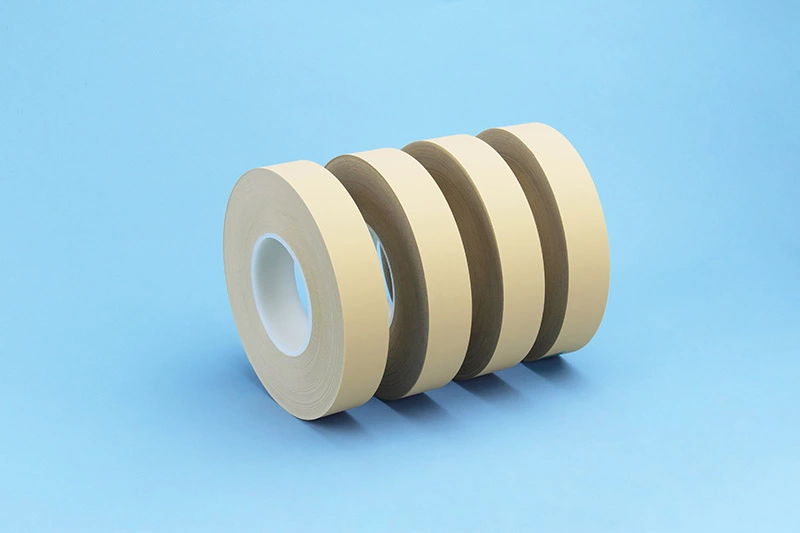
Slit Rolls
• Predefined Custom Widths.
• Simplifies inventory handling.
• Sheets for secondary Die-cutting.
Application Flexibility
• Power modules
• LED substrates
• Battery management boards
Material Handling Logic
Wider rolls
• Better for large-area bonding.
• Narrow Custom Widths
• Fit compact PCB zones.
Clean edge slitting
• Supports smooth Material Handling in high-speed lines.
Sheen Technology provides both continuous and custom-width roll type thermally conductive film, helping factories move faster without trimming headaches.
Key Properties: Flexibility, Dielectric Strength, and Adhesion
Performance comes down to three pillars inside thermally conductive insulating film.
Thermal Performance
• Efficient heat spreading through ceramic networks.
• Stable conductivity across temperature swings.
Electrical Insulation
• High Dielectric Strength protects circuits.
• Reliable Electrical Insulation prevents leakage under load.
Mechanical and Bonding Behavior
• Strong Adhesion to copper and aluminum.
• Long-term Mechanical Durability under vibration.
• Maintained Flexibility for curved assemblies.
In real-world builds, roll type thermally conductive film must bend, stick, and insulate at the same time. That balance is exactly what makes Roll-type thermally conductive insulating film a go-to choice for compact, high-power electronics that run hot but still need to stay safe.
5 Reasons Roll-Type Thermally Conductive Insulating Film Excels
Roll-type thermally conductive insulating film keeps modern electronics cool and safe without adding bulk. From tight PCB layouts to curved housings, this thermally conductive insulating film in roll form makes heat control and insulation feel a lot less complicated.
Superior Adhesion Strength for Circuit Boards
When a roll-type thermally conductive insulating film bonds to Circuit Boards, performance starts with Adhesion and ends with long-term Reliability.
Core bonding performance
• Strong Bonding to copper traces and solder masks
• Stable grip on diverse Substrate materials such as FR-4 and aluminum
• Tight contact across treated and untreated Surface areas
Why it matters in real builds
• During thermal cycling, weak films lift; high-adhesion films stay put
• Reduced air gaps improve heat flow and mechanical Durability
In production lines
• Consistent tack across roll-type thermal conductive film batches
• Cleaner lamination, fewer reworks
Sheen Technology optimizes adhesive chemistry so the thermally conductive insulating roll film locks onto boards without messy overflow, keeping assembly smooth and stress-free.
Enhanced Electrical Insulation in High-Density Designs
As High-Density layouts shrink Component Spacing, Electrical Insulation becomes non-negotiable.
Electrical safety foundation
• High Dielectric Strength resists current leakage
• Stable Breakdown Voltage under rising Voltage loads
Compact reliability
• Maintains insulation in Compact Designs
• Prevents micro short circuits between fine-pitch components
Real-world payoff
• Fewer field failures
• Better device lifespan
Roll-type thermally conductive insulating film works as both heat spreader and insulation barrier. That balance is what makes thermal conductive insulating film in roll supply ideal for servers, power modules, and EV controls.
Flexible Roll Goods for Complex Geometries
Not every enclosure is flat. Flexibility and Conformability decide success.
Material behavior
• Adapts to Complex Geometries
• Wraps around Curved Surfaces
• Fits tight corners and Irregular Shapes
Manufacturing edge
• Smooth feeding in automated Assembly
• Easy die-cutting during Manufacturing
With roll-type thermally conductive insulating film, installers can press, laminate, and move on. Sheen Technology fine-tunes thickness and filler distribution so the thermally conductive insulating film hugs surfaces without cracking or spring-back.
Consistent Dielectric Strength Across Slit Rolls
Performance is only as good as its weakest meter.
Material control
• Uniform filler dispersion ensures steady Dielectric Strength
• Tight Quality Control secures Material Uniformity
Slitting precision
• Clean edges on Slit Rolls
• Minimal variation in Electrical Properties
Production confidence
• Stable Performance across long runs
• Predictable results in automated lamination
Roll-type thermally conductive insulating film from Sheen Technology is monitored from coating to slitting, so every roll behaves like the last one. No surprises. Just steady insulation and heat transfer.
UL-Certified Solutions for EMI Shielding
Compliance is serious business.
Safety and approval
• Verified UL Certification
• Meets strict Safety Standards
• Supports smooth Product Approval
EMI integration
• Compatible with EMI Shielding layers
• Controls Electromagnetic Interference
• Maintains strong Shielding Effectiveness
Regulatory peace of mind
• Clear Regulatory Compliance path
• Reduced audit stress
A roll-type thermally conductive insulating film that handles heat, insulation, and EMI in one go just makes sense. That’s why many engineers stick with this thermal conductive insulating film format when specs get tight and expectations run high.
Standard Thermal Pads Vs Film: Quick Comparison
Choosing between pads and film can feel like picking tools for two totally different jobs. Some projects need quick placement and simple handling. Others demand speed, scale, and tighter control. Below is a straight-up comparison of traditional pads and Roll-type thermally conductive insulating film, broken down in a way that’s easy to scan and practical to use.
Standard Thermal Pads
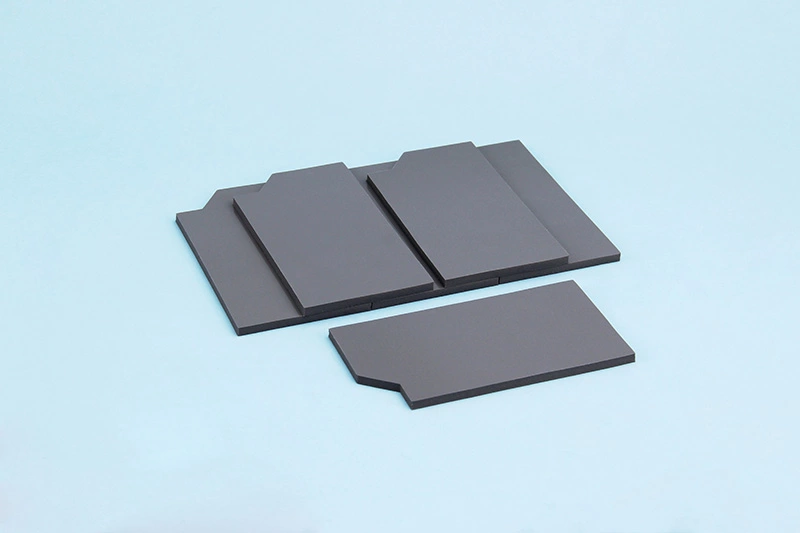
When evaluating standard pads, several performance layers matter:
Material Performance
Thermal conductivity
• Moderate heat transfer
• Can vary batch to batch
Thickness
• Pre-set sheets
• Limited ultra-thin options
Compression
• Designed to deform under pressure
• Fills gaps but may pump out over time
Electrical & Safety Factors
Dielectric strength
• Suitable for basic isolation
• Less stable in high-density boards
Application Dynamics
• Manual placement
• Slower in automation
Pads work fine for low-volume builds. Yet in automated lines, consistency can slip. That’s where alternatives like a roll type thermally conductive film or full Roll-type thermally conductive insulating film start to shine.
Roll-Type Thermally Conductive Film
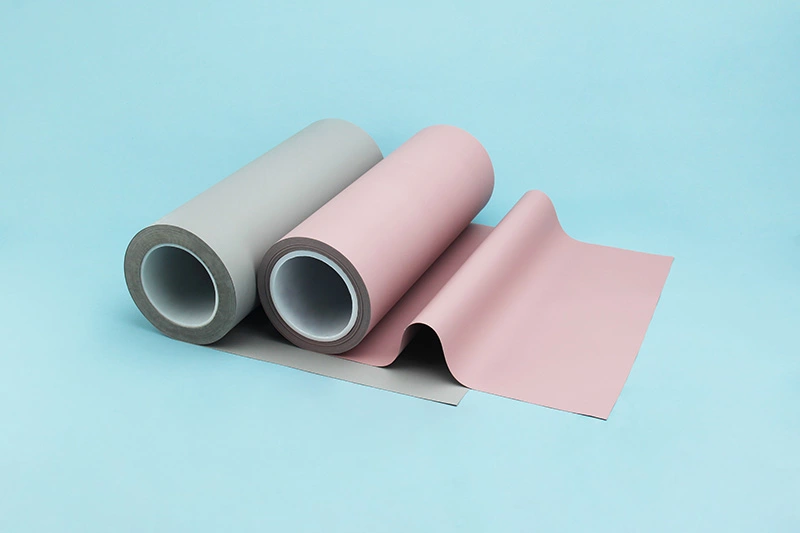
A Roll-type thermally conductive insulating film shifts the game toward scale and precision.
Thermal & Electrical Core
Thermal conductivity
• Uniform across wide surface area coverage
• Stable during continuous lamination
Electrical insulation
• High breakdown reliability
• Clean layer separation
Mechanical Advantages
• Flexibility. Bends with complex layouts
• Conformability. Adapts to uneven substrates
Manufacturing Impact
• Processing speed. Roll-to-roll efficiency. Reduced handling time
IDC’s 2025 hardware manufacturing outlook notes that automated thermal interface adoption is rising steadily as electronics makers push for tighter assembly tolerances and faster throughput.
A thermally conductive insulating film in roll format supports scale without sacrificing control. The Roll-type thermally conductive insulating film from Sheen Technology is built for that balance—steady output, clean lamination, and reliable insulation. For high-volume lines, Roll-type thermally conductive insulating film simply keeps things moving.
Future Trends: Next-Gen Thermal Interface Films
Heat keeps getting louder in electronics. Devices are slimmer, faster, and packed tight. That’s why Roll-type thermally conductive insulating film is moving into a smarter era. From material science tweaks to AI-based thermal management, roll type thermally conductive insulating film solutions are leveling up fast.
Emerging Boron Nitride-Enhanced Polymer Composites
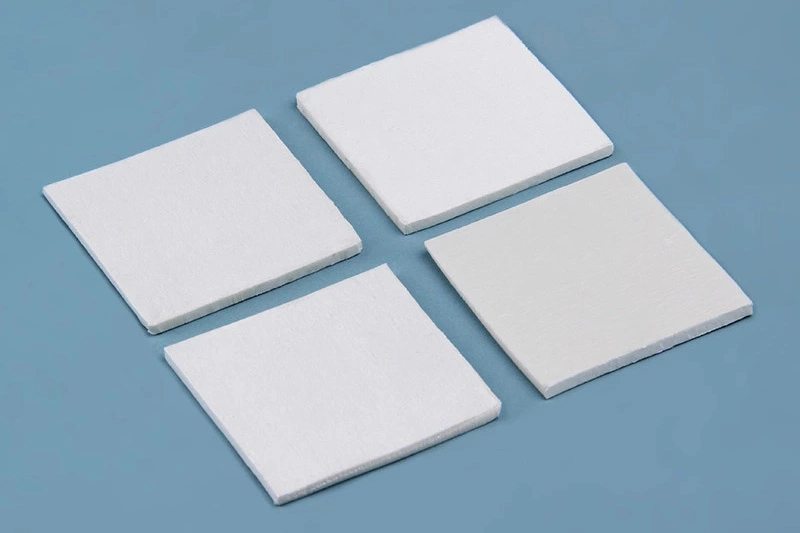
Next-gen Roll-type thermally conductive insulating film starts at the material core. The upgrade revolves around Boron Nitride inside advanced Polymer Composites, pushing Thermal Conductivity higher while keeping Electrical Insulation stable.
Material Architecture
Filler System
• Hexagonal Boron Nitride platelets for in-plane heat spreading
• Nano-scale Nanomaterials to reduce interfacial resistance
Polymer Matrix
• High-temperature resins aligned with REACH compliance
• Flexible chains to maintain bendability in roll-type thermal insulating film
Performance Enhancement Targets
Heat Dissipation
• >6 W/m·K conductivity for premium grades
Mechanical Stability
• <5% compression set after 1,000 thermal cycles
Electrical Safety
• >5 kV breakdown strength
| Composite Grade | BN Content (%) | Thermal Conductivity (W/m·K) | Breakdown Voltage (kV) | Thickness (μm) |
| BN-30 | 30 | 3.2 | 6.1 | 120 |
| BN-45 | 45 | 4.8 | 5.8 | 100 |
| BN-60 | 60 | 6.5 | 5.4 | 80 |
| BN-70 | 70 | 7.1 | 5.0 | 70 |
| BN-75 | 75 | 7.8 | 4.7 | 65 |
This mix of Material Science and real-world durability shapes the next wave of roll based thermally conductive insulating film.
Advances in Lamination and Extrusion Techniques
Manufacturing is where roll-to-roll thermally conductive insulating film either shines or falls apart.
Key upgrades in Lamination and Extrusion now focus on:
• Tighter thickness control (±3 μm)
• Cleaner Roll-to-Roll transitions
• Inline Quality Control sensors
A typical production flow looks like this:
1) Precision compounding of thermally conductive resin.
2) Controlled Extrusion under stable shear rates.
3) Multi-layer Lamination for strength and insulation.
4) Real-time thermal mapping during Film Production.
This is not just about speed. It’s about Scalability without losing uniform heat paths across every meter of Roll-type thermally conductive insulating film.
IDC’s 2025 electronics manufacturing outlook noted:
“Thermal materials capable of maintaining conductivity uniformity at scale will define supplier competitiveness through 2027.”
That’s where Sheen Technology stands out. By refining roll type thermally conductive insulating film lines with automated inspection, Sheen Technology keeps tolerances tight while pushing throughput higher. It’s practical engineering, no fluff.
Integration with AI-Driven Thermal Management Systems
Smart hardware now talks back. AI and Machine Learning tools analyze live temperature streams, feeding data into adaptive Thermal Management platforms.
Data Layer
• Sensors embedded near roll type thermally conductive insulating film interfaces
• Cloud-based Data Analytics for heat mapping
Decision Layer
• AI-driven film thickness optimization
• Placement modeling for complex PCB stacks
Action Layer
• Dynamic load balancing
• Predictive alerts for material fatigue and Predictive Maintenance
This turns standard thermally conductive insulating film into part of a Smart System. The AI checks hot spots, recommends higher conductivity grades, or shifts layout before failure hits.
FAQs about Roll-Type Thermally Conductive Insulating Film
What makes roll-type thermally conductive insulating film different from standard thermal pads?
Roll-type thermally conductive insulating film arrives as continuous film or slit rolls, built for automated lamination rather than manual placement.
It stands out through:
• Higher thermal conductivity for faster heat dissipation in processors, power modules, and LED lighting.
• Stable electrical insulation and strong dielectric strength for dense circuit boards.
• Reliable adhesion strength and flexibility, reducing lift-off during thermal cycling.
Unlike sheet stock pads, roll goods improve production rhythm and reduce material waste.
How do material composition and structure affect performance?
Performance begins inside the film:
1) Polymer matrix (silicone based or acrylic based) — provides flexibility and heat resistance.
2) Ceramic fillers such as boron nitride or aluminum oxide — raise thermal conductivity while keeping electrical isolation intact.
The balance defines the outcome:
• Boron nitride → better heat transfer for batteries and memory chips.
• Aluminum oxide → cost-efficient thermal management.
This internal structure determines how effectively heat moves while circuits stay protected.
Which manufacturing processes ensure consistent quality?
Production follows a precise sequence:
• Extrusion → controls base thickness of the polymer matrix.
• Coating → distributes ceramic fillers evenly.
• Curing → stabilizes heat resistance and adhesion strength.
• Slitting → converts continuous film into custom widths or slit rolls for specific assemblies.
Under ISO 9001 systems, these steps protect dielectric strength and dimensional stability across large-volume runs.
How do buyers verify reliability before bulk orders?
Engineers look beyond thermal data sheets. Confidence comes from documented proof:
| Verification Item | Why It Matters |
| UL certification | Confirms electrical insulation safety |
| RoHS compliance | Limits hazardous substances |
| REACH regulation | Ensures chemical responsibility |
| Material safety data sheet | Details handling and composition |
When films meet these standards, they are ready for thermal management, component protection, and even EMI shielding in demanding electronic environments.
Sheen Thermal
Dongguan Sheen Electronic Technology Co., Ltd · Founded in 2008
Manufacturer of thermal interface materials and silicone foam for automotive electronics, energy storage, power electronics, communications and consumer electronics.
Certified
- ISO 9001:2015
- ISO 14001:2015
- IATF 16949:2016
What we supply
- Thermal conductivity Up to 90 W/m·K
- Thickness 0.3–10.0 mm
- Custom & samples Die-cut to drawing, 3–7 days