
 English
 usheenthermal

Maximize BESS Lifespan: Selection of Thermal Management Solutions for Energy Storage Inverters
Date:2026-08-06
The Selection of Thermal Management Solutions for Energy Storage Inverters isn’t engineering fluff—it’s the line between steady revenue and costly shutdowns in today’s heat-stressed BESS projects.
Sheen Technology engineers state, “thermal stability dictates inverter lifespan.”
Pick materials wrong, expect downtime, rising costs, and frustrated operators fast.
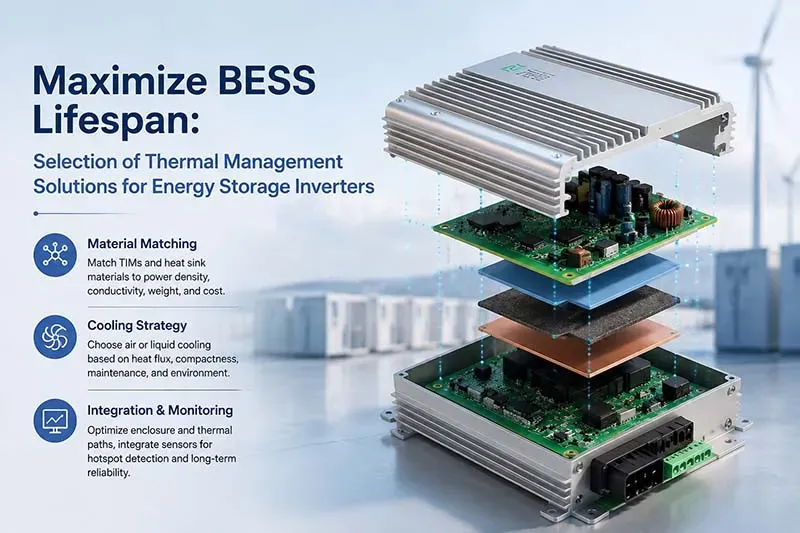
Reading Notes: Selection of Thermal Management Solutions for Energy Storage Inverters
➔ Material Matching: Pair TIMs like liquid metal or PCM with power density, and choose heat sink materials (aluminum, copper, composites) based on conductivity, weight, and cost.
➔ Cooling Strategy: Decide between air and liquid cooling by balancing system compactness, heat flux removal, maintenance, and environmental constraints.
➔ Integration & Monitoring: Design enclosures (DBC, AMB substrates, die-cast aluminum) for optimal thermal paths and embed sensors for early detection of hotspots, ensuring long-term reliability and reduced MTBF losses.
What Are Thermal Management Solutions For Inverters
Picking the right thermal setup for energy storage inverters isn’t just tech talk—it’s about keeping systems stable, efficient, and long-lasting. The Selection of Thermal Management Solutions for Energy Storage Inverters blends materials, fluids, and design choices so heat moves out fast and reliability stays high.
Thermal Interface Materials Explained
Core role:
- Reduce thermal impedance between chip and sink
- Fill micro gaps with gap filler or thermal pad
Material choices:
- thermal paste and grease for flexibility
- phase change material for stable cycling
- Adhesive TIMs when bonding matters

Practical flow: Surface prep → apply TIM → clamp pressure → verify thermal conductivity
Small tweaks here directly improve energy storage inverter cooling performance.
Heat Sink Materials Breakdown
Selection path:
- Base metals: aluminum (light, cost-friendly), copper (higher thermal conductivity)
- Advanced options: heat pipe or vapor chamber integration
Design layers:
- fin geometry tuning
- extrusion vs casting choice
- airflow alignment
For the selection of Thermal Management Solutions for Energy Storage Inverters, this stage often defines passive cooling limits.
Coolant Fluids Essentials
Water-based:
- water with corrosion inhibitor
- glycol mix for low freezing point
Specialized:
- dielectric fluid for electrical isolation
Performance checks:
- specific heat capacity
- viscosity
- boiling point
A good fluid choice keeps inverter thermal management steady under peak load swings.
Encapsulation & Potting Materials Guide
Protection stack:
- epoxy resin: rigid, strong seal
- silicone: flexible, high dielectric strength
- polyurethane: balanced moisture resistance
Application steps:
- Mix potting compound
- Degas
- Cure under control
These materials quietly boost vibration survival and heat spread.
Structural & Enclosure Materials Overview
Frame:
- aluminum alloy for heat spread
- steel for mechanical strength
Outer shell:
- plastic or composite material for insulation
Key checks:
- thermal expansion match
- corrosion resistance
- sealing to target IP rating
Brands like Sheen Technology often align enclosure and cooling early, making the Selection of Thermal Management Solutions for Energy Storage Inverters smoother and more scalable.
Field Data: Temperature Spikes Reduce Inverter MTBF 25%
Picking the right path for the Selection of Thermal Management Solutions for Energy Storage Inverters isn’t just lab talk—it shows up fast in field failures. Real sites reveal how heat behaves under messy loads, dust, and airflow limits. This is where smart thermal management solutions for energy storage inverters separate stable systems from early breakdowns.
On-Site Temperature Profiling Techniques
Real-world field measurements shift the conversation from theory to action, especially when dialing in the Selection of Thermal Management Solutions for Energy Storage Inverters.
Capture layer
- Temperature sensors:Place near IGBT junctions, busbars, and capacitors,Validate sensor placement against airflow paths
- Thermal imaging: Sweep during load ramps to catch transient spikes
- Data loggers: Sync timestamps with inverter switching cycles
Context layer
- Environmental monitoring: Track ambient swings, enclosure heat soak
- Profiling methods: Compare idle vs peak load thermal gradients
Insight layer
- Align readings with thermal management solutions for energy storage inverters
Correlating Thermal Peaks with MTBF Loss
Heat spikes don’t negotiate. They shorten life, and the numbers back it up for any Selection of Thermal Management Solutions for Energy Storage Inverters effort.
| Thermal Peak (°C) | Failure Rate Increase (%) | MTBF Reduction (%) |
| 60 | 5 | 3 |
| 70 | 12 | 8 |
| 80 | 20 | 15 |
| 90 | 33 | 22 |
| 100 | 45 | 25 |
Short bursts drive thermal stress, triggering degradation mechanisms like solder fatigue. Over time, reliability analysis shows a tight statistical correlation between spike frequency and MTBF reduction. That’s why thermal management solutions for energy storage inverters must prioritize peak suppression, not just average cooling.
Strategies for Early Fault Detection
Catching heat issues early keeps the Selection of Thermal Management Solutions for Energy Storage Inverters grounded in reality instead of guesswork.
Detection stack
- Signal layer:Condition monitoring with real-time monitoring streams
- Intelligence layer:Anomaly detection flags unusual gradients,Predictive analytics estimates lifetime prediction windows
Fusion logic
- Combine sensor fusion inputs: Temperature + load + switching frequency
- Generate fault indicators tied to overheating risk
Action loop
- Trigger cooling adjustments
- Refine thermal management solutions for energy storage inverters
5 Factors In Selection Of Thermal Management Solutions For Energy Storage Inverters
Picking the right mix in the Selection of Thermal Management Solutions for Energy Storage Inverters isn’t just a spec-sheet exercise—it’s about keeping systems cool under real stress. From materials to airflow, every choice shapes efficiency, lifespan, and safety. Get the thermal management selection right, and performance stays steady even when loads spike.
Factor 1 – Matching TIMs to Power Density
When handling Thermal Interface Materials, the link between Power density and Interface resistance decides everything.

Core matching logic:
- High density setups:Use Phase change materials or liquid-based TIMs,Minimize Thermal conductivity loss across interfaces
- Medium density:Balanced Thermal grease options
- Low density:Cost-friendly Thermal pads
Small tweak, big impact. In real-world inverter cooling solution design, shaving even slight resistance boosts heat flow efficiency. That’s why Selection of Thermal Management Solutions for Energy Storage Inverters often starts here.
Factor 2 – Optimizing Heat Sink Material
Material choice shapes how a Heat sink performs under load.
1) Aluminum
- Lightweight
- Good Thermal conductivity
2) Copper
- Superior heat spreading
- Higher cost
3) Hybrid/composite
- Tuned Material properties for weight-sensitive builds
Then comes Fin design:
- Taller fins → better convection
- Denser fins → lower Thermal resistance, but airflow trade-offs
Factor 3 – Choosing the Right Coolant Fluid
Fluid choice drives system stability in Selection of Thermal Management Solutions for Energy Storage Inverters.
| Coolant fluid | Specific heat capacity (kJ/kg·K) | Viscosity (mPa·s) | Dielectric strength |
| Water-glycol mixture | 3.6–4.0 | Medium | Low |
| Dielectric fluids | 1.8–2.5 | Low | High |
| Pure water | ~4.2 | Low | Very low |
Key trade-offs:
- ↑ Specific heat capacity → better cooling
- ↓ Viscosity → smoother flow
- ↑ Dielectric strength → safer electronics
For energy storage inverter cooling, dielectric fluids win when electrical isolation matters most.
Factor 4 – Selecting Encapsulation & Potting Compounds
Encapsulation isn’t just protection—it’s thermal control wrapped in chemistry.
- Epoxy: strong, high Thermal conductivity
- Silicone: flexible, better under thermal cycling
Key performance layers:
- Heat path: Reduce hotspots via conductive fillers
- Protection: Block moisture with stable Encapsulation
- Durability: Handle vibration using elastic Potting compounds
Short takeaway: stable materials prevent cracks, which keeps thermal management solutions consistent over time.
Factor 5 – Designing the Enclosure and Substrate
This part ties everything together in the Selection of Thermal Management Solutions for Energy Storage Inverters.
Substrate stack
- Substrate material:DBC,AMB
- Benefits:Lower thermal pathways resistance,Better heat spreading
Enclosure system:
Enclosure design
- Die-cast aluminum
- Sealed housings
Heat control methods
- Convection via airflow channels
- Radiation through surface treatment
Airflow logic:
- Directed Airflow management
- Reduced hotspots across the Printed Circuit Board
Sheen Technology applies this layered approach to keep inverter cooling solution performance stable even under peak cycling.
Liquid Versus Air: Comparative Cooling Solutions
A smart pick in the Selection of Thermal Management Solutions for Energy Storage Inverters can make or break uptime. Heat builds fast, and picking between liquid and air isn’t just tech talk—it’s cost, reliability, and maintenance in real life. Here’s a grounded look at both paths, with practical angles for inverter thermal solution selection.
Liquid Cooling
Liquid paths handle dense heat without drama. In high-load inverter setups, the Selection of Thermal Management Solutions for Energy Storage Inverters often leans liquid because stability matters over long cycles.
Core flow chain
- Pump drives coolant through pipes
- Cold plate pulls heat from power modules
- Heat exchanger or radiator dumps heat outside
Design layers
Fluid choice
- Dielectric fluid for safety near electronics
- Glycol mix for freeze and corrosion control
Hardware loop
- Sealed pipes reduce loss
- Redundant pump for uptime
Control
- Sensors tune flow and fan assist at the radiator
Practical notes
- Compact builds, quieter operation
- Higher upfront, lower thermal drift over time
Performance snapshot
| Method | Heat Flux (W/cm²) | Temp Stability (±°C) | Noise (dB) | Maintenance Cycle (months) |
| Liquid (dielectric) | 20–35 | 1.0–1.5 | 30–40 | 12–24 |
| Liquid (glycol) | 15–25 | 1.5–2.0 | 35–45 | 6–12 |
| Hybrid loop | 18–30 | 1.2–1.8 | 35–42 | 9–18 |
| Air high-flow | 5–10 | 3.0–5.0 | 45–60 | 3–6 |
| Passive air | 2–5 | 5.0–8.0 | 20–30 | 6–12 |
Air Cooling
Air is simple, cheap, and easy to service. For many sites, the Selection of Thermal Management Solutions for Energy Storage Inverters still defaults to air because parts are everywhere and fixes are quick.
Air path basics
- Fan pushes airflow across heat sink
- Fins expand surface area
- Vents guide exit, dust filters protect internals
Tuning sequence
- Size the heat sink to expected load
- Match fan curve to enclosure resistance
- Shape airflow with ducts and vents
- Add dust filters, set cleaning intervals
Tradeoffs in plain terms
- Lower cost, faster swaps
- More noise, more dust risk, wider temp swings
For broader deployments, Sheen Technology often pairs optimized airflow layouts with smart controls to stretch performance. In day-to-day inverter thermal solution selection, air still wins on simplicity, while liquid wins on headroom.
Case Study: Selection Of Thermal Management Solutions For Energy Storage Inverters In Utility-Scale Plants
This case tracks the selection of thermal management solutions for energy storage inverters under real utility-scale stress—heat, dust, load swings—while keeping performance steady and service life on track.
Project Overview and Performance Targets
The selection of thermal management solutions for energy storage inverters started with a tight project scope and a layered system architecture. Targets were clear, but the path wasn’t linear.
Core intent
- Hold junction temps within limits
- Extend lifespan extension under cycling
- Meet strict performance metrics
Operating frame
- Define operational parameters under peak solar hours
- Stress-test for grid fluctuations
- Align with efficiency goals and uptime
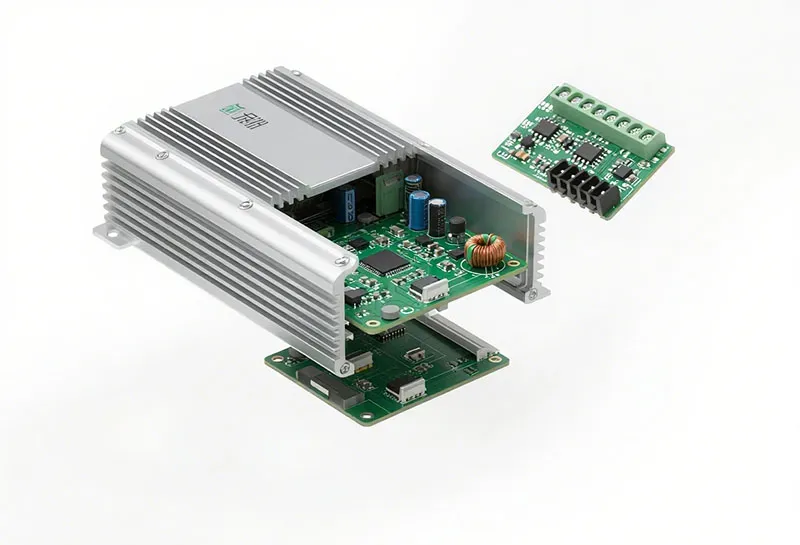
Within this selection of thermal management solutions for energy storage inverters, teams mapped failure modes, then tuned airflow, liquid paths, and sensor density. Reliability wasn’t a buzzword; it drove every constraint in this utility-scale setup. Sheen Technology supported early modeling to keep targets realistic.
Material Selection Process: From TIMs to Coolants
Picking parts for the selection of thermal management solutions for energy storage inverters meant balancing cost and physics.
Materials stack
- thermal interface materials (PCM)
- aluminum heat sinks
- glycol coolants
Evaluation flow
- Check material properties and thermal conductivity
- Validate compatibility with dielectric fluids
- Compare phase change materials vs grease
→ Outcome: stable contact resistance, manageable service intervals.
Sheen Technology guided pairing so TIM pump-out and corrosion risks stayed low. The selection of thermal management solutions for energy storage inverters leaned toward hybrid air–liquid layouts for maintainability.
Field Results and Thermal Performance
Real-world data closed the loop on the selection of thermal management solutions for energy storage inverters.
Observations
- smoother temperature profiles
- fewer hotspots
- better heat dissipation
Validation steps
- Capture field data across seasons
- Compare thermal measurements to models
- Confirm thermal resistance drop
Short reads: stable curves. Less throttling. Higher operational efficiency.
Long view: performance validation showed MTBF gains over air-only baselines. The selection of thermal management solutions for energy storage inverters proved resilient during dust events and load spikes.
Lessons Learned for Large-Scale Deployment
Scaling the selection of thermal management solutions for energy storage inverters brought practical lessons.
- Keep it simple
- Design for service
- Monitor everything
Deployment logic
Architecture
- modular loops for scalability
- sensors tied to alerts
Materials
- compatible pairs to avoid degradation
- predictable aging curves
Operations
- clear maintenance strategies
- fast swap procedures
Multiple takeaways land hard: best practices hinge on integration, not just parts; deployment challenges shrink with foresight; system optimization needs feedback loops. Sheen Technology emphasized scalable cooling blocks and remote diagnostics, turning operational insights into steady gains and cleaner future considerations.
【Request a Custom Quote】Not sure which thermal management solution fits your BESS or energy storage inverter design? Send us your operating temperature range, power density, insulation requirements, interface conditions, and reliability targets, and our engineers can help recommend the right thermal solution for your application.
Sheen Thermal
Dongguan Sheen Electronic Technology Co., Ltd · Founded in 2008
Manufacturer of thermal interface materials and silicone foam for automotive electronics, energy storage, power electronics, communications and consumer electronics.
Certified
- ISO 9001:2015
- ISO 14001:2015
- IATF 16949:2016
What we supply
- Thermal conductivity Up to 90 W/m·K
- Thickness 0.3–10.0 mm
- Custom & samples Die-cut to drawing, 3–7 days